Edible
How to Grow Strawberries (Complete Beginner's Guide)
Grow strawberries from crown to harvest in 12–14 months. Planting, watering, feeding, mulching, runners, and harvest for June-bearing and day-neutral types.
On this page
- Quick answer
- Table of contents
- Choosing your variety type
- Site, soil, and bed preparation
- Planting day
- Year-1 care timeline
- Watering and feeding
- Mulching and weed control
- Runner management
- Harvesting strawberries
- Renovating the patch each year
- Pests and diseases
- Common mistakes
- Troubleshooting
- Final notes
- A note on conditions
Watch the visual walkthrough
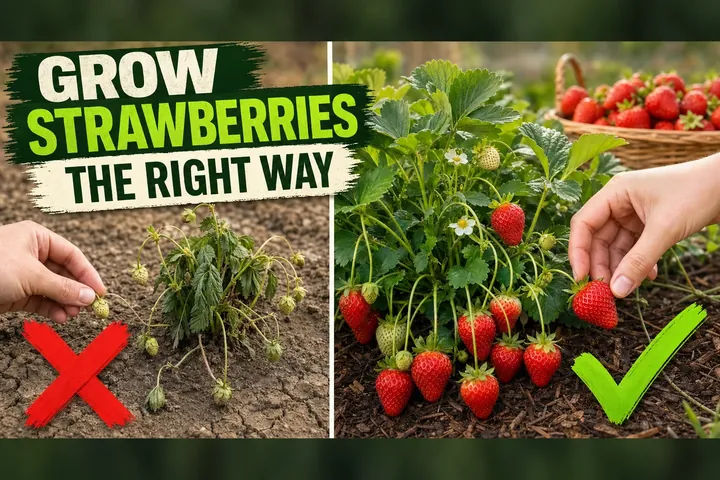
Pro Grow Strawberry Tips to For The BEST Most Productive Plants Ever!
We do more than, JUST, YouTube! Check more MIgardener below: Start growing! Visit our online store for $2 heirloom seeds, ...
A single $30 pack of strawberry crowns can produce 5–10 kg (10–20 lb) of fruit per year for 3–5 years — better economics than almost any other home crop. The catch is that strawberries reward patience: the first year is largely setup, and the real harvest comes the second year.
This guide walks through the full lifecycle — choosing varieties, planting, daily care, runner management, harvest, and yearly renovation — so a beginner can plant in spring and have a productive patch by the following summer.
Quick answer
Plant strawberry crowns in early spring at exactly soil level, 30–45 cm (12–18 in) apart. Pinch all first-year flowers from June-bearing varieties to build strong roots. Water 2.5–4 cm (1–1.5 in) per week, mulch with straw, side-dress monthly, and harvest fully red berries every 2–3 days. Renovate beds after harvest. Patches stay productive 3–5 years.
Table of contents
- Choosing your variety type
- Site, soil, and bed preparation
- Planting day
- Year-1 care timeline
- Watering and feeding
- Mulching and weed control
- Runner management
- Harvesting strawberries
- Renovating the patch each year
- Pests and diseases
- Common mistakes
- Troubleshooting
- FAQ
Choosing your variety type
The flowering type is the single biggest decision in strawberry growing because it determines your harvest pattern, runner habit, and care schedule.
| Type | Pattern | Harvest window | Runner production |
|---|---|---|---|
| June-bearing | One big spring/early-summer crop | 3–4 weeks | Heavy |
| Day-neutral | Continuous through summer | June–October | Light |
| Everbearing | Two crops (early summer + autumn) | 2 windows | Medium |
Best beginner choices:
- For preserves and a big harvest: June-bearing ‘Allstar’, ‘Honeoye’, or ‘Earliglow’
- For fresh eating all summer: Day-neutral ‘Albion’, ‘Seascape’, or ‘Tristar’
- For two harvests with simple care: Everbearing ‘Quinault’ or ‘Ozark Beauty’
Site, soil, and bed preparation
A strawberry patch stays in place 3–5 years, so site selection matters more than for annual crops.
Sun: 6–10 hours direct sun. Less than 6 hours = small sour berries.
Drainage: Good drainage is critical. Strawberries hate wet feet — root rot is the most common silent killer.
pH: 5.8–6.5. Test before planting; amend with sulphur or lime as needed.
Soil prep:
- Loosen soil to 30 cm (12 in) deep
- Work in 5–8 cm (2–3 in) of well-rotted compost
- Add 60 g per m² (2 oz per sq yd) of balanced organic fertiliser
- Smooth and level
Avoid these previous crops: Tomatoes, peppers, potatoes, eggplant. They share verticillium wilt that lingers in soil for 3+ years.
Planting day
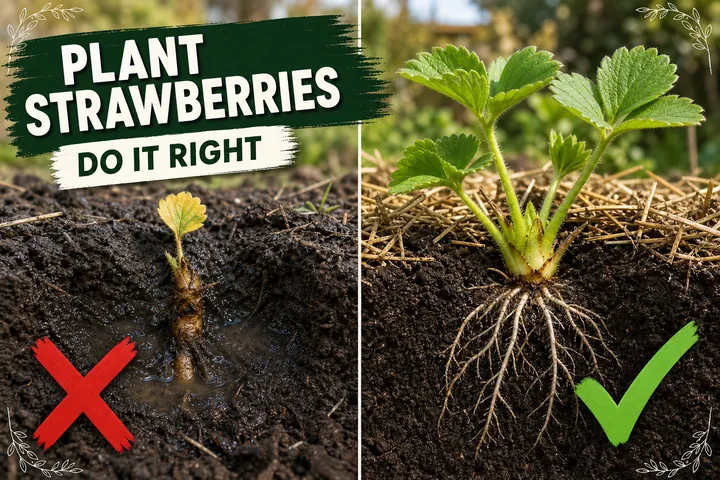
Get the depth right and almost everything else can be fixed later. The full planting detail is in the dedicated how to plant strawberries guide.
Critical points:
- Crown midpoint at exactly soil level
- Roots fanned out, not bunched
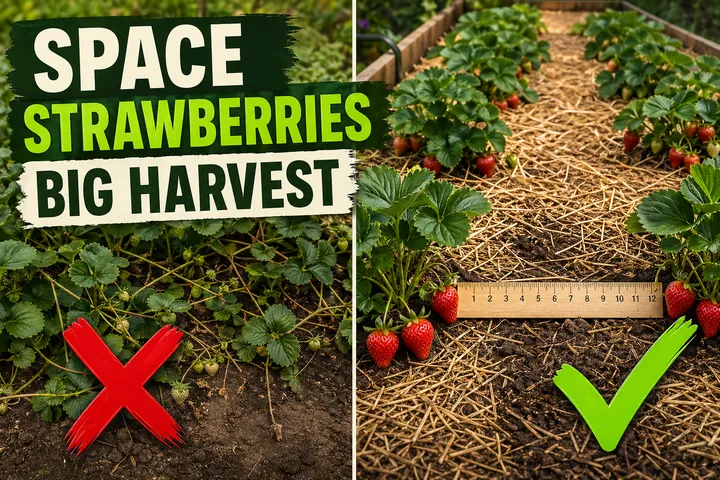
- Spacing 30–45 cm (12–18 in) within row, 90–120 cm (36–48 in) between rows
- Water in deeply with 500 ml (17 fl oz) per plant
For specific spacing options (matted row vs hill system), see how far apart to plant strawberries.
Year-1 care timeline
Year one is mostly about building strong plants for the year-two harvest.
| Month after planting | Task |
|---|---|
| Month 0 (planting) | Water in deeply; mulch lightly |
| Months 1–4 (June-bearers) | Pinch all flowers as they appear |
| Months 1–1.5 (day-neutrals) | Pinch flowers for first 6 weeks only |
| Month 1 onward | Weekly deep watering 2.5–4 cm (1–1.5 in) |
| Month 2 | First side-dress with balanced fertiliser |
| Months 3–5 | Manage runners (see runner section) |
| Month 4 onward (day-neutrals) | Stop pinching; first small harvest begins |
| Late autumn | Mulch heavily for winter (10 cm / 4 in straw) |
Watering and feeding
For a complete reference on keeping an established strawberry planting healthy through runners, renovation, and disease — beyond the planting-year basics — the strawberry plant care guide covers the full seasonal routine.
Watering
- Frequency: 1–2 deep waterings per week, 2.5–4 cm (1–1.5 in) total
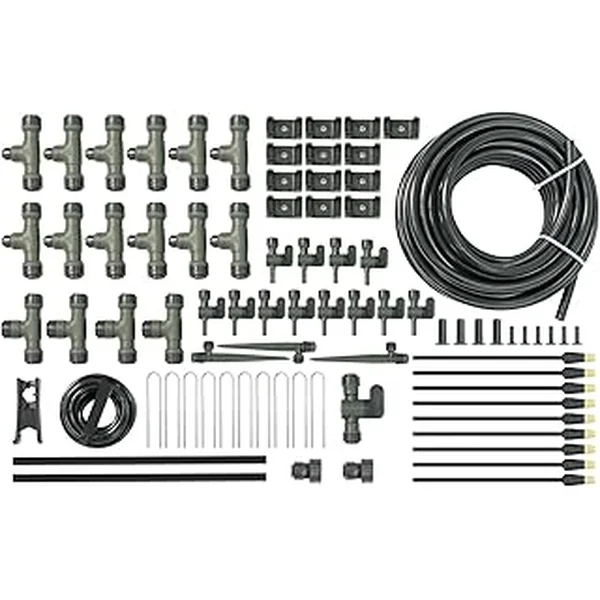
- Method: Drip or soaker hose at the base — never overhead
- Time of day: Morning so any wet leaves dry quickly
- Container plants: Daily check in summer; small pots may need twice-daily
The most common watering error is light frequent sips — these wet only the top 2 cm (1 in) and encourage shallow roots that wither in heat.
Feeding schedule
- At planting: Balanced organic fertiliser worked into the bed
- Month 2: Side-dress 30 g per plant (1 oz per plant) of balanced fertiliser
- Throughout fruiting: Diluted liquid feed every 3–4 weeks
- After June-bearer harvest (renovation): Top-dress with compost + balanced fertiliser
- Stop feeding: 6 weeks before first frost in autumn
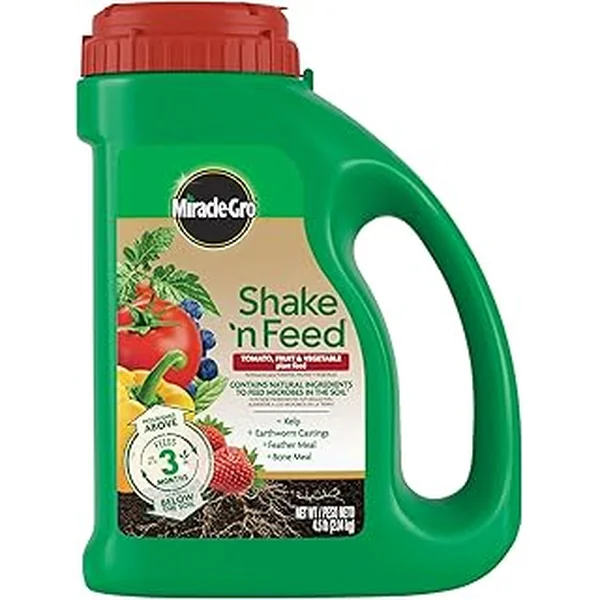
Avoid high-nitrogen feeds — they produce lush leaves but few berries. Stick with balanced 10-10-10 or fruit-specific blends.
Mulching and weed control
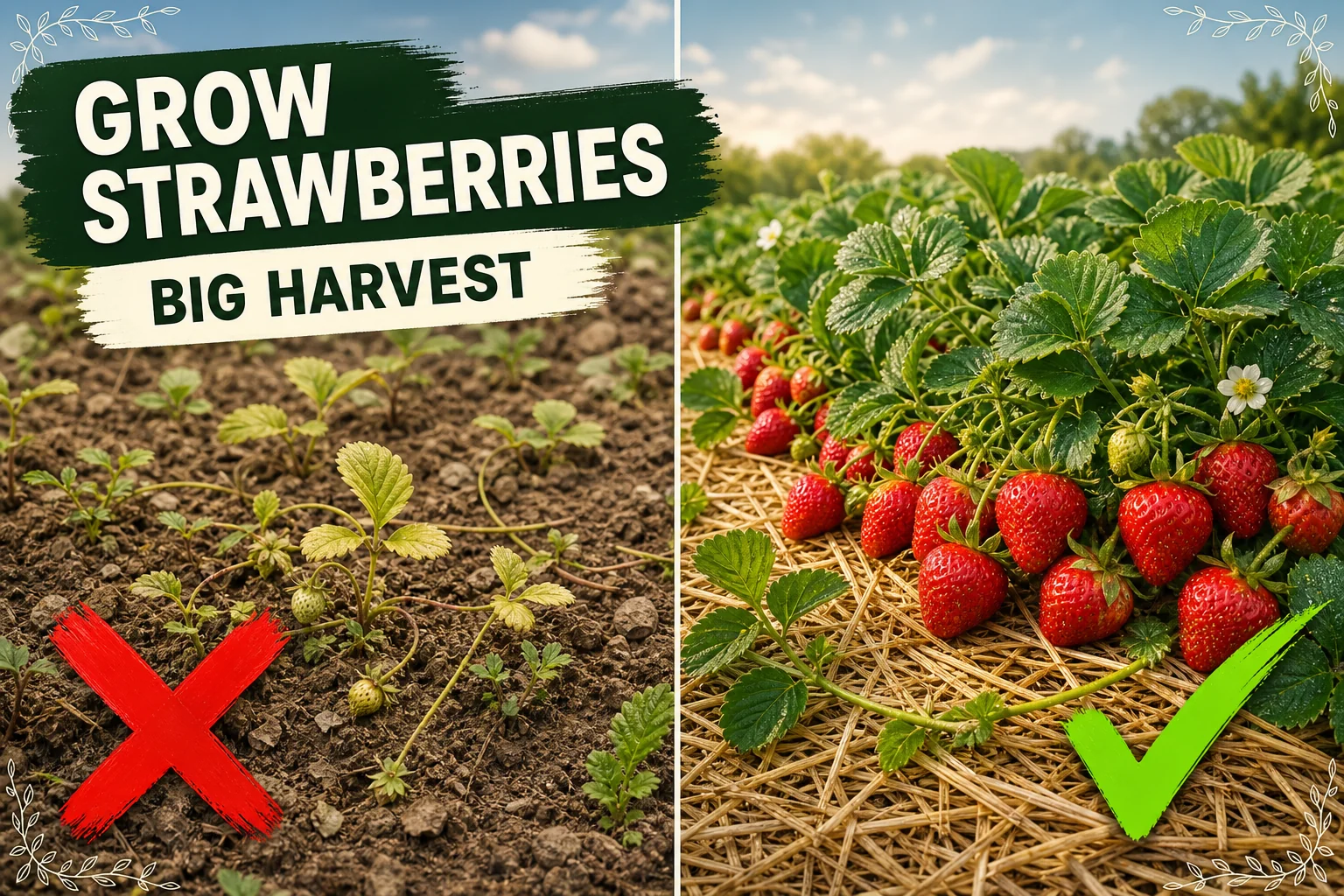
Mulch is non-optional for strawberries. It serves four jobs at once.
Why mulch:
- Keeps berries off bare soil (the source of “strawberry” in the name — “strewn berries” on straw)
- Suppresses weeds (strawberry roots are shallow; weed competition is severe)
- Retains moisture
- Insulates roots in winter
Best mulches:
- Clean straw — the traditional choice; 5 cm (2 in) layer
- Pine needles — slightly acidify soil; great for strawberries
- Shredded leaves — free; replace yearly
- Black plastic landscape fabric — warms soil for earlier fruit; cut planting holes
Avoid: Fresh wood chips (rob nitrogen), grass clippings (mat down and rot), straw with weed seeds (creates more work).
Runner management
A runner is a horizontal stem that grows out from the parent and roots a new daughter plant. Strawberries produce dozens per year if unmanaged.
Matted row system (June-bearers)
- Allow 3–4 runners per parent plant to root in
- Train them along the row, not into paths
- Cut all additional runners as soon as they appear
- Goal: a 45 cm (18 in) wide row of well-spaced plants
Hill system (day-neutrals / everbearers)
- Cut every runner immediately
- Forces energy into fruit production
- Higher yield per plant; lower yield per area
Free new plants
Daughter plants from runners are free new strawberries. Pin a healthy runner tip into a small pot of moist soil while it’s still attached to the parent. After 4–6 weeks, sever the runner and you have a new rooted plant ready for autumn transplanting.
This is the best way to renew the patch — propagate the most vigorous plants, cull the weakest, refresh every 3–4 years.
Harvesting strawberries
When to pick
- Fully red, including the back near the stem
- Slightly soft to gentle pressure
- Pulls free with a small twist
Strawberries do not ripen after picking. Pale berries stay pale.
How to pick
Pinch the stem 1–2 cm (½ in) above the berry. Pulling the berry off bruises the soft flesh. Place picked berries in a single layer in shallow containers — stacked berries crush each other.
Frequency
- Peak season: every 2–3 days
- Hot weather: daily (over-ripe fruit attracts pests fast)
- Day-neutrals: every 4–5 days outside peak windows
Storage
Eat or refrigerate within 24 hours. Don’t wash until just before eating — water accelerates mould.
For a full timeline by variety, see how long does a strawberry plant take to produce fruit.
Renovating the patch each year
June-bearing strawberries need yearly renovation after harvest to keep producing well.
Within 2 weeks of last harvest:
- Mow or cut leaves to 5 cm (2 in) above crowns. Use sharp scissors or a mower set high.
- Thin plants to 15 cm (6 in) spacing — pull weakest, keep strongest.
- Narrow the row to 30–45 cm (12–18 in) wide if it’s spread.
- Top-dress with compost — 2 cm (1 in) over the row.
- Apply balanced fertiliser at half-strength.
- Water deeply.
New leaves emerge within 2–3 weeks, and the plants build strong crowns for next year’s flowers.
Day-neutrals and everbearers don’t need full renovation — just side-dress monthly and remove tired runners.
Pests and diseases
| Problem | Symptoms | Fix |
|---|---|---|
| Slugs | Holes in fruit, slime trails | Iron phosphate granules; beer traps; copper tape |
| Birds | Pecked or vanished berries | Bird netting over hoops |
| Grey mould (Botrytis) | Fuzzy grey rot on fruit | Drip irrigation; good airflow; pick over-ripe quickly |
| Leaf spot | Purple/red spots on leaves | Renovate after harvest; remove infected leaves |
| Verticillium wilt | Sudden plant collapse | Plant in fresh ground; choose resistant varieties |
| Strawberry root weevil | Notched leaves, dying plants | Beneficial nematodes in autumn |
| Aphids | Curled new leaves | Strong water spray; ladybug attractants |
Common mistakes
- Wrong planting depth. Crown buried = rot; roots exposed = death.
- Skipping first-year flower pinching (June-bearers). Cuts second-year yield 50–70%.
- No mulch. Fruit rot, weed pressure, and slug damage all explode.
- Overhead watering. Invites grey mould and leaf spot.
- Letting runners run wild. Patch becomes unmanageable mess in 2 years.
- Skipping renovation. Yields decline rapidly without yearly reset.
- Planting in former tomato/pepper beds. Verticillium wilt strikes immediately.
- Heavy nitrogen feeds. Lush leaves, no berries.
Troubleshooting
| Symptom | Likely cause | Fix |
|---|---|---|
| Small berries | Crowded plants, heat stress, low water | Thin patch; mulch; water deeply |
| Hollow or hard fruit | Drought during fruit set | Consistent watering; mulch heavily |
| Wilting in heat despite wet soil | Verticillium wilt | Move bed; resistant varieties |
| Lots of leaves, few flowers | Excess nitrogen | Switch to balanced fertiliser; reduce feeds |
| Crowns heaved out after winter | Insufficient mulch | Press back; add 10 cm (4 in) straw next autumn |
| Pale yellow leaves | Iron deficiency from high pH | Acidify with sulphur or pine needles |
| Runners everywhere, no fruit | First-year flower pinching skipped + unmanaged runners | Pinch flowers next year; cut runners now |
| Fruit rotting on the soil | No mulch | Apply 5 cm (2 in) straw immediately |
Final notes
Strawberries are the most rewarding fruit for the home garden because year two onwards is nearly self-sustaining: pinch flowers year one, mulch and water year two, harvest by the bowl, then renovate. Five years from one $30 pack of crowns is achievable with no specialist skills.
For more strawberry-specific guidance:
- How to plant strawberries — detailed planting day
- How far apart to plant strawberries — matted row vs hill spacing
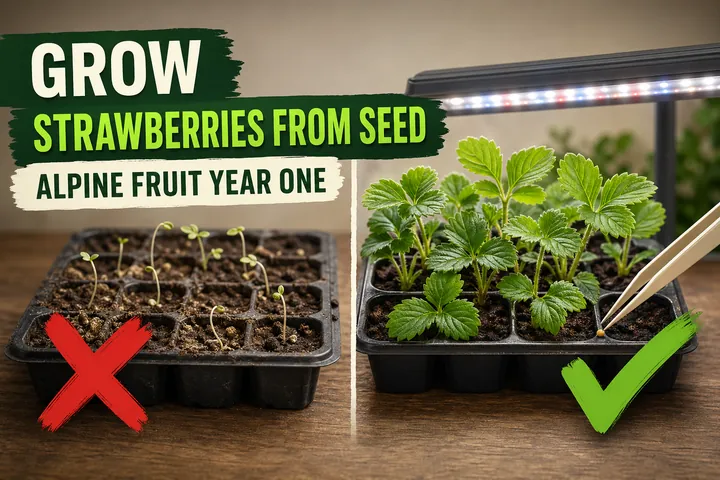
- How to grow strawberries from seed — the slow route
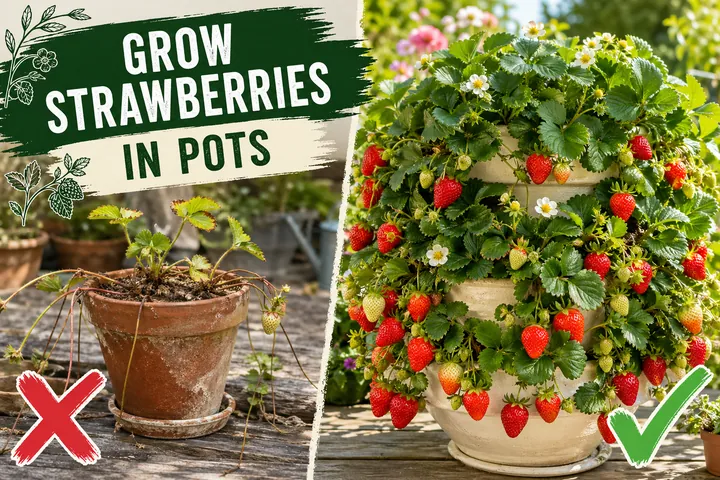
- How to grow strawberries in containers — pots and hanging baskets
- How long does a strawberry plant take to produce fruit — variety-by-variety timeline
Track planting dates, renovation reminders, and harvest windows with the free Tazart plant care app.
A note on conditions
Climate, variety, and soil all shift these numbers slightly. The practices above are well-tested averages from university extension trials — adjust by 1–2 weeks based on your local conditions and what your specific cultivar’s instructions recommend.
Highly recommended
The supplies that make this guide work


Tazart is an Amazon Associate — we earn from qualifying purchases at no extra cost to you. Thank you for helping us keep these guides free.
Frequently asked questions
How long does it take to grow strawberries?
It depends on type and starting material. June-bearing strawberries planted from crowns in spring produce their first real harvest the following June (12–14 months). Day-neutral and everbearing types planted in spring give a small first harvest in 4–5 months (autumn of the same year). Strawberries grown from seed take 4–6 months longer because they spend the first season as small seedlings.
How much sun do strawberries need?
Strawberries need 6–10 hours of direct sun per day for best fruiting. Plants in 4–6 hours produce fewer, smaller, and less sweet berries. Less than 4 hours and the plants survive but rarely fruit usefully. South or west exposure is best in the northern hemisphere; east-facing also works in hot climates where afternoon shade prevents berry sunburn.
How often should I water strawberries?
Strawberries need 2.5–4 cm (1–1.5 in) of water per week — more in heat, less in cool weather. Deep weekly watering is better than light daily sips. Water at the base, ideally with drip irrigation, to keep foliage and fruit dry. Containers dry faster — check pots daily in summer.
When are strawberries ready to pick?
Pick strawberries when the fruit is fully red — including the back of the berry near the stem. Strawberries do NOT ripen after picking, unlike tomatoes. Pinch the stem 1–2 cm (½ in) above the fruit; pulling the berry off bruises it. Harvest every 2–3 days during peak season; over-ripe fruit attracts slugs and fruit flies.
How do you keep strawberries producing every year?
After harvest, 'renovate' the patch each year. For June-bearers: mow leaves to 5 cm (2 in) tall, thin plants to 15 cm (6 in) spacing, top-dress with compost, and water deeply. This stimulates new crown growth for next year's crop. Day-neutrals don't need renovation but benefit from removing tired runners and side-dressing with fertiliser monthly.
Should I cut runners off strawberries?
It depends on your spacing system. In matted-row systems (June-bearers), let the first 3–4 runners root in to fill the row, then cut the rest. In hill systems (day-neutrals/everbearers), cut every runner immediately to force energy into fruit. Unmanaged runners create chaotic dense patches that fruit poorly within 2 years.
How long do strawberry plants live?
Productively, 3–5 years. After year 4–5, individual crowns become woody, fruit gets smaller, and disease pressure rises. Most home gardeners renew their patches by transplanting newly rooted runner daughters into a fresh bed every 3–4 years and removing the oldest plants.
What pH and soil do strawberries like?
pH 5.8–6.5 (slightly acidic) and rich, well-drained loam. Heavy clay holds too much water and rots crowns; pure sand drains too fast. Amend either with 5–8 cm (2–3 in) of compost worked in before planting. Avoid beds where tomatoes, peppers, potatoes, or eggplant grew in the past 3 years — verticillium wilt is shared.