Edible
How to Grow Spinach (Cool-Weather Salad Crop Guide)
Grow tender spinach without bolting. Best soil, sowing depth, spacing, watering, and the cool-season timing that gives you weeks of cut-and-come-again leaves.
On this page
Watch the visual walkthrough
How to Grow Spinach: From Seed to Harvest
A short visual walkthrough that pairs with the steps above.
Spinach is one of the fastest, most rewarding leafy greens you can grow at home — but only if you plant it in the right window. Sown in cool soil, it gives you 3 to 4 weeks of tender leaves from a single bed. Sown one month too late, it bolts straight to flower and turns bitter.
This guide walks you through it: when to plant, how deep, how to space, how to water, and exactly how to keep spinach producing as long as possible.
Quick answer
Sow spinach (Spinacia oleracea) 4 to 6 weeks before your last spring frost, or 6 to 8 weeks before your first fall frost. Plant seeds 1 cm (½ in) deep, 2-3 cm (1 in) apart, in rows 30 cm (12 in) apart. Keep the soil between 4-21°C (40-70°F), water 2.5 cm (1 in) per week, and start harvesting outer leaves at 25 to 35 days. Succession-sow a fresh row every 2 weeks for continuous harvest.
Why spinach is a cool-season crop
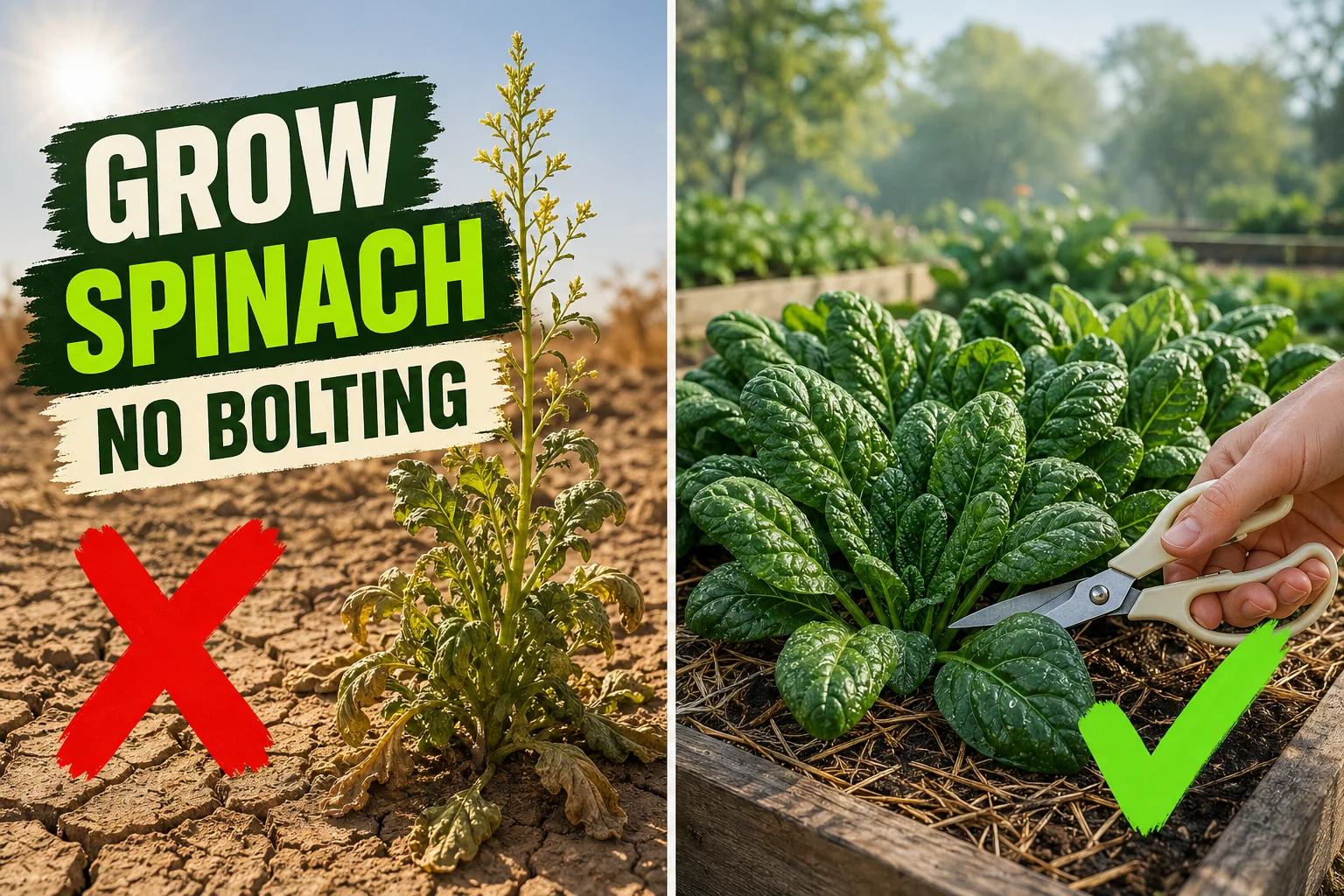
Spinach evolved in central and southwest Asia as a winter green. Its biological clock is set for short days and cool soil. When daylight stretches past 14 hours and soil pushes above 21°C (70°F), the plant skips leaf production and races to flower — a process called bolting.
Once a spinach plant bolts:
- The center stem shoots up tall and leggy
- New leaves come in small, narrow, and bitter
- The plant pours its energy into seeds, not edible greens
You cannot reverse bolting. Your job as a grower is to give spinach enough cool-soil weeks to produce a full harvest before that switch flips.
What you’ll need
- Spinach seeds (a bolt-resistant variety like Bloomsdale Long-Standing, Tyee, or Space)
- A garden bed, raised bed, or container at least 15 cm (6 in) deep with drainage
- Loose, fertile soil rich in organic matter (pH 6.5-7.5)
- A sunny spot getting 6+ hours of direct light in spring and fall
- Mulch (straw, shredded leaves, or grass clippings) — 5 cm (2 in) deep
- A watering can or drip line for steady, even water
That’s the whole list. Spinach doesn’t need stakes, trellises, or grow lights.
Step-by-step: growing spinach from seed
1. Pick your planting window
Soil temperature is more important than the calendar. Use a basic soil thermometer or check your local frost dates:
- Spring sowing: 4-6 weeks before the last frost. Soil should read 4-21°C (40-70°F) at 5 cm (2 in) deep.
- Fall sowing: 6-8 weeks before the first fall frost. Air temperatures should be cooling — daytime highs below 24°C (75°F).
- Winter sowing (mild climates, USDA zones 8-10): sow in October or November for harvest through winter.
Skip mid-summer entirely unless you live somewhere cool and coastal.
2. Prepare the soil
Loosen the top 15-20 cm (6-8 in) of soil with a fork or trowel. Work in a 2-3 cm (1 in) layer of finished compost. Spinach has a shallow root system, so you don’t need to dig deep — but you do need loose, fast-draining soil.
If your soil is acidic (pH below 6.5), add a light dusting of garden lime per the bag’s rate. Spinach struggles in acidic soil and turns yellow.
3. Sow the seeds
Make shallow furrows 1 cm (½ in) deep and 30 cm (12 in) apart. Drop seeds 2-3 cm (1 in) apart along each row. Cover lightly with soil and pat down with the back of a trowel — don’t pack hard.
For a continuous harvest, sow a fresh row every 2 weeks until soil hits 21°C (70°F). This is called succession planting, and it’s the single biggest factor in how much spinach you get from a small bed.
4. Water in gently
Use a watering can with a fine rose head or a soft hose spray to settle the seeds without washing them out of the furrow. Keep the soil consistently moist (not soggy) until you see sprouts in 7 to 14 days.
If the surface dries between waterings, germination drops sharply. A light layer of straw or a damp burlap sack draped over the bed during warm weather keeps moisture in.
5. Thin the seedlings
Once seedlings reach 5 cm (2 in) tall, thin them to one plant every 10-15 cm (4-6 in) for full-sized leaves, or 5 cm (2 in) apart for baby spinach. Don’t pull thinnings — snip them at soil level with scissors so you don’t disturb neighboring roots.
The thinnings are edible. They’re your first salad of the season.
6. Mulch as soon as plants are 10 cm tall
Lay a 5 cm (2 in) layer of straw, shredded leaves, or grass clippings around the plants. Mulch keeps soil temperatures down, holds moisture, and stops weeds. It is the most underrated tool for delaying spinach bolting.
Keep mulch 1-2 cm (½ in) clear of the plant stems to prevent rot.
Care after planting
| Task | When |
|---|---|
| Water | 2.5 cm (1 in) per week, split into 2-3 deep soakings |
| Mulch | Once plants are 10 cm (4 in) tall — refresh as it breaks down |
| Fertilize | A balanced liquid fertilizer (or fish emulsion) every 3 weeks |
| Weed | Hand-pull weekly — spinach roots are shallow and dislike hoeing |
| Shade cloth | Add 30-40% shade cloth once daytime highs pass 24°C (75°F) in spring |
A free plant care app like Tazart tracks the watering schedule for you, adjusts it for your local weather, and pings your phone when soil is likely dry — useful when you’re juggling several succession-planted rows at once.
When and how to harvest
Spinach is a cut-and-come-again crop. You don’t pull the whole plant — you harvest the outer leaves and let the center keep growing.
Baby leaves (25-35 days): snip outer leaves once they’re 5-8 cm (2-3 in) long, leaving the central crown intact. Take no more than one-third of the plant per harvest.
Full-size leaves (40-50 days): snip outer leaves at 10-15 cm (4-6 in) long. Take the largest outer leaves first and work inward.
Stop harvesting once you see a center stem stretching upward — that’s the bolting signal. Cut the entire plant, wash, and use the leaves immediately. Once the flower stalk shoots up, the plant is done.
How to keep spinach from bolting
You cannot stop bolting forever — spinach is genetically programmed to flower. But you can delay it by 1-3 weeks, which is the difference between 2 harvests and 5.
- Pick bolt-resistant varieties. Bloomsdale Long-Standing, Tyee, Space, and Olympia are bred for slower bolting.
- Plant at the right time. Spring sowings race against rising temperatures — start as early as the soil allows.
- Mulch heavily. A 5 cm (2 in) layer of straw or shredded leaves keeps soil 3-5°C (5-9°F) cooler.
- Water deeply and consistently. Drought stress is a fast bolting trigger. Aim for 2.5 cm (1 in) per week.
- Use afternoon shade. A 30-40% shade cloth from noon onward extends harvest by 1-2 weeks once the heat arrives.
- Harvest often. Removing outer leaves slows the plant’s rush to flower.
- Try New Zealand or Malabar spinach for summer. They’re not true spinach but produce spinach-flavored leaves in heat.
Common mistakes to avoid
- Planting too late. A spring sowing one week late can lose half its harvest. Watch soil temperature, not the calendar.
- Sowing seeds too deep. Spinach needs light contact with soil, not a 2-3 cm (1 in) burial. Stick to 1 cm (½ in).
- Crowding the bed. Plants 5 cm (2 in) apart compete for light and bolt earlier. Thin to 10-15 cm (4-6 in) for full leaves.
- Letting the soil dry out. Drought stress = bolting. Check soil moisture every 2-3 days during warm spells.
- Skipping mulch. Bare soil heats up fast. Mulch is the cheapest bolt-delay tool you have.
- Planting in acidic soil. Spinach hates pH below 6.5. Test your soil if leaves come in yellow.
- Harvesting the whole plant. You get 3-4 weeks more leaves by snipping outer leaves than by cutting at the base.
Troubleshooting
| Symptom | Likely cause | Fix |
|---|---|---|
| Seeds don’t germinate | Soil too warm (above 24°C / 75°F) or too dry | Wait for cooler weather; pre-soak seeds 4 hours; keep soil consistently moist |
| Seedlings are pale yellow | Acidic soil or nitrogen-poor | Test pH; lime if below 6.5; side-dress with compost or fish emulsion |
| Center stem shoots up tall and leggy | Bolting (heat and long days) | Harvest the whole plant now; replant in fall; switch varieties next year |
| Leaves are small and bitter | Stress from heat, drought, or crowding | Water deeply; mulch; thin plants to 10-15 cm (4-6 in) apart |
| Yellow patches with fuzzy purple underside | Downy mildew (fungal disease) | Remove infected leaves; improve airflow; water at soil level only; rotate crop next season |
| Tiny holes in leaves | Flea beetles or leaf miners | Cover with floating row cover at sowing; remove damaged leaves; rotate crop |
| Slugs eating young leaves | Wet, mulched bed at night | Set out shallow saucers of beer; hand-pick at dusk; reduce mulch in slug-heavy seasons |
| Plants wilt mid-day even when watered | Soil too warm or too sunny | Add 30-40% shade cloth in afternoon; water early morning; check root depth |
Watch: growing spinach without bolting
A short visual walkthrough pairs well with the steps above. If you’re a visual learner, watch a quick tutorial like How to Grow Spinach on YouTube and then come back to follow the timing in this guide.
Related reading
- How to grow lettuce in containers — the same cool-season window and watering rhythm work for lettuce too.
- Cilantro plant care — another bolt-prone cool-season herb. Succession planting is the same trick.
- Dill plant care — pairs well with spinach in a spring herb-and-greens bed and shares the cool-soil preference.
- How to plant lettuce — same cool-season window, same shallow-seed rule, perfect bed companion to spinach.
- Track your succession sowings and watering with the free Tazart plant care app and let it set up the schedule for you.
A note on conditions
Every garden is different. Latitude, day length, soil mix, raised vs in-ground beds, mulch depth, and your local weather all change how fast spinach grows and how long before it bolts. Use the steps above as a starting point and adjust based on what your plants actually do in week two — that’s how every good gardener learns.
Highly recommended
The supplies that make this guide work
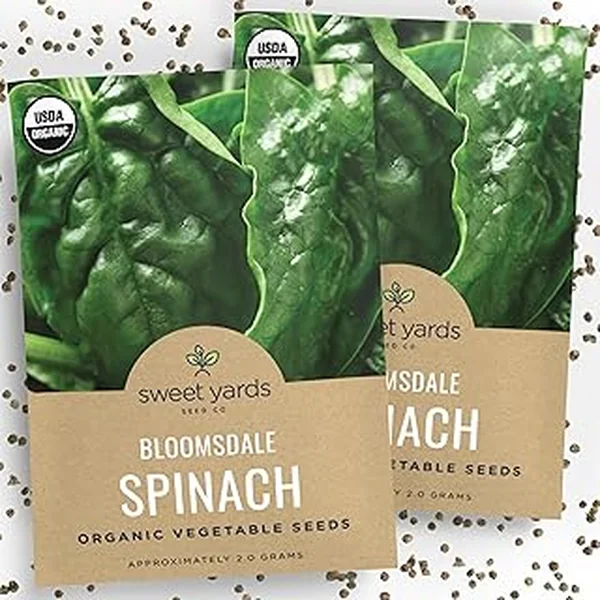

Tazart is an Amazon Associate — we earn from qualifying purchases at no extra cost to you. Thank you for helping us keep these guides free.
Frequently asked questions
When should I plant spinach?
Sow spinach 4 to 6 weeks before your last spring frost, when the soil is between 4°C and 21°C (40°F and 70°F). Plant a second round 6 to 8 weeks before your first fall frost. Spinach germinates poorly above 24°C (75°F), so skip the height of summer.
How deep do you plant spinach seeds?
Sow spinach seeds 1 cm (½ in) deep, spaced 2-3 cm (1 in) apart in rows 30 cm (12 in) apart. Cover lightly with soil and keep evenly moist for 7 to 14 days until they sprout.
How long does spinach take to grow?
Baby spinach leaves are ready 25 to 35 days after sowing. Full-size leaves take 40 to 50 days. Once you start harvesting outer leaves, a single planting will produce for 3 to 4 weeks before bolting.
How do you keep spinach from bolting?
Pick bolt-resistant varieties (Bloomsdale Long-Standing, Tyee, Space), grow during cool weather only, mulch heavily to keep soil temperatures below 21°C (70°F), water consistently, and harvest outer leaves often. Bolting is mostly triggered by long days and heat — there is no fix once it starts.
Does spinach need full sun or shade?
Full sun in spring and fall — at least 6 hours per day. In late spring as temperatures rise, partial afternoon shade extends your harvest by 1 to 2 weeks before bolting.
How often should you water spinach?
Spinach needs 2.5 cm (1 in) of water per week, split into 2 or 3 deep waterings. Shallow daily sprinkling produces weak roots. The top 2-3 cm (1 in) of soil should never fully dry out — drought stress triggers bolting fast.
Can you grow spinach in containers?
Yes. Use a pot at least 15 cm (6 in) deep and 30 cm (12 in) wide, filled with quality potting mix. Containers warm up faster than ground beds, so move them into afternoon shade once daytime temperatures pass 21°C (70°F).