Flowers
How to Grow Snapdragons (Cool-Weather Stalks of Color)
Snapdragons love cool weather and bloom on tall stalks in nearly every color. Here's how to grow snapdragons from seed, when to plant, spacing, and pinching.
On this page
- Quick answer
- Why cool weather matters
- When to plant snapdragons
- What you’ll need
- Step-by-step: growing snapdragons from seed
- Care after planting
- Fall vs spring sowing
- Common mistakes to avoid
- Troubleshooting
- Snapdragons in containers
- Watch: starting snapdragons from seed for cut-flower stalks
- Related reading
- A note on conditions
Watch the visual walkthrough
Growing SNAPDRAGONS 101: Germination Tips, Spacing, Netting & Soil Blocks!
A short visual walkthrough that pairs with the steps above.
Snapdragons are one of the most rewarding cool-weather flowers you can grow — tall colorful stalks, weeks of bloom, and the famous “dragon mouth” flowers kids love to pinch open. They thrive when nights are cold and mornings are crisp, and they fade out fast once summer heat hits.
This guide walks you through it step by step: when to sow, surface sowing, hardening off, transplanting, spacing, pinching, deadheading, and how to overwinter snapdragons in mild zones for an early spring flush.
Quick answer
Sow snapdragon seed indoors 8–10 weeks before your last frost, surface-sow on damp seed mix (light is required), keep at 18–21°C (65–70°F), and harden off before transplanting after the last hard frost. Space plants 15–25 cm (6–10 in) apart in full sun, pinch the tips at 10–15 cm (4–6 in) tall, and water when the top 2–3 cm (1 in) of soil is dry. They bloom heavily from cool spring through early summer, then fade above 24°C (75°F).
Why cool weather matters
Snapdragons (Antirrhinum majus) are native to the rocky hillsides of the Mediterranean, where springs are cool and damp and summers are dry. In gardens, this means they bloom hardest when nights sit between 4–18°C (40–65°F) and slow down sharply once nights stay above 21°C (70°F).
Heat is what kills snapdragons — not cold. A spring-planted snapdragon that looks fantastic in May often turns leggy and brown by mid-July in hot summer regions. The trick is timing: plant early so they bloom before the heat, or plant in fall in mild zones for winter and early-spring color.
When to plant snapdragons
| Season | When to plant | What to expect |
|---|---|---|
| Fall planting (zones 7+) | 6–8 weeks before your first hard frost — late September to mid-October | Light fall bloom, overwinters under mulch, explodes again in early spring |
| Early spring (most zones) | Sow seed indoors 8–10 weeks before last frost; transplant after last hard frost | Blooms 10–14 weeks until summer heat above 24°C (75°F) shuts them down |
| Mid-summer | Don’t | They wilt, get leggy, and stop flowering |
In USDA zones 7 and warmer, fall-planted snapdragons often bloom right through mild winters. In zones 4–6, treat them as a spring-only crop unless you mulch heavily and accept some winter loss.
What you’ll need
- A packet of fresh snapdragon seed (or six-packs from a nursery)
- Seed-starting mix and a tray with a humidity dome
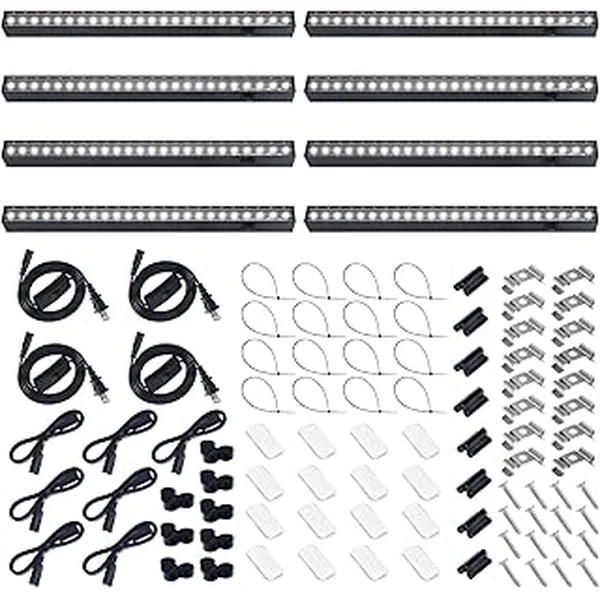
- A bright south-facing window or a full-spectrum LED grow light bar
- A pot at least 20 cm (8 in) wide with drainage holes, or an open garden bed
- General-purpose potting mix (containers) or compost-amended garden soil (beds)
- A sunny spot — 6+ hours of direct light
- Watering can with a fine rose
- Mulch — 3–5 cm (1–2 in) of straw or shredded bark
- A balanced flower fertilizer
That’s the whole list. A heat mat is helpful but not required.
Step-by-step: growing snapdragons from seed
1. Chill or stratify if needed
Most fresh snapdragon seed germinates fine at room temperature, but old seed (over 1 year) and some heirloom varieties germinate faster after a 1-week chill. Place the seed packet in a sealed bag in the fridge at 2–5°C (35–40°F) for 5–7 days before sowing. Skip this step with fresh seed.
2. Surface sow on damp seed mix
Snapdragon seed is dust-fine and needs light to germinate — do not bury it. Fill a tray with damp seed-starting mix, scatter seeds across the surface, and press them in gently with the flat of your hand. Mist the surface so the seed sticks but stays visible.
Cover the tray with a clear humidity dome to hold moisture, and place it under a bright LED grow light or in a warm room at 18–21°C (65–70°F). Germination takes 10–14 days.
3. Grow seedlings under bright light
Once seedlings sprout, remove the dome and put them under a full-spectrum LED grow light positioned 5–8 cm (2–3 in) above the trays for 14–16 hours a day. A south-facing window alone usually isn’t enough — snapdragon seedlings stretch into thin floppy stems without strong overhead light.
Bottom-water the trays when the surface goes dry and feed weakly with a balanced fertilizer at quarter-strength every 2 weeks.
4. Harden off before transplanting
Two weeks before your transplant date, start hardening off the seedlings. On day one, set them outside in dappled shade for 1–2 hours, then bring them back in. Add an hour each day, slowly moving them into more direct sun and wind. By day 10, they should handle 8 hours outside in full sun.
Snapdragons are technically a hardy annual and tolerate light frost once hardened off — but unhardened seedlings will collapse on the first cold windy night.
5. Transplant at the right depth
Wait until after your last hard frost. Loosen the top 20 cm (8 in) of soil and mix in a 5 cm (2 in) layer of compost. Pop each seedling out of its cell and plant it at the same depth it was growing — the crown (where stems meet roots) should sit just at soil level. Burying the crown causes rot.
Space plants 15–25 cm (6–10 in) apart — closer for shorter bedding varieties, wider for tall cutting types. Water in deeply right after transplanting to settle the soil and remove air pockets.
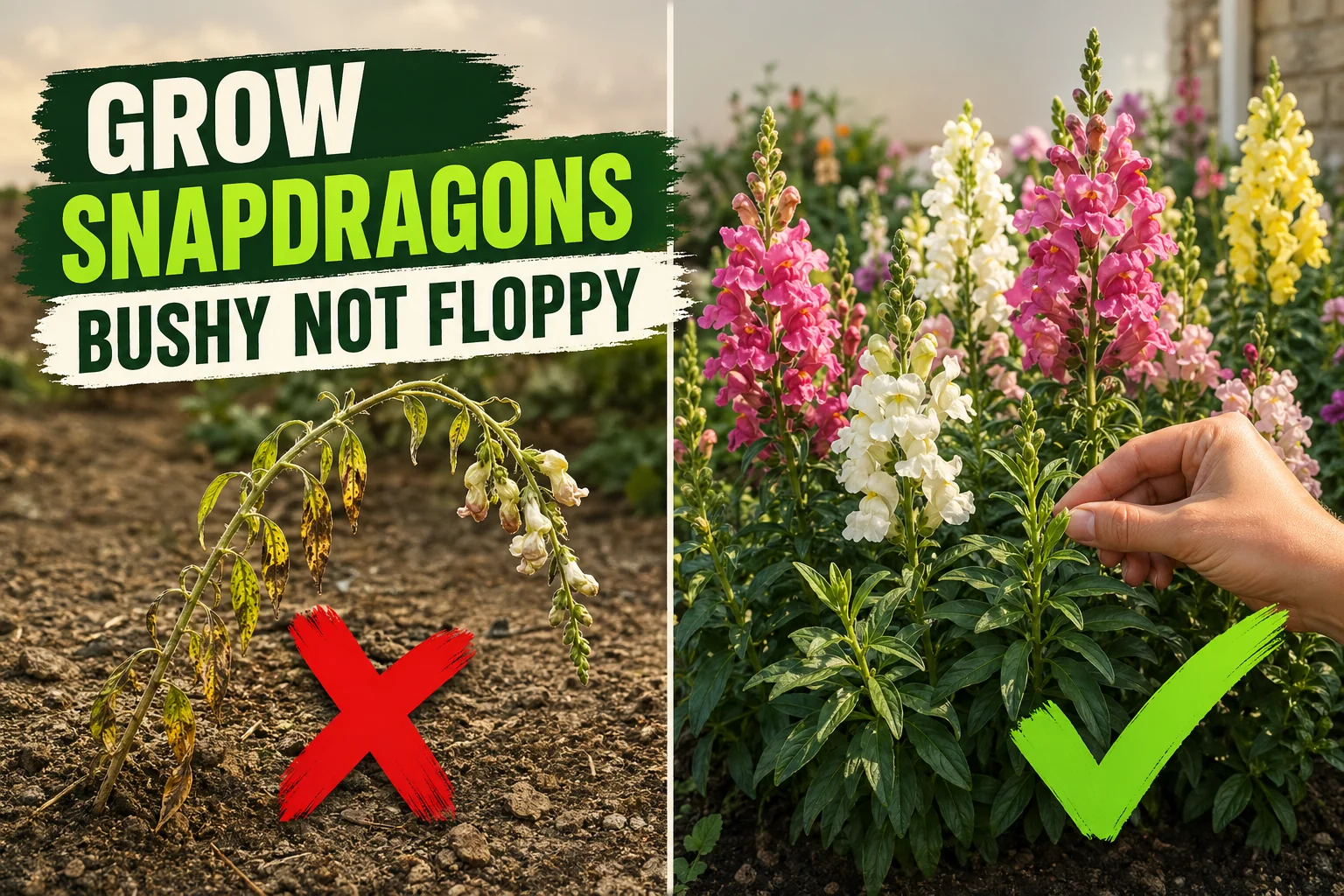
6. Pinch the tips for branching
When transplanted seedlings are 10–15 cm (4–6 in) tall and have 3–4 sets of true leaves, pinch off the top 2–3 cm (1 in) with your fingertips. The plant will branch into 4–8 side stalks instead of pushing one tall central spike — far more flowers per plant, sturdier stems.
This is the single biggest secret to bushy productive snapdragons. Skip it and you get one tall floppy stem that needs staking.
7. Mulch and water in
Spread a 3–5 cm (1–2 in) layer of straw or shredded bark mulch around (not over) the plants. Mulch keeps roots cool, locks in moisture, and stops mud splash that triggers leaf spot. Water at the base, not over the flower spikes.
Care after planting
Snapdragons are low-maintenance once established — three habits make all the difference.
| Task | When |
|---|---|
| Water | When top 2–3 cm (1 in) of soil is dry — every 3–5 days in beds, 2–3 days in pots |
| Deadhead | Cut spent flower spikes back to a leaf node every 5–7 days |
| Fertilize | Balanced or bloom-boosting fertilizer every 2–3 weeks during active bloom |
A free plant care app like Tazart can hold the watering and feeding schedule for you, adjust it for your local weather, and remind you when frost is coming — useful for hardened seedlings that still need protection on the coldest spring nights.
Deadheading rule
When a flower spike fades from the bottom up and the top buds finish, cut the entire stalk back to a leaf node 10–15 cm (4–6 in) lower on the stem. The plant pushes new side branches and reblooms in 2–3 weeks. Skip deadheading and the plant pours energy into seed pods and stops flowering.
Fertilizer rule
Snapdragons are moderate feeders. Use a balanced fertilizer (10-10-10) or a bloom-boosting product (5-10-10) at half-strength every 2–3 weeks. Skip nitrogen-heavy lawn fertilizer — it produces tall floppy leaves and few flowers.
Fall vs spring sowing
Both work — they give very different displays.
Spring sowing is the easy default for most US gardeners. Start seed indoors 8–10 weeks before last frost, transplant after the last hard frost, and you’ll get a heavy bloom from late spring through early summer. Plants fade in mid-summer above 24°C (75°F) and are pulled.
Fall sowing is for zones 7+ and dedicated cut-flower growers. Sow seed indoors in late summer, transplant out 6–8 weeks before first hard frost, and the plants establish strong roots before winter. Mulched in for winter, they explode into bloom in early spring — taller, sturdier stalks than any spring-sown plant. This is how flower farmers grow market-quality snapdragons.
Common mistakes to avoid
- Burying the seed. Snapdragon seed needs light to germinate — surface-sow only.
- Skipping the pinch. A non-pinched snapdragon makes one floppy stalk. A pinched plant makes 4–8 stalks. Five seconds, double the flowers.
- Transplanting too early. Unhardened seedlings collapse on the first cold windy night. Always harden off for 10–14 days first.
- Letting them get root-bound. Snapdragon seedlings hate sitting in cell trays past 8 weeks — pot up to 9 cm (3.5 in) pots if you can’t transplant on time.
- Watering over the flowers. Wet flower spikes invite gray mold and leaf spot. Water at the base only.
- Planting in afternoon shade. Less than 6 hours of direct sun makes snapdragons leggy with thin weak stems.
Troubleshooting
| Symptom | Likely cause | Fix |
|---|---|---|
| Leggy seedlings indoors | Light too far away or too few hours | Lower LED to 5 cm (2 in) above trays; run 14–16 hours a day |
| Yellowing lower leaves | Overwatering or compacted soil | Let soil dry to 2–3 cm (1 in) deep; loosen soil; check drainage holes |
| One floppy tall stalk, no branching | Skipped pinching | Pinch the top 2–3 cm (1 in) now — branches still emerge from leaf nodes below |
| Brown spent flower spikes, no rebloom | Skipped deadheading | Cut spent spikes back to a lower leaf node; new growth in 2–3 weeks |
| Gray fuzzy mold on flowers | Botrytis from wet humid weather | Remove infected blooms; water only at the base; thin plants for airflow |
| Plants collapse in early summer | Heat stress above 24°C (75°F) | Cut back by half and water deeply — some varieties rebound when fall cools |
Snapdragons in containers
Snapdragons grow well in pots if you pick the right variety and size — tall cutting types need a deep bed, but dwarf and intermediate varieties (30–60 cm / 12–24 in) thrive in containers.
- Choose a pot at least 25 cm (10 in) wide and 25 cm (10 in) deep with drainage holes.
- Use general-purpose potting mix, NOT garden soil.
- Plant 3–4 dwarf snapdragons per 30 cm (12 in) pot.
- Water more often than beds — containers dry out in 1–2 days in late spring sun.
- Move pots into morning sun and afternoon shade once temps climb above 21°C (70°F).
- Fertilize every 2 weeks at half-strength — container snapdragons use up nutrients fast.
Watch: starting snapdragons from seed for cut-flower stalks
A short visual walkthrough pairs well with the steps above. If you’re a visual learner, watch a quick tutorial like How to Grow Snapdragons from Seed on YouTube and then come back to follow the timing in this guide.
Related reading
- How to grow zinnias from seed — the warm-season cut-flower replacement once snapdragons fade in summer heat.
- How to plant morning glory seeds — a heat-loving climbing annual that takes over the trellis when snapdragon season ends.
- How to grow cosmos flowers (heat-tough summer cutting garden) — another easy direct-sown annual that thrives where snapdragons struggle in summer.
- Track the last frost date for your zip code with the free Tazart plant care app and let it remind you when to start snapdragon seed indoors and when to transplant.
A note on conditions
Every garden is different. Light hours, soil drainage, container size, mulch depth, your USDA zone, and how cold your spring nights actually run all change how snapdragons grow and how often they need water. Use the steps above as a starting point and adjust based on what your plants actually do in week two — that’s how every good flower gardener learns.
Highly recommended
The supplies that make this guide work


Tazart is an Amazon Associate — we earn from qualifying purchases at no extra cost to you. Thank you for helping us keep these guides free.
Frequently asked questions
When should I plant snapdragons?
Plant snapdragons in early fall (6 to 8 weeks before your first hard frost) for fall and winter color in mild zones, or in very early spring (as soon as the soil can be worked) for a long spring and early-summer display. Snapdragons germinate best at 18–21°C (65–70°F) and bloom heaviest when nights stay between 4–18°C (40–65°F).
Do snapdragons come back every year?
Snapdragons (Antirrhinum majus) are technically short-lived perennials in USDA zones 7–10 but are grown as cool-season annuals in most gardens. Fall-planted plants often overwinter under mulch and rebloom in spring; in zones 4–6, plant them as a spring-only annual or expect cold-damaged regrowth. Many varieties also reseed themselves freely.
How cold can snapdragons tolerate?
Established snapdragons handle frost down to about −7°C (20°F) without protection and survive brief dips to −12°C (10°F) once mulched. Young transplants are tender — wait until after your last hard frost or harden them off slowly. Snow cover insulates the crowns and helps fall-planted snapdragons survive zone 6 winters.
Do snapdragons need full sun?
Snapdragons need 6+ hours of direct sun for the tallest stalks and heaviest bloom. They tolerate light afternoon shade in late spring once temps climb above 21°C (70°F), but too much shade makes them leggy with weak stems. South- or east-facing beds work best.
How often should I water snapdragons?
Water snapdragons when the top 2–3 cm (1 in) of soil is dry — usually every 3–5 days in beds and every 2–3 days in containers. They want consistent moisture but hate soggy soil and crown rot. Water at the base, not over the flower spikes, to prevent fungal leaf spot.
Should I pinch snapdragons?
Yes — pinching is the single biggest factor in getting bushy snapdragons with multiple flower stalks. When seedlings are 10–15 cm (4–6 in) tall and have 3–4 sets of true leaves, pinch the top 2–3 cm (1 in) off. The plant will branch into 4–8 stalks instead of one — far more flowers per plant.