Edible
How to Grow Radishes (28-Day Crop for Beginners)
Radishes are the fastest crop you can grow — seed to harvest in 28 days. Soil, spacing, watering, light, and the thinning trick for round crisp roots.
On this page
- Quick answer
- Why radishes are the perfect beginner crop
- What you’ll need
- Step-by-step: growing radishes from seed
- Care after sprouting
- When and how to harvest
- Succession sowing: fresh radishes every week
- Common mistakes to avoid
- Troubleshooting
- Watch: growing radishes from seed
- Related reading
- A note on conditions
Watch the visual walkthrough
How to Grow Full Size Radishes and Not Just Leaves: 4 Tips, Planting, Harvest & Proof
A short visual walkthrough that pairs with the steps above.
Radishes are the fastest crop you can grow at home — seed to harvest in 28 days, no special skill needed. They sprout in under a week, ignore frost, fit in a windowbox, and reward beginners with crisp peppery roots while you’re still learning what your soil and sun look like.
This guide walks you through every step: picking the right variety, planting depth, thinning, watering, and exactly when to pull them so you get round crisp roots instead of woody hot ones.
Quick answer
Sow radish seeds 1 cm (0.5 in) deep and 2-3 cm (1 in) apart in loose soil, in a spot with at least 6 hours of sun, when daytime temperatures are 10-21°C (50-70°F). Keep the soil consistently moist, thin seedlings to 5 cm (2 in) apart at 7-10 days, and harvest 25-30 days later when the shoulders bulge above the soil line.
Why radishes are the perfect beginner crop
Radishes (Raphanus sativus) are a cool-season annual root vegetable in the brassica family. They evolved to germinate fast and bulk up quickly before summer heat hits — which is exactly why they’re forgiving for first-time growers.
Three reasons radishes punish almost no mistakes:
- They sprout in 4-7 days. You’ll know if your seeds are alive and your soil works within a week.
- They mature in 28 days. No long commitment — a failed crop costs you a month, not a season.
- They tolerate cold. Light frost won’t kill them. You can sow as soon as the soil thaws in spring.
The trade-off: radishes are unforgiving about hot weather, dry soil, and crowding. Get those three right and the rest takes care of itself.
What you’ll need
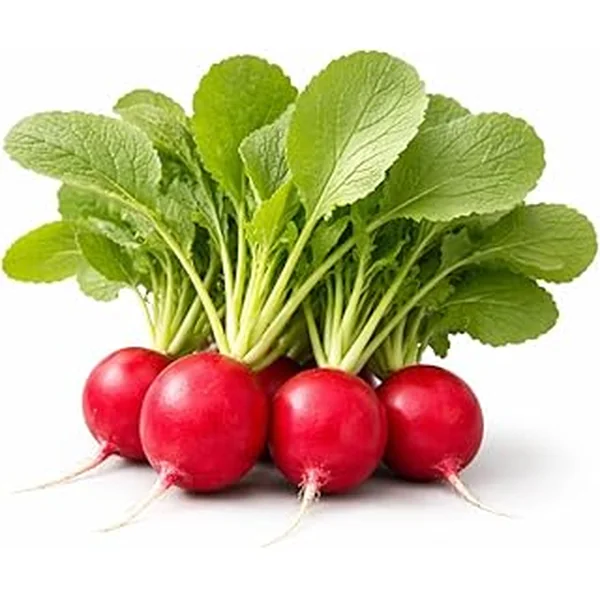
- One packet of spring radish seeds — Cherry Belle, French Breakfast, Easter Egg, or Sparkler are all classic 28-day varieties
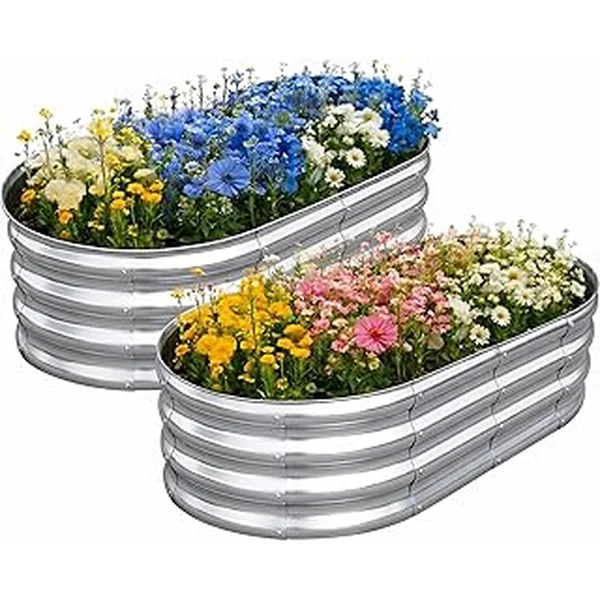
- Loose, stone-free soil — either a garden bed worked to 15 cm (6 in) deep, a raised bed, or a container at least 15 cm (6 in) deep with drainage holes
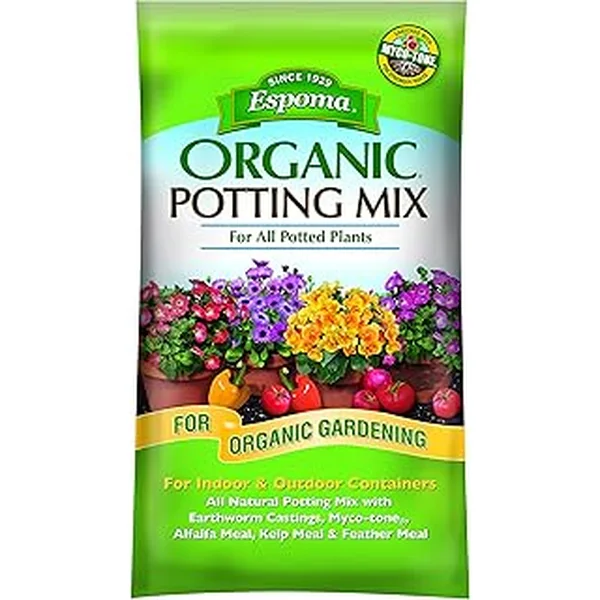
- A bag of vegetable potting mix if growing in containers (not garden soil — too heavy for round roots)
- A spot with 6+ hours of direct sun
- A watering can with a fine rose
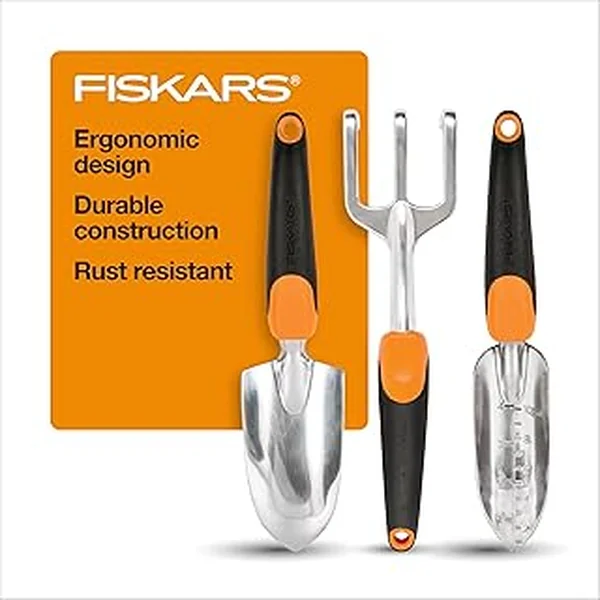
- A small trowel for furrows and thinning
That’s the whole list. No fertilizer, no grow lights, no transplanting — radishes are direct-sown.
Step-by-step: growing radishes from seed
1. Pick the right variety and timing
For your first crop, stick with a classic round red spring variety like Cherry Belle (28 days), French Breakfast (25 days), or Easter Egg (a 28-day rainbow mix). Skip daikon, winter, and watermelon radishes for now — they take 50-70 days and need more space.
Sow when daytime temperatures are 10-21°C (50-70°F). In most climates that’s early spring (as soon as soil can be worked) and early fall (6-8 weeks before your first frost). Skip mid-summer — heat above 24°C (75°F) bolts radishes and turns them woody.
2. Prepare loose, stone-free soil
Radishes are roots — they push down into the soil, so the soil has to let them. In a garden bed, dig and loosen to 15 cm (6 in) deep, removing stones, sticks, and clumps. Mix in a thin layer of finished compost if your soil is heavy clay.
In a container, fill a pot 15 cm (6 in) deep and as wide as you have room for, with light vegetable potting mix to 2 cm (0.75 in) below the rim.
Skip fresh manure and high-nitrogen fertilizer. Nitrogen pushes leafy tops at the expense of the root — it’s the #1 reason home radishes are “all leaves, no bulb.”
3. Sow the seeds
Make shallow furrows 1 cm (0.5 in) deep and 15 cm (6 in) apart. Drop seeds along the furrow 2-3 cm (1 in) apart, cover lightly with soil, and press gently with the back of your hand to firm contact.
If you’re sowing in a container, scatter seeds across the surface, cover with 1 cm (0.5 in) of mix, and press flat.
Water with a fine spray so you don’t wash seeds out of place. Seeds germinate in 4-7 days at 10-21°C (50-70°F), faster in warmer soil.
4. Thin the seedlings (this is the step everyone skips)
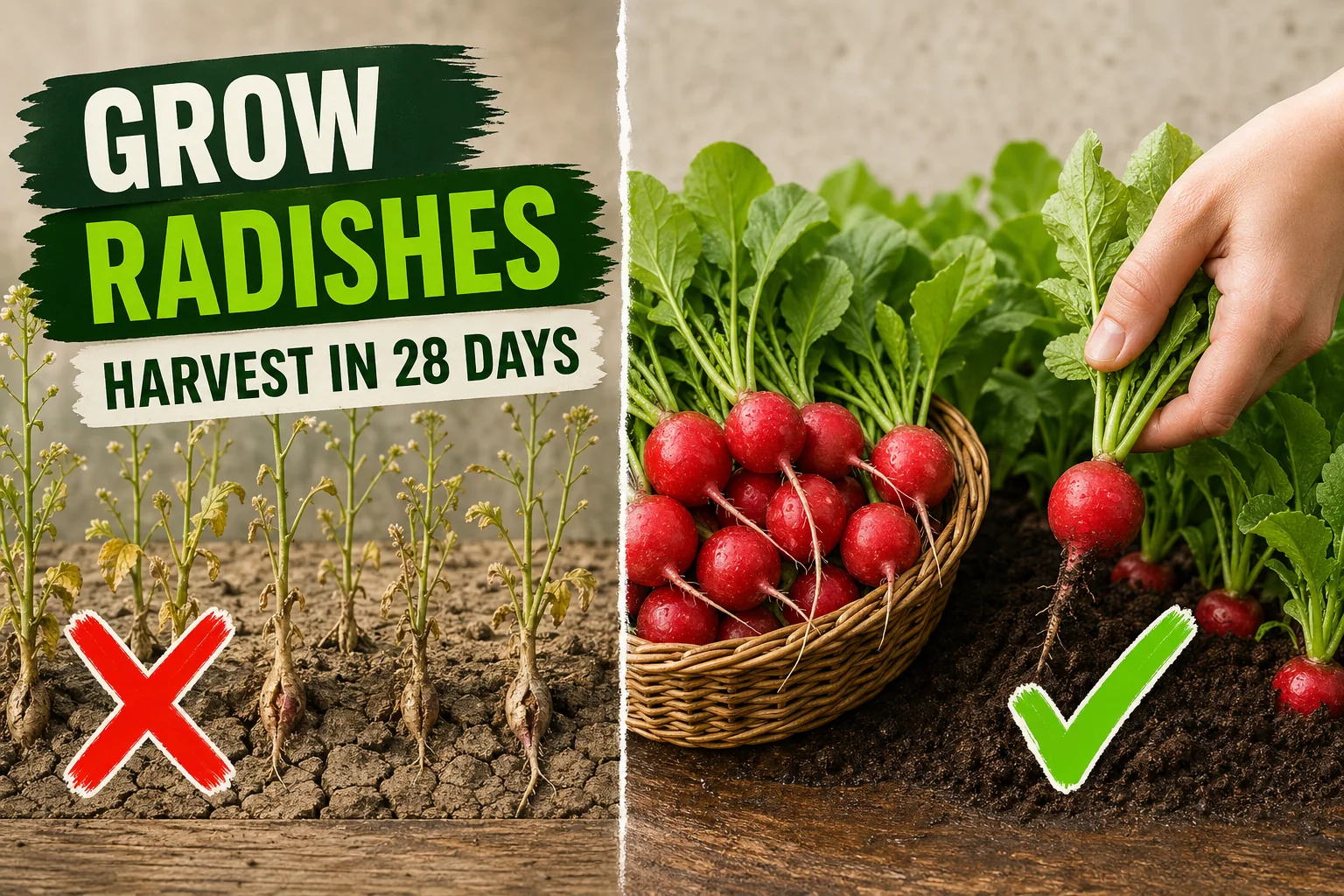
When seedlings have their first set of true leaves (about 7-10 days after sprouting), thin them so each plant has 5 cm (2 in) of space. Snip the extra seedlings at soil level with scissors — don’t pull, or you’ll disturb the roots of the keepers.
The thinned seedlings are edible. Toss them in salads as microgreens.
Skipping thinning is why so many beginners harvest only leaves. Crowded radishes never form a bulb — they fight for light and stay all top.
5. Water consistently
Keep the top 2 cm (0.75 in) of soil never bone-dry. In a garden bed that’s usually every 2-3 days; in a container, often daily once the weather warms.
Inconsistent watering — wet, then dry, then wet — is what makes radishes:
- Crack and split as the root swells unevenly
- Turn woody and hot as they fight drought stress
- Bolt early and send up a flower stalk before the root sizes up
A free plant care app like Tazart can hold the watering schedule for you, adjust it to your local weather, and ping you when it’s time — handy if you’re succession-sowing every two weeks.
6. Skip the fertilizer
Spring radishes mature in 28 days — they finish before they need feeding. Adding nitrogen mid-crop almost guarantees leafy plants with no bulb. The only exception is very poor sandy soil, in which case work in a half-strength balanced liquid fertilizer once at the 2-week mark.
Care after sprouting
Once thinned, radishes need almost no work:
| Task | When |
|---|---|
| Water | When the top 2 cm (0.75 in) of soil is dry — every 2-3 days in beds, often daily in pots |
| Weed | Pull weeds while they’re tiny — radish roots are shallow, easy to disturb |
| Watch the shoulder | At 25 days, check if the top of the root bulges 2-3 cm (1 in) wide above the soil — that’s harvest signal |
When and how to harvest
Radishes don’t tell you on a calendar — they tell you with their shoulder. When the top of the root pushes up above the soil and looks 2-3 cm (1 in) wide and round, gently lift one with your fingers to test.
If it’s firm, round, and crisp inside, harvest the rest within a week. Left in the soil past 35 days, spring radishes:
- Crack and split as they keep growing
- Turn pithy and hollow inside
- Develop a harsh peppery bite
- Eventually bolt — sending up a tall flower stalk and going to seed
Pull radishes by gripping the leaves at the base and pulling straight up. Wash off the soil, snip the tops to 2 cm (0.75 in) above the bulb, and store in a sealed bag in the fridge for up to 2 weeks. The greens are edible too — they cook up like spinach.
Succession sowing: fresh radishes every week
Because radishes mature in 28 days, sow a small new pinch of seeds every 7-10 days through spring and fall. A 60 cm (24 in) row sown weekly gives you a steady harvest instead of 50 radishes ready on the same Tuesday.
In hot climates, pause succession sowing in mid-summer and resume in early fall when nights cool back to 15°C (60°F).
Common mistakes to avoid
- Skipping the thinning. Crowded radishes are all leaves, no root. Thin to 5 cm (2 in) apart at the first true leaf stage.
- Heavy or stony soil. Roots fork, twist, or stay tiny. Loosen to 15 cm (6 in) deep and remove stones, or grow in a raised bed or container.
- Letting the soil dry out. Drought-stressed radishes turn woody and peppery. Check moisture every 2-3 days.
- Adding nitrogen fertilizer. Pushes leafy tops, kills the root. Skip it for spring radishes.
- Sowing in summer heat. Above 24°C (75°F), radishes bolt and go bitter. Stick to spring and fall.
- Leaving them past 35 days. They keep growing — and crack, hollow out, and turn sharp. Harvest at the shoulder signal.
Troubleshooting
| Symptom | Likely cause | Fix |
|---|---|---|
| All leaves, no bulb | Crowding, shade, or too much nitrogen | Thin to 5 cm (2 in); move to 6+ hours of sun; skip fertilizer |
| Roots are forked or twisted | Stones, clumps, or compacted soil | Loosen to 15 cm (6 in) deep, remove stones, or grow in a container with potting mix |
| Cracked or split roots | Inconsistent watering — wet then dry then wet | Water every 2-3 days; mulch with 2 cm (0.75 in) of fine compost to even out moisture |
| Roots taste hot and woody | Drought stress or harvested too late | Water more consistently; harvest at 25-30 days, not 40 |
| Tall flower stalk shoots up | Heat or long-day bolting | Pull and use the bulb now; resow when temperatures drop below 21°C (70°F) |
| Tiny pinholes in leaves | Flea beetles | Cover seedlings with row cover for the first 14 days; the bulbs are unaffected even if leaves are nibbled |
| Yellow leaves with crispy edges | Underwatering or root damage from weeding too close | Water deeply once; weed only when soil is moist |
| Greens look fine, root stays tiny | Too much shade or 4 hours of sun isn’t enough | Move pot to brighter spot; in beds, plan next sowing for a sunnier patch |
Watch: growing radishes from seed
A short visual walkthrough pairs well with the steps above. If you’re a visual learner, search YouTube for “how to grow radishes from seed thinning harvest” for a 5-minute demonstration of sowing, thinning, and pulling — then come back for the timing details in this guide.
Related reading
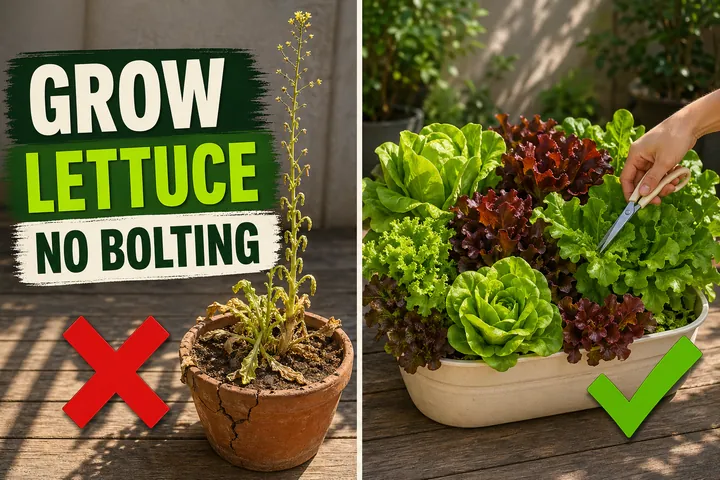
- How to grow lettuce in containers — pair radishes with lettuce in the same wide container for a quick salad bar.
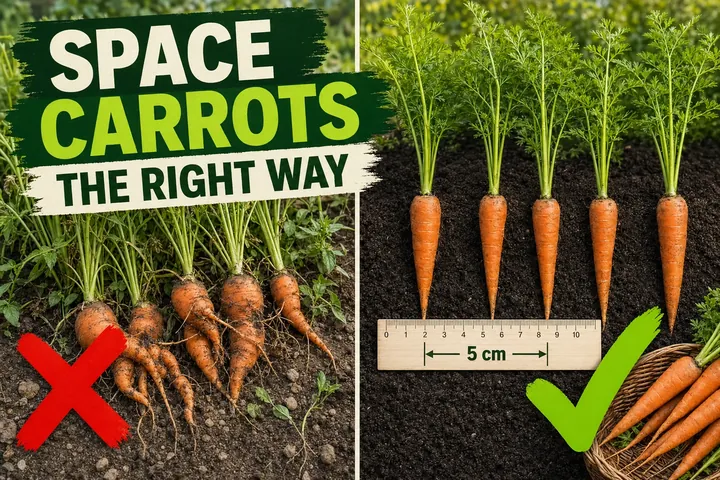
- How far apart to plant carrots — same loose-soil, no-stones rule applies to every root crop.
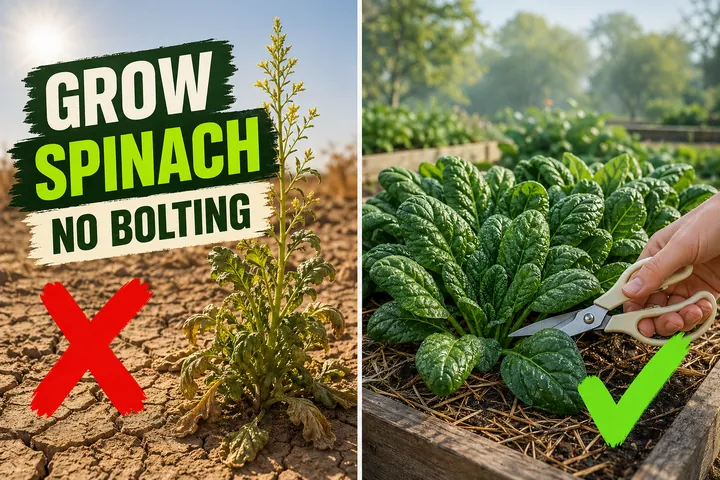
- How to grow spinach — another fast cool-season crop that loves the same spring and fall timing.
- Track watering, succession sowings, and harvest dates with the free Tazart plant care app — it adjusts the schedule to your local weather automatically.
A note on conditions
Every garden is different. Sun angle, soil texture, container size, season, and your local heat all change how fast radishes size up and how often they need water. Use the steps above as a starting point and watch what your seedlings actually do in week two — if the leaves are racing ahead of the bulb, thin harder; if the soil dries out daily, water more. Cool spring and fall weather are easy mode for radishes; high summer is the test, and afternoon shade with consistent moisture is almost always the answer.
Highly recommended
The supplies that make this guide work
Tazart is an Amazon Associate — we earn from qualifying purchases at no extra cost to you. Thank you for helping us keep these guides free.
Frequently asked questions
How long do radishes take to grow?
Most spring radish varieties like Cherry Belle, French Breakfast, and Easter Egg are ready 25-30 days from sowing. Plant the seed today, harvest in about 4 weeks. Winter and daikon types take 50-70 days. If your radishes are still small after 35 days, they need more sun, more water, or thinner spacing.
How deep do you plant radish seeds?
Plant radish seeds 1 cm (0.5 in) deep and 2-3 cm (1 in) apart in rows 15 cm (6 in) apart. Cover lightly with soil, water gently, and you'll see seedlings in 4-7 days. Deeper than 2 cm (0.75 in) slows germination and produces weak crooked roots.
Why are my radishes all leaves and no bulb?
Three causes: (1) Too much shade — radishes need 6+ hours of sun to push energy down into the root. (2) Too crowded — unthinned seedlings compete and never bulb up. (3) Too much nitrogen — fresh manure or high-nitrogen fertilizer pushes leafy growth at the expense of the root. Thin to 5 cm (2 in) apart, move to full sun, and skip the fertilizer.
How often should I water radishes?
Keep the soil consistently moist — aim for the top 2 cm (0.75 in) never drying out completely. In a garden bed that means watering every 2-3 days; in a container daily in warm weather. Inconsistent watering is what makes radishes turn woody, hot, and split.
Can you grow radishes in containers?
Yes — radishes are one of the best beginner container crops. Use a pot at least 15 cm (6 in) deep and as wide as you have space. Sow seeds 2-3 cm (1 in) apart, thin to 5 cm (2 in) once seedlings have two true leaves, and you'll harvest in 28 days from a single windowbox.
Do radishes need full sun?
They prefer 6+ hours of direct sun for full round roots. They tolerate as little as 4 hours of bright light, but the roots stay smaller and slower. In hot summer climates, afternoon shade actually helps — heat above 24°C (75°F) makes radishes bolt and turn bitter.
When is the best time to plant radishes?
Spring (as soon as soil can be worked, when daytime temperatures stay around 10-21°C / 50-70°F) and fall (6-8 weeks before your first frost) are ideal. Skip mid-summer in hot climates — radishes bolt and the roots go woody above 24°C (75°F). Cold-tolerant: they germinate as low as 5°C (40°F).
How do you know when a radish is ready to harvest?
Check the shoulder. When the top of the radish bulges to about 2-3 cm (1 in) wide above the soil line, gently pull one to test. If it's round, firm, and crisp, harvest the rest within a week. Left in the ground past 35 days, radishes turn woody, split, and develop a sharp peppery bite.