Edible
How to Grow Basil Indoors (Year-Round Pesto Supply)
Grow sweet basil indoors all year for a constant pesto supply. Exact light, watering, soil, pinching, and harvest steps that keep one plant going for 6+ months.
On this page
Watch the visual walkthrough
Grow Perfect Basil indoors!
A short visual walkthrough that pairs with the steps above.
Sweet basil (Ocimum basilicum) is the plant most home cooks would happily grow forever — and the plant most home cooks accidentally kill within a month of bringing the supermarket pot home. Indoor basil dies for two boring reasons: not enough light, and being allowed to flower. Fix both and a single plant will give you fresh leaves for pesto, caprese, and pasta for 6+ months straight.
This guide is the exact routine — light, soil, pot, watering, pinching, and harvest — that keeps Genovese basil bushy and productive indoors year-round.
Quick answer
Sow Genovese basil seeds in a 15 cm (6 in) pot of light peat-free potting mix, place it under a full-spectrum LED grow light on a 12-hour timer (or in the brightest south-facing window you have), water when the top 2–3 cm (0.75–1 in) of soil is dry, and pinch the top growing tips every 2–3 weeks. Cut off any flower buds the moment they appear. Keep the room at 18–24°C (65–75°F) and one plant will produce leaves for 6–9 months.
Why indoor basil is harder than people think
Basil is a warm-loving Mediterranean annual built for full sun and long summer days. The supermarket plant you bring home was started in a heated greenhouse with industrial-strength lights, then crammed into a pot with 8–12 seedlings sharing the same root ball. The plant looks lush at the store and starts collapsing within days of being placed on a kitchen counter — not because you did anything wrong, but because the conditions are completely different.
To keep basil alive indoors you need to reproduce what the greenhouse gave it: lots of light, warmth, room to root, and a constant pinch routine to keep the plant in leaf-production mode.
What you’ll need
- Genovese (or sweet) basil seeds, or one healthy supermarket plant
- A 15 cm (6 in) pot with drainage holes — ceramic or plastic both work
- Light peat-free indoor potting mix
- A full-spectrum LED grow light bar on a 12-hour timer (strongly recommended)
- A south- or west-facing windowsill as a backup or supplement
- Scissors or clean fingertips for pinching
- A small watering can or cup
- A balanced liquid fertilizer (used at half-strength, every 2–3 weeks)
Step-by-step: starting basil indoors
1. Choose seeds over a supermarket plant
Supermarket basil is grown to look full at point of sale, not to last. Twelve seedlings in one tiny pot will compete and starve each other within weeks. A packet of Genovese basil seeds is cheap, gives you dozens of plants, and lets you grow one plant per pot — which is the only setup that lasts indoors.
If you do start with a supermarket pot, separate it gently into 2–4 clumps and replant each clump in its own 15 cm (6 in) pot. You’ll lose a few stems to transplant shock; the survivors will get bigger and healthier than they ever would in the original pot.
2. Fill a pot with light potting mix
Fill a 15 cm (6 in) pot with peat-free indoor potting mix to about 2 cm (0.75 in) below the rim. Tap the pot once to settle the soil — don’t pack it down, basil roots need air.
Skip garden soil and skip heavy seed-starting mixes that hold water like a sponge. Indoor basil rots in soggy soil faster than almost any other herb.
3. Sow the seeds shallow
Scatter 6–8 seeds across the surface, then cover with about 5 mm (¼ in) of soil. Mist or water gently from above so the seeds aren’t washed to one side. Cover the pot with a clear plastic dome or a piece of plastic wrap until you see green shoots — usually 5–10 days at 20°C (68°F).
Once seedlings have their first true leaves (the second set, after the round seed leaves), thin to the strongest 1–2 plants per pot. Crowded basil never bushes out properly.
4. Get the light right (this is the whole game)
Basil needs at least 6 hours of direct sun, but it does best with 10–12 hours of strong light per day. A south-facing windowsill in summer can do the job. From October to March in most northern homes, natural light is not enough — period.
The reliable fix is a full-spectrum LED grow light bar on a plug-in timer:
- Position it 15–25 cm (6–10 in) above the plant
- Run it on a 12-hour cycle (e.g. 7 a.m. to 7 p.m.)
- Raise it as the plant grows so the leaves stay 15–25 cm (6–10 in) below the bar
Within a week of moving leggy basil under a grow light, you’ll see new growth come in tight, dark green, and densely spaced.
5. Water by feel, not on a schedule
Stick a finger 2–3 cm (0.75–1 in) into the soil. If it feels dry, water until it drips out the drainage holes. If it feels cool and damp, wait. Indoors, that usually works out to every 3–5 days — more often under a grow light or in dry winter heating, less often in cool rooms.
Two warning signs to watch for:
- Wilting in the afternoon, perking up after watering = thirsty, water more often
- Lower leaves yellowing while soil stays damp = overwatering, let it dry out longer
Our companion guide on the right watering frequency for basil indoors and out has a detailed seasonal breakdown if you want exact day-count ranges for different pot sizes.
6. Pinch from week three onward
Once the seedling has 3–4 sets of true leaves, pinch off the top growing tip just above a leaf node with your fingernails or scissors. The plant will send two new branches from that node within 7–10 days. Repeat every 2–3 weeks on every shoot.
This is the single difference between a stick of basil with a few leaves on top and a bushy 25–30 cm (10–12 in) wide plant that gives you enough leaves for pesto every fortnight.
7. Kill flower buds on sight
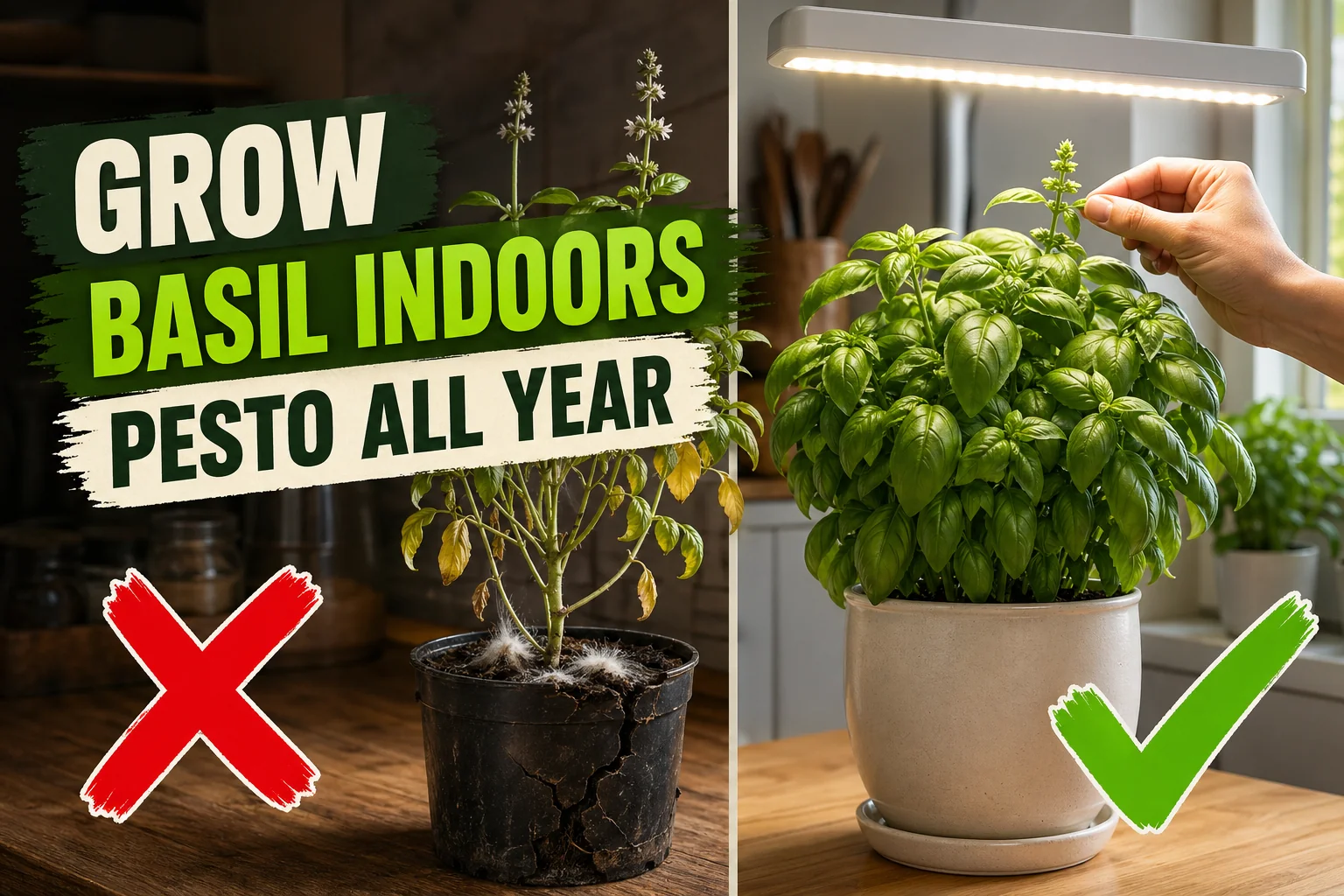
Once basil flowers (called bolting), the plant redirects everything into making seeds. Leaves turn bitter, growth slows, and the plant starts winding down. Pinch off any flower spike the moment you see one forming — including the small leaves directly below it. Done weekly, this can extend a basil plant’s productive life by months.
Care after planting
| Task | When |
|---|---|
| Water | When the top 2–3 cm (0.75–1 in) of soil is dry — usually every 3–5 days |
| Light | 10–12 hours of strong light daily (LED grow light or south window) |
| Pinch tips | Every 2–3 weeks on every shoot, just above a leaf node |
| Remove flowers | As soon as you spot a bud — never let it bloom |
| Fertilize | Half-strength balanced liquid fertilizer every 2–3 weeks once the plant is rooted in |
| Rotate pot | Quarter turn weekly so growth stays even |
Cilantro is another fast-growing direct-sow herb that shares the same bright-windowsill setup — the cilantro seed planting guide covers depth, pot size, and succession sowing so you can stagger both herbs on the same shelf.
A free plant care app like Tazart can hold the watering, pinching, and fertilizing schedule for you, adjust it for your local weather, and remind you on Apple Watch — useful when you’re growing more than one or two pots.
When and how to harvest
Basil rewards regular harvest — the more you cut, the more it grows.
- Light harvest (any time): snip 2–3 leaves from the top of a shoot whenever you cook. Always take from the top of a stem, never the bottom.
- Pesto harvest (every 2–3 weeks on a mature plant): cut whole stems back to just above the second set of leaves from the bottom. The plant will regrow two new shoots from that point. One mature plant under good light yields about a cup of leaves per harvest.
- End-of-life harvest: when a plant finally slows after 6–9 months indoors, cut all the leaves at once, blanch them, and freeze in olive oil cubes for winter pesto.
Never cut into the bare woody base of an old basil stem — basil rarely re-sprouts from old wood, unlike rosemary or thyme.
Common mistakes to avoid
- Relying on a windowsill in winter. From October to March, supplement with a grow light or accept that the plant will get leggy and die back.
- Letting it flower. A flowering basil is a dying basil. Pinch the buds.
- Watering on a fixed schedule. Indoor humidity, pot size, and grow-light heat all change how fast soil dries. Use the finger test.
- Leaving 8 seedlings in the supermarket pot. They starve each other within weeks. Separate or restart.
- Skipping the pinch. Without regular tip pinching, basil grows tall and sparse, then flops. Pinch from week three onwards.
- Cold drafts. Basil sulks below 15°C (59°F). Keep it away from cold windows in winter.
Troubleshooting
| Symptom | Likely cause | Fix |
|---|---|---|
| Tall, leggy stem with leaves only on top | Not enough light | Move under a full-spectrum LED grow light 15–25 cm (6–10 in) above the plant on a 12-hour timer; pinch the top to force branching |
| Lower leaves yellowing | Overwatering or root rot | Let the top 3–4 cm (1–1.5 in) of soil dry; check for mushy roots and repot in fresh peat-free mix if found |
| Crispy leaf edges, plant wilting | Underwatering or hot dry air | Water deeply once, then resume the “top 2–3 cm (0.75–1 in) dry” rule; move away from radiators |
| White flower spikes appearing | Bolting (early flowering) | Pinch the flower spikes off immediately, including the small leaves below them |
| Tiny black flying insects | Fungus gnats from staying too wet | Let the soil dry out fully; top with 1 cm (0.5 in) of dry sand; add yellow sticky traps |
| Pale washed-out leaves | Low light or low feed | Add a grow light; feed half-strength balanced liquid fertilizer every 2–3 weeks |
| White fuzzy growth on stems | Powdery mildew from poor airflow | Improve airflow with a small fan; remove affected leaves; water at the soil only, never on the leaves |
Watch: growing basil indoors
A short visual walkthrough pairs well with the steps above. If you’re a visual learner, search YouTube for How to Grow Basil Indoors Year-Round and watch a quick tutorial, then come back here to follow the timing and pinching schedule in this guide.
Related reading
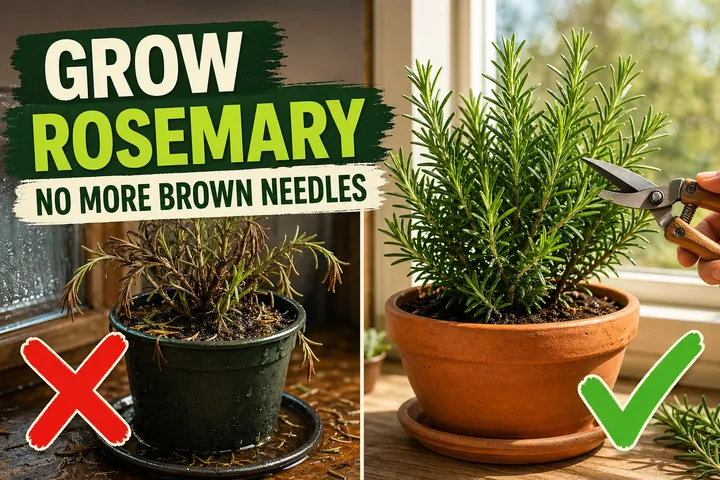
- How to take care of a rosemary plant — the other big Mediterranean kitchen herb, but its watering and light needs are very different from basil’s.
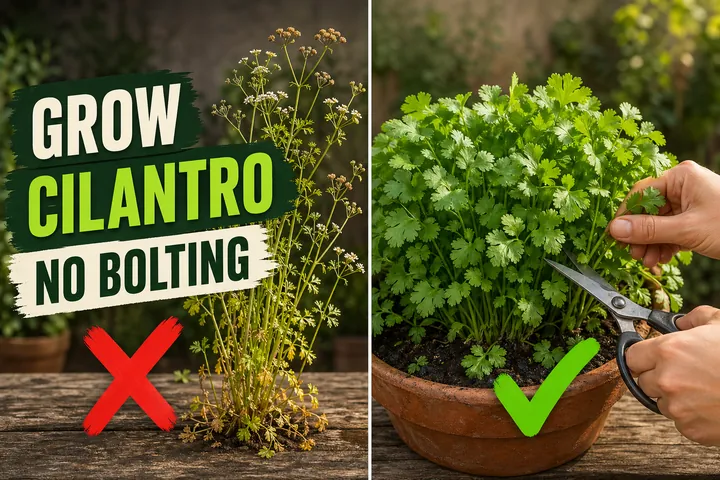
- Cilantro plant care — the kitchen herb most likely to bolt in your house; the bolting fixes overlap with basil.
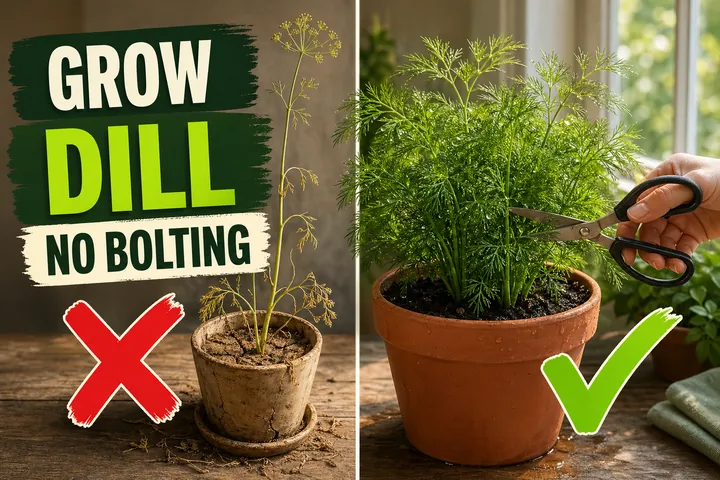
- Dill plant care — pairs perfectly with basil on a sunny indoor herb shelf, with similar light needs.
- How to grow scallions on the windowsill — round out your kitchen herb shelf with endless free green onions in a glass of water.
- Set up watering and pinching reminders for every herb on your kitchen shelf with the free Tazart plant care app.
A note on conditions
Every home is different. Light, pot size, soil mix, season, indoor humidity, and your local weather all change how fast basil grows and how often it needs water. Use the timings above as a starting point and adjust based on what your plant actually does in week two — that’s how every good basil grower learns.
Highly recommended
The supplies that make this guide work
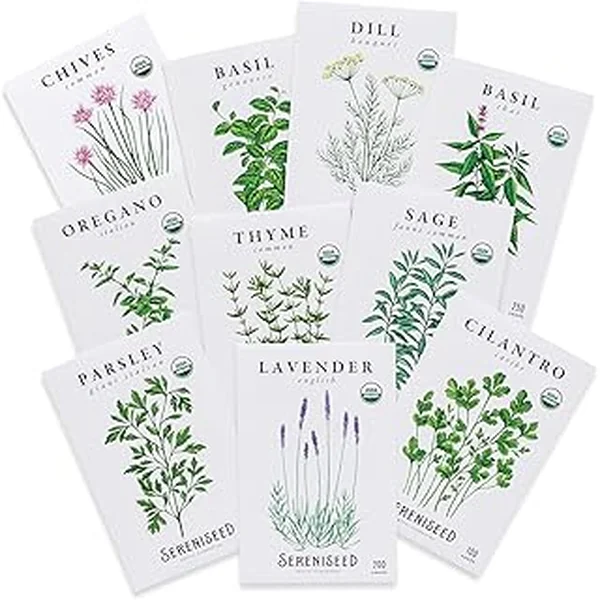
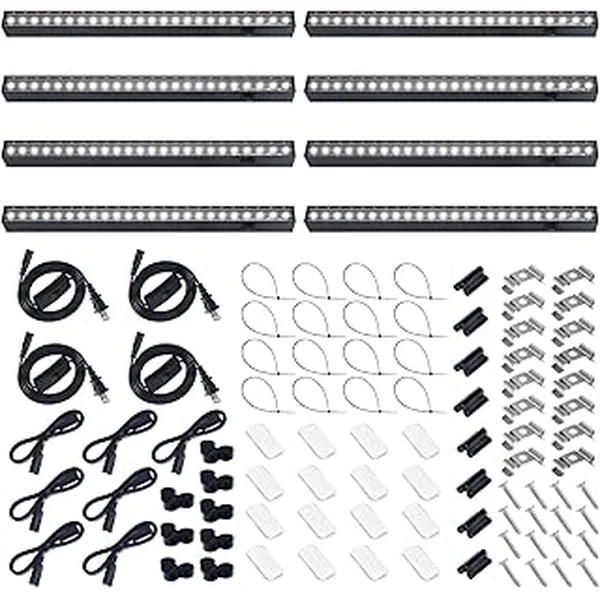
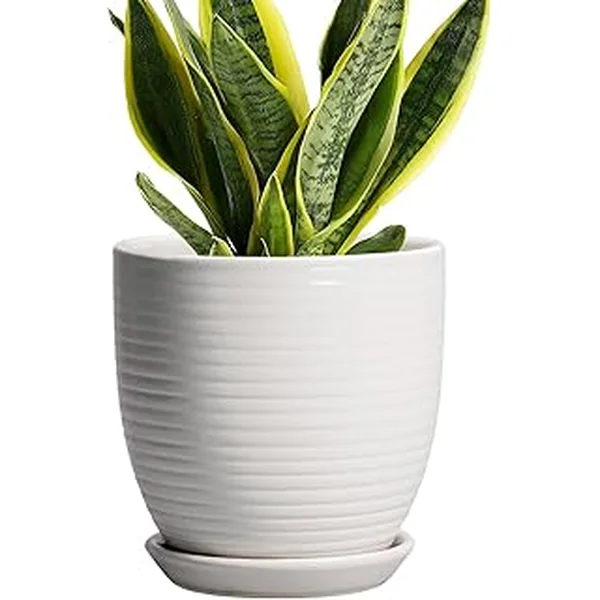
Tazart is an Amazon Associate — we earn from qualifying purchases at no extra cost to you. Thank you for helping us keep these guides free.
Frequently asked questions
How much light does indoor basil need?
Basil wants 6 hours of direct sun minimum, but 10–12 hours of strong light is what keeps it bushy and productive. A south-facing windowsill is the bare minimum and usually still leaves indoor basil leggy. The reliable fix is a full-spectrum LED grow light bar 15–25 cm (6–10 in) above the plant on a 12-hour timer. Under good light, basil leaves grow thick, dark green, and densely spaced; under low light they stretch, pale, and flop.
How often should I water basil indoors?
Water when the top 2–3 cm (0.75–1 in) of soil feels dry — usually every 3–5 days indoors, more often under a grow light, less in winter. Pour slowly until water drips from the drainage holes, then let it drain fully. Basil hates two extremes: bone-dry soil (leaves wilt and crisp) and waterlogged soil (roots rot and lower leaves yellow). Stick a finger in before every watering instead of using a fixed schedule.
Why is my indoor basil leggy?
Legginess almost always means not enough light. The plant stretches its stem reaching for stronger light, which leaves big gaps between leaves and a thin floppy plant. Move it to the brightest window you have or add a full-spectrum LED grow light. Then pinch off the top set of leaves above a leaf node to force the plant to branch out from the side stems — within 7–10 days you'll see two new shoots where you pinched.
Can basil grow indoors all year?
Yes, but only with supplemental light from roughly October to March in most northern homes. Basil is a warm-loving annual that wants 18–24°C (65–75°F) and 12+ hours of strong light. Natural winter daylight through a window is too weak and too short — without a grow light, indoor basil slows down, gets leggy, then dies back. With a basic LED bar on a 12-hour timer, the same plant can keep producing leaves for 6–9 months.
Should I let my basil flower?
No — pinch off flower buds as soon as you see them. Once basil flowers (called bolting), the plant redirects energy from leaves to seeds, the existing leaves turn bitter, and new leaf production slows dramatically. Pinching the flower buds as soon as they appear keeps the plant in leaf-production mode and can extend a single basil plant's productive life by months.
How do I make indoor basil bushy?
Two things: enough light, and frequent pinching. Once the plant has 3–4 sets of leaves, pinch off the top growing tip just above a leaf node. The plant will send out two new branches from that node. Repeat every 2–3 weeks on every shoot. Combined with 10–12 hours of strong light, this turns one small basil seedling into a dense bushy plant 25–30 cm (10–12 in) wide that yields enough leaves for pesto every couple of weeks.