Diagnosis
How to Get Rid of Spider Mites on Plants (Fast Fix)
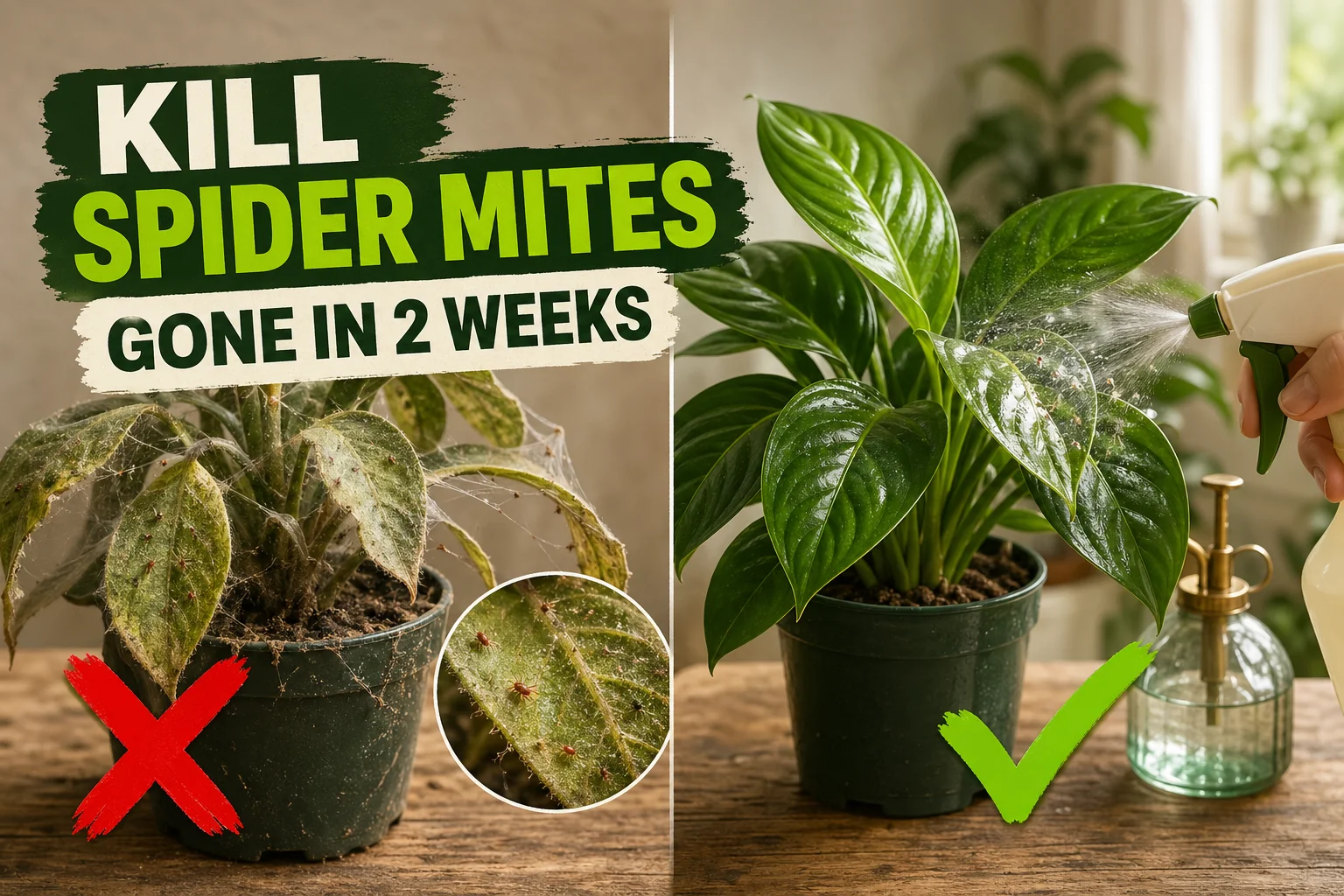
Spider mites kill plants in days. Here's exactly how to spot them, kill them in 2 weeks with neem and water, and stop them from coming back.
On this page
- Quick answer
- What spider mites are (and why they’re so destructive)
- How to confirm you have spider mites
- What you’ll need
- Step-by-step: how to get rid of spider mites in 2 weeks
- Common mistakes to avoid
- Troubleshooting
- How to prevent spider mites coming back
- When to call it (or get expert help)
- Watch: spider mite treatment walkthrough
- Related reading
- A note on conditions
Watch the visual walkthrough
Spider Mites - 4 Ways To Naturally Get Rid Of Them
A short visual walkthrough that pairs with the steps above.
Spider mites are one of the fastest-moving pests in the houseplant world — a colony can defoliate a plant in under two weeks if you ignore them. The good news: they die just as fast once you know the routine. A water blast, a humid environment, and a weekly neem oil spray will clear most infestations in about 14 days.
This guide covers exactly how to confirm them, kill them, and stop them from coming back.
Quick answer
Isolate the plant, blast every leaf with lukewarm water (focus on the undersides), spray with neem oil or insecticidal soap, and raise humidity above 50%. Repeat the spray every 5 to 7 days for 2 to 3 weeks. Most infestations clear in about 14 days.
What spider mites are (and why they’re so destructive)
Spider mites belong to the Tetranychidae family — they’re not insects, they’re tiny arachnids related to ticks and spiders. The most common houseplant pest is the two-spotted spider mite (Tetranychus urticae), about 0.5 mm (1/64 in) long.
They feed by piercing leaf cells and sucking out the contents, which leaves behind the classic pale stippling pattern you see on infested leaves. Each adult lays around 100 eggs in her short 2-to-4-week life, and eggs hatch in just 3 days at room temperature. That’s how a few mites turn into a full infestation in a single week.
They love warm, dry air — the exact conditions inside most heated homes — which is why they hit indoor plants harder than outdoor ones.
How to confirm you have spider mites
Before you spray anything, make sure mites are actually the problem. Three signs together = confirmed.
Sign 1: Stippled leaves
Hold a leaf up to the light. If you see tiny pale or yellow dots scattered all over the leaf surface, like someone flicked a paintbrush at it, that’s mite feeding damage. Healthy leaves are uniformly coloured.
Sign 2: Fine webbing
Spider mites earn their name by spinning silky webs in leaf joints, along stems, and across the undersides of leaves. The webbing is much finer than spider silk — almost dust-like. It’s most obvious in heavy infestations.
Sign 3: Moving specks on the underside
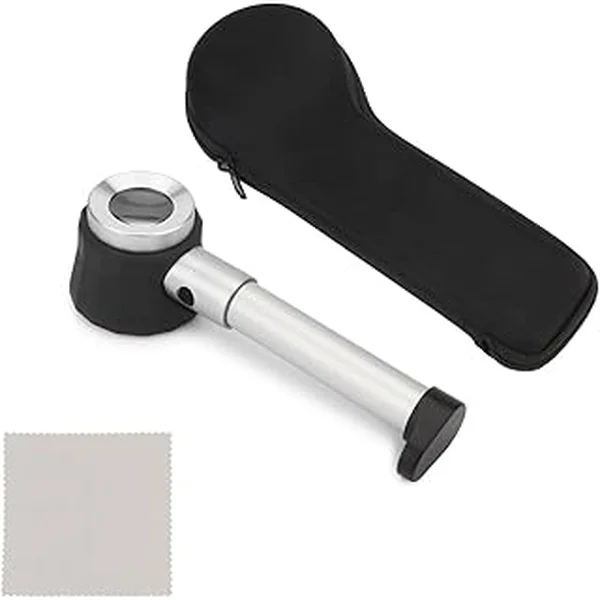
Flip a leaf over and look closely (use a 10x loupe if you have one). You’ll see tiny moving dots — red, yellow-green, or brown. Wipe a leaf with a white tissue and check the smear: red or rusty streaks confirm spider mites.
If you only see stippling but no webbing or moving specks, the cause might be thrips, sun scorch, or a nutrient deficiency — not mites.
What you’ll need
- A bathtub, shower, or sink with a sprayer
- Lukewarm water (around 20°C / 68°F)
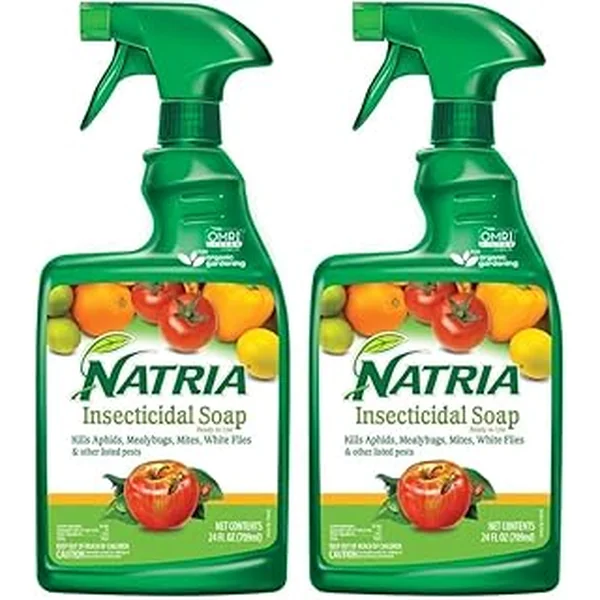
- Cold-pressed neem oil or ready-to-use insecticidal soap
- A clean spray bottle (if mixing neem)
- A microfibre cloth or cotton pads
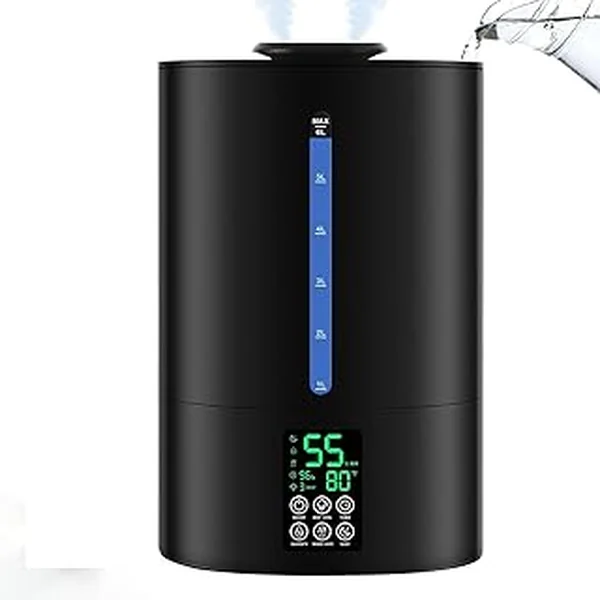
- A humidifier or daily misting bottle
- Optional: 10x magnifying loupe to confirm the ID
That’s it. No expensive miticides needed for the first round.
Step-by-step: how to get rid of spider mites in 2 weeks
1. Isolate the infested plant immediately
Move it at least 1 m (3 ft) away from every other plant. Mites crawl across touching leaves and float on air currents — one infested plant can seed an entire shelf in a few days. A separate room is even better.
Inspect every nearby plant for stippling and webbing before you assume the infestation is contained.
2. Blast the plant with water
Take the plant to the shower or sink. Use lukewarm water at low-to-medium pressure and soak every leaf surface, paying extra attention to the undersides where mites and eggs cluster. Aim from below upward.
A single thorough rinse physically removes 70–90% of the active mites. It also breaks up the webbing, which is what protects the mites from sprays.
Let the plant drip-dry for 30 minutes before the next step.
3. Spray with neem oil or insecticidal soap
Mix neem oil per the bottle’s instructions — typically 5 ml (1 tsp) of neem and 2–3 drops of mild dish soap per 1 L (34 fl oz) of water. Soap helps the oil emulsify so it actually wets the mite.
Spray every leaf top and underside until they drip. Don’t forget stems and leaf joints — that’s where webbing hides.
Important: spray in the evening or out of direct sunlight. Neem oil on a leaf in direct sun can cause leaf burn.
If you prefer ready-to-use insecticidal soap, follow the label — most don’t need dilution.
4. Raise humidity above 50%
Spider mites die in humid air. Move the plant into your most humid room (bathroom, kitchen) or run a humidifier nearby aimed at the foliage. Mist the leaves once a day with plain water for the first week.
Don’t go overboard — humidity above 70% encourages fungal problems on some plants. The 50–60% range is the sweet spot.
5. Repeat every 5 to 7 days for 2 to 3 weeks
This is where most people fail. Mite eggs hatch on a 3-day cycle and most sprays don’t kill eggs reliably, so you need to keep spraying through several hatches.
A simple schedule:
| Day | Action |
|---|---|
| Day 0 | Isolate, water blast, neem spray |
| Day 3 | Mist with plain water, check for new stippling |
| Day 7 | Water blast again, neem spray |
| Day 14 | Final water blast, neem spray, then check carefully |
| Day 21 | Spot-check with loupe; spray again if any signs |
Stop only when you see no new stippling, no webbing, and no moving specks for 7 straight days.
A free plant care app like Tazart can hold the spray schedule for you and remind you on the right day — which matters more than the spray itself, because skipping a week lets the colony bounce back.
Common mistakes to avoid
- Spraying once and assuming you’re done. One spray kills adults, not eggs. You’ll be reinfested in a week.
- Forgetting the undersides of leaves. That’s where 80% of the mites and 100% of the eggs live. Top-of-leaf-only spraying barely dents the population.
- Spraying neem in direct sun. Causes leaf burn on most houseplants. Spray in the evening.
- Skipping isolation. Mites move plant-to-plant in days. Treating one plant while it sits next to others = constant reinfection.
- Using rubbing alcohol on tender plants. It kills mites but burns leaves on calathea, fittonia, and most ferns. Stick to neem or soap.
- Over-humidifying. Above 70% humidity invites powdery mildew and root rot. Keep it around 50–60%.
Troubleshooting
| Symptom | Likely cause | Fix |
|---|---|---|
| Stippling keeps appearing after each spray | Skipping the egg-hatch window | Spray every 5 days instead of 7 for 3 cycles |
| Leaves yellowing fast despite treatment | Damage already done; mites are gone | Trim worst leaves, fertilize lightly after 2 weeks of recovery |
| Webbing reappears in same spot | Missed undersides on that section | Hand-wipe that area with a damp cloth before next spray |
| Plant looks worse after neem spray | Neem applied in direct sun, or too concentrated | Halve the dilution, spray only in evening, rinse leaves the next morning |
| Mites spread to a second plant | Plants too close during treatment | Move infested plant to a different room, treat both for full cycle |
| New mites every few weeks | Bringing in infested new plants | Quarantine every new plant for 2 weeks before adding to the collection |
| Tiny webs but no stippling | Not spider mites — could be a real spider | Confirm with 10x loupe before spraying |
How to prevent spider mites coming back
- Quarantine new plants for 2 weeks. Most infestations come in on a new purchase.
- Keep humidity above 40% in winter. Dry heated air is mite paradise.
- Wipe leaves monthly with a damp cloth. Removes dust and any early mites before they multiply.
- Inspect undersides every 2 weeks. Catching one mite is easy. Catching 10,000 takes a month of weekly sprays.
- Don’t fertilize a stressed plant. High-nitrogen leaves are softer and more attractive to mites — let a struggling plant recover before feeding.
When to call it (or get expert help)
If a plant has lost more than 60% of its leaves to mite damage and the new growth is also covered in stippling within 5 days, the plant is usually too stressed to recover. Take a healthy cutting if possible, then compost the rest.
For valuable or large plants, a professional plant health care service can apply systemic miticides that aren’t sold to home users — sometimes worth it for a mature fiddle leaf fig or a rare aroid.
Watch: spider mite treatment walkthrough
A short visual walkthrough pairs well with the steps above. Search YouTube for “how to kill spider mites on houseplants” — look for a video from a credentialed plant channel that shows the underside-of-leaf spraying technique, then come back to follow the 14-day schedule in this guide.
Related reading
- How to get rid of fungus gnats on houseplants — the other tiny pest that loves houseplants. Different bug, different fix.
- Pothos plant care — pothos are mite magnets in dry winter air. This care guide covers humidity and leaf-wiping habits that prevent infestations.
- Plant health care services explained — when DIY isn’t enough, here’s what a pro does differently.
A note on conditions
Every home is different. Light, plant species, humidity, season, and whether nearby plants are also infested all change how fast spider mites spread and how long treatment takes. The 14-day cycle in this guide is the average — sensitive plants like calathea may need a gentler dilution, and heavy infestations on woody plants can take 4 weeks. Check the underside of a leaf every few days during treatment and adjust based on what you actually see.
Highly recommended
The supplies that make this guide work

Tazart is an Amazon Associate — we earn from qualifying purchases at no extra cost to you. Thank you for helping us keep these guides free.
Frequently asked questions
What kills spider mites instantly?
A strong stream of plain water blasted onto the undersides of leaves physically dislodges most adults and eggs in seconds. It's not a long-term cure on its own, but it's the fastest way to crash an active infestation. Follow it up within 24 hours with a neem oil or insecticidal soap spray to kill the survivors.
How do I get rid of spider mites on my houseplants?
Isolate the plant, rinse every leaf surface (especially the undersides) with lukewarm water, then spray with neem oil or insecticidal soap every 5 to 7 days for 2 to 3 weeks. Raise humidity to 50% or higher with a humidifier or daily misting. Spider mites thrive in dry air, so wet leaves and humid rooms break their breeding cycle.
What does a spider mite infestation look like?
Look for tiny pale or yellow speckles (stippling) all over the leaves, fine silky webbing in leaf joints and along stems, and dust-like specks on the undersides of leaves that move when you watch closely. The mites themselves are 0.5 mm (1/64 in) — barely visible without a magnifier — and can be red, yellow, or green-brown.
Does neem oil really kill spider mites?
Yes. Cold-pressed neem oil disrupts the mite's life cycle and suffocates eggs and adults on contact. It's not instant — give it 5 to 7 days to take effect — and you have to reapply every week for at least 2 to 3 weeks because eggs hatch on a 3-day cycle. Always spray in the evening or out of direct sun to avoid leaf burn.
How long does it take to get rid of spider mites?
About 2 weeks of consistent treatment for a mild to moderate infestation. Heavy infestations or sensitive plants (calathea, fiddle leaf fig) can take 3 to 4 weeks. The key is repeating the spray every 5 to 7 days — skipping a week lets the next generation of eggs hatch and restart the cycle.
Will spider mites go away on their own?
Almost never indoors. Houseplants don't have the natural predators (ladybugs, predatory mites) that keep outdoor populations in check, and the warm dry air inside most homes is perfect for mite reproduction. Without intervention, a small colony can wipe out a houseplant in 2 to 4 weeks.