Diagnosis
How to Get Rid of Aphids on Plants (Without Toxic Sprays)
Aphids ruin new growth in days. Here's exactly how to spot them, kill them with water, soap, neem, and ladybugs in 2 weeks — no toxic chemicals.
On this page
- Quick answer
- What aphids are (and why they multiply so fast)
- How to confirm you have aphids
- What you’ll need
- Step-by-step: how to get rid of aphids in 2 weeks (no toxic sprays)
- Common mistakes to avoid
- Troubleshooting
- How to prevent aphids coming back
- When to call it (or get expert help)
- Watch: aphid treatment walkthrough
- Related reading
- A note on conditions
Watch the visual walkthrough
Foolproof Aphid Control and Prevention
A short visual walkthrough that pairs with the steps above.
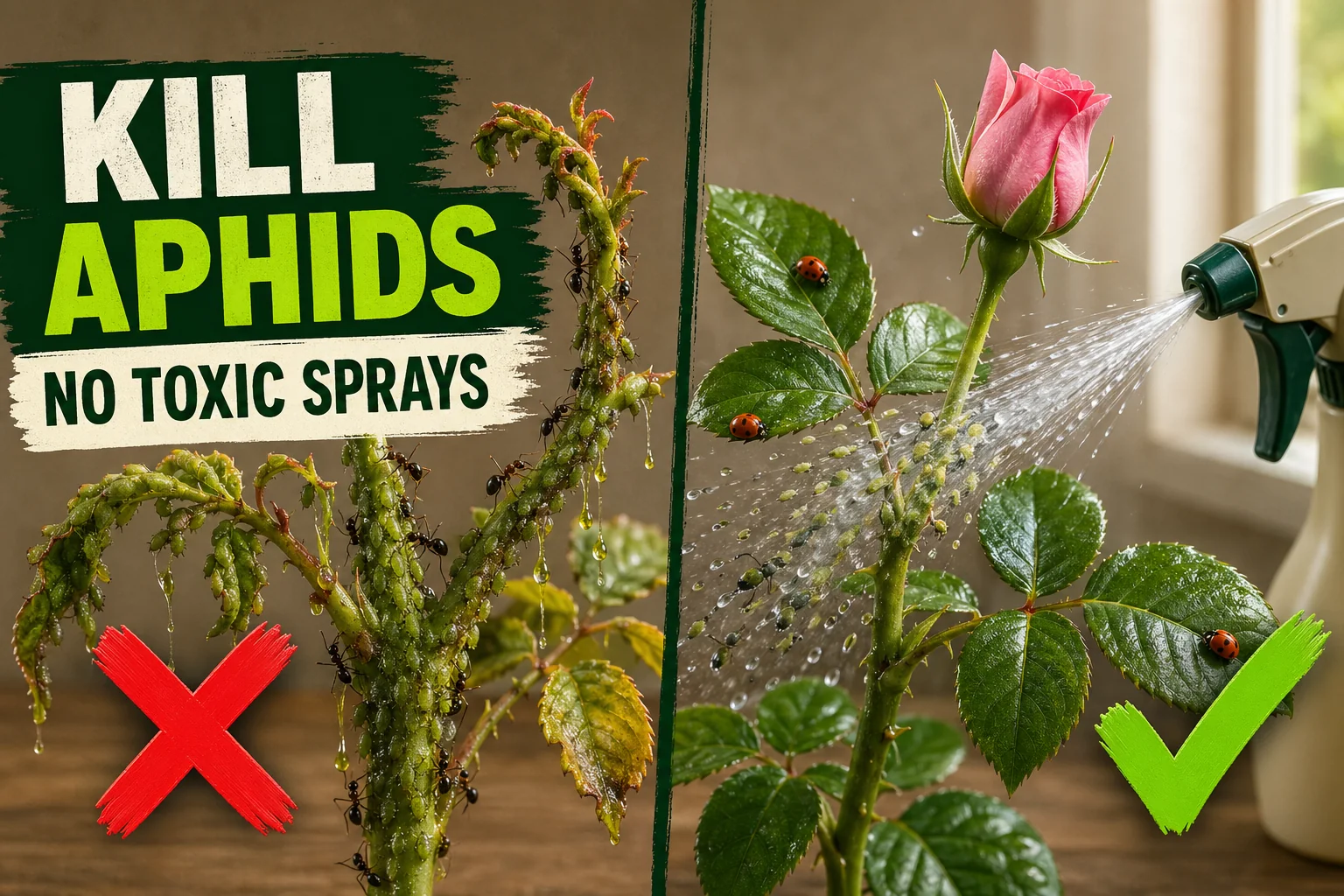
Aphids are the fastest-multiplying soft pest in the garden — a single colony on a rosebud can curl every new leaf in under a week. The good news: they’re also the easiest pest to kill without reaching for a toxic chemical. A water blast, a soap or neem spray, and a few hungry ladybugs will clear most infestations in about 14 days.
This guide covers exactly how to confirm aphids, kill them naturally, and stop them from coming back.
Quick answer
Blast every infested stem with lukewarm water (focus on undersides and new growth), spray with diluted dish soap or insecticidal soap, and bring in ladybugs if you can. Repeat the spray every 5 to 7 days for 2 to 3 weeks. Most colonies clear in about 14 days — no toxic chemicals required.
What aphids are (and why they multiply so fast)
Aphids belong to the Aphidoidea superfamily — soft-bodied sap-suckers about 1 to 3 mm (1/16 to 1/8 in) long that come in green, black, pink, yellow, or grey depending on the species. They pierce tender stems and leaves with a needle-like mouthpart and drink the sugary plant sap.
Two reasons they explode overnight:
- Live birth, no males needed. In warm weather, females reproduce asexually and give birth to live young — about 80 babies per female in a single week.
- Honeydew attracts ants. Ants farm aphids the way humans farm cows: they protect the colony from ladybugs and even carry aphids to fresh shoots. If you see ants marching up a stem, aphids are usually waiting at the top.
They love soft new growth — rosebuds, tomato tips, pepper flowers, lettuce hearts — which is why damage shows up there first.
How to confirm you have aphids
Three signs together = confirmed.
Sign 1: Clusters on stems and leaf undersides
Tip a stem of new growth toward the light. If you see dozens of tiny pear-shaped insects packed tightly together, that’s a colony. Aphids cluster — unlike thrips or spider mites, which spread evenly across the leaf surface.
Sign 2: Sticky shiny leaves (honeydew)
Aphids drink so much sap they excrete the excess as honeydew — a sticky clear liquid that drips onto the leaves below. Run a finger across an older leaf; if it feels tacky and shiny, look up the stem for the source.
If the honeydew has been there a while, you may also see black sooty mould growing on it. The mould is harmless but blocks light, weakening the plant further.
Sign 3: Ants on the plant
A steady line of ants going up and down a stem is a near-certain sign of an aphid colony at the top. Ants protect aphids from natural predators — break that partnership and the ladybugs and lacewings can do their job.
If you see curled or twisted new growth but no insects, no ants, and no honeydew, the cause might be thrips, broad mites, or a herbicide drift — not aphids.
What you’ll need
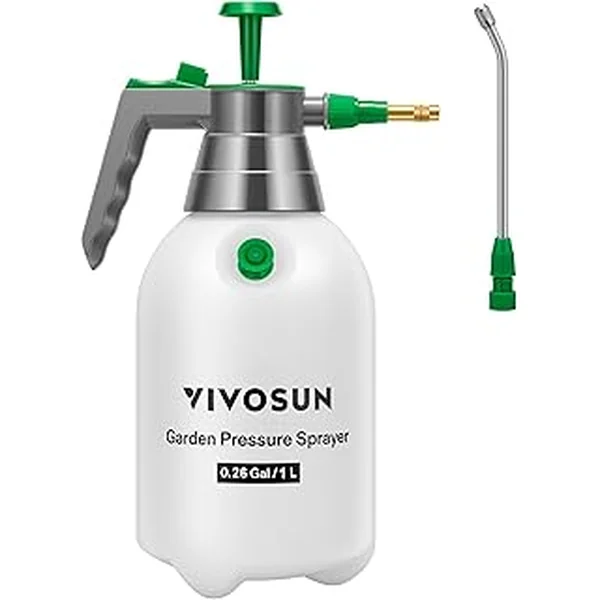
- A spray bottle or hose with an adjustable nozzle
- Lukewarm water (around 20°C / 68°F)
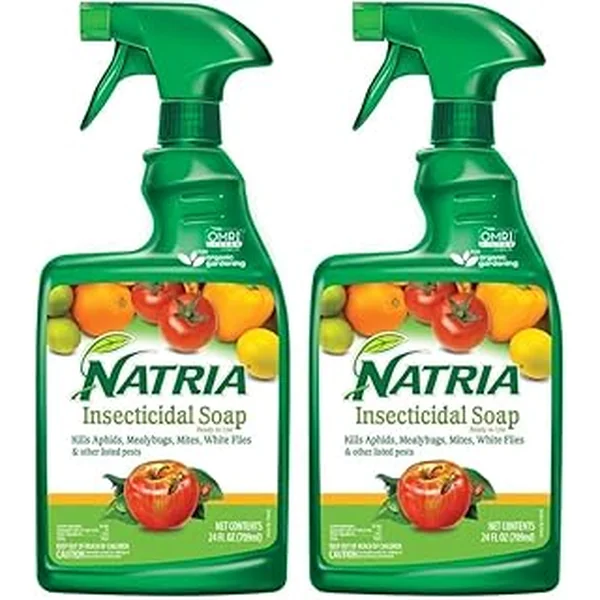
- Mild fragrance-free dish soap, or ready-to-use insecticidal soap
- A clean spray bottle (if mixing your own soap solution)
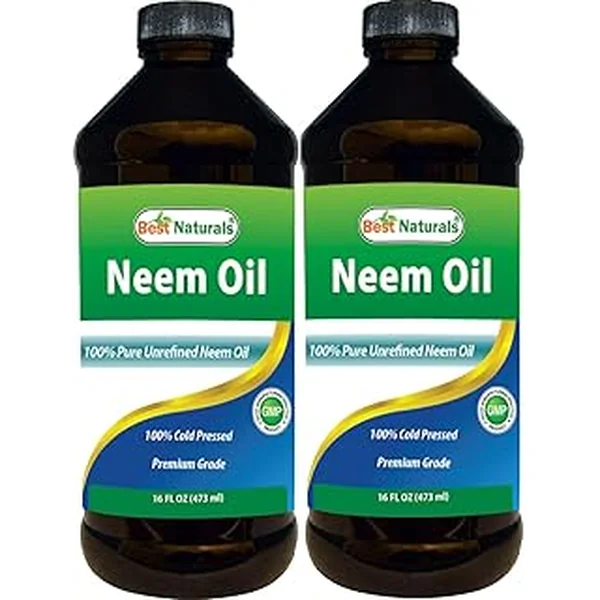
- Cold-pressed neem oil (optional, for resistant colonies)
- A microfibre cloth or cotton pads
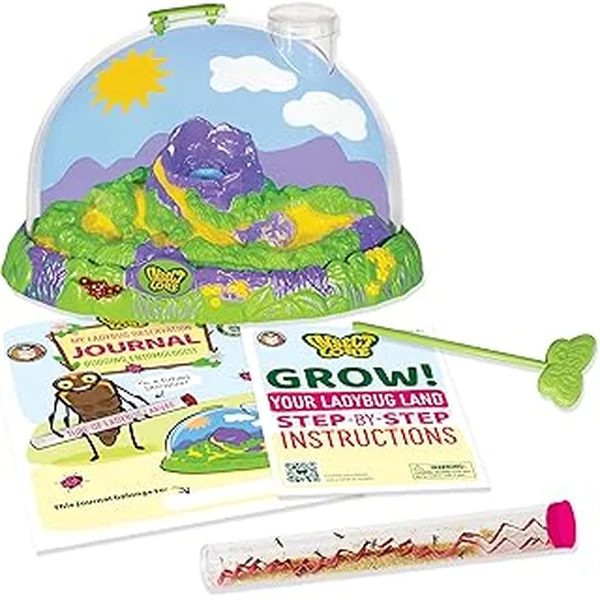
- Optional: ladybugs (live release tubs are widely sold for the garden)
That’s it. No synthetic pesticides needed for the first round.
Step-by-step: how to get rid of aphids in 2 weeks (no toxic sprays)
1. Isolate or screen off the infested plant
If it’s a houseplant, move it at least 1 m (3 ft) away from every other plant — winged aphids appear when colonies get crowded, and one infested plant can seed an entire shelf.
For garden plants, isolation isn’t possible. Instead, walk the bed and check every neighbour. Treat each infested plant on the same day so you don’t keep reseeding the colony.
2. Blast the colony with water
Take the plant to the shower, sink, or hose and use lukewarm water at low-to-medium pressure. Soak every stem and the undersides of every leaf, paying extra attention to new growth where colonies hide. Aim from below upward.
A single thorough rinse physically removes 70–90% of the active aphids. Soft-bodied aphids that fall off the plant rarely make it back — most are eaten by ground beetles or dry out before they can climb.
Let the plant drip-dry for 30 minutes before the next step.
3. Spray with soap or neem
Mix a soap spray: 5 ml (1 tsp) of mild dish soap and 1 L (34 fl oz) of water in a spray bottle. For tougher colonies on roses, brassicas, or fruit trees, use neem oil instead — typically 5 ml (1 tsp) of cold-pressed neem and 2–3 drops of dish soap per 1 L (34 fl oz) of water.
Spray every leaf top, underside, and stem until they drip. Don’t forget the leaf joints and the underside of new growth — that’s where survivors hide.
Important: spray in the evening or out of direct sunlight. Soap or neem on a leaf in direct sun can cause leaf burn, especially on tender vegetables.
4. Break the ant supply line
If ants are farming the colony, the spray alone won’t be enough — they’ll keep moving aphids back to the plant. Block their path:
- Wrap a band of horticultural sticky tape around the trunk of trees and roses (10 cm / 4 in wide, sticky side out)
- For pots, sit the pot in a saucer of plain water — ants won’t swim across
- Outdoors, follow the ant line back to the nest and pour a kettle of boiling water down it
Without ant protection, ladybugs and lacewings can do most of the cleanup for you.
5. Bring in (or invite) ladybugs
A single adult ladybug eats up to 50 aphids per day, and ladybug larvae eat even more. For an outdoor garden:
- Buy a live-release tub of ladybugs (sold in spring at most garden centres or online)
- Mist the plant lightly first — ladybugs land better on damp leaves
- Release at dusk so they don’t immediately fly off
Indoors, ladybugs are harder to keep on a single plant. Stick to the soap/neem schedule instead.
6. Repeat every 5 to 7 days for 2 to 3 weeks
This is where most people fail. Aphid eggs and unborn young inside surviving females hatch over the following 7 to 10 days, so you need to keep spraying through at least two hatches.
A simple schedule:
| Day | Action |
|---|---|
| Day 0 | Isolate, water blast, soap or neem spray |
| Day 3 | Inspect new growth, re-blast any cluster |
| Day 7 | Water blast again, soap or neem spray |
| Day 14 | Final water blast and spray, then check carefully |
| Day 21 | Spot-check new growth; spray once more if any signs |
Stop only when you see no new clusters, no honeydew, and no ants for 7 straight days.
A free plant care app like Tazart can hold the spray schedule for you and remind you on the right day — which matters more than the spray itself, because skipping a week lets the next batch of aphids restart the colony.
Common mistakes to avoid
- Spraying once and assuming you’re done. One spray kills adults but not unborn young. You’ll be reinfested in a week.
- Forgetting the undersides and new growth. That’s where 80% of the aphids live. Top-of-leaf-only spraying barely dents the colony.
- Using strong dish detergent or dishwasher soap. Both contain degreasers and salts that burn leaves. Use a mild fragrance-free hand-wash dish soap.
- Spraying in direct sun. Causes leaf burn on most plants, especially tender vegetables. Spray in the evening.
- Ignoring the ants. As long as ants are farming the colony, predators stay away. Block the ant trail first.
- Reaching for a broad-spectrum chemical pesticide. It also kills ladybugs, lacewings, and pollinators — leaving the next aphid wave with no natural enemies and creating worse outbreaks.
Troubleshooting
| Symptom | Likely cause | Fix |
|---|---|---|
| Aphids reappear within a week of spraying | Skipping the egg-hatch window | Spray every 5 days instead of 7 for 3 cycles |
| Sticky honeydew remains after the colony is gone | Residue not yet rinsed off | Rinse leaves with plain water, wipe with a soft damp cloth |
| Black sooty mould on leaves | Mould growing on old honeydew | Wipe leaves with damp cloth + 1 drop of soap, then rinse; mould fades within a week |
| New growth still curled and twisted | Damage already done; aphids are gone | Trim worst-affected tips, fertilize lightly after 2 weeks of recovery |
| Plant looks worse after soap spray | Soap too concentrated, or sprayed in sun | Halve the dilution, spray only in the evening, rinse leaves the next morning |
| Aphids spread to a second plant | Winged aphids dispersing from a crowded colony | Treat both plants on the same day for a full 2-week cycle |
| Ants keep returning to the stem | Ant nest still active nearby | Apply a sticky tape barrier on the trunk; pour boiling water on the visible ant nest |
How to prevent aphids coming back
- Inspect new plants for 2 weeks before adding to the collection. Most aphid outbreaks come in on a new purchase.
- Plant a strip of dill, fennel, yarrow, or alyssum near vulnerable crops — these flowers attract ladybugs and parasitic wasps that hunt aphids for free.
- Avoid heavy nitrogen fertilizing. Too much nitrogen produces soft sappy growth that aphids find irresistible. Use a balanced feed at half strength.
- Check rosebuds and tomato tips weekly in spring and early summer. Catching one cluster is easy. Catching ten thousand takes a month of weekly sprays.
- Don’t spray broad-spectrum chemicals. They kill the predators that would otherwise keep aphids from ever becoming a problem.
When to call it (or get expert help)
If a young vegetable transplant has more than half its growing tips curled and stunted, it’s usually faster to pull and replace than to nurse it through a recovery cycle. For mature roses, fruit trees, or rare ornamentals, treat aggressively for the full 3 weeks before giving up — the plant’s root system can almost always push out fresh new growth once the colony is gone.
For commercial-scale infestations or specimen trees, a professional plant health care service can apply targeted biocontrols like Aphidius parasitic wasps that aren’t sold to home users.
Watch: aphid treatment walkthrough
A short visual walkthrough pairs well with the steps above. Search YouTube for “how to get rid of aphids without chemicals” — look for a video from a credentialed plant or gardening channel that shows the underside-spraying technique and the soap-water dilution, then come back to follow the 14-day schedule in this guide.
Related reading
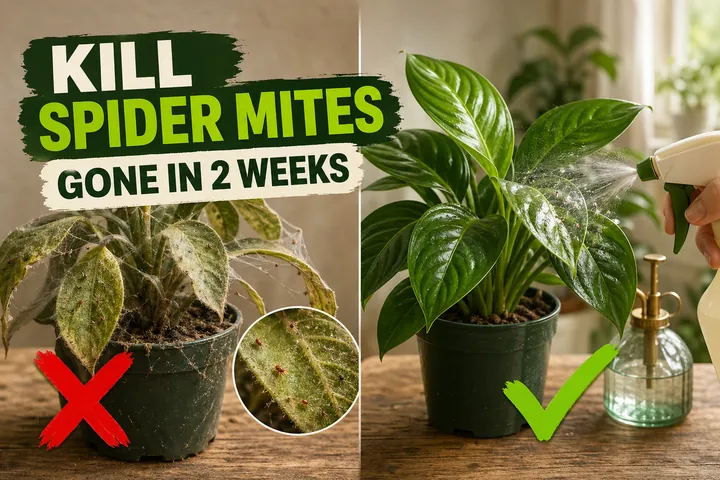
- How to get rid of spider mites on plants — the other tiny sap-sucker, but a very different fix (no soap, more humidity).
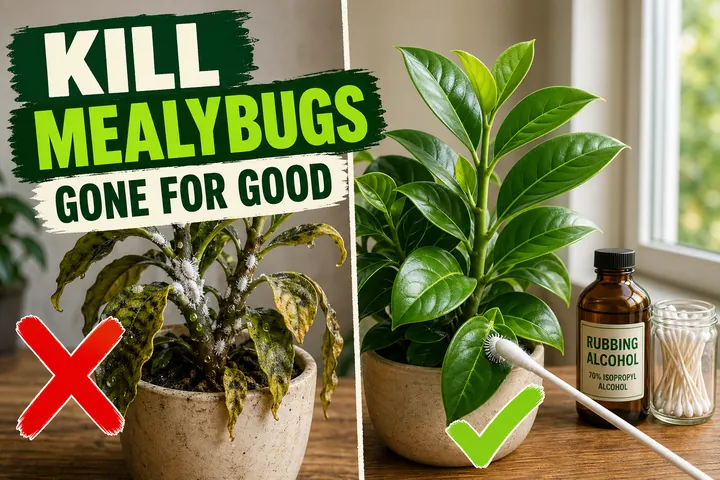
- How to get rid of mealybugs on plants — same family of soft-bodied pests, treated with rubbing alcohol instead of soap.
- Plant health care services explained — when DIY isn’t enough, here’s what a pro does differently.
A note on conditions
Every garden and home is different. Plant species, weather, predator activity, neighbouring infested plants, and how often new aphids fly in from outside all change how fast a colony spreads and how long treatment takes. The 14-day cycle in this guide is the average — heavy infestations on roses or brassicas can take 3 to 4 weeks, and tender seedlings may need a gentler 2.5 ml (½ tsp) per litre soap dilution. Inspect new growth every few days during treatment and adjust based on what you actually see.
Highly recommended
The supplies that make this guide work
Tazart is an Amazon Associate — we earn from qualifying purchases at no extra cost to you. Thank you for helping us keep these guides free.
Frequently asked questions
What kills aphids instantly?
A strong stream of plain water blasted onto the colony physically dislodges most aphids in seconds — and once they fall off the plant, soft-bodied aphids rarely make it back. It's not a permanent cure on its own, but it's the fastest way to crash an active colony. Follow it up within 24 hours with insecticidal soap or a neem oil spray to kill the survivors and any eggs.
How do I get rid of aphids without chemicals?
Three steps clear most colonies in about two weeks. (1) Blast every infested stem with lukewarm water from a spray bottle or hose, focusing on the undersides of leaves and tender new growth. (2) Spray with diluted dish soap (1 tsp / 5 ml per 1 L / 34 fl oz of water) or insecticidal soap every 5 to 7 days. (3) Release ladybugs outdoors, or simply let any wild ones in — they eat 50 aphids a day each. No toxic chemicals required.
What does an aphid infestation look like?
Look for clusters of soft-bodied insects 1 to 3 mm (1/16 to 1/8 in) long packed tightly along stems and the undersides of new leaves. They can be green, black, pink, yellow, or grey. Other tells: sticky shiny honeydew on leaves below the colony, curled or distorted new growth, ants marching up and down the stems (they farm aphids for the honeydew), and sometimes black sooty mould growing on the honeydew.
Does dish soap kill aphids?
Yes, plain mild dish soap works well — about 5 ml (1 tsp) of soap per 1 L (34 fl oz) of water in a spray bottle. The soap dissolves the aphid's protective wax coating and they dehydrate within hours. Use a fragrance-free, dye-free liquid soap (not detergent or dishwasher soap), spray every 5 to 7 days for 2 to 3 weeks, and rinse leaves the next morning if your plant has tender foliage like calathea or new tomato seedlings.
How long does it take to get rid of aphids?
About 2 weeks of consistent treatment for a mild to moderate infestation. Heavy colonies on roses or veg crops can take 3 to 4 weeks. Aphid eggs hatch in 7 to 10 days, so you have to repeat the spray every 5 to 7 days through at least two hatch cycles. Skipping a week lets the next generation rebuild the colony.
Will aphids go away on their own?
Outdoors, sometimes — ladybugs, lacewings, parasitic wasps, and birds keep populations in check during a normal season. Indoors or on protected plants under glass, almost never: there are no predators, the air is warm and dry, and a single female aphid can produce 80 live young in a week. Without intervention a colony doubles in days.