Houseplants
How to Care for an Orchid Plant (Phalaenopsis Care Guide)
Phalaenopsis orchid care made simple — light, watering with ice cubes, bark mix, humidity, and how to get a moth orchid to rebloom every year. Beginner-proof guide.
On this page
- Quick answer
- Table of contents
- Meet the moth orchid
- Light — the rebloom trigger
- Watering — and the ice cube method
- Soil and pots — bark, not dirt
- Temperature and humidity
- Feeding
- Reblooming year after year
- Cutting the flower spike
- Repotting
- Common mistakes
- Troubleshooting
- Dendrobium and Cattleya — quick differences
- Related reading
- A note on conditions
Watch the visual walkthrough
Caring for Orchids: A Step-by-Step Guide
A short visual walkthrough that pairs with the steps above.
A Phalaenopsis orchid — the moth orchid you find in every supermarket — is much easier to keep alive than its reputation suggests. The catch is that almost every instinct you have from caring for a normal houseplant is wrong for an orchid: it doesn’t grow in soil, it shouldn’t be watered weekly on a schedule, and the roots want to dry out between drinks.
This guide gives you the exact light, watering, potting, and reblooming steps that keep a supermarket orchid alive and flowering year after year — plus quick notes at the end on how Dendrobium and Cattleya orchids differ.
Quick answer
A Phalaenopsis orchid needs bright indirect light, watering only when the roots turn silvery and the bark mix is dry — usually every 7 to 10 days — fir-bark mix in a clear pot with drainage holes, daytime temperatures of 18–27°C (65–80°F), and weekly weak feeding. To rebloom, drop night temperatures to 13–18°C (55–65°F) for 3 to 4 weeks in autumn.
Table of contents
- Meet the moth orchid
- Light — the rebloom trigger
- Watering — and the ice cube method
- Soil and pots — bark, not dirt
- Temperature and humidity
- Feeding
- Reblooming year after year
- Cutting the flower spike
- Repotting
- Common mistakes
- Troubleshooting table
- Dendrobium and Cattleya — quick differences
- FAQ
Meet the moth orchid
Phalaenopsis is an epiphyte — a plant that, in the wild, grows clinging to tree bark in tropical Asia, with its roots dangling in humid air rather than buried in soil. The thick silvery roots have a spongy outer layer called velamen that absorbs water in seconds and then dries out almost as fast.
That single fact changes everything about how you care for it:
- It can’t sit in wet potting soil — the roots suffocate.
- It doesn’t want a small dark pot — it wants a clear pot so its roots get light.
- It doesn’t drink slowly through the week — it gulps water and then dries out.
A supermarket Phalaenopsis usually arrives in clear plastic potted in fir bark, sometimes with a moss plug around the root ball. That’s actually a good starter setup. Don’t repot it the day you bring it home.
Light — the rebloom trigger
Phalaenopsis like bright indirect light — about 10,000 to 20,000 lux. In practical terms:
- East-facing window — best. Soft morning sun, no afternoon scorch.
- South or west window — good, but pull the plant 1–2 m (3–6 ft) back from the glass or hang a sheer curtain.
- North window — survival only. The leaves stay dark green, but you’ll rarely get a new flower spike.
A healthy Phalaenopsis leaf is soft mid-green, sometimes called “olive-green” by orchid growers. Dark forest green means too little light — the plant lives but won’t bloom. A reddish or yellow tinge to the leaves means too much direct sun, and you’ll see leaf scorch within a day if you don’t move it.
Light is the single biggest reason a Phalaenopsis stops reblooming. If yours is alive but stubbornly leaf-only, the answer is almost always more light, not more fertilizer.
Watering — and the ice cube method
The rule is simple: water only when the roots look silvery-grey and the bark feels light and dry. Green plump roots = wait. Silvery shrivelled roots and a pot that lifts easily = water.
In a typical centrally heated home, that works out to:
- Spring/summer: every 7–10 days
- Autumn/winter: every 10–14 days
The pot is your moisture meter. Pick it up — if it feels heavier than a dry pot of the same size, the bark is still holding water. Wait.
How to actually water
There are two reliable methods:
1. The soak method. Take the orchid (still in its clear inner pot) to the sink. Run room-temperature water through the bark for 30 seconds, letting it drain freely. Let the pot sit on the rack for 10 minutes so all excess water drips out, then return it to its decorative outer pot. Never leave standing water in the outer pot.
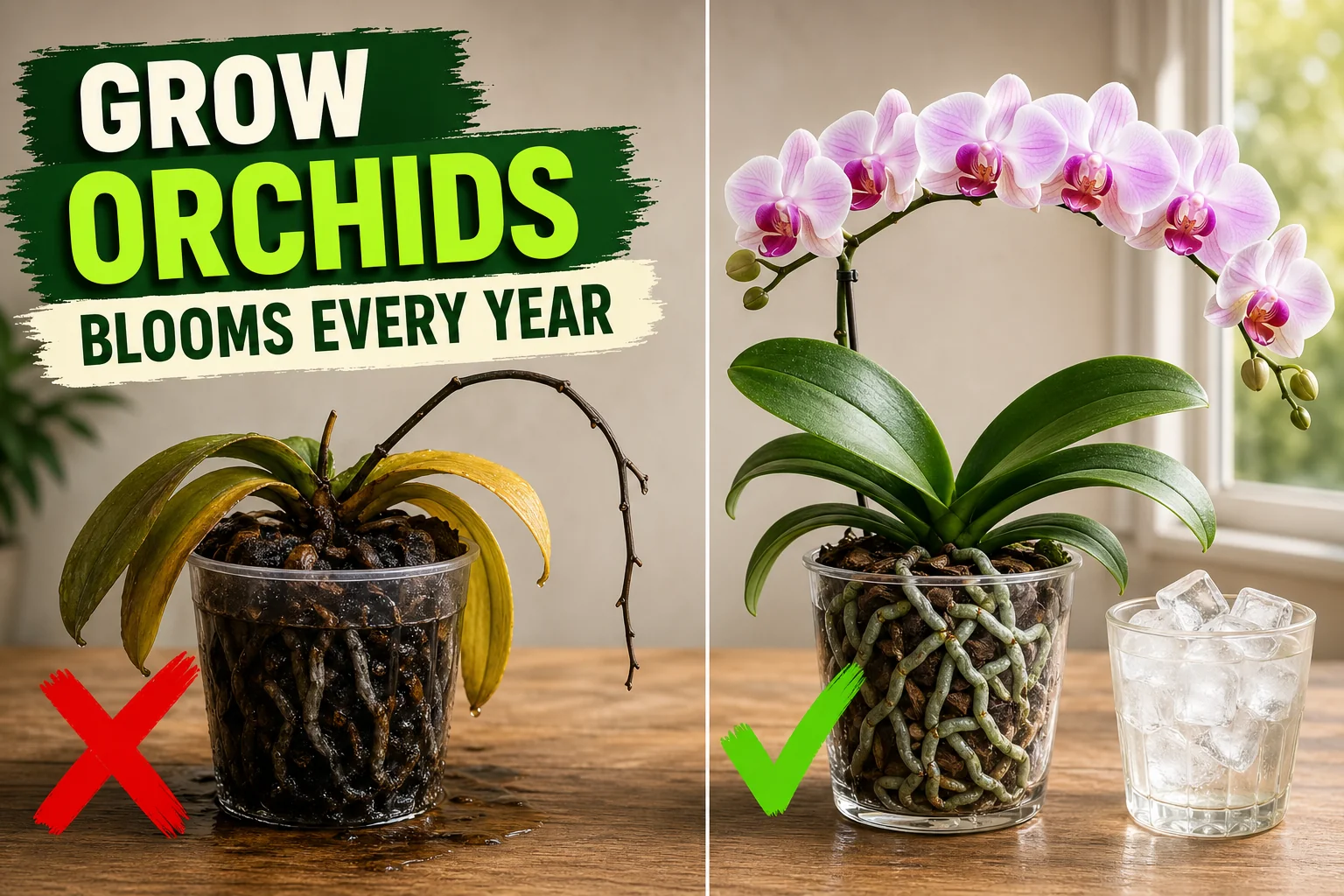
2. The ice cube method. Place 3 ice cubes (about 60 ml / 2 fl oz of water) directly on the bark, never on the leaves or crown, once a week. The ice melts slowly so the water has time to soak in instead of running straight through. This is the method most supermarkets recommend on the plant tag, and university trials at Ohio State and the University of Georgia found it does not harm Phalaenopsis grown in bark — leaves, roots, blooms, and bloom counts were the same as room-temperature watered plants over five months.
Both methods work. The ice method is more forgiving for beginners because it’s hard to overwater with three cubes a week. Whichever you pick, never let water sit in the crown (the centre point where the leaves emerge). Water trapped there causes crown rot, which kills the plant. If you splash water there by accident, dab it dry with a tissue.
Soil and pots — bark, not dirt
A Phalaenopsis grown in normal potting soil will rot within a few months. The roots need air. Use one of:
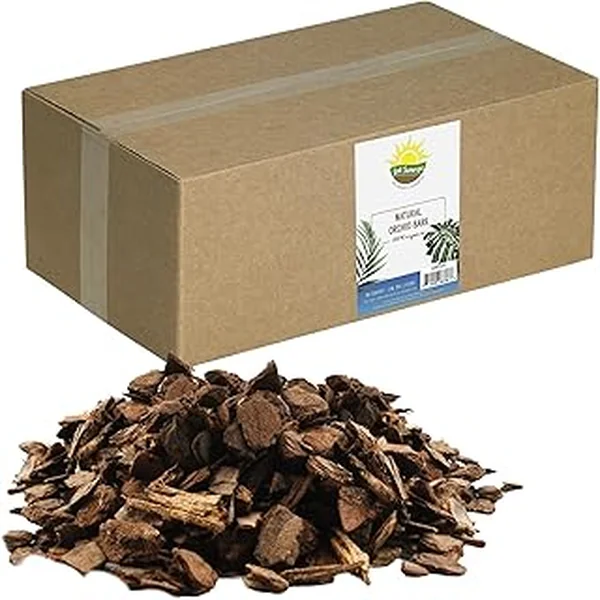
- Medium-grade fir bark — the standard, drains in seconds, lasts about 18–24 months before it breaks down.
- Bark + perlite + charcoal blend — a step up, holds slightly more moisture for warmer rooms.
- Sphagnum moss — only if you under-water habitually. Moss holds moisture so long that overwatering is the default mistake.
Always pot in a clear plastic orchid pot with drainage and side slits, then drop that into a decorative ceramic outer pot. The clear pot lets you see root colour at a glance — silvery means thirsty, green means hydrated. Decorative pots without drainage are fine as long as you never leave standing water inside.
Temperature and humidity
Phalaenopsis are happy in normal indoor temperatures:
- Daytime: 18–27°C (65–80°F)
- Nighttime: 16–21°C (60–70°F) most of the year — but see Reblooming for the autumn drop that triggers spikes.
- Never below 13°C (55°F) for more than a few hours, or you risk leaf damage and root cold-shock.
For humidity, 40–60% is the sweet spot. Most homes sit at 30–40% in winter, which is fine. If your air is very dry (under 30%, common with central heating), set the pot on a pebble tray with water that doesn’t touch the pot bottom, or run a small humidifier nearby. Misting the leaves is risky — water in the crown causes rot — so skip it.
Feeding
Bark mix has almost no nutrients of its own, so a Phalaenopsis in bark needs feeding to push spikes and big blooms.
The simple routine: “Weakly, weekly.” Use a balanced orchid fertilizer (20-20-20 or 19-31-17 bloom-booster type) at ¼ strength, every time you water during active growth (spring and summer). In autumn and winter, drop to once a month, or stop entirely while the plant is in a cool reblooming rest.
Once a month, water with plain water only to flush out salt build-up — orchid roots are sensitive to salt damage from accumulated fertilizer.
Reblooming year after year
This is the part most owners skip, and it’s why so many orchids only bloom once.
If you’re growing other tropical houseplant blooms alongside your orchid, the calla lily care guide covers a plant with similarly specific watering and dormancy requirements that’s worth reading before you mix them on the same shelf.
Phalaenopsis flower spikes are triggered by a drop in night-time temperature. In the wild, that drop happens when the dry season starts. Indoors, you can fake it:
- In early autumn (September–October in the Northern Hemisphere), move the orchid somewhere nights drop to 13–18°C (55–65°F) — a windowsill that gets cool at night, an enclosed porch, or a cooler bedroom.
- Keep daytime light bright and indirect.
- Wait 3 to 4 weeks.
- A small green nub usually appears between two leaves — that’s your new flower spike. It looks similar to a root, but spike tips are flatter and grow upward; root tips are pointed and curl down.
- Once the spike is established, you can move the plant back to its normal warm spot. Stake the spike loosely as it grows.
Buds typically open 8 to 12 weeks after the spike appears, and individual flowers last 2 to 3 months.
Cutting the flower spike
When the last flower drops, you have a choice:
- Spike still green and firm — cut just above the second visible node from the base of the spike. A side spike often emerges from one of the lower nodes within a few weeks, giving you a second smaller round of blooms in the same season.
- Spike turning yellow or brown — cut all the way back to 2 cm (1 in) above the leaves. The plant will then put its energy into next year’s spike instead of trying to keep a dying one alive.
Always use sterile scissors — wipe the blades with rubbing alcohol — to avoid passing fungal or viral infections between plants.
Repotting
Repot every 18 to 24 months, or sooner if:
- The bark has broken down to dark soft compost-like fragments
- The pot is full of dead grey roots
- The plant is climbing out of its pot
Best time: right after blooming, in spring. Don’t repot a plant that’s actively spiking or in full bloom.
The simple repotting steps:
- Tip the plant out and shake off the old bark. Don’t be gentle — the roots are tougher than they look.
- Snip off any mushy black or hollow brown roots with sterile scissors. Keep all firm white-grey-green roots, even the wrinkled ones.
- Choose a clear pot only one size up, or the same size if the root mass shrank after pruning. Phalaenopsis like to be snug.
- Fill the pot with fresh soaked, pre-rinsed fir bark. Settle the plant in so the lowest leaf sits at the bark surface, not buried.
- Don’t water for 5 to 7 days after repotting. The cuts need to heal — watering immediately invites rot.
Common mistakes
- Watering on a weekly schedule. Roots dry at different rates depending on light, season, and pot size. Always check first.
- Using normal potting soil. It compacts and suffocates the roots within weeks.
- Letting water sit in the crown. Crown rot is silent and fatal. Dab any splashed water dry.
- Cutting off aerial roots. They’re healthy. Phalaenopsis are epiphytes — they’re meant to grow roots in air.
- Repotting in full bloom. The plant aborts the flowers. Wait until the last bud opens or drops.
- Fertilizing a dry plant. Always water plain first, then feed. Fertilizing dry roots burns them.
- Giving up after the first bloom. It’s not “done.” Drop night temperatures and it will spike again, often for 10+ years from the same plant.
Troubleshooting
| Symptom | Likely cause | Fix |
|---|---|---|
| Yellow bottom leaf, oldest one only | Natural leaf retirement after blooming | Normal — just remove the spent leaf when it detaches on its own |
| Multiple leaves yellow + soft centre | Overwatering, crown or root rot | Tip out, cut black roots back to firm tissue, repot in dry bark, hold water 5–7 days |
| Wrinkled limp leaves, silver shrivelled roots | Underwatering | Soak the pot for 30 sec under running water, then water on the silver-root cue going forward |
| Reddish or burned patches on leaves | Direct sun scorch | Move 1–2 m (3–6 ft) back from the window or add a sheer curtain |
| Roots growing out the top of the pot | Healthy aerial roots | Leave them — that’s normal for an epiphyte |
| Bud blast (buds drop before opening) | Cold draught, gas leak, sudden move, dry air | Move to a stable warm spot away from heating vents and ripening fruit |
| Flowers last only a few days | Hot dry room, ripening fruit nearby (ethylene) | Cooler room (18–22°C / 65–72°F), away from the fruit bowl |
| No new spike for over a year | Light too low, or no temperature drop | Move to brighter indirect light + give 3–4 weeks of cool 13–18°C (55–65°F) nights |
| Sticky clear droplets on leaves | Normal nectar, or scale insects if also bumpy | Wipe with damp cloth; if bumps, treat with horticultural oil |
Dendrobium and Cattleya — quick differences
If your orchid isn’t a Phalaenopsis, the basic light + bark + dry-between-waterings rules still apply, but a few details change:
Dendrobium (often the cane-like supermarket orchid with multiple stems and clusters of small flowers):
- Wants brighter light than Phalaenopsis — a south-facing window with a sheer curtain is ideal.
- Needs a dry winter rest: cut watering by half from late autumn through mid-winter, almost no fertilizer. This dry rest is what triggers spring flowering.
- Likes to be pot-bound in a smaller pot than Phalaenopsis. Repot only every 2–3 years.
Cattleya (the big, showy “corsage orchid”):
- Wants the brightest indirect light of the three — close to a south or west window with diffuser.
- Has thick pseudobulbs that store water — water only when bark is fully dry, every 7–14 days.
- Needs a temperature drop of 5–8°C (10–15°F) between day and night year-round to bloom well, not just in autumn.
- Repot only when new growth pushes over the pot edge — Cattleyas hate being repotted unnecessarily.
For all three, a free plant care app like Tazart can hold the watering rhythm for you, adjust it for your local weather, and ping you when it’s time to start the cool autumn rebloom trigger.
Related reading
- Pothos plant care — the easiest beginner houseplant if your orchid feels intimidating, and the same “let it dry out” rule applies.
- How to take care of a prayer plant — another humidity-loving tropical that pairs well with orchids on the same windowsill.
- Aglaonema plant care — a low-light houseplant for the spots in your home where an orchid wouldn’t bloom.
A note on conditions
Every home is different. Light, pot size, room temperature, central heating, season, and your local humidity all change how often a Phalaenopsis needs water and how easily it reblooms. Use the numbers above as a starting point and adjust based on what your plant actually does in week two — silvery roots and a light pot mean water; green roots and a heavy pot mean wait. That single observation, repeated, is the whole secret to keeping an orchid alive for a decade.
Highly recommended
The supplies that make this guide work
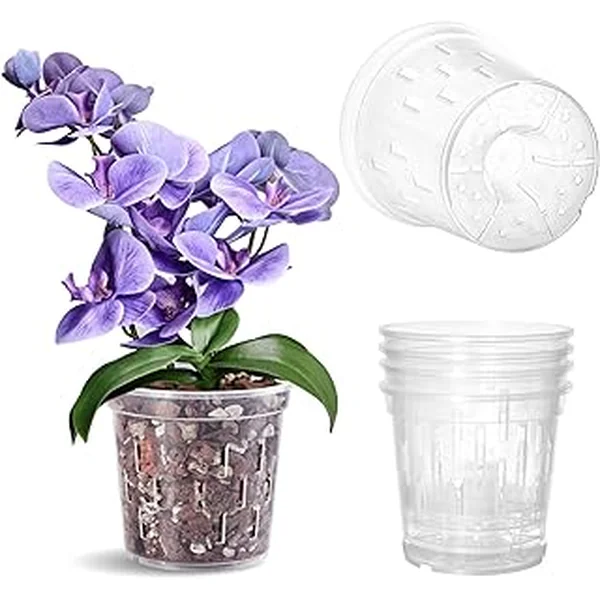

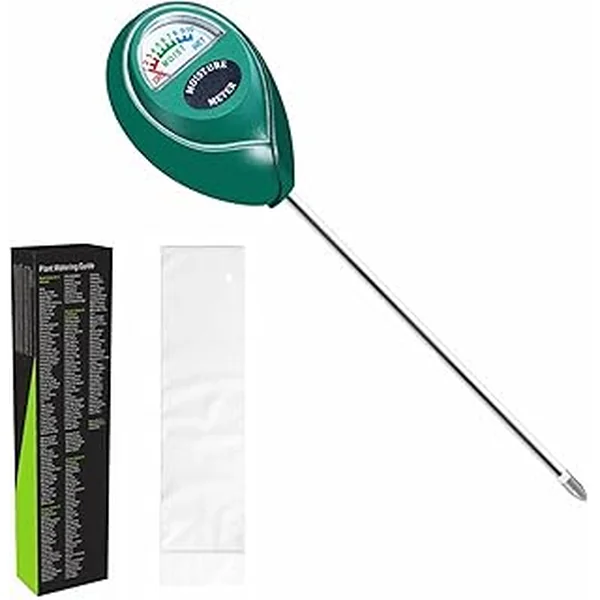
Tazart is an Amazon Associate — we earn from qualifying purchases at no extra cost to you. Thank you for helping us keep these guides free.
Frequently asked questions
How often should I water my orchid?
Every 7 to 10 days for a Phalaenopsis in bark mix, less often in winter and more often in summer. The right rule is by feel, not by calendar — water only when the roots look silvery-grey and the bark feels light and dry. Green plump roots and damp dark bark mean wait. Overwatering is the #1 killer of moth orchids.
Is the ice cube method safe for orchids?
Yes, despite the myth. Studies from Ohio State and the University of Georgia found 3 ice cubes (about 60 ml / 2 fl oz of water) once a week causes no leaf, root, bloom, or flowering damage on Phalaenopsis grown in bark. The ice melts slowly so water has time to soak in instead of running straight through. Place cubes on the bark, never on the leaves or crown.
Why are my orchid leaves turning yellow?
Most often it's the oldest bottom leaf yellowing as the plant retires it — totally normal, especially after blooming. If multiple leaves yellow at once or the centre of the plant turns yellow and soft, that's overwatering and root rot. Tip the plant out, cut all mushy black roots back to firm tissue with sterile scissors, and repot in fresh dry bark.
How do I get my orchid to bloom again?
Phalaenopsis rebloom when night temperatures drop to 13–18°C (55–65°F) for 3 to 4 weeks. In autumn, move the plant near a cool window or onto a porch where nights are cooler than days. A new flower spike usually appears within 6 to 12 weeks. Keep light bright and indirect, and feed weekly with a weak balanced fertilizer.
Should I cut the flower spike after blooming?
It depends on the spike. If it stays green, cut just above the second visible node from the base — a side spike often emerges from one of the lower nodes within a few weeks. If the entire spike turns brown and dry, cut it all the way down to about 2 cm (1 in) above the leaves so the plant can put energy into a fresh spike next season.
Why are roots growing out of the pot?
That's normal and healthy. Phalaenopsis are epiphytes — in the wild they cling to tree bark with their roots in open air. Aerial roots collect humidity and air. Don't cut them off and don't try to bury them. If the plant is overflowing the pot, repot one size up in fresh bark mix in spring.
How much light does a Phalaenopsis need?
Bright indirect light. An east-facing window is ideal. South or west works if you set the plant 1–2 m (3–6 ft) back or use a sheer curtain. Direct midday sun scorches the leaves yellow within hours. The leaves should be a soft mid-green — dark forest green means too little light, reddish-yellow tinge means too much.