Edible
How to Care for a Strawberry Plant: Complete Season Guide
How to care for a strawberry plant from spring planting to winter — sun, watering, fertilizer, runner management, June-bearing vs day-neutral, year 2 fruit.
On this page
- Quick answer
- Table of contents
- Strawberry types — three different care patterns
- Site selection and soil
- Watering
- Fertilizing schedule
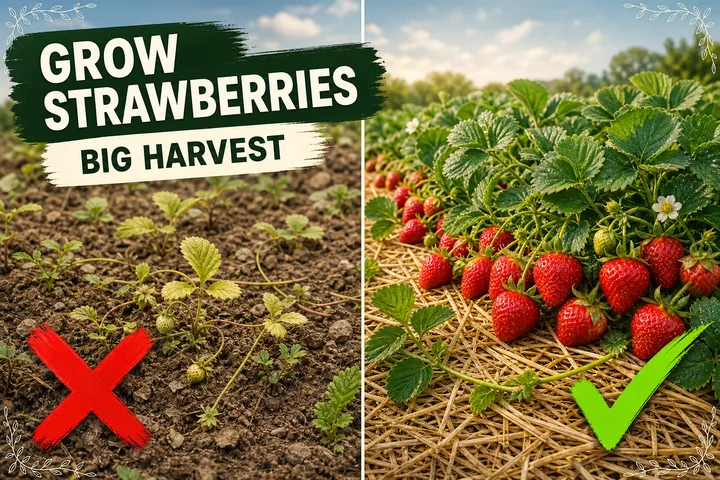
- Mulching
- Flower removal in year one
- Runner management
- Pest and disease watch
- Harvesting
- Autumn cleanup and winter care
- Second-year and beyond
- Common mistakes
- Related reading
- A note on conditions
Watch the visual walkthrough
Pro Grow Strawberry Tips to For The BEST Most Productive Plants Ever!
We do more than, JUST, YouTube! Check more MIgardener below: Start growing! Visit our online store for $2 heirloom seeds, ...
A strawberry plant produces more food per square metre than almost any other garden crop and rewards a small amount of care with a heavy crop of fruit that no supermarket variety can match. The plants are also forgiving — they grow in beds, raised planters, containers, hanging baskets, and even tower systems — but the difference between a tired, half-productive patch and one that crops heavily for years comes down to a handful of routine care tasks that many growers either skip or do at the wrong time.
This guide walks through the full strawberry plant care year — from spring planting through summer fruiting, runner management, autumn cleanup, and winter mulch — and explains why June-bearing, day-neutral, and everbearing varieties need slightly different treatment.
Quick answer
Strawberry plants (Fragaria × ananassa) need 6–10 hours of direct sun, well-drained slightly acidic soil at pH 5.5–6.8, 2.5–4 cm (1–1.5 in) of water per week, straw mulch over the soil, and a balanced 10-10-10 fertilizer at planting plus a second application after fruiting. Remove flowers in year one of June-bearing plants for stronger year-two harvests. Manage runners according to type. Mulch 10–15 cm (4–6 in) deep in autumn to overwinter the crowns in cold zones.
Table of contents
- Strawberry types — three different care patterns
- Site selection and soil
- Watering
- Fertilizing schedule
- Mulching
- Flower removal in year one
- Runner management
- Pest and disease watch
- Harvesting
- Autumn cleanup and winter care
- Second-year and beyond
- Common mistakes
- Related reading
Strawberry types — three different care patterns
Before any care advice, you need to know which type of strawberry you have. The three commercial groups respond differently to almost every variable.
| Type | Bloom and fruit timing | Best for | Key care difference |
|---|---|---|---|
| June-bearing | One heavy crop in late spring / early summer (typically June in temperate zones) | Maximum single harvest, jam making, freezing | Remove year-one flowers; remove most runners; main harvest is year two |
| Day-neutral | Continuous light cropping from early summer through autumn frost | Fresh-eating, small spaces, container culture | Fruits on first-year plants; remove all runners |
| Everbearing | Two or three flushes through summer (spring + late summer typically) | Beginners, regional fresh supply | Behavior similar to day-neutral; remove all runners |
If you bought plants without a clear label, behavior in the first season usually identifies the type. A plant that flowers heavily in May and then stops is June-bearing; a plant that flowers in waves through summer is day-neutral or everbearing.
For each section below, the differences between the three types are noted where they matter.
Site selection and soil
Strawberries need:
- Full sun. 6 to 10 hours of direct sunlight per day. Less than 6 hours and the harvest drops noticeably while disease pressure rises (wet foliage stays wet longer in shade).
- Well-drained soil. Standing water at the crown rots the plant within days. Raised beds 15–25 cm (6–10 in) above grade solve drainage problems on heavy clay sites.
- Slightly acidic pH. 5.5 to 6.8 is the sweet spot. Most garden soils fall naturally into this range; only chalky or limestone soils need acidifying with elemental sulphur or peat.
- Rich in organic matter. Fork in 5–10 cm (2–4 in) of well-rotted compost or aged manure to a depth of 25 cm (10 in) before planting. This single step does more for long-term yield than any fertilizer.
- Crop rotation. Avoid planting strawberries where tomatoes, potatoes, peppers, eggplants, or strawberries themselves grew in the last 3 years — these crops share verticillium wilt and root rot organisms.
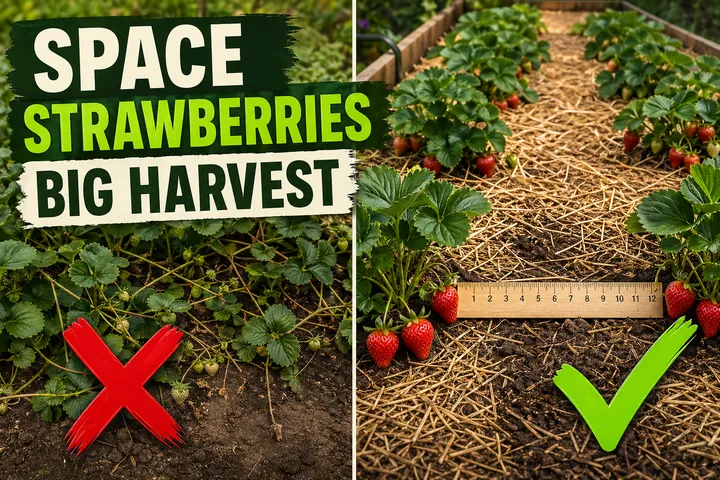
Spacing depends on type. June-bearing varieties want 30–45 cm (12–18 in) between plants in matted rows; day-neutral and everbearing varieties want 30 cm (12 in) between plants in hill systems. Our how far apart to plant strawberries guide covers spacing in depth.
Watering
Strawberries are 92% water by weight. Consistent moisture during fruit set and ripening is the single biggest driver of berry size.
Target: 2.5 to 4 cm (1 to 1.5 in) of water per week from rainfall plus irrigation combined. Bump to 4 cm (1.5 in) per week during fruiting and during heat waves.
Practical rules:
- Water at the base of the plants, not on the foliage. Wet leaves dry slowly and invite leaf spot and grey mould.
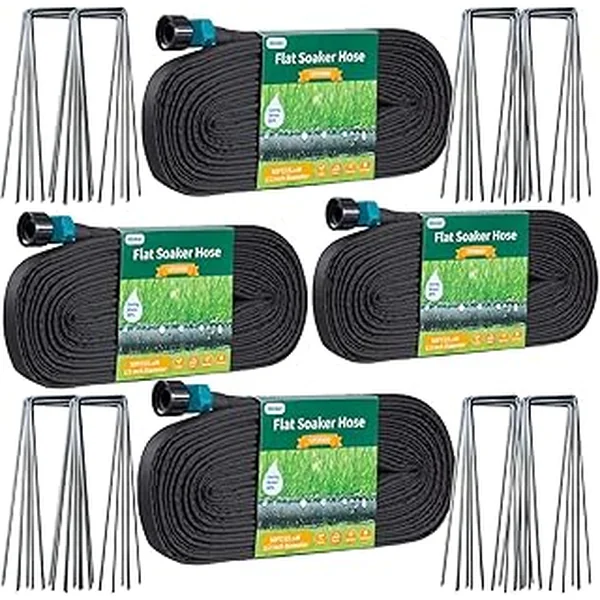
- Use a soaker hose or drip line where possible. Sprinklers throw water onto the foliage and onto ripening berries (which then rot).
- Water deeply 2–3 times per week rather than shallowly every day. Deep watering pushes roots downward, which improves drought tolerance.
- Water in the morning so any incidental splash on the leaves dries by midday.
- Mulch (see below) keeps soil moisture far more even than bare soil — irrigation requirements drop by roughly 25–30% under straw mulch in summer heat.
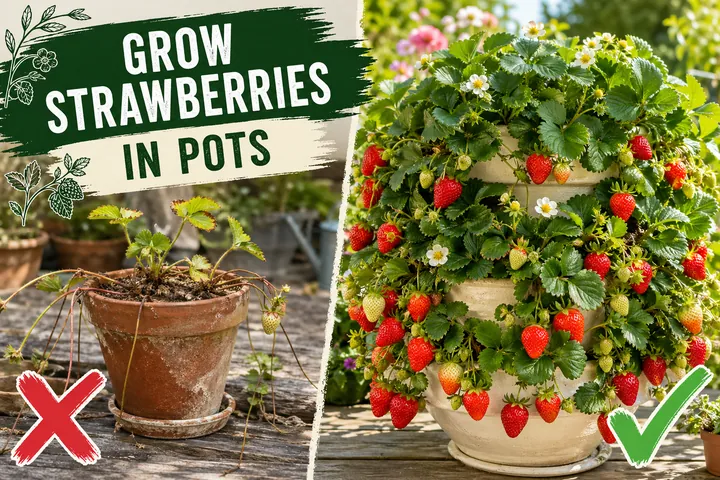
Containers dry faster than ground beds. A 30 cm (12 in) container in full sun in midsummer may need daily watering; check by feeling the top 2–3 cm (1 in) of soil and watering when it is just barely damp.
Fertilizing schedule
Strawberries are moderate feeders. The schedule depends on type.
June-bearing strawberries
- At planting (spring of year one): apply a balanced 10-10-10 granular fertilizer at the label rate (typically 100 g per 10 m² / 1 lb per 100 sq ft), worked into the top 10 cm (4 in) of soil before planting.
- Late summer of year one (August): a second application at half the planting rate, scratched into the soil and watered in. This builds the crown for next year’s fruit.
- After harvest (July of year two and beyond): a single application at half the planting rate within 2 weeks of the last picking. This is the most important feed of the year — the plant is forming next year’s flower buds at this point.
Day-neutral and everbearing strawberries
- At planting (spring): balanced 10-10-10 at the label rate.
- Early summer (June): a second light application at half the planting rate.
- Midsummer (late July or August): a third light application at quarter strength to sustain the autumn flush.
Avoid high-nitrogen lawn fertilizer at any point in the year — it pushes soft leafy growth at the expense of fruit and dramatically increases susceptibility to grey mould (Botrytis) and slugs. Organic alternatives like fish emulsion at half label strength produce excellent results without the nitrogen overload risk.
Mulching
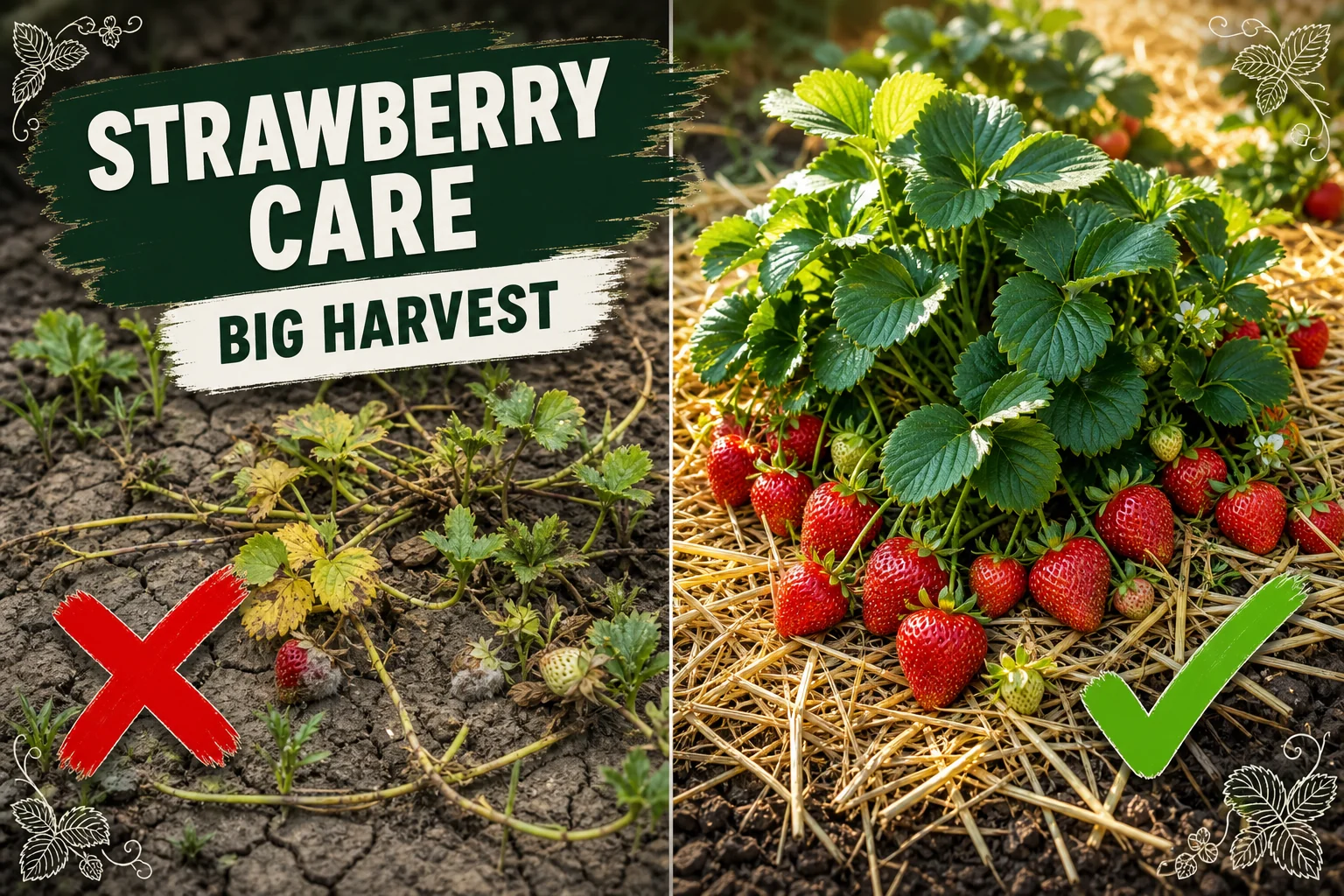
The name “strawberry” comes from the historical practice of laying straw under the fruiting plants. Mulching does four things that matter:
- Keeps berries clean by lifting them off the soil.
- Conserves soil moisture by reducing evaporation.
- Suppresses weeds that compete with the shallow strawberry roots.
- Prevents the soil-splash that spreads fungal spores onto leaves and fruit.
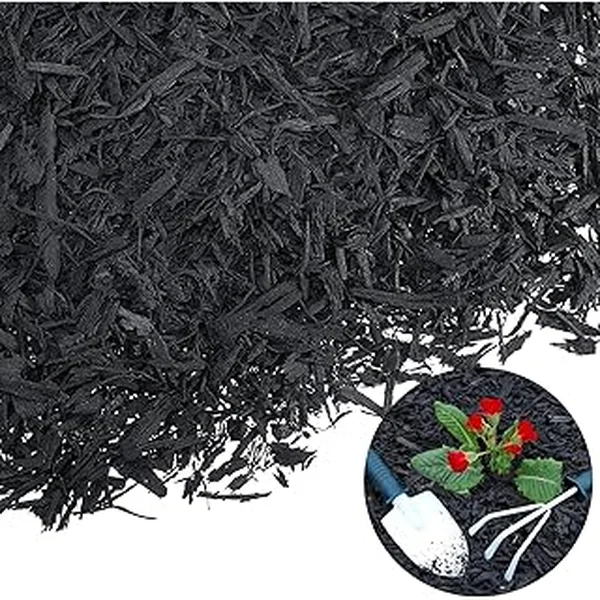
Apply 5–8 cm (2–3 in) of clean wheat straw, pine needles, or shredded leaves around the plants once flowers appear in spring. Black landscape fabric and plastic mulches work commercially but lock moisture in and trap heat — straw is more forgiving in a home garden.
Avoid hay (contains grass seeds that germinate in the bed) and grass clippings (mat down and rot).
Flower removal in year one
This is the single biggest sacrifice that pays off the most.
For June-bearing varieties, pinch off every flower that appears in the first growing season after planting. The plant’s energy goes into root and crown development instead of fruit, and the next year’s harvest is several times heavier than it would have been if you let year-one fruit develop.
For day-neutral and everbearing varieties, pinch off only the first 4–6 weeks of flowers after planting (typically the first cluster), then let the plant fruit normally for the rest of the season. The early flower removal builds a stronger plant before fruit production begins.
Yes, it feels wasteful. Do it anyway. The yield difference in year two is dramatic.
Runner management
Runners are the horizontal stems strawberry plants throw out that develop new plants at their tips. Managing them well is the difference between a productive bed and a tangled mess.
June-bearing strawberries
- Allow each parent plant to develop 4–6 runners that root into the soil between plants. These daughter plants become next season’s productive crowns.
- Cut off any further runners as they appear.
- This is called the “matted row” system: each row becomes a band of plants 30–60 cm (12–24 in) wide.
Day-neutral and everbearing strawberries
- Cut all runners off as they appear.
- These types fruit on first-year plants and on the parent plants continuously, so runners only drain energy from current-season berry production.
- The exception: save 2–3 runners per plant if you want to propagate replacement crowns to refresh the bed in 2–3 years.
Cutting runners is a 5-minute task done weekly during runner season (typically July through September). Use clean snips, cut close to the parent plant, and compost the trimmings.
Pest and disease watch
The main strawberry problems and what to do about them:
| Problem | Symptom | Fix |
|---|---|---|
| Grey mould (Botrytis) | Fuzzy grey rot on ripening berries, especially after rain | Improve air circulation; mulch with straw; pick berries promptly; remove rotten fruit immediately |
| Leaf spot | Small purple-brown spots on leaves | Remove infected leaves; water at base only; avoid overhead watering |
| Slugs and snails | Chewed holes in ripening berries; slime trails | Slug pellets (iron phosphate is pet-safe); beer traps; copper tape around the bed |
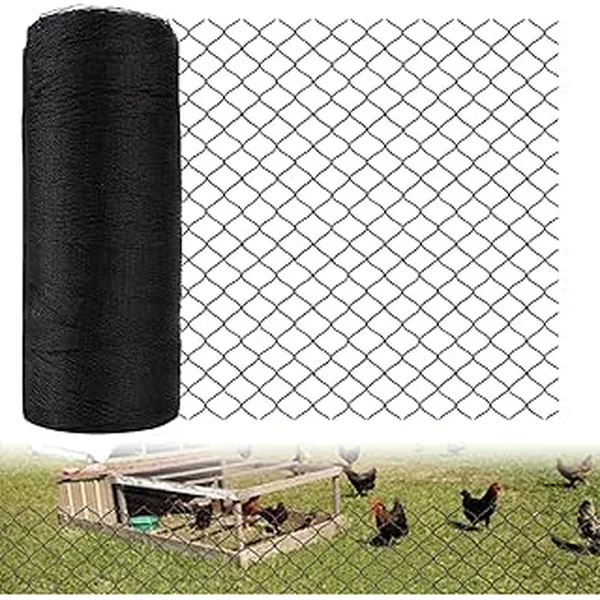
| Birds | Whole berries pecked or missing | Bird netting over the bed during fruiting |
| Spider mites | Yellow stippling on leaves; fine webbing in dry hot weather | Strong water spray; encourage predatory mites; reduce dust |
| Verticillium wilt | Plants suddenly collapse; older leaves wilt first | No cure — remove and discard affected plants; rotate to a new bed location |
| Strawberry crown rot | Plant collapses; brown mushy crown | Improve drainage; raise the bed; remove affected plants |
Harvesting
Pick strawberries when they are fully red — colour develops up the berry from the tip, and the area around the cap should be deep red, not pale. Underripe berries do not ripen further off the plant.
Pick in the morning when the berries are cool and firm; afternoon-picked berries soften within hours. Snip the stem just above the cap with your fingernails or small scissors rather than pulling — pulling can tear the calyx and damage the berry.
Harvest every 2–3 days during the peak season. Berries left too long on the plant attract slugs and rot quickly, especially after rain.
A productive June-bearing patch yields 200–450 g (½–1 lb) of fruit per plant per season; a productive day-neutral or everbearing plant yields 300–500 g (¾–1 lb) over the full season.
Autumn cleanup and winter care
In late autumn, after the first hard frost in cold zones (or in October regardless in mild zones):
- Cut foliage of June-bearing plants back to 5 cm (2 in) above the crown — a process called renovation. Do this immediately after the harvest in July, not in autumn, for the best year-two yields.
- Remove all dead leaves, weeds, and runner debris from the bed.
- Top-dress with 2–3 cm (1 in) of compost if the bed soil has dropped over the season.
- Mulch the crowns with 10–15 cm (4–6 in) of clean straw or pine needles once temperatures consistently drop below 5°C (40°F). This insulates the crowns from freeze-thaw cycles and prevents winter kill in zones 3–5.
- In zones 8–10, no winter mulch is needed but a light 2–3 cm (1 in) layer of straw helps preserve soil moisture through dry winters.
In spring, pull the winter mulch back as soon as new growth begins (usually March in mild zones, April in cold zones) — leaving the mulch on top of the emerging crowns causes rot.
Second-year and beyond
Strawberry beds peak in year two and three, then decline.
- Year one (June-bearing): flowers removed; bed building.
- Year two: heavy fruiting from June-bearing; continuous fruiting from day-neutral and everbearing.
- Year three: equal or slightly lower yield than year two.
- Year four: yield drops 30–50% as parent plants age and disease pressure builds in the bed.
- Year five: tear out the bed, plant new strawberries in a fresh location, and start the cycle again.
To extend a bed beyond year four, rotate “in place”: each year, let strong runners root from the most productive parent plants, then in autumn pull out the original parents and let the daughters become the new bed. This refreshes the bed without abandoning the location, though disease pressure still builds over time and a full rotation to a new site every 5 years remains the cleanest approach.
Common mistakes
- Planting in less than 6 hours of sun. Yields drop and disease pressure rises. Move to full sun.
- Letting year-one June-bearing flowers fruit. Robs the plant of year-two productivity. Pinch every flower in year one.
- Watering the foliage instead of the soil. Causes leaf spot and grey mould. Use a soaker hose or drip line at the base.
- Burying the crown. The growing point at the base of the leaves must sit at the soil surface, not below. Buried crowns rot.
- Letting all runners develop. Tangled bed, weak plants, low yield. Manage runners according to type.
- Skipping straw mulch. Dirty berries, more weeds, more disease. Mulch 5–8 cm (2–3 in) deep around plants in spring.
- Heavy nitrogen feeding. Soft leafy growth, poor fruit, more grey mould. Use balanced fertilizer and stay light during fruiting.
- No winter mulch in cold zones. Crown freeze-kill in zones 3–5. Mulch 10–15 cm (4–6 in) deep in late autumn.
- Not renovating June-bearing beds. Plants get tired, weed pressure builds. Cut foliage to 5 cm (2 in) immediately after harvest and top-dress with compost.
Related reading
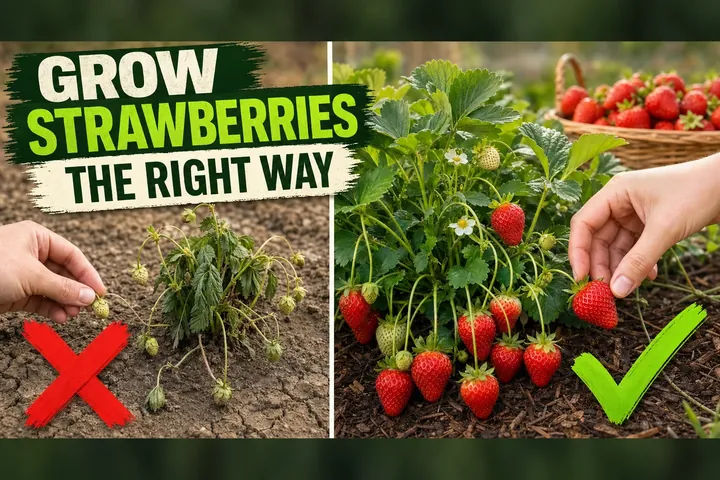
- How to grow strawberries — the from-scratch starter guide for getting a new bed established.
- How to grow strawberries in containers — container-specific care for balconies, patios, and small spaces.
- How far apart to plant strawberries — spacing for matted rows, hill systems, and containers.
- How long does a strawberry plant take to produce fruit — timing expectations for first-year, second-year, and beyond.
Track your strawberry watering schedule, runner-cutting reminders, and post-harvest fertilizer dates with the free Tazart plant care app — a “renovate the bed” alert two weeks after the last picking is the single most useful reminder for June-bearing growers.
A note on conditions
Every garden is different. Local climate, soil type, summer rainfall, the variety you planted, and the depth of winter cold all change how a strawberry bed actually performs. The numbers in this guide — 6–10 hours of sun, 2.5–4 cm (1–1.5 in) of water per week, pH 5.5–6.8, mulch 10–15 cm (4–6 in) deep for winter — are reliable starting points. The plants themselves tell you within the first full season what they want more or less of: small pale leaves and few berries mean more compost, more sun, or more water; lush foliage with little fruit usually means too much nitrogen or shade.
Highly recommended
The supplies that make this guide work

Tazart is an Amazon Associate — we earn from qualifying purchases at no extra cost to you. Thank you for helping us keep these guides free.
Frequently asked questions
How much water does a strawberry plant need?
Strawberry plants need 2.5-4 cm (1-1.5 in) of water per week from rainfall plus irrigation combined — slightly more during fruiting and hot weather. Water deeply at the base of the plant 2-3 times per week rather than shallowly every day. Mulch with straw or pine needles to keep moisture even and the berries clean.
Do strawberries need full sun?
Yes. Strawberries need 6-10 hours of direct sunlight per day for maximum fruit production. Plants in partial shade (4-6 hours) still produce some berries but the harvest is smaller, the fruit ripens later, and disease pressure increases. Full sun also dries the foliage faster after rain, which helps prevent leaf spot and grey mould.
When should I fertilize my strawberry plants?
Apply a balanced 10-10-10 fertilizer at planting time, then a second light application after the first harvest in June-bearing types or in early spring and again in midsummer for day-neutral and everbearing types. Avoid high-nitrogen fertilizers during fruiting — they push leafy growth at the expense of berries and increase rot susceptibility.
Should I cut off strawberry runners?
It depends on the type and your goal. For June-bearing strawberries, remove most runners to direct energy into the parent plant and next year's fruit. For day-neutral and everbearing varieties (which fruit on first-year plants), remove all runners to maximize current-season berry production. Save 2-3 runners per parent only if you want to propagate replacement plants for the bed.
How long do strawberry plants live?
Individual strawberry plants are productive for 3-5 years before yields decline. The bed itself can run indefinitely if you let strong runners root and replace declining parent plants annually. Most growers tear out and rotate the bed after 4-5 years to refresh soil and break disease cycles.
Do strawberry plants come back every year?
Yes — strawberry plants are perennial in USDA zones 3-10. The crown overwinters and resprouts each spring. In cold zones (3-5), mulch the crowns with 10-15 cm (4-6 in) of straw in late autumn to insulate against winter kill. In warm zones (8-10), the plants stay evergreen but yields drop after the third year.