Flowers
How to Care for a Fuchsia Plant: Bloom, Pinch & Overwinter
Learn how to care for a fuchsia plant — part shade, even moisture, weekly feeding, deadheading, pinching, overwintering hardy types, and beating whitefly and gall mite.
On this page
- Quick answer
- Table of contents
- Hardy vs tender fuchsias
- Light: the afternoon shade rule
- Watering fuchsias correctly
- Soil and potting
- Feeding for continuous bloom
- Pinching for bushiness
- Deadheading: the seed-pod rule
- Hanging basket vs upright forms
- Overwintering hardy types
- Overwintering tender types
- Whitefly and fuchsia gall mite
- Troubleshooting table
- Watch: Fuchsia plant care video guide
- Related reading
- Summary: fuchsia plant care checklist
Watch the visual walkthrough
❄ How to Overwinter Fuchsia Baskets ❄ #fuchsia #overwintering
Are you thinking of overwintering ❄ your fuchsia basket plants? Watch how we force our hanging fuchsia plant to go dormant so ...
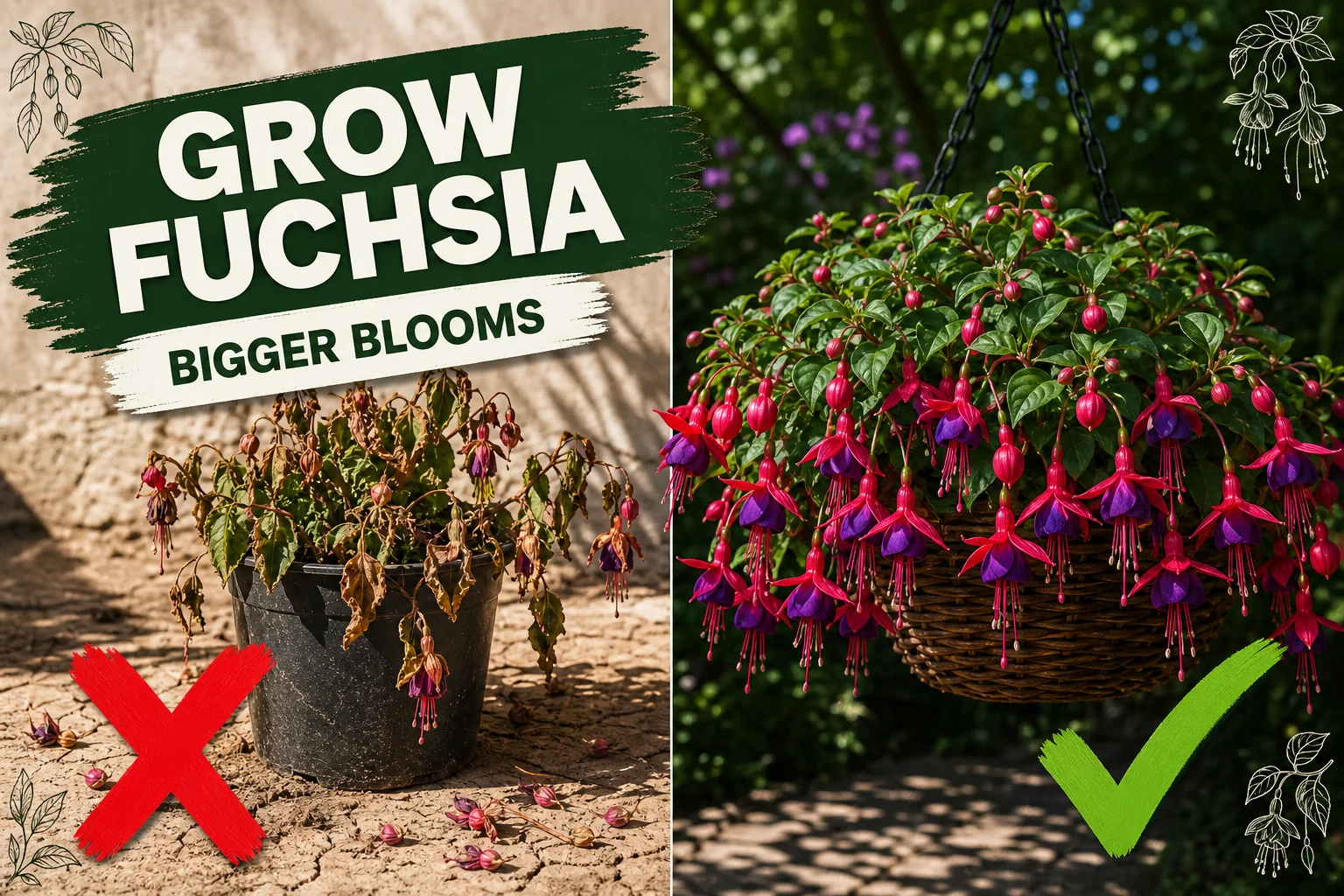
Fuchsias are one of those plants that seem effortless when they are happy — clusters of pendant flowers cascading from a basket for months — and impossible when they are not. The difference comes down to a handful of habits: shade in the afternoon, even moisture, weekly food, and constant deadheading.
This guide walks through exactly how to care for both hardy and tender fuchsia plants, from spring pinching through summer bloom and into winter dormancy.
Quick answer
Fuchsia plants (Fuchsia hybrida) need part shade (especially cool afternoon shade), consistently moist soil, and weekly feeding to keep blooming through summer. Pinch young plants every 2 weeks for bushiness, deadhead the seed pod (not just the flower) to extend bloom, and protect from sun and heat above 27°C (80°F). Hardy varieties (USDA zones 7–10) overwinter outdoors with crown mulching; tender varieties come indoors to a cool frost-free room. Watch for whitefly and fuchsia gall mite — the two main pests.
Table of contents
- Hardy vs tender fuchsias
- Light: the afternoon shade rule
- Watering fuchsias correctly
- Soil and potting
- Feeding for continuous bloom
- Pinching for bushiness
- Deadheading: the seed-pod rule
- Hanging basket vs upright forms
- Overwintering hardy types
- Overwintering tender types
- Whitefly and fuchsia gall mite
- Troubleshooting table
- FAQ
Hardy vs tender fuchsias
Before you do anything else, you need to know which type of fuchsia you have. The care is similar through summer but completely different in winter.
| Type | Examples | USDA hardiness | Winter behaviour |
|---|---|---|---|
| Hardy | F. magellanica, ‘Riccartonii’, ‘Tom Thumb’ | Zones 7–10 | Dies back to ground in winter; resprouts in spring |
| Tender | Most hanging-basket cultivars, ‘Swingtime’, ‘Dollar Princess’ | Zones 9–11 | Damaged by any frost; must come indoors |
If you bought a plant labelled simply “fuchsia” at a garden centre and it was in a hanging basket, it is almost certainly tender. Hardy fuchsias are usually sold as shrubs in larger pots.
In zones 6 and colder, all fuchsias are effectively tender — even hardy varieties need protection.
Light: the afternoon shade rule
This is the single most important growing condition for fuchsias.
Best position: morning sun, afternoon shade. Aim for 4–6 hours of direct sun in the early part of the day, then deep shade through the hot afternoon.
Why: fuchsias evolved in cool cloud-forest conditions of South America and New Zealand, where bright but never harsh light is the norm. Afternoon sun above 27°C (80°F) wilts leaves, scorches flowers, and accelerates bud drop — even when soil is moist.
By climate:
- Cool maritime climates (Pacific Northwest, UK, coastal northern Europe): can take more sun, even full sun in summer
- Hot inland summer climates (Texas, southern Spain, inland Australia): deep shade through the entire afternoon; even morning sun may be too much in extreme heat
- Tropical/subtropical climates: dappled all-day shade only
A fuchsia that wilts by 1 pm even with moist soil is telling you it needs more shade. Move the pot.
Watering fuchsias correctly
Fuchsias are thirsty plants with delicate, shallow root systems. Even moisture is essential — drought stress is the fastest way to lose flowers and buds.
The rule: Check the top 2–3 cm (0.75–1 in) of soil every morning. Water deeply when dry.
Frequency by setup:
| Setup | Typical summer frequency |
|---|---|
| Hanging basket, small pot | Daily (sometimes twice in heatwaves above 30°C / 86°F) |
| Larger container (30 cm / 12 in or more) | Every 1–2 days |
| Ground-planted hardy fuchsia | Every 2–4 days; weekly in cool weather |
| Indoor potted overwintering fuchsia | Every 2–3 weeks (just enough to keep rootball alive) |
How to water: at the base, slowly, until water runs from drainage holes. Never let pots sit in standing water — fuchsias resent both drought and waterlogging.
Wilt-then-water cycles cause bud drop. A single hot day where the plant dries out completely can cost a week of flowering.
Soil and potting
- Texture: rich, loose, moisture-retentive but well-draining
- Recipe: quality multi-purpose peat-free potting mix + 10% perlite for containers
- pH: 6.0 to 7.0
- Drainage: essential — every fuchsia pot needs drainage holes
- In-ground: dig in plenty of compost; improve clay drainage with grit before planting
Pot size:
- Hanging baskets: 30–35 cm (12–14 in) diameter minimum for one trailing fuchsia
- Upright pot: at least 25 cm (10 in) diameter; larger plants need 30–40 cm (12–16 in)
- Avoid undersized pots — fuchsias suffer fast in cramped roots and dry out instantly
Feeding for continuous bloom
Fuchsias are heavy feeders during bloom. Weak feeding equals weak flowering.
Routine:
- Spring through autumn (growing season): balanced liquid fertiliser (e.g. 10-10-10 or 14-14-14) at half-strength every 7–10 days
- Container plants: every 7 days
- In-ground hardy fuchsias: every 10–14 days
- Switch in mid to late summer: to a higher-potassium feed (e.g. 0-10-10 or a tomato-style feed) to boost flowering through the late season
Avoid: high-nitrogen-only feeds — they push leafy growth at the cost of blooms.
Stop feeding: in autumn, 6 weeks before your average first frost date.
Pinching for bushiness
A young fuchsia left unpinched produces 2–3 long stems with sparse flowers at the tips. A pinched fuchsia produces dozens of branches, each with a flower at the tip — many times more bloom on the same root system.
Step-by-step pinching:
- Wait until the plant has 3 pairs of leaves on each main shoot.
- With clean fingertips or snips, pinch out the growing tip just above the second leaf pair.
- Within 7–14 days, two new shoots emerge from the node below.
- When those new shoots have 2 leaf pairs each, pinch them too.
- Repeat until late spring (about 6 weeks before you want bloom to start).
Stop pinching about 6 weeks before you want flowers — buds form on stem tips, and continued pinching delays flowering.
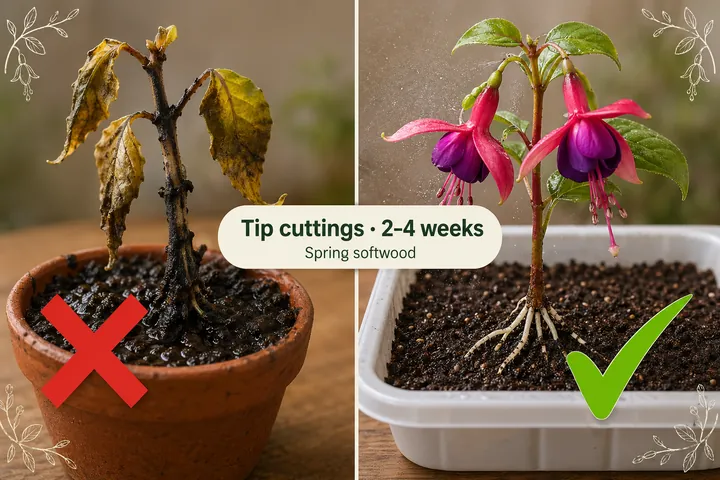
For dedicated propagation of new plants from cuttings of this season’s pinched tips, see our guide on propagating fuchsia — those discarded tips root readily.
Deadheading: the seed-pod rule
This is the rule most fuchsia growers miss. Fuchsias do not just need spent flowers removed — they need the developing seed pod removed.
Why: after a flower drops, the green or red oval berry behind it is a developing seed pod. The plant senses this and shifts energy from making new flowers to ripening seed. Removing the pod tells the plant to keep producing flowers.
How:
- Walk the plant every 2–3 days during peak bloom.
- For each spent flower, follow the stem back to the small green or red berry behind it.
- Pinch or snip the entire pod off — not just the petals.
This single habit can extend flowering by 6–8 weeks per season.
Hanging basket vs upright forms
Hanging baskets are the classic look. Trailing fuchsia varieties pour over the basket edge with cascading pendant blooms. Care notes:
- Use a large 30–35 cm (12–14 in) basket with a coco liner
- Water daily — never miss a hot day
- Hang where it gets morning sun and afternoon shade
- Use lightweight peat-free potting mix to reduce hanging weight
- Refresh basket compost each year
Upright bush forms make more solid garden plants. They have stiffer stems and hold flowers more horizontally. Care notes:
- Use a 25–40 cm (10–16 in) pot or plant in the ground
- Pinch heavily as a young plant to form a rounded bush
- Cane-support taller varieties to prevent stem snap in wind
- Easier to overwinter than baskets (you can move the whole pot)
Many of the same flower-care principles apply to tropical bloomers — our guides on hibiscus plant care, plumeria plant care, and begonia care cover related part-shade or sun-loving flowering shrubs.
Overwintering hardy types
If your fuchsia is hardy (USDA zone 7+ rated), it can stay outdoors with simple winter protection.
- After the first hard frost turns the foliage brown, cut all stems back to 15 cm (6 in) above the ground.
- Mulch the crown with a 7–10 cm (3–4 in) layer of straw, fallen leaves, or compost — this insulates the roots through the coldest weeks.
- Mark the planting position with a stake so you do not forget where it is when bare.
- In spring, when new growth emerges from the base, pull mulch back and feed lightly.
- Some varieties may die back to ground even in zone 7–8 winters — this is normal. The crown is alive and will resprout.
For zones 5–6, attempt hardy fuchsias only with significant winter protection: a 15–20 cm (6–8 in) mulch dome over the entire crown, plus a cloche or row cover for the first hard frost weeks.
Overwintering tender types
Tender fuchsias (most hanging-basket cultivars) cannot survive frost. They must come indoors.
- Before the first frost, bring the plant inside.
- Cut back by half — about 30–40 cm (12–16 in) of growth remaining.
- Move to a cool, dark, frost-free space at 4–7°C (40–45°F). Garages, unheated basements, and cool spare rooms all work. The plant should not be in a warm bright living room — it needs to go dormant.
- Water sparingly — just enough to keep the rootball from drying out completely. Once every 2–3 weeks is typical.
- Stop all feeding until spring.
- In early spring, move back to a brighter cool position and resume watering. New growth should emerge within 2–3 weeks.
- After last frost, harden off and return outdoors.
A successfully overwintered fuchsia can live 5–10 years and grow larger every season.
Whitefly and fuchsia gall mite
Whitefly (Trialeurodes vaporariorum)
Symptoms: clouds of tiny white insects fly up when leaves are brushed; sticky honeydew on lower leaves; yellow stippling.
Fix:
- Knock off with a strong jet of water early in the morning
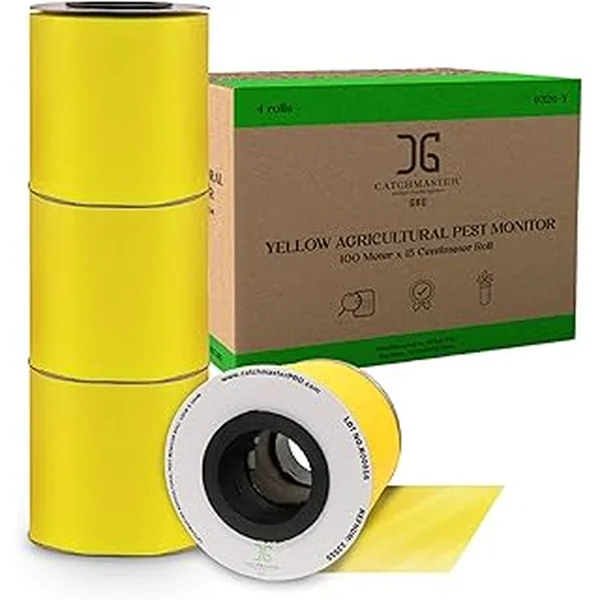
- Hang yellow sticky traps near the plant
- Apply insecticidal soap to leaf undersides every 5–7 days for 3 weeks
- Encourage parasitic wasps and other natural predators by avoiding broad-spectrum insecticides
Fuchsia gall mite (Aculops fuchsiae)
This is a serious specific pest of fuchsias, particularly in California and parts of Europe.
Symptoms: distorted, thickened, reddened new growth that resembles a gall or club; severely affected plants stop flowering.
Fix:
- There is no easy chemical cure for an established infestation
- Remove and destroy all infested growth (bag and bin — do not compost)
- Plant resistant cultivars: ‘Mendocino Mini’, ‘Miniature Jewels’, ‘Voodoo’ series have moderate resistance
- In severe areas, switch to other flowering plants if your cultivar is consistently destroyed
Aphids
Symptoms: clusters of soft green or black insects on new shoots; sticky honeydew.
Fix: strong water blast; ladybird release in the garden; insecticidal soap on undersides.
Rust
Symptoms: orange-brown pustules on undersides of leaves; pale spots on upper surface.
Fix: remove and destroy infected leaves; improve airflow; avoid wetting foliage when watering.
Troubleshooting table
| Symptom | Most likely cause | Fix |
|---|---|---|
| Wilting in afternoon with moist soil | Too much heat / sun | Move to deeper afternoon shade |
| No flowers | Too much shade or excess nitrogen | More morning sun; switch to high-K feed |
| Flower buds drop before opening | Drought stress or temperature shock | Maintain even moisture; protect from heat |
| Yellow leaves on lower plant | Overwatering or magnesium deficiency | Improve drainage; feed Epsom salts |
| White insects flying up from leaves | Whitefly | Sticky traps + insecticidal soap |
| Distorted thickened new growth | Fuchsia gall mite | Remove infested growth; consider resistant variety |
| Sticky residue on leaves | Whitefly or aphids | Strong water blast; insecticidal soap |
| Leggy thin stems | Not enough pinching when young | Cut back hard, restart pinching cycle |
| Brown crispy leaf edges | Underwatering or scorching sun | Daily watering check; more shade |
Watch: Fuchsia plant care video guide
A visual walkthrough of pinching and deadheading is useful — pairs well with those sections above.
Related reading
- How to Propagate Fuchsia — root pinched tips into new plants
- Hibiscus Plant Care — tropical flowering shrub with sun and feeding needs
- Plumeria Plant Care — frangipani for warm-climate gardens
- Begonia Care — another shade-loving summer bloomer
Summary: fuchsia plant care checklist
- Light: morning sun + cool afternoon shade; protect from heat above 27°C (80°F)
- Water: consistently moist; daily for hanging baskets in summer
- Soil: rich, moisture-retentive, well-draining; pH 6.0–7.0
- Feed: balanced liquid feed every 7–10 days at half strength; switch to high-K mid-summer
- Pinch: every 2 weeks until 6 weeks before bloom
- Deadhead: remove entire seed pod, not just petals
- Hardy varieties: USDA 7–10; mulch crown after frost
- Tender varieties: indoors to cool frost-free space at 4–7°C (40–45°F)
- Pests: whitefly, fuchsia gall mite, aphids — monitor weekly
Done well, a fuchsia can cascade with hundreds of pendant blooms from May to first frost. The work is small but steady: water in the morning, deadhead every couple of days, feed once a week, and watch the shade pattern across the day.
Want fuchsia-specific reminders for deadheading, weekly feeding, and overwintering? The Tazart app builds a personalised care calendar and lets Dr. Afrao, our AI plant assistant, answer your specific fuchsia questions in real time.
Highly recommended
The supplies that make this guide work

Tazart is an Amazon Associate — we earn from qualifying purchases at no extra cost to you. Thank you for helping us keep these guides free.
Frequently asked questions
How much sun does a fuchsia plant need?
Most fuchsias thrive in part shade — about 4–6 hours of morning sun with cool afternoon shade. Direct hot afternoon sun is the single biggest killer of fuchsias, especially in summer above 27°C (80°F). In genuinely cool maritime climates, fuchsias can take more sun. In hot inland climates, deep shade is acceptable. Leaves that look wilted by lunchtime even with moist soil are a sure sign the plant needs more shade.
How often should I water a fuchsia plant?
Fuchsias need consistently moist (never waterlogged, never bone-dry) soil. Check daily — water when the top 2–3 cm (0.75–1 in) of soil feels dry. Hanging baskets and small pots in hot weather often need daily watering, sometimes twice a day above 30°C (86°F). Larger ground-planted fuchsias might only need watering 2–3 times a week. The wilt-then-water cycle drops flower buds; even moisture is the single most important habit for continuous bloom.
Why is my fuchsia not blooming?
The most common cause is too much shade or too much nitrogen-heavy fertiliser. Fuchsias need at least a few hours of direct morning sun to bloom heavily, and a balanced or potassium-rich feed every 7–14 days to fuel flower production. Other causes include irregular watering (drought stress drops buds), inadequate pinching when the plant was young (creates fewer flowering stem tips), or simply a tender variety that has not yet recovered from overwintering shock.
How do I deadhead a fuchsia plant correctly?
Fuchsias do not just need spent flowers removed — they need the entire developing seed pod (the small green or red berry behind the bloom) removed too. Once a flower drops, pinch off the berry behind it with your fingertips or snip with small scissors. Leaving seed pods on the plant signals it to stop producing new flowers — removing them keeps it blooming for months longer. Deadhead at least every few days during peak bloom.
How do I overwinter a fuchsia plant?
Hardy varieties (rated USDA zones 7–10, e.g. Fuchsia magellanica) can stay outside; cut back to 15 cm (6 in) above ground after the first hard frost and mulch the crown with 7–10 cm (3–4 in) of straw or leaves. Tender varieties (most hanging-basket types) must come indoors. Cut back by half, move to a cool dark frost-free space at 4–7°C (40–45°F), and water sparingly (just enough to stop the rootball drying out completely) until early spring.
What are the white insects on my fuchsia plant?
Tiny white insects that flutter up in a cloud when you brush the foliage are whiteflies (Trialeurodes vaporariorum), one of the most common fuchsia pests. They suck sap from leaf undersides, leave sticky honeydew, and cause yellowing. Knock them off with a strong jet of water in the morning, hang yellow sticky traps, and apply insecticidal soap to undersides of leaves every 5–7 days. Encourage natural predators by avoiding broad-spectrum sprays.
How do I make a fuchsia bushier?
Pinching is essential. Once a young fuchsia is established and has produced 3–4 pairs of leaves on each shoot, pinch out the growing tip with your fingertips. The plant responds by sending two new shoots from the node below the pinch — doubling stem count. Repeat every 2 weeks until late spring. After this, allow the final round of new shoots to develop flower buds and stop pinching, otherwise you delay blooming.