Houseplants
How Often to Water a Spider Plant (Stop Brown Tips for Good)
Water a spider plant every 7–10 days in summer and 14–21 days in winter — once the top 2–3 cm (0.75–1 in) of soil is dry. Here's how to stop brown leaf tips for good.
On this page
- Quick answer
- How often: the real schedule (week by week)
- Why your spider plant has brown tips
- What you’ll need
- Step-by-step: the right way to water
- Adjusting for season, pot, and light
- Common mistakes to avoid
- Troubleshooting
- Watch: spider plant watering in action
- Related reading
- A note on conditions
Watch the visual walkthrough
Best TIPS For Spider Plant 🌱 Complete Care For Spider Plant
A short visual walkthrough that pairs with the steps above.
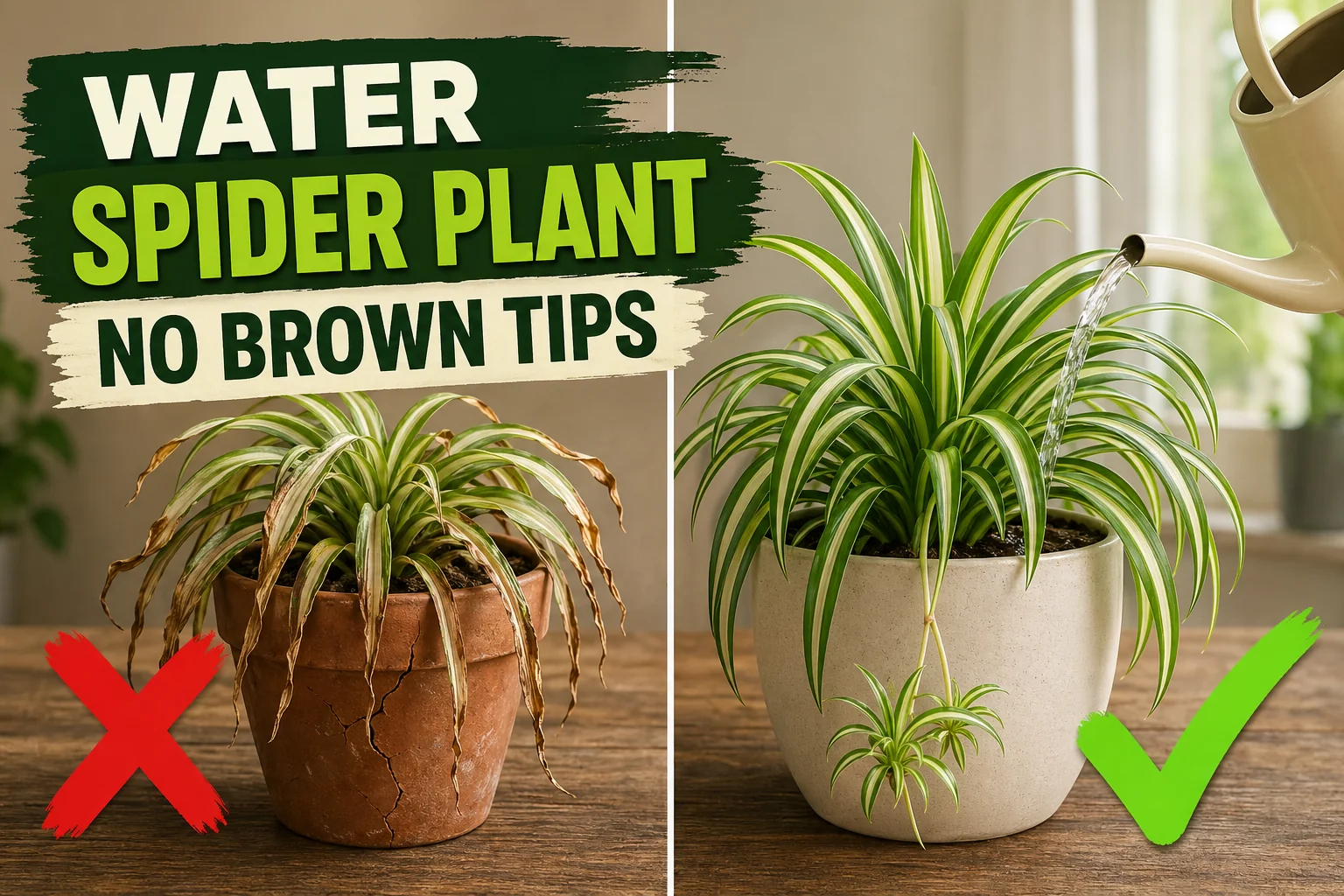
If your spider plant has crispy brown leaf tips, your first instinct is probably to water it more. Don’t. Brown tips on a Chlorophytum comosum almost never mean thirst — they mean fluoride, chlorine, or salt buildup from tap water and fertilizer.
This guide gives you the exact watering cadence by season, the real cause of brown tips, and a step-by-step routine that keeps the variegated leaves glossy and the spiderettes coming.
Quick answer
Water a spider plant once the top 2–3 cm (0.75–1 in) of soil is dry — typically every 7–10 days in spring and summer, and every 14–21 days in autumn and winter. Use room-temperature distilled water, rainwater, or tap water left out for 24 hours. If you see brown tips, the problem is almost always tap water minerals, not underwatering.
How often: the real schedule (week by week)
Spider plants store water in fleshy tuberous roots, so they tolerate a missed watering far better than a soggy one. Use this as a starting baseline and adjust to your conditions.
| Season | Indoor frequency | Soil cue before watering |
|---|---|---|
| Spring (active growth) | Every 7–10 days | Top 2–3 cm (0.75–1 in) dry |
| Summer (peak growth + heat) | Every 5–9 days | Top 2–3 cm (0.75–1 in) dry |
| Autumn (slowdown) | Every 10–14 days | Top 3–4 cm (1–1.5 in) dry |
| Winter (dormancy) | Every 14–21 days | Top 4–5 cm (1.5–2 in) dry |
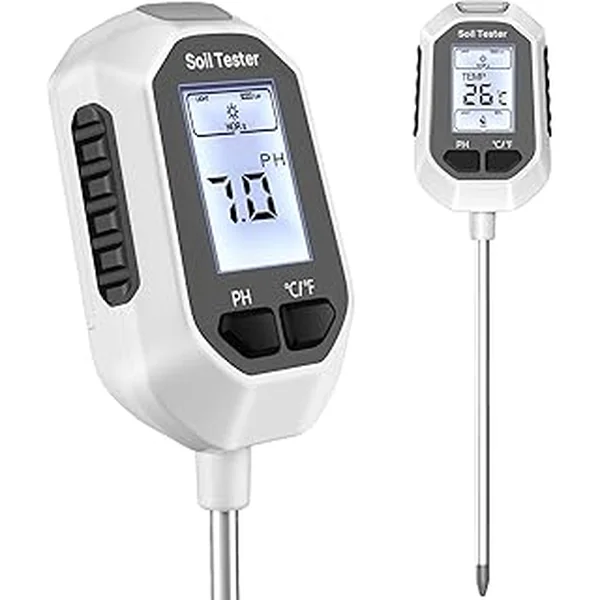
A cheap analogue moisture meter is the easiest gut-check: water when the probe reads 3–4 (out of 10). Above 5, hold off. Below 2, you’ve waited a touch too long.
Why your spider plant has brown tips
This is the single biggest watering question we get, so it deserves its own section. Crispy brown leaf tips are almost always one of three things — and only one of them is about how often you water.
- Fluoride toxicity (most common). Chlorophytum comosum is on the short list of houseplants flagged as fluoride-sensitive. Municipal tap water in many countries is fluoridated at levels harmless to humans but cumulatively toxic to spider plant tips. Fluoride does not evaporate when you let water sit out.
- Chloramine and chlorine. Chlorine evaporates after 24 hours of sitting uncovered. Chloramine — used in many newer water systems — does not. Both burn root tips, which shows up as the leaf tip dying back.
- Salt buildup from fertilizer or hard water. Fertilizer salts and mineral salts in hard water concentrate in the soil over months. They pull moisture out of the root tips, causing tip burn that looks like underwatering but worsens when you water more.
What is rarely the cause: actual underwatering. A genuinely thirsty spider plant goes pale, soft, and floppy before it browns at the tips.
The fix:
- Switch to distilled water, rainwater, or filtered water (a fridge filter or Brita helps).
- If you must use tap, leave it uncovered for 24 hours — but understand this only handles chlorine, not fluoride.
- Flush the pot quarterly: carry it to the sink and slowly run dechlorinated water through it for 2–3 minutes to wash salts out. This single habit prevents most tip browning.
- Trim browned tips at an angle with clean scissors so they look natural — they won’t grow back, but new leaves will come in clean.
What you’ll need
- Room-temperature distilled water, rainwater, or tap water left out 24 hours
- A watering can with a narrow spout (so you can water the soil, not the foliage)
- Optional: an analogue soil moisture meter
- A pot with drainage holes — this is non-negotiable for spider plants
- A saucer you can empty after each watering
That’s the whole kit.
Step-by-step: the right way to water
1. Check the soil 2–3 cm (0.75–1 in) down
Push your finger into the soil up to the second knuckle, or insert a moisture meter halfway down the pot. If the top 2–3 cm (0.75–1 in) feels dry, water. If it feels cool and damp, wait a day or two. This single check prevents most overwatering.
2. Use room-temperature, dechlorinated water
Cold water shocks tropical roots. Pour your distilled, filtered, or rested-out tap water into the can and let it come to room temperature first. If you only have tap, leave a jug uncovered overnight to let chlorine off-gas — and remember this doesn’t help with fluoride.
3. Water the soil, not the leaves
Aim the spout at the soil surface around the base of the plant. Water in slow circles so the entire root ball gets soaked, not just one side. Avoid splashing the foliage — fluoride-rich droplets that dry on the leaves contribute to tip burn.
4. Water until you see drainage
Keep pouring slowly until water runs out of the drainage holes. This is the goal. A full saturate-and-drain cycle hydrates the deep tuberous roots and flushes a small amount of salt out of the soil with every watering.
5. Empty the saucer within 10 minutes
Spider plants tolerate a short miss but punish standing water with root rot. Tip the saucer into the sink as soon as the pot stops dripping. Never let the pot sit in collected runoff.
6. Note the date — then forget the calendar
Mark the watering date in a plant care app or note. Then don’t water on a schedule — water on the soil cue. The note is just a sanity check so you know roughly how fast your specific plant drinks.
Adjusting for season, pot, and light
The 7–10 day rule is a baseline. Your real frequency moves with conditions:
- Bigger pot, terracotta: dries faster — water more often.
- Smaller pot, plastic or glazed ceramic: holds water longer — water less often.
- South or west window with bright direct light: higher transpiration — water more often.
- North-facing or low light: slow growth, low transpiration — water much less, especially in winter.
- Dry winter heating: soil dries top-down quickly, but the bulk of the rootball stays damp longer than you’d think — always check the soil before watering.
If you’re juggling multiple plants, the free Tazart app holds species-specific watering rules, adjusts for your local weather and indoor light, and pings you only when the pot actually needs water — instead of on a fixed weekly reminder.
Common mistakes to avoid
- Watering on a fixed weekly schedule. Spider plants don’t dry on a schedule — they dry based on pot, light, and season.
- Using cold water straight from the tap. Shocks roots and worsens tip browning. Always use room-temperature water.
- Ignoring tap water quality. This is the #1 cause of brown tips. Fluoride and chloramine are the real enemies, not your watering hand.
- Leaving the pot in standing water. A wet saucer = rotting tubers within a week.
- Over-fertilizing. Spider plants are light feeders. A diluted balanced fertilizer once a month in spring/summer is plenty. Salt buildup from monthly heavy feeds is a hidden tip-burn cause.
- Misting daily. Spider plants don’t need misting. Dried-on droplets actually leave mineral marks on the leaves.
Troubleshooting
| Symptom | Likely cause | Fix |
|---|---|---|
| Crispy brown leaf tips | Fluoride / chloramine / salt buildup | Switch to distilled or rainwater; flush the pot quarterly |
| Pale, floppy, washed-out leaves | Underwatering or very low light | Soak thoroughly once; move to brighter indirect light |
| Yellow leaves with mushy bases | Overwatering / root rot | Stop watering, unpot, trim mushy tubers, repot in fresh dry mix |
| Leaves curling inward | Heat stress or extreme dryness | Move out of direct hot sun; water and let the rootball rehydrate |
| White crust on soil surface | Hard-water mineral buildup | Scrape off the top 1 cm (0.5 in) of soil; replace with fresh mix; flush the pot |
| No spiderette babies forming | Plant is too young, too dark, or over-fertilized | Be patient (12–18 months); give bright indirect light; pause feeding for 2 months |
Watch: spider plant watering in action
A short visual walkthrough pairs well with the steps above. If you’re a visual learner, watch a quick spider plant watering tutorial on YouTube and then come back to follow the soil-cue rule in this guide — every plant in every home dries on its own clock, and your eyes plus a finger in the soil beat any timer.
Related reading
- How to take care of a spider plant — light, soil, repotting, and feeding once you’ve got watering dialled in.
- How to propagate a spider plant — turn those spiderette babies into a dozen new plants for free.
- How often to water a jade plant — the opposite end of the watering spectrum, and a good comparison if you keep both.
- Let the free Tazart plant identifier scan your spider plant and set the watering schedule for you, adjusted for your local weather.
A note on conditions
Every home is different. Light intensity, pot size, soil mix, ambient humidity, the season, and your local water chemistry all change how often a spider plant actually needs water. Use the cadence above as a starting point, watch what your plant does in week two, and trust the soil cue — that’s how every good plant grower learns.
Highly recommended
The supplies that make this guide work
Tazart is an Amazon Associate — we earn from qualifying purchases at no extra cost to you. Thank you for helping us keep these guides free.
Frequently asked questions
How often should I water a spider plant?
Water a spider plant once the top 2–3 cm (0.75–1 in) of soil is dry — usually every 7–10 days in spring and summer, and every 14–21 days in autumn and winter. Frequency depends on pot size, light, and indoor humidity, so check the soil with your finger before reaching for the watering can.
Why does my spider plant have brown tips?
Brown tips on a spider plant are almost never caused by underwatering. The two real culprits are mineral buildup from tap water (fluoride and chloramine) and salt buildup from fertilizer. Switch to distilled water, rainwater, or tap water left out for 24 hours, and flush the pot thoroughly every 2–3 months to wash salts out.
Can I water a spider plant with tap water?
Only if your tap water is fluoride-free and low in chloramine. Chlorophytum comosum is one of the most fluoride-sensitive houseplants and reacts with classic crispy brown leaf tips. Filtered, distilled, or rainwater is safer. If you must use tap, leave it out uncovered for 24 hours so chlorine evaporates — note that fluoride does not evaporate.
Do spider plants like to dry out between waterings?
Yes — partly. The fleshy tuberous roots store water, so the plant tolerates short dry spells. Let the top 2–3 cm (0.75–1 in) of the soil dry out between waterings, but don't let the entire pot bone-dry for long stretches or you'll see leaves curl and lose colour.
How much water does a spider plant need?
Water until you see drainage running freely from the bottom of the pot, then stop. There's no fixed millilitre amount — it depends on pot volume. The goal is to soak the entire root ball, then let the excess drain so the roots aren't sitting in standing water.
Should I bottom-water my spider plant?
Bottom-watering works well for spider plants and helps avoid splashing fluoride-rich water onto the leaves. Sit the pot in 2–3 cm (0.75–1 in) of room-temperature filtered water for 15–20 minutes, then lift it out and let it drain. Top-water once a quarter to flush salts out of the soil.