Guide
How Often to Fertilize Your Lawn (and Best Time of Day)
How often to fertilize your lawn — 4 feeds for cool-season grass, 5 for warm-season, the right time of day, and the seasonal schedule that actually works.
On this page
- Quick answer
- Table of contents
- Why frequency matters
- Cool-season vs warm-season grass
- Seasonal feeding schedule
- Best time of day to fertilize
- Wet vs dry lawn application
- Signs you’re over-fertilizing
- How to apply fertilizer step by step
- Common fertilizing mistakes
- Troubleshooting
- FAQs
- Related reading
- A note on conditions
Watch the visual walkthrough
Grass Maintenance: What We Fertilize With & How Often! 🌾💚// Garden Answer
Quick note about Gypsum! In the video I said that gypsum lowers the pH of the soil. It doesn't. It does, however, simulate the ...
A healthy thick lawn is not built on more fertilizer — it’s built on the right number of feedings, in the right windows, at the right time of day. Most lawns in the US, UK, Canada, and Australia fall into one of two big groups: cool-season grasses like Kentucky bluegrass, tall fescue, and perennial ryegrass, which thrive between 15–24°C (60–75°F); and warm-season grasses like Bermuda, zoysia, and St. Augustine, which prefer 25–35°C (75–95°F). Frequency matters because each grass type has a different growth window, a different nitrogen demand, and a different dormancy pattern.
Get the timing right and the lawn fills in, crowds out weeds, and recovers from foot traffic on its own. Get it wrong — too much, too late, or in the wrong heat — and you’ll see fertilizer burn, runoff, and yellow streaks within a week. This guide walks through exactly how often to feed your lawn, the seasonal schedule for cool-season vs warm-season turf, the best time of day to spread, and the application mistakes that waste most homeowners’ fertilizer.
Quick answer
Feed cool-season lawns (Kentucky bluegrass, fescue, ryegrass) 4 times a year — early spring, late spring, early autumn, and late autumn. Feed warm-season lawns (Bermuda, zoysia, St. Augustine) 5 times a year — late spring through early autumn. Always spread in the early morning (6–10 a.m.) or late afternoon (4–6 p.m.), never between 11 a.m. and 3 p.m. Water the fertilizer in with 6–12 mm (0.25–0.5 in) of water within 24 hours.
Table of contents
- Why frequency matters
- Cool-season vs warm-season grass
- Seasonal feeding schedule
- Best time of day to fertilize
- Wet vs dry lawn application
- Signs you’re over-fertilizing
- How to apply fertilizer step by step
- Common fertilizing mistakes
- Troubleshooting table
- FAQs
- Related reading
- A note on conditions
Why frequency matters
A lawn pulls most of its nitrogen out of the soil within 6–8 weeks of a feeding. After that, blades go pale, growth slows, weeds invade the thinning patches, and the turf can’t recover from foot traffic. Feeding too little leaves yellow lawn; feeding too often pushes top growth so fast that roots stay shallow and the lawn fails the first time the weather turns hot or dry.
Four feedings a year for cool-season turf, and five for warm-season turf, hit the balance: enough nitrogen to keep the canopy thick, with deep enough rest periods that roots stay long and drought-resilient. Skip a feeding and the lawn thins. Add a sixth feeding “just to be safe” and you build up salts that burn the crown.
Cool-season vs warm-season grass
The first step is knowing which lawn you have, because the schedules are completely different.
Cool-season grasses (most of the northern US, UK, Canada, northern Europe):
- Kentucky bluegrass (Poa pratensis)
- Tall fescue (Festuca arundinacea)
- Fine fescue (Festuca rubra)
- Perennial ryegrass (Lolium perenne)
- Peak growth at 15–24°C (60–75°F) — spring and autumn
- Slows or browns in mid-summer heat above 30°C (86°F)
Warm-season grasses (the southern US, Australia, much of South America):
- Bermuda grass (Cynodon dactylon)
- Zoysia (Zoysia japonica)
- St. Augustine (Stenotaphrum secundatum)
- Centipede grass (Eremochloa ophiuroides)
- Peak growth at 25–35°C (75–95°F) — late spring through early autumn
- Goes brown and dormant below 13°C (55°F)
If you can’t tell which one you have, look at when the lawn is greenest: cool-season is green in April and October but tan in August; warm-season is brown in winter and bright green in July.
Seasonal feeding schedule
This is the core of the whole article. Match every feeding to the active growth window.
| Window | Cool-season (4 feeds) | Warm-season (5 feeds) | Goal |
|---|---|---|---|
| Early spring (Mar–Apr) | Light feed when soil hits 13°C (55°F) | Skip — still dormant | Wake up roots, green-up |
| Late spring (May–Jun) | Balanced feed before summer | First feed once green-up is full | Build leaf canopy |
| Early summer (Jun–Jul) | Skip — heat stress | Second feed | Push warm-season growth |
| Mid-summer (Jul–Aug) | Skip — heat stress | Third feed | Sustain canopy |
| Late summer (Aug–Sep) | Skip if dry — feed if rainy | Fourth feed | Recover from heat |
| Early autumn (Sep–Oct) | Heaviest feed of the year | Final feed before dormancy | Build root reserves |
| Late autumn (Oct–Nov) | Winterizer feed before frost | Skip — going dormant | Store carbs in roots for winter |
Cool-season grass — 4 feeds a year:
- Early spring once soil reaches 13°C (55°F) — light dose, around 0.5 kg N per 100 m² (1 lb N per 1000 sq ft)
- Late spring before summer heat — balanced 0.5 kg N per 100 m² (1 lb N per 1000 sq ft)
- Early autumn — the most important feed, 0.7–1 kg N per 100 m² (1.5–2 lb N per 1000 sq ft)
- Late autumn winterizer 4–6 weeks before first hard frost — 0.5 kg N per 100 m² (1 lb N per 1000 sq ft)
Warm-season grass — 5 feeds a year:
- Late spring once fully green-up is finished
- Early summer — 4–6 weeks after #1
- Mid-summer — 4–6 weeks after #2
- Late summer — 4–6 weeks after #3
- Early autumn — final feed 6 weeks before dormancy
Never apply more than 0.5 kg of nitrogen per 100 m² (1 lb N per 1000 sq ft) in a single application. Bigger doses scorch blades and leach into groundwater.
Best time of day to fertilize
The right time of day is just as important as the right month.
Best windows:
- Early morning, 6–10 a.m. — soil is cool, dew helps granules settle, wind is calm
- Late afternoon, 4–6 p.m. — sun’s strongest hours have passed, you can water in afterward, and overnight temperatures cool the soil
Avoid:
- 11 a.m. – 3 p.m. — soil temperatures peak. Granules touching hot blades cause fertilizer burn within hours, leaving yellow or brown streaks that follow your spreader path.
- Just before nightfall on a hot day — fertilizer sitting on warm wet blades all night encourages fungal disease (brown patch, dollar spot) on susceptible lawns.
- Frosted grass — granules bounce off frozen blades and end up unevenly distributed.
Water it in within 24 hours. Apply 6–12 mm (0.25–0.5 in) of water with a sprinkler or wait for forecast rain in that range. Without water, the granules sit on the blades, lose nitrogen to volatilization, and risk burning the lawn at the next sunny stretch.
Wet vs dry lawn application
The lawn surface and the soil underneath both matter.
Granular slow-release fertilizer:
- Lawn blades: dry. Wet blades cause granules to stick and concentrate, which scorches.
- Soil: lightly moist. Dry soil sheds granules; soggy soil traps them in low spots.
- The ideal is a lawn that was watered or rained on 24 hours earlier, mowed 1–2 days before, with dry blade tips at the moment of spreading.
Liquid fertilizer:
- Apply to dry blades early morning, then leave undisturbed for 4 hours before watering or mowing.
- Liquid is absorbed through the leaf, so timing matters more than soil moisture.
If a heavy rainstorm (over 12 mm / 0.5 in) is forecast within 6 hours of spreading, delay the application. The fertilizer will run off into the street, the storm drain, and ultimately waterways — wasted product and an environmental problem.
Signs you’re over-fertilizing
Catch these early and the lawn recovers in 4–8 weeks. Ignore them and you’ll be reseeding bare patches by next spring.
- Yellow or brown streaks following your spreader pattern — fertilizer burn from overlap passes
- Tip burn — blade tips brown or curl, especially on the sunniest part of the lawn
- A white salt crust on the soil surface in dry stretches
- Lush dark green top growth, but the lawn wilts fast in heat — shallow roots from too-frequent feeding
- Brown spongy patches — fungal disease (brown patch) thriving on excess nitrogen
- Fertilizer runoff in driveways or storm drains after rain — overapplication or applied too close to a downpour
If you see two or more, stop feeding for 8 weeks, water deeply (25 mm / 1 in once a week) to flush salts, and skip the next scheduled feed.
How to apply fertilizer step by step
- Identify the grass type — cool-season vs warm-season. This sets the entire calendar.
- Mow 1–2 days before at your normal height. Bag the clippings on the pre-feed mow.
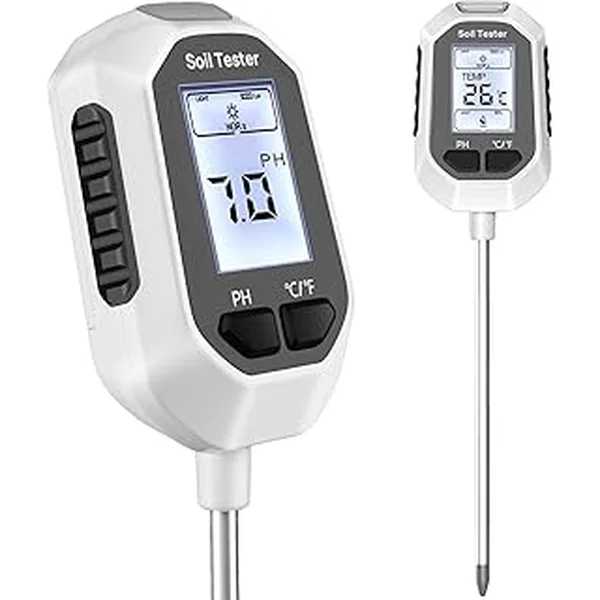
- Test soil pH if it’s been over 2 years. Lawns absorb nitrogen best at pH 6.0–7.0. A simple soil pH meter is enough.
- Read the bag. Calculate the correct rate for your lawn area. A 3 kg (6.6 lb) bag of 24-0-12 covers about 100 m² (1000 sq ft).
- Fill the rotary or drop spreader on a hard surface (driveway, patio) — never over the lawn — so spilled granules don’t burn a single spot.
- Set the spreader rate per the bag’s chart for your specific spreader model.
- Walk in straight overlapping passes at a steady pace. Apply half the dose in one direction, then the other half in perpendicular passes for even coverage.
- Sweep up any granules from sidewalks and driveways and return them to the lawn — never wash them into storm drains.
- Water in within 24 hours with 6–12 mm (0.25–0.5 in) of water, or wait for forecast rain in that range.
- Note the date. Use the free Tazart app to log the feed and set the next reminder for 6–8 weeks out.
Common fertilizing mistakes
-
Over-feeding. Five or six feedings on cool-season grass is too many. Stick to 4 a year and the lawn stays thicker than over-fed neighbours.
-
Applying right before a heavy rainstorm. Anything over 12 mm (0.5 in) of rain within 6 hours washes the fertilizer into storm drains. Light rain is fine — heavy rain is wasted money and a pollution problem.
-
Missing the second pass. Spreading in only one direction leaves stripes. Always apply half the dose in one direction and half perpendicular.
-
Fertilizing in mid-summer heat on a cool-season lawn. The grass is in heat-stress dormancy. Nitrogen has nowhere to go and burns the crown. Skip those months.
-
Spreading on wet blades. Granules stick and concentrate. Always spread on dry foliage with damp soil.
-
Forgetting to water it in. Dry granules lose nitrogen to volatilization within 48 hours and risk burning at the next sunny stretch. Water in with 6–12 mm (0.25–0.5 in) every time.
Troubleshooting
| Symptom | Likely cause | Fix |
|---|---|---|
| Yellow stripes following spreader path | Uneven application, missed second pass | Water deeply for 2 weeks; next feed, do half-dose perpendicular passes |
| Brown burnt patches after fertilizing | Fertilizer burn from spreading on hot lawn or wet blades | Water 25 mm (1 in) immediately; reseed bare patches in next overseeding window |
| Lawn went tan a week after feeding | Applied during drought or heat stress on dormant grass | Stop feeding; water deeply; resume only when grass actively grows again |
| White salt crust on soil surface | Salt buildup from over-fertilizing | Skip next 2 feeds; water 25 mm (1 in) weekly to leach salts |
| Lawn looks dark green but wilts fast | Shallow roots from too-frequent feeding | Stretch interval to 8 weeks; water deeply 25 mm (1 in) once a week, not daily shallow |
| Brown patches with circular fungal rings | Excess nitrogen feeding fungal disease | Skip next feed; mow tall (7.5 cm / 3 in); water early morning only |
FAQs
Can I fertilize my lawn at night? It’s not ideal. Spreading after dusk leaves fertilizer sitting on cool wet blades all night, which encourages fungal disease (brown patch, dollar spot) on susceptible warm-weather lawns. Late afternoon (4–6 p.m.) is fine because the lawn dries before nightfall. If you must spread at night, water it in with 6–12 mm (0.25–0.5 in) immediately and rake any granules off the blade tips.
Can I fertilize before rain? Light rain — 3–6 mm (0.1–0.25 in) within the next 24 hours — is perfect. The rain waters granules in for you. Heavy rain — over 12 mm (0.5 in) within 6 hours — washes everything away and pollutes waterways. Always check the forecast before spreading.
Can I fertilize in summer drought? No. Never fertilize a dormant or drought-stressed lawn. Grass that crunches underfoot or has gone tan is not absorbing nutrients. Nitrogen builds up as salts in the root zone and burns the crown when the lawn tries to resume growth. Wait 7–10 days after rain or deep irrigation has greened it back up.
Should I fertilize after mowing? Mow 1–2 days before, not immediately after. Mowing right before opens up the canopy so granules reach the soil. Wait 24–48 hours after fertilizing before mowing again so the nitrogen is watered in and absorbed instead of picked up in the bag.
Can I use liquid fertilizer instead of granular? Yes — liquid greens up the lawn faster (3–5 days) and is great for a mid-season top-up. But it only feeds for 2–3 weeks, so you’d need 8–10 applications a year to match a slow-release granular schedule. For most lawns, granular slow-release is the cheaper, more even choice for the main 4–5 feeds; keep liquid for spot fixes.
How long after fertilizing should I water? Water within 24 hours with 6–12 mm (0.25–0.5 in) — enough to dissolve granules and move nitrogen into the root zone, but not so much you cause runoff. If natural rain in that range is in the forecast within 24 hours, let it do the job for you.
Related reading
- How to plant grass seed on an existing lawn (overseeding guide) — fall feed #3 is the perfect window to overseed thin patches at the same time.
- How to make compost at home — a thin compost top-dress every other year supplies slow-release organic nitrogen between feedings.
- How to fix root rot — the same overwatering and salt buildup that causes root rot in pots happens in compacted lawn soil too.
Track every lawn feeding automatically with the free Tazart plant care app. Log your fertilizer date and the app fires the next reminder 6–8 weeks out — and Dr. Afrao, the in-app AI assistant, can diagnose fertilizer burn, fungal patches, and nitrogen deficiency from a photo of the lawn.
A note on conditions
Every lawn is different. The numbers in this guide — 4 feeds for cool-season, 5 for warm-season, 0.5 kg N per 100 m² (1 lb per 1000 sq ft), 6–12 mm (0.25–0.5 in) water-in — are reliable starting points, but your specific grass species, soil type, sun exposure, mowing height, irrigation system, and local climate all change how the lawn responds to feeding. Watch the lawn for the 2 weeks after each application: green-up speed, blade tip colour, and how the turf recovers from foot traffic will tell you whether to advance, delay, or skip the next feed. That feedback loop — observe, adjust, observe again — is what turns an average lawn into a thick weed-free one.
Highly recommended
The supplies that make this guide work
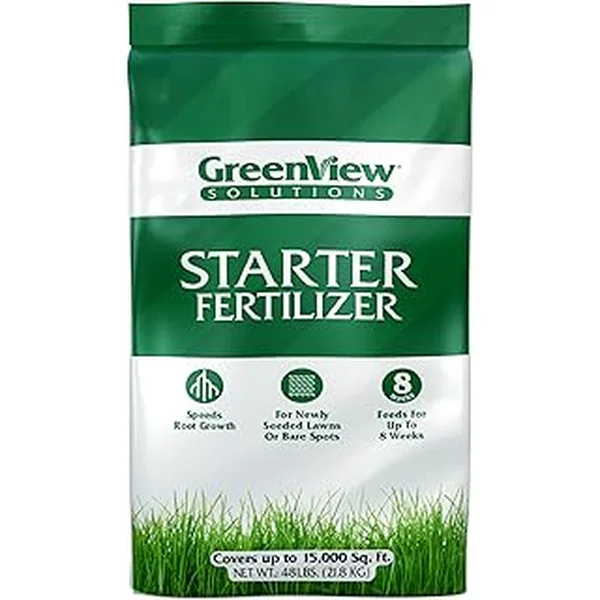
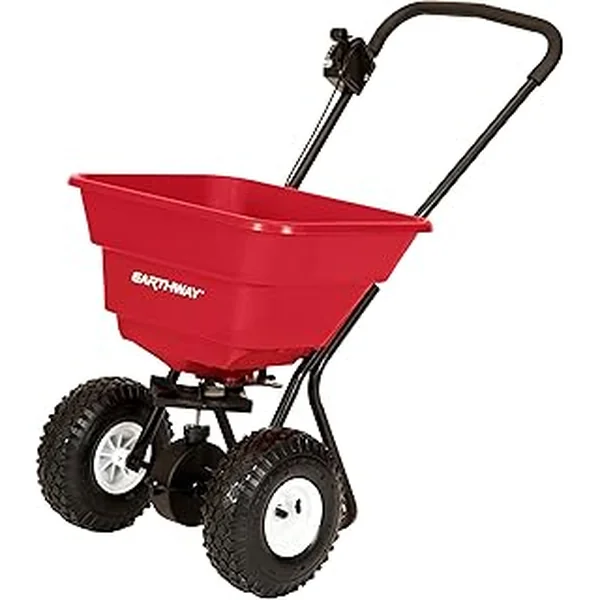
Tazart is an Amazon Associate — we earn from qualifying purchases at no extra cost to you. Thank you for helping us keep these guides free.
Frequently asked questions
How many times a year should I fertilize my lawn?
Cool-season lawns (Kentucky bluegrass, tall fescue, perennial ryegrass) need 4 feedings a year — early spring, late spring, early autumn, and late autumn. Warm-season lawns (Bermuda, zoysia, St. Augustine) need 5 feedings — late spring, early summer, mid-summer, late summer, and early autumn. Skip feeding when the grass is dormant or under heat or drought stress.
What is the best time of day to fertilize a lawn?
Early morning between 6–10 a.m. or late afternoon between 4–6 p.m. are the safest windows. Avoid 11 a.m.–3 p.m. when soil temperatures peak and granules can scorch grass blades. Cooler air, calmer wind, and lighter dew help the fertilizer settle evenly, and you can water it in within 24 hours without losing nitrogen to evaporation.
Can I fertilize my lawn before rain?
Light rain (3–6 mm / 0.1–0.25 in) within 24 hours is ideal — it waters granules in for you. But heavy rain (over 12 mm / 0.5 in) within a few hours of spreading washes fertilizer off the lawn into storm drains, wasting product and causing nutrient runoff. Check the forecast before spreading and skip the application if a downpour is expected.
Can I fertilize my lawn in summer drought?
No — never fertilize a drought-stressed or dormant lawn. Grass that's gone tan or crunchy underfoot has stopped growing, so the nitrogen has nowhere to go. It builds up as salts in the root zone and burns the crown when growth tries to resume. Wait until rain or irrigation has greened the lawn back up for at least 7–10 days.
Should I mow before or after fertilizing?
Mow 1–2 days before fertilizing so the granules reach the soil instead of resting on long blade tips, then wait 24–48 hours after fertilizing before mowing again. This gives the nitrogen time to be watered in and absorbed by the roots, and avoids picking up granules in the mower bag with your clippings.
Is liquid or granular fertilizer better for lawns?
Granular slow-release is the standard choice for whole-lawn feeding 4–5 times a year — it spreads evenly with a rotary or drop spreader and feeds for 6–8 weeks per application. Liquid feeds work faster (greens up in 3–5 days) but only last 2–3 weeks, so they're best as a quick mid-season top-up, not the main schedule.