Edible
How Many Red Peppers Can One Plant Produce? (Realistic Yield Guide)
How many red peppers per plant? Bells yield 6-8, jalapeños 25-50, cherry types 50-100+. Full variety yield guide and tips to boost harvest.
On this page
- Quick answer
- Table of contents
- Yield by variety: realistic numbers
- 5 factors that control how many peppers you get
- How to get more peppers from each plant
- Troubleshooting: why your plant is underproducing
- Will overwintering increase yield?
- Getting spacing right for maximum yield
- Growing bell peppers for maximum fruit
- A note on conditions
- FAQ
- Related reading
Watch the visual walkthrough
4 Tips For a Huge PEPPER Harvest
In this video I'm going to go through my top 4 tips to get a huge pepper harvest. Organic gardening doesn't have to be difficult.
A single red pepper plant can give you 6 peppers or 60 — depending entirely on the variety you choose and whether a few key conditions are met. The realistic range is wider than most seed packets admit.
This guide gives you honest per-plant yield numbers for every major pepper type, plus the five factors that separate a 3-pepper plant from a 10-pepper plant.
Quick answer
Bell peppers yield 6-8 fruits per plant in a typical season, with 10+ possible in ideal conditions. Jalapeños produce 25-50 per plant. Cherry and mini sweet peppers deliver 50-100+ per plant. Superhots like habanero average 30-60. Variety, season length, sun, pruning, and consistent watering are the five factors that determine where your plant lands in that range.
Table of contents
- Yield by variety: realistic numbers
- 5 factors that control how many peppers you get
- How to get more peppers from each plant
- Troubleshooting: why your plant is underproducing
- Will overwintering increase yield?
- FAQ
Yield by variety: realistic numbers
These figures are per-plant, per-season averages under home garden conditions — not greenhouse maximums. Expect the lower end in cool short-summer climates and the higher end in warm climates with 5+ months of growing season.
| Variety type | Typical yield per plant | Ideal-condition maximum | Days to red ripe |
|---|---|---|---|
| Bell pepper (California Wonder, Big Red) | 6-8 fruits | 10-12 fruits | 90-110 days |
| Sweet snacking / mini pepper | 20-40 fruits | 50+ fruits | 75-90 days |
| Jalapeño | 25-35 fruits | 50 fruits | 70-80 days (green), 90+ days (red) |
| Serrano | 30-50 fruits | 80 fruits | 70-80 days |
| Cayenne | 30-50 fruits | 75 fruits | 70-85 days |
| Poblano / Ancho | 10-15 fruits | 20 fruits | 65-80 days |
| Cherry pepper | 50-100 fruits | 150+ fruits | 75-90 days |
| Habanero / Scotch bonnet | 30-60 fruits | 100+ fruits | 90-110 days |
| Ghost pepper / Bhut jolokia | 20-40 fruits | 60 fruits | 100-120 days |
| Carolina Reaper / superhots | 15-30 fruits | 50 fruits | 120-150 days |
Why bell peppers produce fewer fruits than jalapeños
Each bell pepper fruit weighs 150-300 g (5-11 oz) at full size. Growing and ripening one takes enormous energy. The plant can only carry 4-6 fruits to full red at one time before new flower production slows.
A jalapeño pepper weighs 20-50 g (¾-1¾ oz). The plant can carry 15-20 simultaneously, cycle through them faster, and keep flowering all season. That is why the fruit count is 4-5 times higher even though the plants are similar in size.
Cherry peppers take this further — each fruit is 3-10 g (⅛-⅓ oz), and the plant produces dozens of flowers in each cycle.
5 factors that control how many peppers you get
1. Season length
Peppers are slow. Bell peppers need 90-110 days from transplant to red ripe. Superhots need 120-150 days. In a northern climate where the growing season between last frost and first frost is only 100-120 days, a bell pepper plant may complete only one fruit cycle before frost — meaning 6-8 peppers total.
In zones 8-10 with 180+ frost-free days, the same plant completes 2-3 cycles and yields 15-20+ peppers.
Fix: Start seeds indoors 8-10 weeks before your last frost. Transplant as early as safely possible once soil reaches 18°C (65°F). Use row covers or frost cloth to protect plants at season’s end and extend harvest by 2-3 weeks.
2. Sunlight: 6-8 hours minimum
Peppers are sun-hungry. Below 6 hours of direct sun per day, fruit set drops sharply — plants push leafy growth instead of flowers. Thin-walled, undersized, pale peppers are almost always a sunlight problem.
Full sun (8+ hours) drives the most vigorous flowering and fruit set. If your garden is partially shaded, choose compact hot pepper varieties like jalapeño or serrano over large bell peppers — they tolerate 6 hours better.
3. Temperature and fruit set
Peppers set fruit within a specific temperature window:
| Temperature | What happens |
|---|---|
| Day: above 35°C (95°F) | Pollen sterile, flowers drop, no fruit set |
| Day: 24-32°C (75-90°F) | Optimal — maximum fruit set |
| Day: 18-24°C (65-75°F) | Good — fruit sets but slower |
| Night: below 13°C (55°F) | Flower and bud drop, growth stalls |
| Below 4°C (40°F) | Plant damage, possible death |
Midsummer heat above 35°C (95°F) is the most common cause of a healthy-looking pepper plant suddenly stopping fruit production. The plant is not sick — it is waiting for temperatures to fall back into range. Afternoon shade cloth reduces ambient temperature around plants by 3-5°C (5-9°F) and restores fruit set.
4. Fertilization strategy
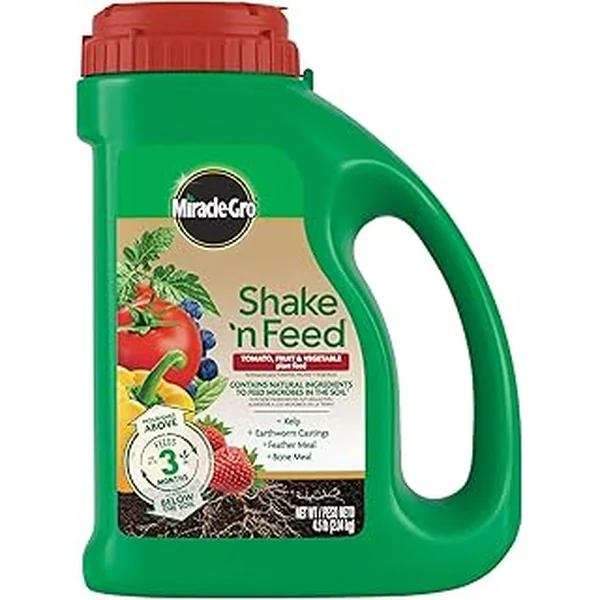
High-nitrogen fertilizer grows lush green plants with few peppers. The goal is a moderate nitrogen level that supports healthy leaves, combined with higher phosphorus and potassium to drive flowering and fruit development.
Switch to a low-nitrogen, high-potassium formula (5-10-10 or tomato-specific fertilizer) once the plant sets its first flowers. Feed every 2 weeks throughout the season. Add a foliar calcium spray every 10 days during fruit set to prevent blossom-end rot, which can ruin 20-30% of a crop before harvest.
5. Harvesting frequency
This one surprises new growers: leaving ripe peppers on the plant slows production. The plant detects ripened fruit and reduces new flower production — the biological signal that it has completed its reproductive task.
Picking peppers promptly when they are full-sized (even if still green) keeps the plant in active production mode. A plant that is picked regularly every few days produces more total fruit over the season than one where peppers are left to hang for weeks.
How to get more peppers from each plant
Pruning the first flowers
When a young pepper plant sets its very first flower before it has developed strong branching — usually when it is 20-25 cm (8-10 in) tall — many experienced growers pinch that first flower off. This redirects the plant’s energy into building more branches and root mass before fruiting begins.
The result: 2-3 weeks of delayed first harvest, but a significantly larger plant that ultimately produces more total fruit over the season. This technique is most effective for bell peppers and habaneros. For jalapeños and faster-cycling varieties, it is optional.
Consistent deep watering
Erratic watering — bone dry followed by heavy soaking — causes two problems:
- Blossom drop: flowers abort and fall off during drought stress
- Blossom-end rot: calcium uptake failure during wet-dry cycles ruins fruit
Water deeply 1-2 times per week, targeting 2.5-5 cm (1-2 in) of total water per week. A 5-7 cm (2-3 in) mulch layer reduces moisture loss by 40-60% in summer heat. Drip irrigation set to run every 2-3 days handles consistency better than hand-watering.
Mulching the root zone
Apply 5-7 cm (2-3 in) of straw, shredded bark, or dried grass clippings around each plant once the soil warms to 21°C (70°F). Leave a 3 cm (1 in) gap around the stem. Mulch stabilises soil moisture, moderates root temperature, and dramatically reduces blossom drop during hot spells.
Supporting heavy plants
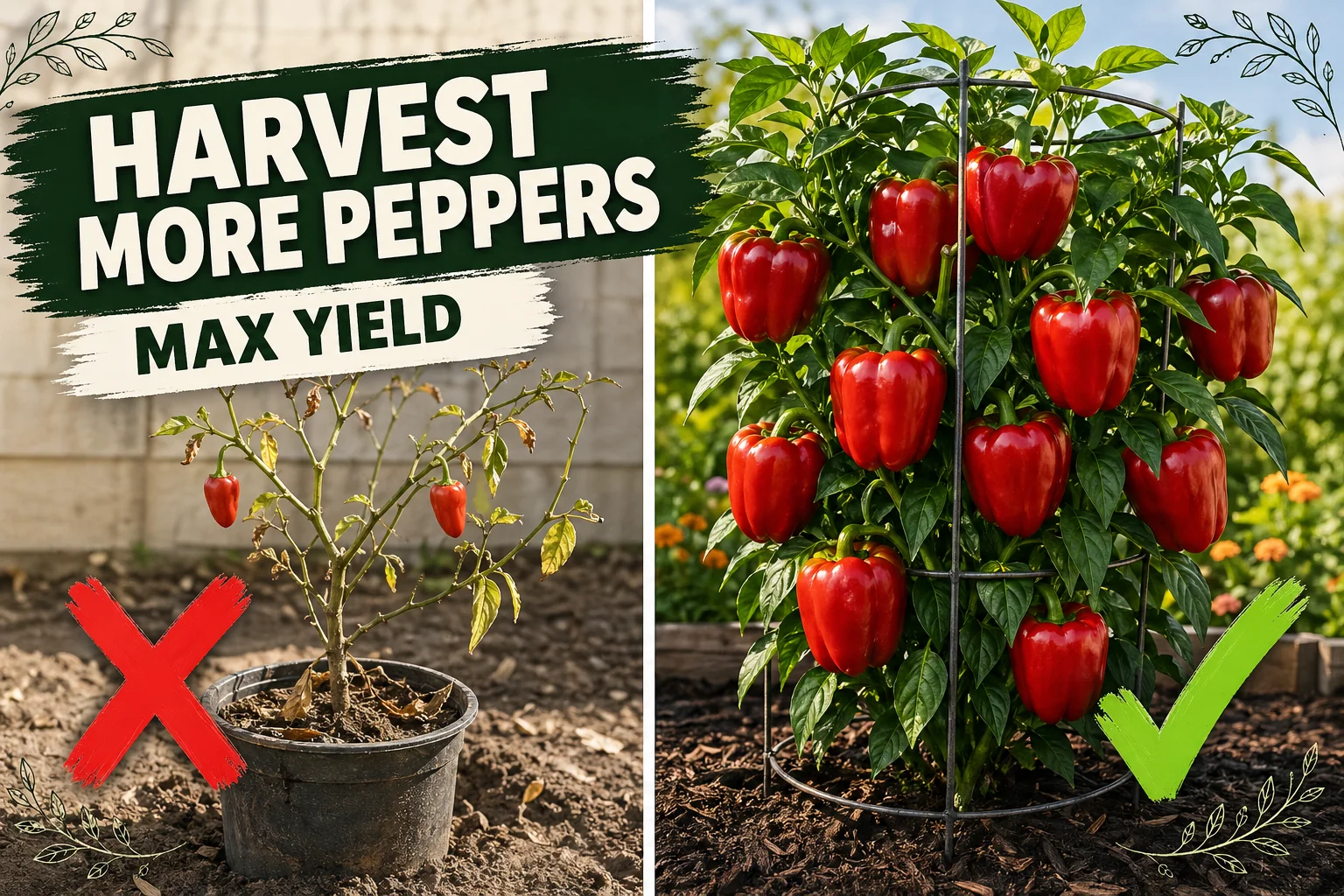
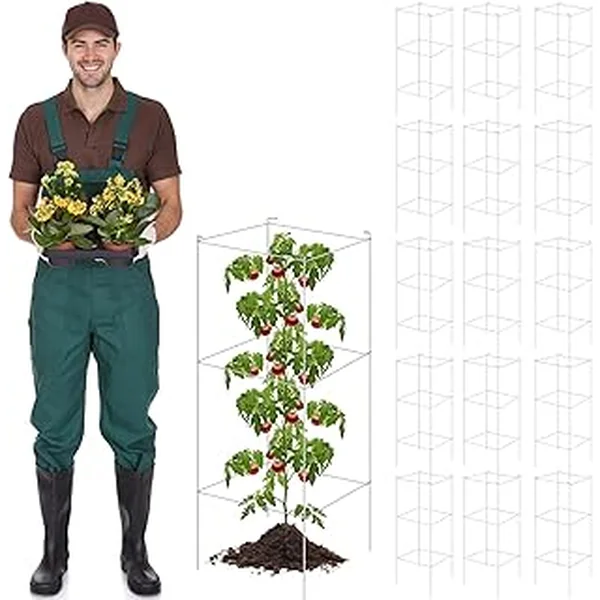
A bell pepper plant loaded with 8+ large fruits will snap brittle branches without support. Install a 60 cm (24 in) tomato cage or bamboo stake at planting time — before the plant needs it. Once branches are loaded, adding support disturbs roots and risks snapping branches at the point where they join the main stem.
Staggering plantings for a longer harvest window
If your season is long enough, plant a second set of seedlings 4-6 weeks after the first. The first planting carries early-season fruit; the second carries late-season fruit into autumn. This approach works well for jalapeños, serranos, and cherry peppers, which cycle fruit quickly.
Troubleshooting: why your plant is underproducing
| Symptom | Most likely cause | Fix |
|---|---|---|
| Flowers forming but dropping without fruit | Heat above 35°C (95°F) or night temps below 13°C (55°F) | Provide afternoon shade cloth in heat; use row cover at night in cool spells |
| Plant looks healthy, no flowers at all | Too much nitrogen, or not enough sun | Stop nitrogen feeds; switch to 5-10-10; verify 6-8 hours of sun |
| 1-3 fruits, then production stops | Left ripe fruit on plant too long | Harvest every ripe and full-sized pepper promptly, even if green |
| Sunken brown patches on fruit bottom | Blossom-end rot (calcium + uneven water) | Mulch deeply; water consistently; apply foliar calcium spray |
| Peppers pale, thin-walled, small | Insufficient sun or too much nitrogen | Move to full sun spot; feed with potassium-heavy formula |
| Lots of leaves, very few peppers | Excess nitrogen from lawn or general fertilizer | Switch to tomato or pepper formula (5-10-10); reduce feeding rate |
| Plant wilts mid-afternoon despite moist soil | Heat stress — roots can’t keep up with evaporation | Mulch heavily; water in early morning; consider afternoon shade |
| Fruits crack before harvest | Irregular watering during fruit development | Even moisture is critical — drip irrigation or daily check in peak heat |
Will overwintering increase yield?
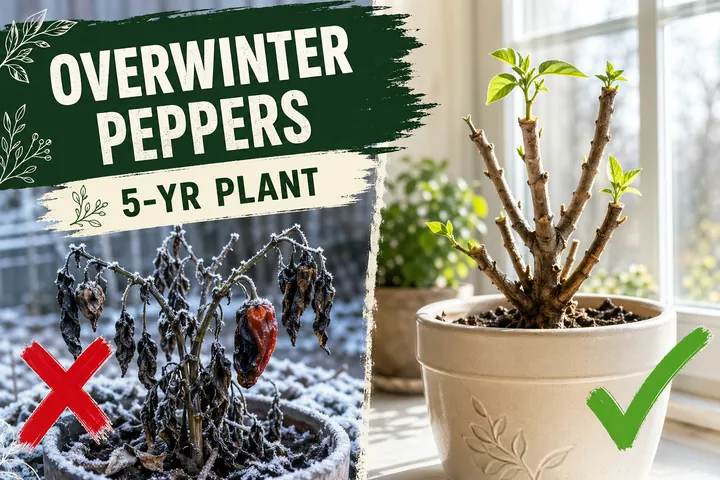
Yes — significantly. A pepper plant in its second season starts the year with an established woody root system and branching structure. It flowers 4-6 weeks earlier than a first-year transplant and typically produces 30-50% more total fruit.
Bell peppers, habaneros, and superhots benefit most from overwintering because their slow maturation (90-150 days) means a first-year plant in a short-season climate may never reach its full potential. A second-year plant has a head start that more than doubles the effective yield window.
Our full guide to overwintering pepper plants covers the pruning, dormancy, and spring revival steps in detail.
Getting spacing right for maximum yield
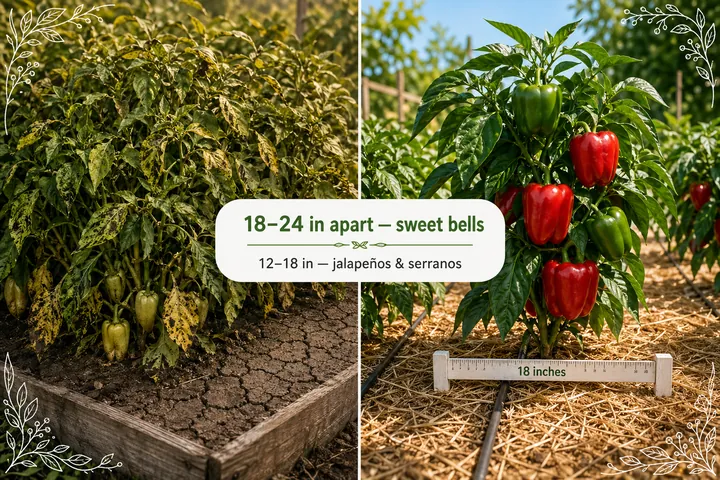
Yield is closely tied to spacing. Overcrowded pepper plants compete for water, nutrients, and light — all three of which drive fruit set. Bell peppers need at least 45 cm (18 in) between plants; jalapeños can manage 30-38 cm (12-15 in) in a raised bed with rich soil.
Our pepper spacing guide covers every variety from compact Thai chilies to large poblanos, with spacing recommendations for in-ground beds, raised beds, and containers.
Growing bell peppers for maximum fruit
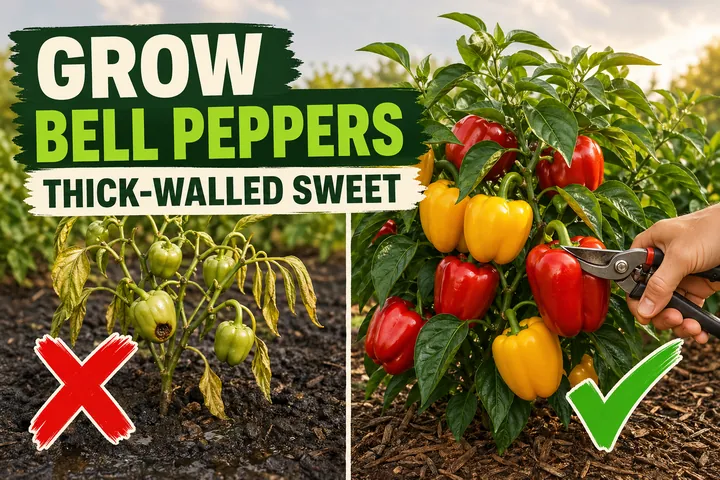
If you are starting from seed, our complete bell pepper growing guide walks through soil prep, transplanting timing, watering schedules, and the exact feeding plan that produces thick-walled fruit — the foundation that all these yield tips build on.
A note on conditions
Every garden is different. Season length, soil quality, humidity, your local pest pressure, and the specific variety you grow all shift these numbers. Use the variety table as a starting point and track what your actual plants do. A good journal or a free app like Tazart can log each plant’s harvest count, help you spot patterns across seasons, and remind you when to feed and water so you hit the upper end of the yield range more consistently.
FAQ
How many red bell peppers does one plant produce? A healthy red bell pepper plant typically produces 6-8 full-sized peppers per season under average garden conditions. In an ideal long season with correct feeding, full sun, and consistent watering, well-maintained plants can reach 10-12 peppers. The jump from green to red adds 2-3 weeks on the plant, so season length matters — if your frost arrives early, not all peppers make the colour change.
How many jalapeños does one plant produce? Jalapeño plants are prolific producers. Expect 25-35 fruits per plant in a typical season, and up to 50 in a long warm summer if you harvest regularly to keep the plant producing. Jalapeños fruit more heavily than bell peppers because each individual fruit is smaller and the plant can carry more of them simultaneously.
How many cherry or mini sweet peppers does one plant produce? Cherry and mini sweet pepper plants are the highest-yielding peppers by fruit count — 50 to 100+ small peppers per plant per season. Their small fruit size means the plant can set and carry many fruits at once without the same energy demand a large bell pepper requires.
How many habaneros does one plant produce? A habanero plant typically produces 30-60 fruits per season. They are slow to mature but once fruiting starts, plants produce steadily right up to frost. A well-fed, overwintered habanero in its second or third year can push over 100 fruits in a long season.
What is the single biggest factor affecting how many peppers a plant produces? Season length. Peppers are slow-maturing tropical plants that need 60-150 days from transplant to full harvest depending on the variety. In northern climates with short summers, plants may only complete 1-2 fruit cycles before frost. Start seeds indoors 8-10 weeks early and consider overwintering plants to build the root system that drives bigger second-year yields.
Does picking peppers early make the plant produce more? Yes. Harvesting peppers promptly — whether green or ripe — signals the plant to set new flowers and fruit rather than spend energy ripening existing peppers. For maximum fruit count, pick every ripe or full-sized pepper as soon as it is ready. Leaving overripe peppers on the plant slows new production.
Why is my pepper plant not producing many peppers? The most common causes are not enough sun (fewer than 6-8 hours), temperatures too high for fruit set (above 32°C / 90°F) or too cool at night (below 13°C / 55°F), incorrect fertilizer (too much nitrogen produces leaves not fruit), erratic watering causing flower drop, or poor pollination. Check those five factors first before assuming a variety problem.
Related reading
- How to grow bell peppers — complete care guide from seed to harvest, covering soil, feeding, and getting peppers to turn red on the plant.
- How far apart to plant peppers — variety-by-variety spacing guide; correct spacing is one of the five yield factors above.
- How to overwinter pepper plants — keep your plants alive through winter for earlier, heavier yields next season.
- What conditions do red peppers need to grow — temperature, light, soil pH, and water — the five biggest variables that decide your final yield.
- Track your harvest count and watering schedule with the free Tazart plant care app — useful for spotting which plants hit their yield potential and which need a feeding adjustment.
Highly recommended
The supplies that make this guide work
Tazart is an Amazon Associate — we earn from qualifying purchases at no extra cost to you. Thank you for helping us keep these guides free.
Frequently asked questions
How many red bell peppers does one plant produce?
A healthy red bell pepper plant typically produces 6-8 full-sized peppers per season under average garden conditions. In an ideal long season with correct feeding, full sun, and consistent watering, well-maintained plants can reach 10-12 peppers. The jump from green to red adds 2-3 weeks on the plant, so season length matters — if your frost arrives early, not all peppers make the colour change.
How many jalapeños does one plant produce?
Jalapeño plants are prolific producers. Expect 25-35 fruits per plant in a typical season, and up to 50 in a long warm summer if you harvest regularly to keep the plant producing. Jalapeños fruit more heavily than bell peppers because each individual fruit is smaller and the plant can carry more of them simultaneously.
How many cherry or mini sweet peppers does one plant produce?
Cherry and mini sweet pepper plants are the highest-yielding peppers by fruit count — 50 to 100+ small peppers per plant per season. Their small fruit size means the plant can set and carry many fruits at once without the same energy demand a large bell pepper requires.
How many habaneros does one plant produce?
A habanero plant typically produces 30-60 fruits per season. They are slow to mature but once fruiting starts, plants produce steadily right up to frost. A well-fed, overwintered habanero in its second or third year can push over 100 fruits in a long season.
What is the single biggest factor affecting how many peppers a plant produces?
Season length. Peppers are slow-maturing tropical plants that need 60-150 days from transplant to full harvest depending on the variety. In northern climates with short summers, plants may only complete 1-2 fruit cycles before frost. Start seeds indoors 8-10 weeks early and consider overwintering plants to build the root system that drives bigger second-year yields.
Does picking peppers early make the plant produce more?
Yes. Harvesting peppers promptly — whether green or ripe — signals the plant to set new flowers and fruit rather than spend energy ripening existing peppers. For maximum fruit count, pick every ripe or full-sized pepper as soon as it is ready. Leaving overripe peppers on the plant slows new production.
Why is my pepper plant not producing many peppers?
The most common causes are not enough sun (fewer than 6-8 hours), temperatures too high for fruit set (above 32°C / 90°F) or too cool at night (below 13°C / 55°F), incorrect fertilizer (too much nitrogen produces leaves not fruit), erratic watering causing flower drop, or poor pollination. Check those five factors first before assuming a variety problem.