Edible
How Long Does a Strawberry Plant Take to Produce Fruit?
Bare-root strawberry plants flower in 2-4 weeks and ripen first berries in 4-6 more. June-bearing peaks year 2; everbearing and day-neutral fruit year 1. Full timeline.
On this page
- Quick answer
- Type comparison chart
- Bare-root vs potted plants vs seeds (timing differences)
- Year 1: should you let it fruit?
- Year 2 onwards: peak production
- What you’ll need
- Step-by-step: getting fastest fruit
- Care after planting
- How to tell when berries are ready
- Common mistakes to avoid
- Troubleshooting
- Watch: strawberry growing timeline
- Related reading
- A note on conditions
Watch the visual walkthrough
Pro Grow Strawberry Tips to For The BEST Most Productive Plants Ever!
A short visual walkthrough that pairs with the steps above.
If you’ve just put a strawberry plant in the ground and you’re staring at it wondering when the actual berries are coming, the honest answer is: it depends on what kind of strawberry you planted, and whether you’re willing to wait one extra year for a much bigger payoff.
A bare-root strawberry typically flowers in 2 to 4 weeks and ripens its first berries 4 to 6 weeks after that — but the real strategy most beginners miss is pinching off year-1 flowers on June-bearing plants so year 2 explodes with fruit. Here’s the full timeline, type by type.
Quick answer
Bare-root strawberry plants flower 2 to 4 weeks after planting and ripen the first berries 4 to 6 weeks after that — roughly 6 to 10 weeks from soil to fruit. June-bearing varieties peak in year 2 and you should pinch all year-1 flowers. Everbearing and day-neutral varieties fruit in year 1 in smaller flushes. Pinch early flowers for the first 4 to 6 weeks for a much bigger crop later.
Type comparison chart
The single biggest factor is the variety on the tag — not the soil, not the weather. Here’s how the three main types compare:
| Type | First fruit | Peak season | Yearly cycle |
|---|---|---|---|
| June-bearing | Year 2 (pinch year-1 flowers) | One concentrated 3-week peak in early summer | One big crop per year |
| Everbearing | Year 1 | Two peaks: early summer + early fall | Two flushes per year |
| Day-neutral | Year 1 | Steady cropping while temps stay 4°C (39°F)-26°C (-15°F) | Continuous — small berries every few days |
If your tag is missing or unreadable, assume June-bearing — it’s the most widely sold type in nurseries.
Bare-root vs potted plants vs seeds (timing differences)
Where you start changes the timeline more than most beginners realise.
- Bare-root crowns (the cheapest, most common option) flower 2-4 weeks after planting and ripen first berries 4-6 weeks after that.
- Potted starter plants are usually 4-8 weeks ahead of bare-root because they already have leaves and a working root system. Many will flower within a week of planting out.
- Strawberry seeds are slow: 3-4 weeks to germinate, 12-16 weeks before they’re transplant-sized, and most won’t fruit at all in year 1. Don’t expect a real harvest until the following season.
The big takeaway: if you want strawberries this year, buy plants — not seeds.
Year 1: should you let it fruit?
This is the choice that decides your whole harvest.
June-bearing — pinch every flower for the first season. It feels brutal, but those flowers steal energy from roots, runners, and leaves. A pinched June-bearing plant builds a much larger crown and rewards you with a year-2 harvest that can be 3 to 4 times bigger than if you’d let it fruit immediately.
Everbearing and day-neutral — pinch only the first 4 to 6 weeks of flowers. These varieties were bred to fruit in year 1, so blocking them all season is overkill. A short 4-6 week head start lets the roots establish, then you let it crop normally for the rest of the season.
If you can only do one thing in year 1: pinch.
Year 2 onwards: peak production
Year 2 is where strawberries become worth the wait. June-bearing plants throw a single concentrated harvest of full-sized berries that can fill quart baskets in a week. Everbearing and day-neutral varieties hit their stride in year 2 too — bigger berries, more reliable flushes.
Plants typically peak across years 2 and 3, hold flat in year 4, and decline sharply after that. A standard strawberry bed gives you roughly 3 to 4 productive years before you should refresh it. Most growers do this by rooting runners from healthy parent plants into a new bed while the old one is still cropping, then tearing the old bed out the following spring.
What you’ll need
To get strawberries fruiting on schedule, the bed setup matters more than fancy fertilizer:
- A sunny spot with 6+ hours of direct sun per day — strawberries fruit poorly in shade
- 30 cm (12 in) (12 inch) spacing between plants in rows 60-90 cm (24–35 in) apart
- Slightly acidic, well-draining soil with pH 5.5-6.8 — test if you’re not sure
- A 5 cm (2 in) (2 inch) layer of straw or pine-needle mulch (the word “strawberry” is literally about the straw mulch)
- A way to net the bed before berries ripen — birds will strip a bed in a single afternoon
That’s the whole list. No special soil amendments or grow lights needed.
Step-by-step: getting fastest fruit
1. Choose the right type for your goal
Want one big harvest for jam? Pick June-bearing. Want fresh berries through the season? Pick everbearing or day-neutral. Mixing types in the same bed is a smart hedge — you’ll have something ripe most of the season.
2. Plant in early spring or early fall
Spring planting (as soon as soil can be worked) gives the plant a full season to establish. Fall planting (6-8 weeks before hard frost) is even better in mild climates — the plant roots all winter and explodes into growth in spring.
3. Plant the crown at the correct depth
The crown — the thick stub where leaves meet roots — should sit exactly at soil level. Buried too deep, it rots. Set too high, it dries out. Spread the roots downward in a fan shape, backfill, and water in well.
4. Mulch heavily with straw
A 5 cm (2 in) layer of clean straw (not hay, which carries weed seeds) keeps soil cool, holds moisture, and stops berries from touching wet soil and rotting. Mulch as soon as plants are in.
5. Water 2-3 cm (0.75–1 in) per week
Strawberries are shallow-rooted, so they want steady moisture, not soaking. A finger pushed 2 cm (0.75 in) into the soil should feel like a wrung-out sponge. Drip irrigation beats overhead watering — wet leaves spread fungal disease.
6. Fertilize after the first flush, not before
Fertilizing before flowering pushes leaf growth at the cost of berries. Wait until the first round of fruit is set, then side-dress with a balanced organic fertilizer or compost. Repeat after every harvest flush for everbearing/day-neutral.
A bonus year-1 trick for June-bearing: remove all runners as they appear. Like flowers, runners drain crown energy. Year 2 is when you let runners develop and propagate the bed.
Care after planting
Once the bed is in, the maintenance loop is simple:
| Task | When |
|---|---|
| Water | 2-3 cm (0.75–1 in) per week, more in heat — keep soil evenly moist |
| Pinch flowers | First 4-6 weeks for everbearing/day-neutral, all season for June-bearing year 1 |
| Remove runners | Year 1 for all types — let them grow year 2 if you want to propagate |
| Fertilize | After first fruit flush, then every 4-6 weeks during cropping |
| Net the bed | As soon as berries start to colour — birds will beat you to ripe fruit |
A free plant care app like Tazart can hold the watering and fertilizing schedule for you, adjust it to your local weather, and ping you when each fruit-bearing window opens — useful when you’re juggling multiple varieties with different cycles.
How to tell when berries are ready
Pick strawberries when they’re fully red right down to the shoulder — the part nearest the cap. Unlike tomatoes, strawberries do not ripen further once picked. A berry with white shoulders will stay sour and crunchy.
Pick in the cool of morning, hold the stem just above the berry, and twist gently. Don’t pull — you’ll uproot the plant. Eat or refrigerate within a day; commercial strawberries last longer because they’re picked under-ripe and gassed, but home-grown fruit at peak ripeness has maybe 24-48 hours of shelf life.
Common mistakes to avoid
- Letting June-bearing plants fruit in year 1. You’ll get a tiny handful of berries and cut your year-2 harvest by half or more. Pinch every flower.
- Skipping the straw mulch. Bare soil + ripe berries = grey mould and slug damage within a week.
- Soggy soil. Strawberries hate wet feet. If water pools after rain, build raised rows or amend with compost and grit.
- Ignoring runners in year 1. Runners drain energy from the crown. Snip them off in year 1 of every type.
- Expecting a real harvest from seed-grown plants in year 1. It almost never happens. Use plants, not seeds.
- Leaving the same bed in production past year 4. Yields drop sharply. Replace with rooted runners every 3-4 years.
Troubleshooting
| Symptom | Likely cause | Fix |
|---|---|---|
| Lots of leaves, no flowers | Too much nitrogen, or first-year June-bearing | Stop fertilizing; if June-bearing year 1, this is normal — wait for year 2 |
| Flowers but no berries forming | Frost damaged flowers, or no pollinators | Cover with row cover at night below 0°C (32°F); plant pollinator-friendly flowers nearby |
| Tiny, sour, white-shouldered berries | Picked too early, or the plant is too young/stressed | Wait until fully red to the cap; check water and pH |
| Grey fuzzy mould on ripening berries | Wet leaves and berries on bare soil | Mulch with straw, water at the base only, harvest promptly |
| Plant collapsed and crown is brown | Crown rot from planting too deep or soggy soil | Replace plant; set new crown at soil level in well-draining soil |
| Yield dropped sharply this year | Bed is past year 4 — natural decline | Propagate runners into a fresh bed and tear out the old one next spring |
Watch: strawberry growing timeline
A short visual walkthrough makes the year-1 vs year-2 difference click fast. If you’re a visual learner, search for a quick Strawberry Growing Timeline tutorial on YouTube and then come back here to map the steps to your own variety and climate.
Related reading
- How to grow strawberries from seed (for patient gardeners) — start alpine and garden strawberries from seed indoors and harvest year-1 berries from Fragaria vesca.
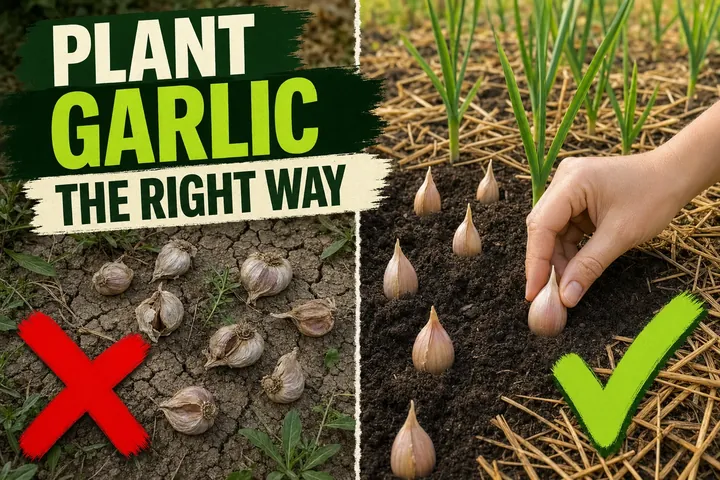
- How to plant garlic cloves the right way — another patient crop where fall planting unlocks a much bigger harvest the following season.
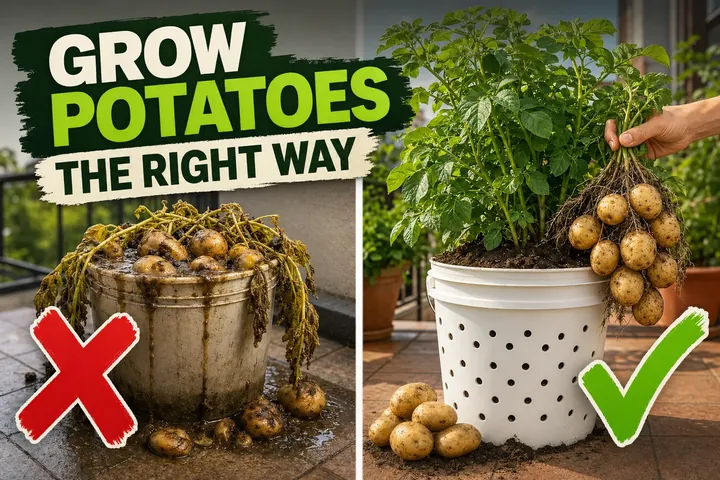
- How to plant potatoes in a bucket — fastest-yielding edible if you want food in 10-12 weeks while your strawberries establish.
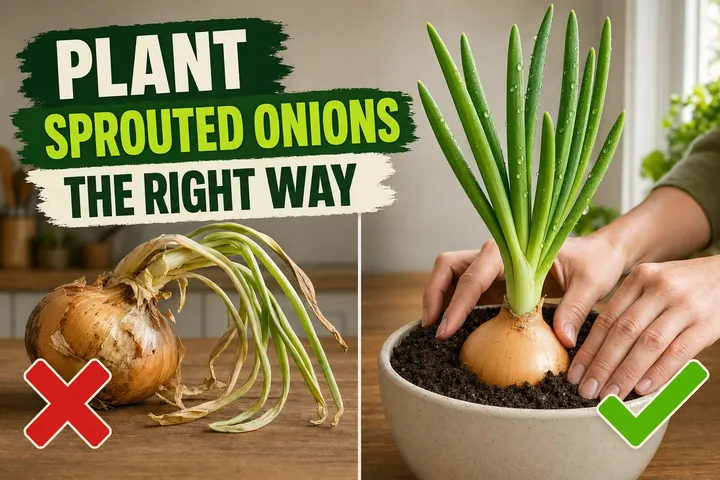
- How to plant sprouted onions — the kitchen-scrap edible that fruits fastest of all.
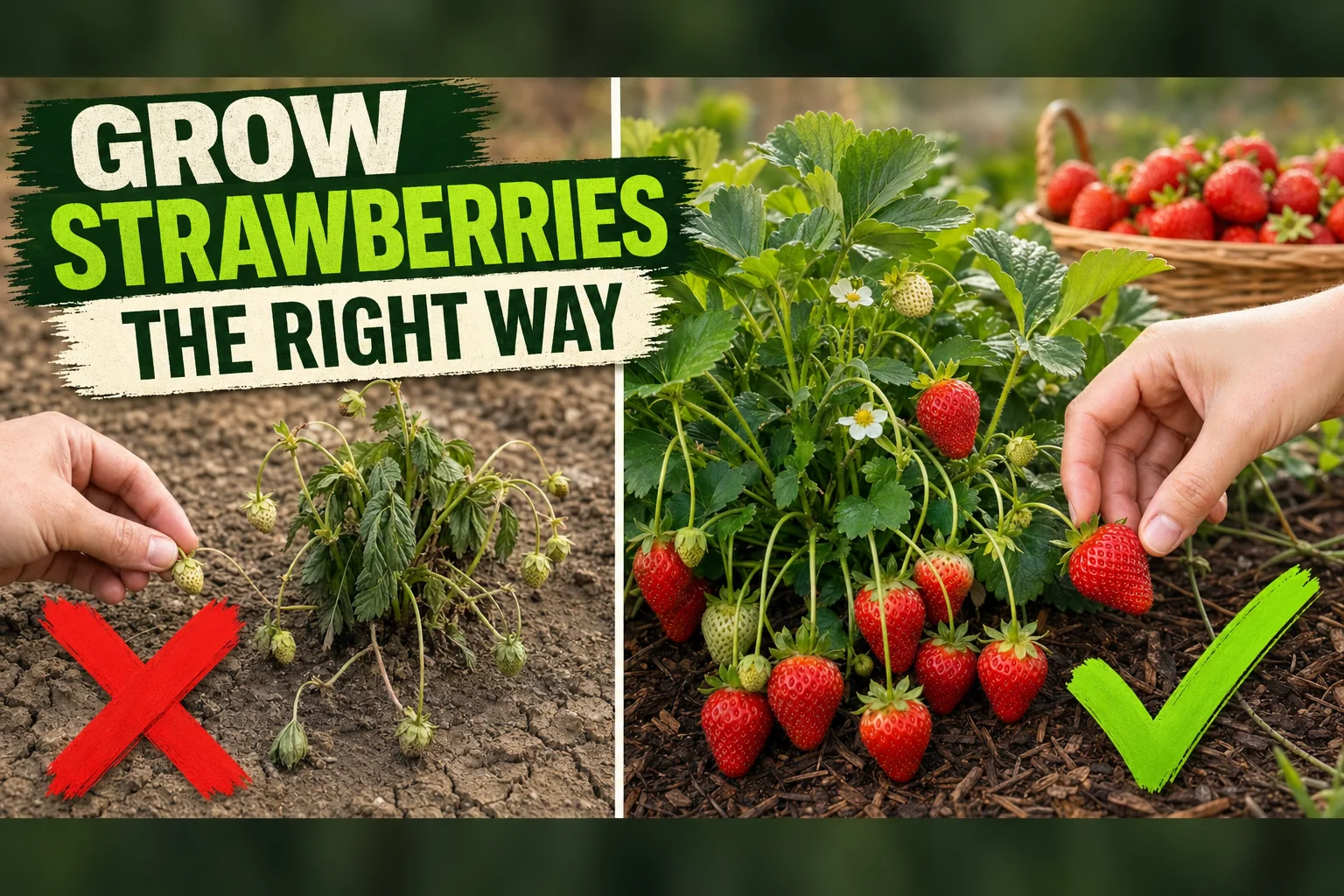
- How to plant strawberries — get the crown-depth and first-year flower-pinching right to hit the timeline above.
- How to grow strawberries — full lifecycle care after planting, with year-by-year renovation.
- Track your strawberry bed’s flowering, mulching, and harvest windows with the free Tazart plant care app — it adjusts the schedule to your local weather automatically.
A note on conditions
Every garden is different. Variety, soil, daylight hours, climate, and how strict you are about pinching year-1 flowers all change how fast a strawberry plant fruits and how much it yields. Use the timelines above as a starting point and adjust based on what your bed actually does in the first 4 to 6 weeks — that’s how every good strawberry grower learns the rhythm of their own patch.
Highly recommended
The supplies that make this guide work


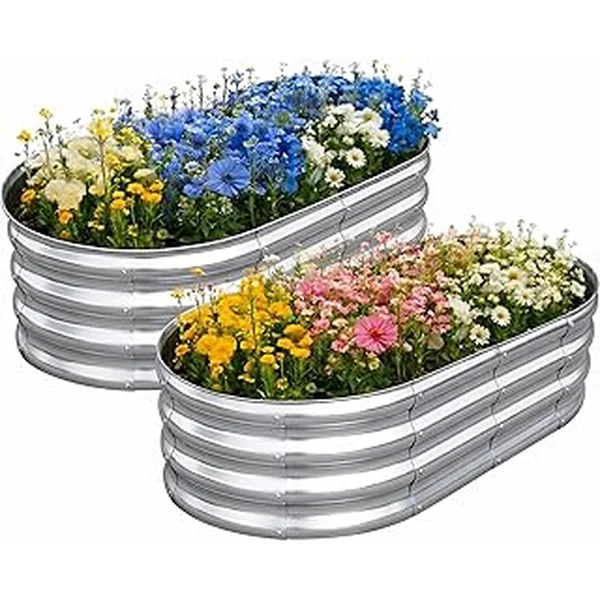
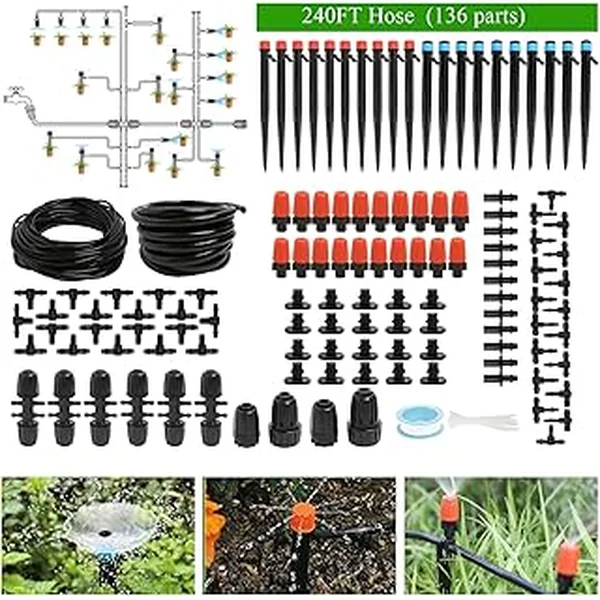
Tazart is an Amazon Associate — we earn from qualifying purchases at no extra cost to you. Thank you for helping us keep these guides free.
Frequently asked questions
How long does it take a strawberry plant to produce fruit?
A bare-root strawberry plant flowers 2 to 4 weeks after planting and ripens its first berries 4 to 6 weeks after that — so roughly 6 to 10 weeks from planting to first ripe fruit, if you let it. June-bearing varieties give the biggest crop in their second year. Everbearing and day-neutral types fruit in their first year, just in smaller flushes.
Do strawberries fruit in their first year?
It depends on the type. June-bearing strawberries technically can fruit in year one, but you should pinch off all the flowers — letting them fruit weakens the plant and cuts year-2 yields by 50% or more. Everbearing and day-neutral strawberries are bred for first-year cropping and will give you berries the same season you plant them.
Why is my strawberry plant not producing berries?
The five most common reasons are: it's a June-bearing variety in year 1 (normal — you'll get berries year 2), too little sun (strawberries need 6+ hours), soil too wet or too alkaline (target pH 5.5-6.8), too much nitrogen fertilizer (gives leaves, no fruit), or the plant is over 4 years old and past its peak. Plants typically peak years 2-3 and decline after year 4.
When should I pinch strawberry flowers?
Pinch every flower off June-bearing strawberries during their first growing season — from planting through about 6 weeks before your first frost. This sends energy into roots, leaves, and runners instead of fruit. For everbearing and day-neutral types, only pinch flowers for the first 4 to 6 weeks after planting, then let them fruit normally.
How many years will a strawberry plant produce?
A strawberry plant peaks in years 2 and 3, holds in year 4, and drops sharply after that. Most growers replace the bed every 3 to 4 years using rooted runners from healthy parent plants. Day-neutral varieties have an even shorter peak — many gardeners treat them as 1 to 2-year plants for top yields.
Are everbearing strawberries faster than June-bearing?
Yes — to first fruit. Everbearing types produce two main flushes in year 1 (early summer and early fall), and day-neutral types fruit continuously between roughly 4°C (39°F) and 26°C (79°F). June-bearing is slower to first fruit but rewards you with one big concentrated 3-week peak in year 2 that's larger than either everbearing flush.