Edible
How Far Apart to Plant Tomatoes (Indeterminate vs Determinate)
Space indeterminate tomatoes 60–90 cm (24–36 in) apart, determinate types 45–60 cm (18–24 in). Rows 90–120 cm (36–48 in). Spacing chart by support style.
On this page
- Quick answer
- Table of contents
- Determinate vs indeterminate — why it matters
- Spacing chart by variety and support
- In-row plant spacing
- Row-to-row spacing
- Raised-bed and container spacing
- Spacing for cages, stakes, and Florida weave
- Common spacing mistakes
- Troubleshooting
- Final notes
- A note on conditions
Watch the visual walkthrough
My TOP 10 TOMATO Growing Tips from 20 Years of Experience
In this video I'll condense 20 years of tomato growing experience into 10 tips. MENTIONED PRODUCTS Tomato Hooks: ...
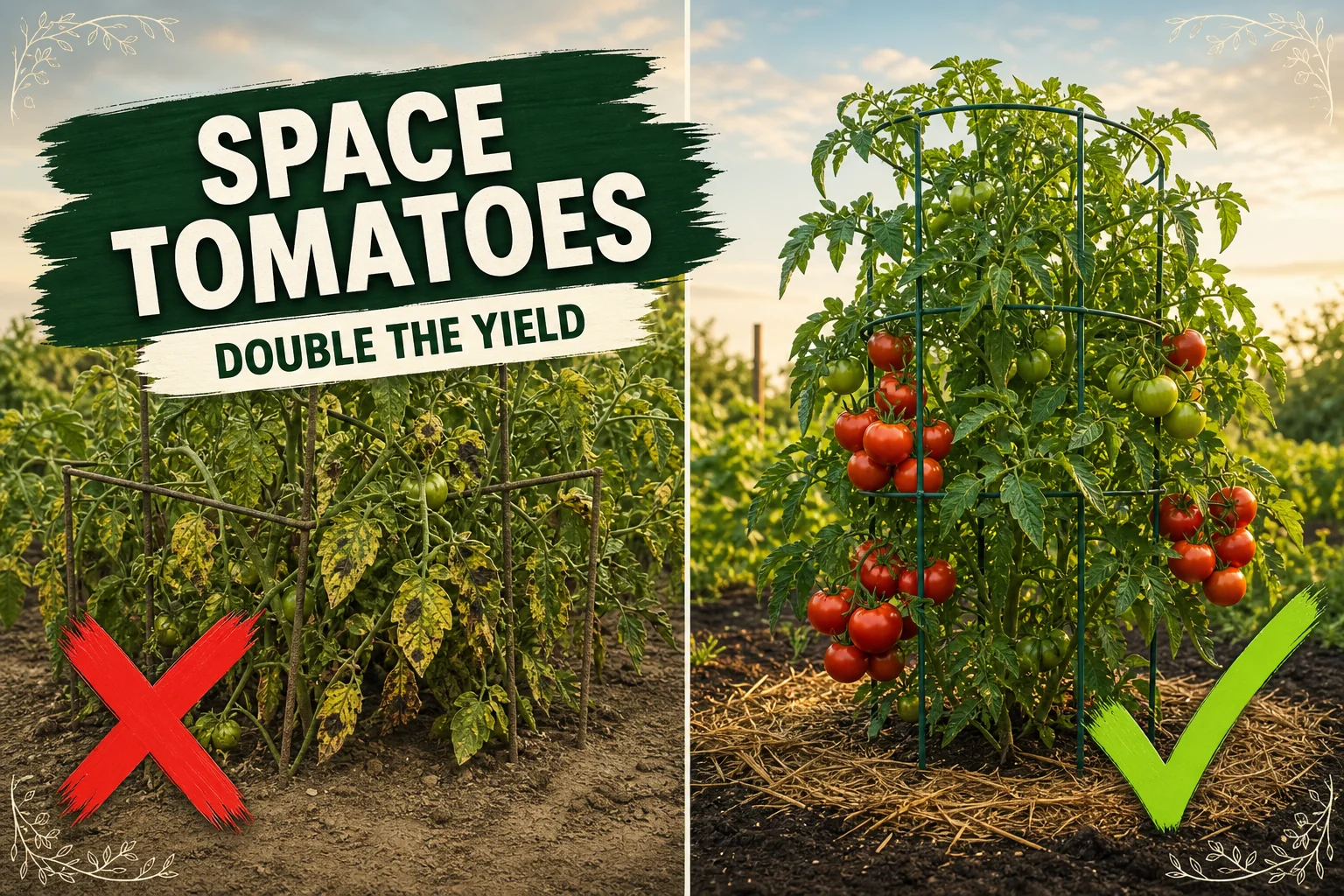
Tomato spacing is the single most important variable for home tomato yield, more important than fertiliser brand, watering schedule, or even variety choice. Crowd them and you lose half the harvest to early blight and small pale fruit. Space them right and an indeterminate plant can produce 9–14 kg (20–30 lb) of fruit over a season.
This guide walks through the exact spacing for every type — determinate, indeterminate, cherry, plum — and every support style — caged, staked, Florida-weave.
Quick answer
Indeterminate (vining) tomatoes: 60–90 cm (24–36 in) apart, rows 90–120 cm (36–48 in) apart. Determinate (bush) tomatoes: 45–60 cm (18–24 in) apart, rows 90 cm (36 in) apart. Tighter spacing reduces yield and triples disease risk. Pruned cordon-style staked tomatoes can sit at 30–45 cm (12–18 in) because each plant is a single vine.
Table of contents
- Determinate vs indeterminate — why it matters
- Spacing chart by variety and support
- In-row plant spacing
- Row-to-row spacing
- Raised-bed and container spacing
- Spacing for cages, stakes, and Florida weave
- Common spacing mistakes
- Troubleshooting
- FAQ
Determinate vs indeterminate — why it matters
Tomatoes come in two growth habits:
Determinate (bush) — Plants stop growing at a genetically fixed height of 90–120 cm (3–4 ft), produce all their fruit over a 2–4 week window, then decline. Examples: ‘Roma’, ‘Celebrity’, ‘Bush Early Girl’. Compact canopy, less pruning needed.
Indeterminate (vining/cordon) — Plants keep growing 1.8–2.4 m (6–8 ft) tall (taller in long seasons) and produce fruit continuously until frost. Examples: ‘Brandywine’, ‘Sungold’, ‘Better Boy’. Sprawling canopy, must be staked or caged.
The growth habit completely changes the spacing math. A determinate at 60 cm (24 in) gets all the room it needs; an indeterminate at 60 cm (24 in) is in the early stages of crowding by midsummer.
If your seed packet doesn’t say either way, assume indeterminate — most heirlooms are.
Spacing chart by variety and support
| Variety / Support | In-row spacing | Row spacing | Plants per m² |
|---|---|---|---|
| Indeterminate, caged | 75–90 cm (30–36 in) | 120 cm (48 in) | 1.0 |
| Indeterminate, staked + pruned to single stem | 30–45 cm (12–18 in) | 90 cm (36 in) | 2.5–3.7 |
| Indeterminate, Florida weave | 45–60 cm (18–24 in) | 100 cm (40 in) | 1.7–2.2 |
| Determinate, caged | 45–60 cm (18–24 in) | 90 cm (36 in) | 1.9–2.5 |
| Determinate, staked | 45 cm (18 in) | 75 cm (30 in) | 3.0 |
| Cherry indeterminate (Sungold etc) | 60–90 cm (24–36 in) | 90–120 cm (36–48 in) | 1.0–1.9 |
| Cherry bush (‘Tumbler’, ‘Patio’) | 30–45 cm (12–18 in) | 60 cm (24 in) | 3.7–5.5 |
For cherry-specific guidance see how far apart to plant cherry tomatoes.
In-row plant spacing
The in-row spacing — the distance between adjacent plants in the same row — controls airflow at the canopy level. This is where blight starts.
Indeterminate, normal cage support: 75 cm (30 in) is the sweet spot. At this spacing, mature plants brush leaves slightly but don’t tangle. Air still circulates through the lower canopy.
Indeterminate, single-stem cordon (pruned): Drop to 30–45 cm (12–18 in). Each plant is a single trained vine, so the canopy doesn’t spread sideways. Common in greenhouse and high-tunnel production.
Determinate, no pruning: 45–60 cm (18–24 in). The plant’s compact habit means no spacing premium is needed.
If you’re tight on space and have to pick one direction to compromise, never compromise in-row spacing in the lower canopy — that’s where soil-splash blight begins. Compromise row spacing instead.
Row-to-row spacing
Row spacing controls walking and working room as much as airflow.
Single rows, indeterminate caged: 120 cm (48 in) feels generous in May and is exactly right by August when leaves spread to 60 cm (24 in) on either side. 90 cm (36 in) is the absolute minimum.
Single rows, determinate: 90 cm (36 in). The plant canopy is narrower, so a tighter row works.
Double rows / paired-row beds: Run two rows 60 cm (24 in) apart, then leave 120 cm (48 in) between the next pair. This makes a “bed of two rows” with a wide walking path on each side.
For raised beds, see the raised-bed section below — different rules.
Raised-bed and container spacing
A 1.2 m × 2.4 m (4 × 8 ft) raised bed comfortably fits:
- Indeterminate, caged: 1 row down the centre, 4 plants at 60 cm (24 in) — total 4 plants
- Indeterminate, single-stem staked: 2 rows 60 cm (24 in) apart, plants 30 cm (12 in) — total 16 plants (high-density cordon style)
- Determinate, caged: 2 rows 45 cm (18 in) apart, plants 45 cm (18 in) — total 12 plants
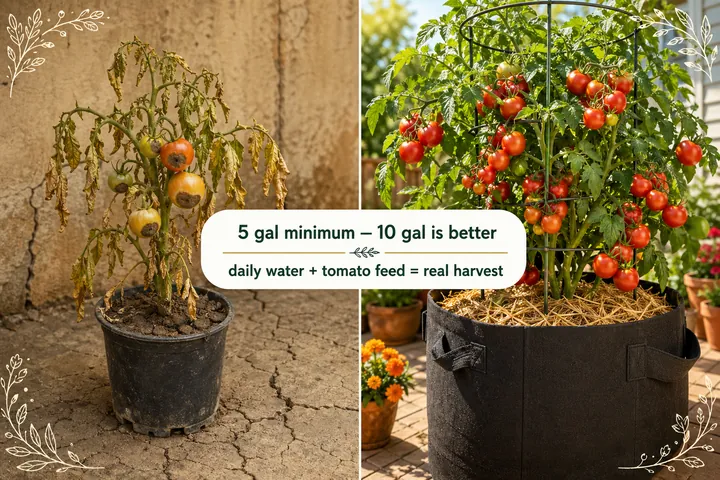
For container growers, the rule of thumb: one indeterminate per 19 L (5 gal) container minimum, ideally 38 L (10 gal); one determinate per 11 L (3 gal). See how to grow tomatoes in pots for the full container guide.
Spacing for cages, stakes, and Florida weave
Spacing should match the support system, because each system shapes the canopy differently.
Tomato cages
Standard galvanised cone cages have a base diameter of 40–50 cm (16–20 in). Place cages so their edges are at least 15 cm (6 in) apart — meaning centres at 75–90 cm (30–36 in). Touching cages trap moisture between them and accelerate fungal disease.
Single-stake (cordon) staking
Drive a 2 m (6 ft) wood or steel stake 30 cm (12 in) into the ground next to each plant. Prune to a single main stem and tie loosely to the stake every 25–30 cm (10–12 in) of growth.
In-row spacing: 30–45 cm (12–18 in). Each plant is essentially a vertical line, so airflow is naturally good even at tight spacing.
Florida weave
Drive 2 m (6 ft) stakes between every 2–3 plants. Run twine horizontally on both sides of the row, weaving through plants at every 25 cm (10 in) of growth. Plants are held upright between the parallel twines without individual tying.
In-row spacing: 45–60 cm (18–24 in). Suits determinates and short-season indeterminates well.
Sprawl (no support)
In drier climates with rare rainfall, some growers let determinate tomatoes sprawl on a thick mulch layer. Spacing must increase to 90 cm (36 in) all directions because the canopy spreads horizontally instead of vertically. Not recommended in humid climates — fruit-rot is severe.
Common spacing mistakes
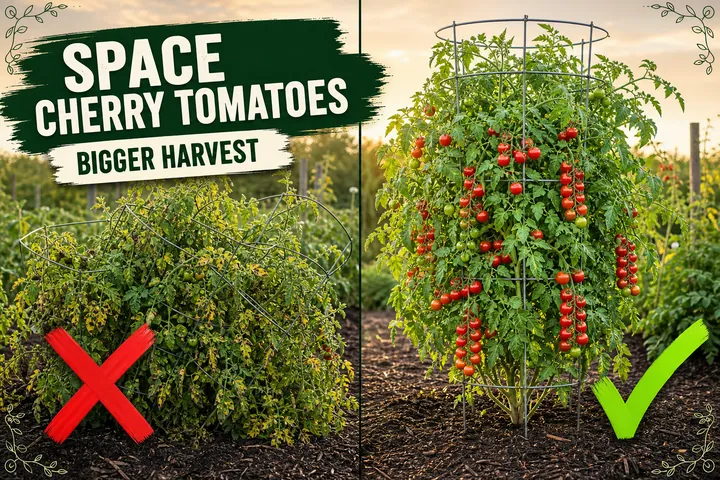
- Treating cherry tomatoes like a small plant. Indeterminate cherries (Sungold, Black Cherry) grow as large as full-size indeterminates and need the same spacing — see how far apart to plant cherry tomatoes.
- Square-foot gardening’s “1 per square” rule for tomatoes. Too tight for any cultivar. Allow 2 squares per plant minimum.
- Skipping row offset. Direct-aligned rows shade and trap air. Stagger row 2 in offset (triangle) positions.
- Pushing stakes in after planting. Tearing roots stunts the plant for 2–3 weeks. Set supports at planting time.
- Crowding to “fill the bed”. Two well-spaced indeterminates outyield four crowded ones. Plant fewer; harvest more.
- Ignoring final canopy spread. Plants look small in May; calculate spacing for August canopies, not seedling sizes.
- Forgetting wind direction. In windy gardens, run rows perpendicular to prevailing wind so air moves through the canopy rather than along it.
Troubleshooting
| Symptom | Likely cause | Fix |
|---|---|---|
| Lower leaves yellow then brown spots | Early blight from poor airflow + soil splash | Wider spacing next year; mulch heavily; remove infected leaves |
| Fruit small, sparse | Crowded roots, nutrient competition | Side-dress with balanced fertiliser; widen spacing next year |
| Tangled vines impossible to harvest | Spacing too tight; no support installed early | Stake what you can; harvest more often; commit to wider spacing next year |
| Cracked fruit | Inconsistent watering, often worse with crowded plants | Mulch + drip irrigation; consistent moisture |
| Hornworm damage spreading fast | Tight canopy lets caterpillars hide; hard to scout | Wider spacing makes hand-picking faster |
| Heavy late-season disease | Wet foliage from overhead watering + crowded canopy | Switch to soaker hose; widen rows |
| Suckers forming everywhere | Indeterminate growth — normal, but worse without space | Prune suckers below first flower cluster; the rest can stay if support is good |
Final notes
Two well-spaced tomato plants will out-produce four crowded ones in real-world home gardens — every time. If your bed feels tight, plant fewer.
For related tomato guides:
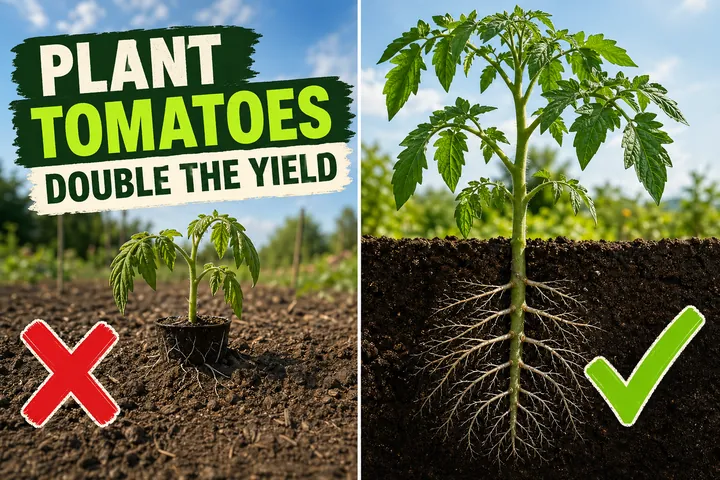
- How deep to plant tomatoes — bury the lower stem for stronger plants
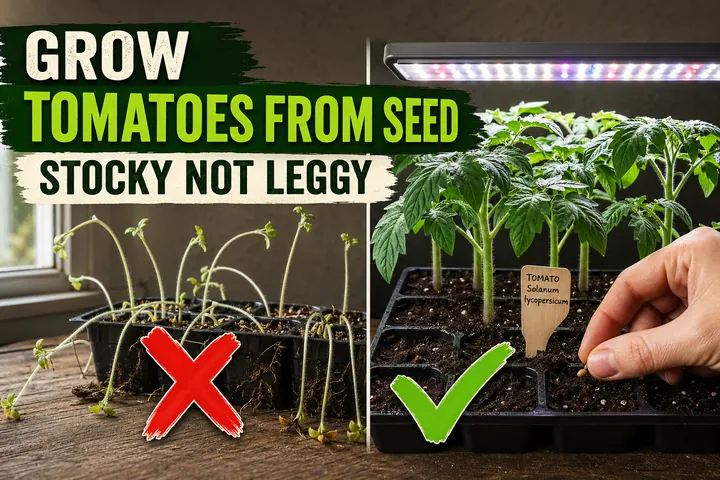
- How to grow tomatoes from seed — full seed-to-transplant timeline
- How to grow tomatoes in pots — container-specific spacing and care
- How far apart to plant cherry tomatoes — variety-specific cherry rules
- How far apart to plant peppers — companion crop in the same bed
Track planting dates, side-dressing intervals, and harvest windows with the free Tazart plant care app.
A note on conditions
Climate, variety, support method, and soil fertility all shift these numbers slightly. The spacings above are well-tested averages from university extension trials — adjust by 10–15 cm (4–6 in) based on your specific cultivar and local conditions.
Highly recommended
The supplies that make this guide work
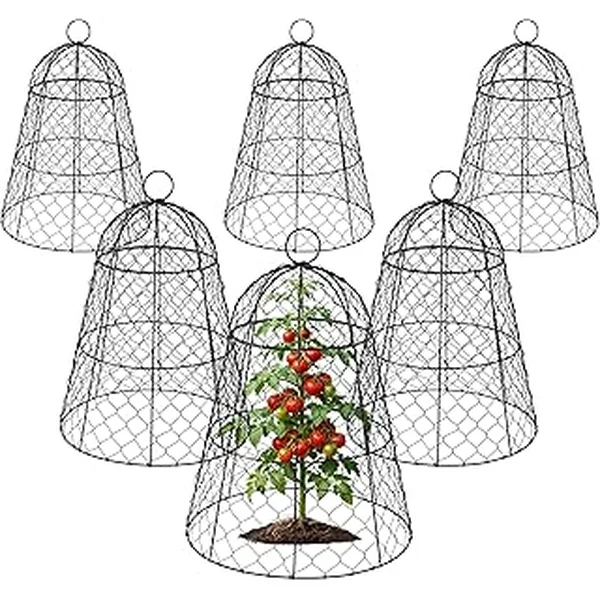
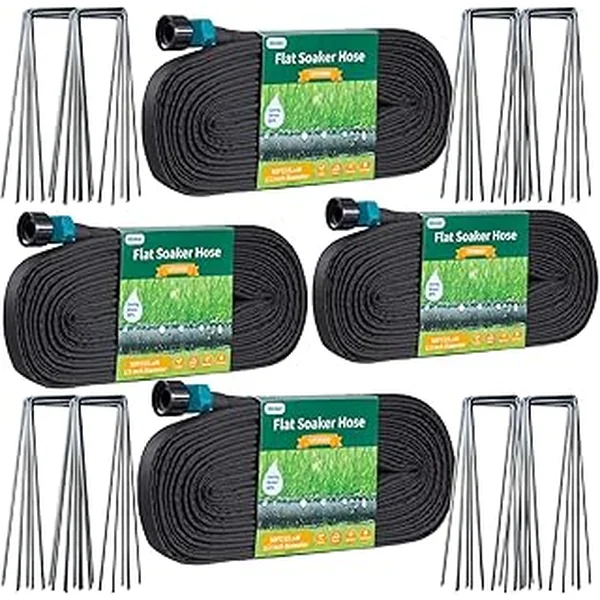
Tazart is an Amazon Associate — we earn from qualifying purchases at no extra cost to you. Thank you for helping us keep these guides free.
Frequently asked questions
How far apart should I plant tomatoes?
Space indeterminate tomatoes (vining, keep growing all season) 60–90 cm (24–36 in) apart in rows 90–120 cm (36–48 in) apart. Determinate (bush) tomatoes need 45–60 cm (18–24 in) between plants in rows 90 cm (36 in) apart. Cherry types follow indeterminate spacing for vining cultivars or determinate for bush types — check the seed packet.
Can tomatoes be planted 18 inches apart?
Yes for determinate (bush) varieties — 45 cm (18 in) is the recommended spacing. For indeterminate vining types, 45 cm (18 in) is too tight and leads to dense canopies, poor airflow, and significantly higher rates of early blight and septoria leaf spot. Stick with 60 cm (24 in) minimum for indeterminate cultivars.
How far apart should tomato rows be?
Single rows: 90–120 cm (36–48 in) apart for indeterminate, 90 cm (36 in) for determinate. Double rows (two parallel rows worked as one bed): keep the two rows 60 cm (24 in) apart and leave 120 cm (48 in) between bed pairs for walking. Wider row spacing makes pruning, scouting for hornworms, and harvesting hugely easier.
How many tomato plants per square foot?
One tomato plant per 60 cm × 60 cm (2 × 2 ft) for determinate types, or one per 90 cm × 90 cm (3 × 3 ft) for indeterminate. Square-foot gardening's standard 'one tomato per square' (30 cm × 30 cm / 1 ft × 1 ft) is too tight for any tomato variety and produces small fruit and chronic disease. Plan for two squares per plant minimum.
Does tomato spacing actually affect yield?
Yes — significantly. University extension trials show indeterminate tomatoes spaced 90 cm (36 in) apart yield 30–50% more total fruit per plant than the same variety at 45 cm (18 in) spacing. Yield per square metre can be similar at tight spacing, but disease pressure rises sharply, often wiping out the gain. Wider spacing is more reliable.
How far apart should I place tomato cages?
Place tomato cages so cage edges are at least 15 cm (6 in) apart from each other — that means the centres of cages should be 75–90 cm (30–36 in) apart for indeterminate tomatoes (using 50 cm / 20 in diameter cages) or 60 cm (24 in) for determinate (using 40 cm / 16 in cages). Touching cages trap moist air and accelerate disease.
What spacing for staked vs caged tomatoes?
Staking with single-stem pruning (cordon method) allows the tightest spacing — 30–45 cm (12–18 in) between plants — because each plant has only one main vine. Caged or untrained tomatoes need 60–90 cm (24–36 in). Stake-and-string Florida weave systems work at 45–60 cm (18–24 in).
How far apart for tomatoes in a raised bed?
In a 1.2 m (4 ft) wide raised bed: indeterminate tomatoes get one row down the centre, plants 60 cm (24 in) apart. For more density, run two rows 60 cm (24 in) apart with plants 75 cm (30 in) apart in offset (triangle) positions. Determinate tomatoes can sit in two rows 45 cm (18 in) apart with 45 cm (18 in) plant spacing.