Edible
How Far Apart to Plant Strawberries (Spacing for Big Harvests)
How far apart to plant strawberries: 45–60 cm (18–24 in) between plants for June-bearing, 30 cm (12 in) for day-neutral. Exact spacing by variety and bed type.
On this page
- Quick answer
- Why spacing matters more than fertilizer for strawberries
- Strawberry spacing chart by variety and system
- June-bearing strawberries: the matted-row system
- Day-neutral and everbearing strawberries: the hill system
- Raised bed and square-foot spacing
- Container, pot, and strawberry-tower spacing
- What you’ll need
- Step-by-step: planting strawberries with correct spacing
- Care after planting
- Common mistakes to avoid
- Troubleshooting crowded strawberries
- When to renovate or re-space an old bed
- Watch: strawberry spacing in practice
- Related reading
- A note on conditions
Watch the visual walkthrough
EVERYTHING I wish I Knew When I First Planted Strawberries
My strawberry garden wasn't always abundant. In fact, I made a lot of mistakes. In my first strawberry patch, I made so many that I ...
If your strawberry harvest last year was a handful of small berries instead of bowls of them, the fix isn’t a fancier variety or more fertilizer — it’s spacing. Plant June-bearing strawberries 45–60 cm (18–24 in) apart and day-neutral varieties 30 cm (12 in) apart. That single rule almost always doubles the harvest the following year.
This guide walks you through exactly how far apart to plant strawberries by variety, by bed type, and by container — plus what happens when you crowd them, and how to fix a row that’s already too tight.
Quick answer
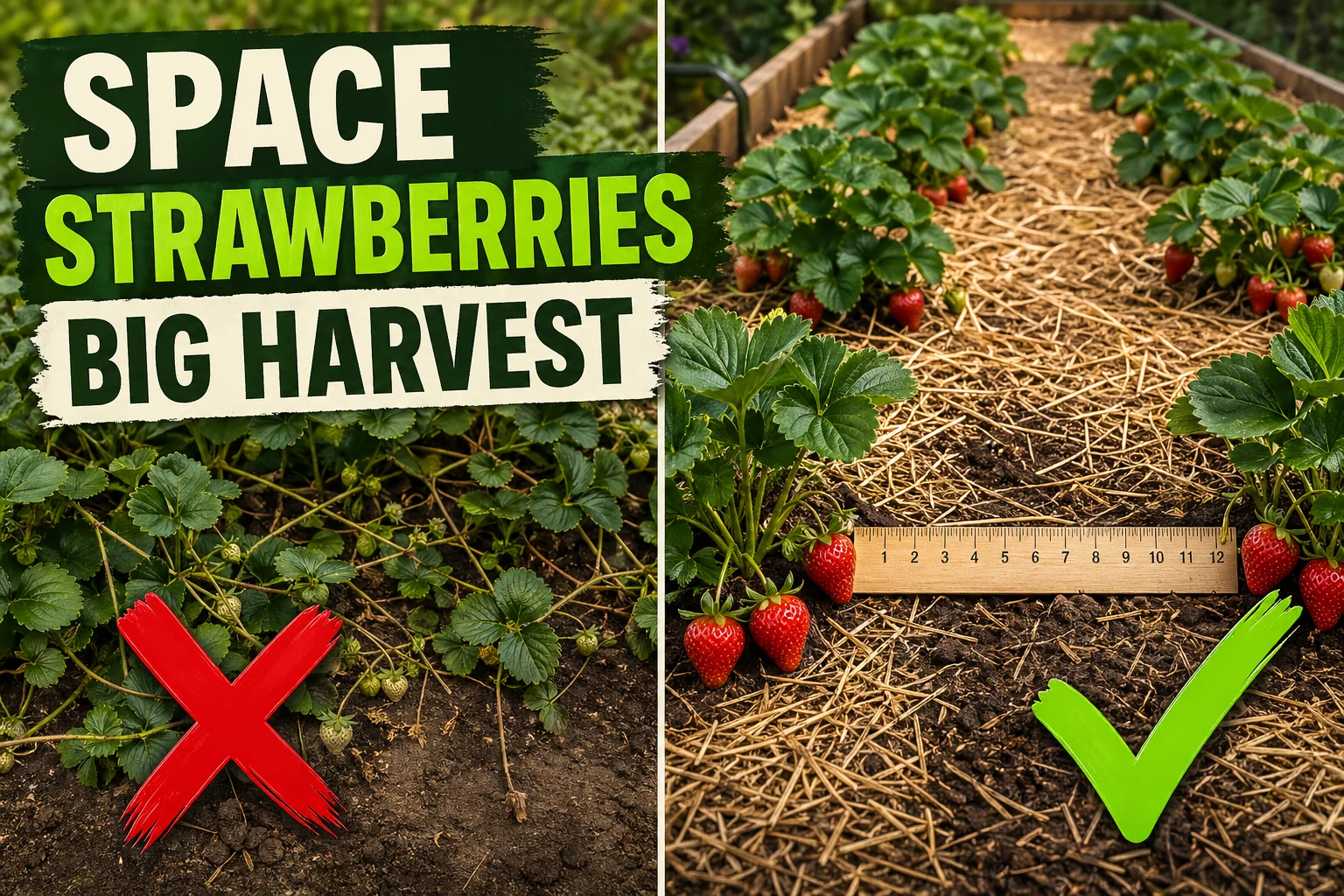
Plant June-bearing strawberries (matted-row system) 45–60 cm (18–24 in) apart in rows 90–120 cm (3–4 ft) apart. Plant day-neutral or everbearing strawberries (hill system) 30 cm (12 in) apart in rows 30–45 cm (12–18 in) apart. In raised beds, use the 30 cm (12 in) grid. In containers and towers, plant 20–25 cm (8–10 in) apart and use day-neutral varieties only. Crown depth matters as much as spacing — set the crown exactly at soil level.
Why spacing matters more than fertilizer for strawberries
Crowded strawberries don’t just give you smaller berries — they give you fewer berries, sicker plants, and a row that collapses by year two. Three things happen when plants are too close:
- Fruit size shrinks 30–50%. Each plant is competing for the same nitrogen, potassium, and water as the one 15 cm (6 in) next to it.
- Gray mold (Botrytis cinerea) explodes. Trapped humidity between overlapping leaves is the perfect petri dish for the fuzzy gray rot that turns ripening berries to mush in 24 hours.
- Powdery mildew spreads. Poor airflow lets the white-dust fungus jump from leaf to leaf in days instead of weeks.
Spacing is, dollar for dollar, the cheapest yield boost in the entire garden. You don’t have to buy anything — you just have to leave the gaps the variety actually needs.
Strawberry spacing chart by variety and system
| Variety type | System | Plant spacing | Row spacing | Best for |
|---|---|---|---|---|
| June-bearing | Matted row | 45–60 cm (18–24 in) | 90–120 cm (3–4 ft) | In-ground beds, big single harvest |
| Day-neutral | Hill | 30 cm (12 in) | 30–45 cm (12–18 in) | Raised beds, all-summer fruiting |
| Everbearing | Hill | 30 cm (12 in) | 30–45 cm (12–18 in) | Containers, two harvests a year |
| Alpine (F. vesca) | Hill | 25–30 cm (10–12 in) | 30 cm (12 in) | Edges, partial shade |
| Vertical tower | Pockets | 20–25 cm (8–10 in) | n/a | Patios, balconies |
The two systems are not interchangeable. Matted row lets June-bearing runners root themselves into a wide band of mixed-age daughter plants. Hill system keeps each plant alone — you snip every runner — so all energy goes into berries and the crown gets bigger every year.
June-bearing strawberries: the matted-row system
June-bearing varieties (Honeoye, Earliglow, Allstar, Jewel, Cavendish) push hard into runners during summer. The matted-row system uses that — you set mother plants 45–60 cm (18–24 in) apart and let the runners fill in to a 45–60 cm (18–24 in) wide band of plants down the row. After two seasons the row looks like a continuous strip of strawberries.
Spacing rules:
- 45–60 cm (18–24 in) between mother plants in the row
- 90–120 cm (3–4 ft) between rows
- Cap the matted row at 45–60 cm (18–24 in) wide — pull or transplant runners that escape
The wide row spacing isn’t wasted soil. It’s harvesting and weeding access, plus the airflow that keeps the berries dry. Skipping it is the most common reason home June-bearing patches collapse to mildew in year two.
Day-neutral and everbearing strawberries: the hill system
Day-neutral varieties (Albion, Seascape, San Andreas, Tribute) and most everbearers (Quinault, Ozark Beauty) make far fewer runners and fruit continuously instead of in one big June flush. They reward the hill system — tight spacing with zero runners.
Spacing rules:
- 30 cm (12 in) between plants
- 30–45 cm (12–18 in) between rows (or grid them in raised beds)
- Snip every runner as it appears — the plant pushes that energy into the crown and into berries instead
A well-managed day-neutral hill plant gets bigger and more productive every year for 3–4 years before it needs replacing.
Raised bed and square-foot spacing
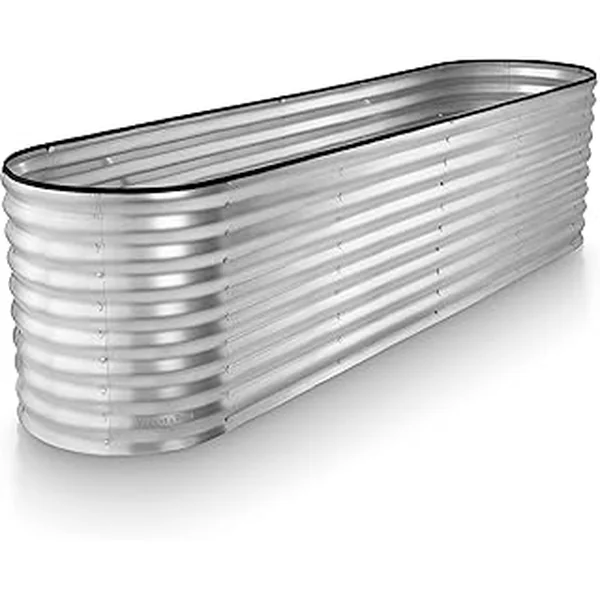
Raised beds reward the hill system. Plant 30 cm (12 in) apart on a grid — one plant per 30 × 30 cm (12 × 12 in) square, or roughly one plant per 0.1 m² (1 sq ft). A 1.2 × 2.4 m (4 × 8 ft) raised bed fits about 32 strawberry plants this way.
Edge plants can sit 15 cm (6 in) from the bed wall — closer than that and the wall blocks airflow on one side. If your bed is deep (30 cm / 12 in or more) you can drop spacing slightly to 25 cm (10 in) because root competition matters less in deep loose mix. Don’t go below that.
For raised beds, choose day-neutral or alpine varieties only and pinch every runner. June-bearing matted rows don’t fit a 1.2 m (4 ft) wide bed.
Container, pot, and strawberry-tower spacing
The smaller the container, the harder spacing matters. Strawberries in pots are a balcony favorite, but cramped roots dry out in hours and crowns rot when watering is overcorrected.
Single pot: at least 25 cm (10 in) wide and 20 cm (8 in) deep per plant. Two plants share a 40 cm (16 in) wide pot at most.
Strawberry pot (the side-pocket terracotta one): one plant per side pocket, 3–4 plants across the top, day-neutral varieties only.
Vertical strawberry tower: one plant per pocket, which usually works out to 20–25 cm (8–10 in) between plants up the column. A 5-tier tower fits roughly 15 plants in the floor space of a single ground plant — the highest-density strawberry option that still works.
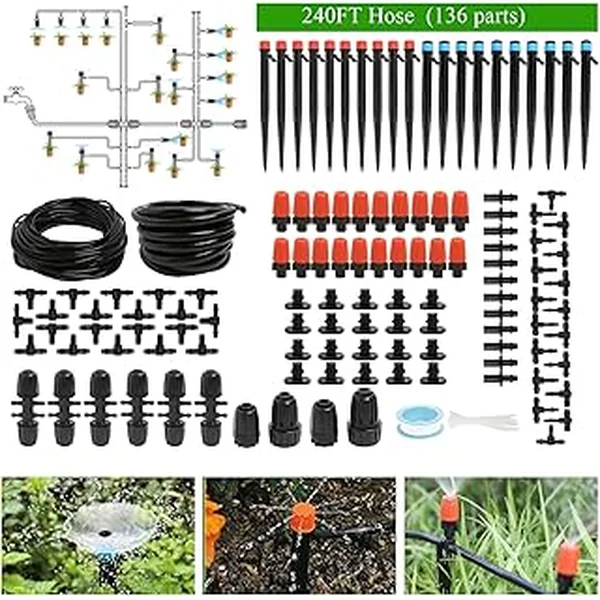
Towers and stacked planters need a drip irrigation kit or daily hand-watering in summer. The top tier dries first; if you wait until the bottom looks dry, the top has already cooked.
What you’ll need
- Strawberry plants — bare-root crowns or potted plugs in the variety that matches your system
- Loose, well-drained soil at pH 5.8–6.5, at least 20 cm (8 in) deep
- Compost (5 cm / 2 in worked into the bed) — no fresh manure
- A measuring tape or wooden ruler — eyeballing fails
- Sticks or chalk to mark plant centers
- Clean wheat straw or pine-needle mulch — 5–7 cm (2–3 in) layer
- A drip irrigation kit (strongly recommended — overhead watering spreads disease)
- A slow-release berry-targeted fertilizer
- Sharp scissors for runner pruning
Step-by-step: planting strawberries with correct spacing
1. Pick the system before you buy plants
Decide between matted-row (June-bearing) and hill system (day-neutral / everbearing) before you order. The two require different row widths, different runner management, and different fertilizing schedules. Mixing systems on the same bed is the most common cause of disappointing harvests.
2. Prep the soil 25–30 cm (10–12 in) deep
Fork the bed deeply and remove every perennial weed root. Work in 5 cm (2 in) of finished compost. Test pH if you can — strawberries want 5.8–6.5. Above 7 they go yellow with iron deficiency. Below 5.5 they sulk.
Skip fresh manure. The salt and fast nitrogen burn fragile crowns and produce leafy plants with few flowers.
3. Mark every plant center with a ruler
Lay a measuring tape down the row and place a stick at each plant center. For matted row, that’s every 45–60 cm (18–24 in). For hill, every 30 cm (12 in). Walking the row and eyeballing always tightens spacing — measure, then plant.
4. Dig a wide shallow hole and build a soil cone
Each hole should be 15 cm (6 in) wide and only deep enough that the crown sits exactly at soil level once the roots are spread. Build a small cone of soil at the bottom of the hole and drape the roots over it like a tent — strawberry roots want to spread sideways and down, never bunched.
5. Plant the crown EXACTLY at soil level
The crown is the woody knob between the roots and the leaves. Set the plant so the crown’s base is even with the surrounding soil — not buried, not exposed.
- Crown buried even 1 cm (0.5 in) deep → crown rot in weeks
- Crown sitting 1 cm (0.5 in) too high → roots dry out on the first hot day
Crown depth kills more new strawberry plants than any pest. It’s worth getting right one plant at a time.
6. Backfill, firm gently, water in
Fill around the roots with the soil you removed and firm gently with your fingers to close air pockets. Don’t compress hard. Water each plant with about 500 ml (17 fl oz) immediately, and again the next morning to settle the soil around the roots.
7. Mulch with 5–7 cm (2–3 in) of clean straw
Lay clean wheat straw or pine-needle mulch around (not on) the crowns. This is non-negotiable for strawberries — the word is literal. Mulch keeps berries off the soil, holds even moisture, suppresses weeds, and blocks the soil splash that carries fungal spores onto leaves.
8. Pinch first-year flowers (mostly)
On June-bearing strawberries, pinch every flower for the first 6 weeks after planting — this forces crown and runner growth instead of weak first-year fruiting. On day-neutral varieties, pinch flowers for the first 4 weeks, then let them fruit through fall.
The mental cost of pinching off flowers is real. The yield gain in year two is bigger than any other single thing you can do.
Care after planting
| Task | When | Notes |
|---|---|---|
| Water | 2.5–3.5 cm (1–1.5 in) per week | Drip lines only — no overhead spraying |
| Fertilize | At planting + every 4 weeks | Slow-release berry food, balanced N-P-K |
| Mulch | Top up to 5 cm (2 in) every season | Refresh after winter |
| Runner pruning (hill) | Weekly during summer | Snip at the base of the daughter |
| Runner training (matted row) | Twice a season | Steer runners into the row, not the path |
| Bird netting | When berries start coloring | Birds find ripe berries within hours |
| Renovate matted row | After June harvest | Mow tops at 7 cm (3 in), narrow row to 45 cm (18 in) |
A free plant care app like Tazart can hold the watering schedule and adjust it for your local weather, plus remind you when it’s time to renovate the matted row or replace plants in year four.
Common mistakes to avoid
- Planting June-bearers in a raised bed. They want 90–120 cm (3–4 ft) row spacing — they will out-grow a 1.2 m (4 ft) bed in one season. Use day-neutrals.
- Burying the crown. The single biggest killer of first-year strawberries. Set the crown at exactly soil level.
- Skipping straw mulch. Bare-soil strawberries get gray mold within 2 weeks of fruiting. Mulch is part of the planting, not optional.
- Letting day-neutrals run. A day-neutral plant that’s allowed to runner doesn’t fruit well. Snip every runner.
- Overhead watering. Wet leaves at evening = gray mold by morning. Use drip irrigation.
- Planting at 25 cm (10 in) “to fit one more row.” That’s how you halve your yield to fit 10% more plants.
Troubleshooting crowded strawberries
| Symptom | Likely cause | Fix |
|---|---|---|
| Lots of leaves, few berries | Too much nitrogen or plants crowded | Cut nitrogen feeds; thin to correct spacing |
| Tiny pale berries | Plants too close — competition for water/nitrogen | Re-space in fall: lift, spread, replant at 30 cm (12 in) |
| Fuzzy gray rot on ripening fruit | Botrytis cinerea from poor airflow | Thin plants; switch to drip; harvest more often |
| White powdery dust on leaves | Powdery mildew from crowding + humidity | Open up spacing; remove worst leaves |
| Crown collapsed, leaves wilting | Crown buried too deep or crown rot | Replant at correct depth in fresh bed |
| Runners taking over the path | Matted row not maintained | Mow row edges back to 45–60 cm (18–24 in) wide |
| Plants weaker every year | Matted row never renovated | Mow tops after harvest, narrow row, top-dress |
When to renovate or re-space an old bed
A matted-row strawberry bed peaks in years 2–3 and declines fast after year 4. Renovate every year right after the June harvest:
- Mow the leaves to 7 cm (3 in)
- Narrow the row back to 45–60 cm (18–24 in) wide by pulling the outermost plants
- Thin remaining plants to 15 cm (6 in) apart in the row
- Top-dress with 2 cm (0.75 in) of compost
- Water deeply
After year 4, lift the strongest plants in spring, replant them at full 45 cm (18 in) spacing in a fresh bed with new compost, and start a new matted row. Strawberries do not want to live in the same soil forever.
Watch: strawberry spacing in practice
A short visual walkthrough pairs well with the steps above. Watching someone lay out a row with a tape measure and place crowns at the correct depth makes the spacing rules click in a way text can’t.
Related reading
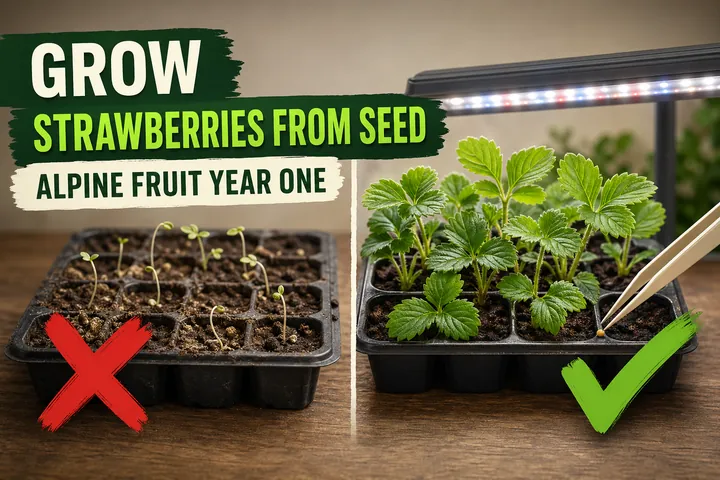
- How to grow strawberries from seed — start the next batch of alpine plants from seed for a fraction of the price of crowns.
- How long does a strawberry plant take to produce fruit? — once the spacing is right, this is when to expect the first berries.
- How to plant strawberries — exact crown depth, soil prep, and the year-1 flower-pinching rule.
- How to grow strawberries — full lifecycle care once the bed is planted at the right spacing.
- How to plant blueberry bushes the right way — strawberries and blueberries share the same acidic-soil sweet spot; pair them in the same bed.
- Track every plant’s watering, fertilizing, and runner-pruning schedule with the free Tazart plant identifier app.
A note on conditions
Every garden is different. Variety, climate, soil depth, mulch, runner management, and how disciplined you are about pinching flowers all change how strawberry rows behave. Use the spacing numbers above as strict starting points — the 30 cm (12 in) and 45 cm (18 in) rules are not negotiable — and adjust watering, mulching, and renovation timing to what your bed actually does in the second summer.
Highly recommended
The supplies that make this guide work


Tazart is an Amazon Associate — we earn from qualifying purchases at no extra cost to you. Thank you for helping us keep these guides free.
Frequently asked questions
How far apart should I plant strawberries?
It depends on the type. Plant June-bearing strawberries 45–60 cm (18–24 in) apart in rows 90–120 cm (3–4 ft) apart, using the matted-row system that lets runners fill in. Plant day-neutral and everbearing varieties 30 cm (12 in) apart in rows 30–45 cm (12–18 in) apart, using the hill system where you remove all runners. In raised beds and containers, drop spacing to 20–30 cm (8–12 in).
How far apart to space strawberries in a raised bed?
Plant strawberries 30 cm (12 in) apart on a grid in raised beds — that's one plant per 30 × 30 cm (12 × 12 in) square, or about one per 0.1 m² (1 sq ft). Use day-neutral or everbearing varieties for raised beds and pinch all runners as they appear, since you don't have room for the matted-row sprawl. Edge plants can sit 15 cm (6 in) from the wall.
How far apart to plant June-bearing strawberries?
Space June-bearing strawberries 45–60 cm (18–24 in) between plants and 90–120 cm (3–4 ft) between rows. The wide row spacing isn't wasted space — that's where the runners will root daughter plants and form the matted row that gives June-bearers their famous big single harvest. After three years the row will be a 60 cm (24 in) wide band of mixed-age plants.
Can I plant strawberries close together?
Closer than 30 cm (12 in) for day-neutrals or closer than 45 cm (18 in) for June-bearers cuts your harvest sharply. Crowded plants compete for water, get less airflow, and develop more gray mold and powdery mildew. The fruit also stays smaller because each plant is fighting for nitrogen and light. Spacing is the cheapest way to double your strawberry yield.
How many strawberry plants per square foot?
About one plant per square foot (0.1 m²) for day-neutral and everbearing varieties planted at 30 cm (12 in) spacing — that's the sweet spot for raised beds and intensive plantings. June-bearing strawberries fit roughly one plant per 0.5 m² (5 sq ft) at 45–60 cm (18–24 in) spacing. A vertical strawberry tower fits 12–18 plants in the footprint of one ground plant.
How far apart to plant strawberries in a tower or strawberry pot?
In a stackable strawberry tower, plant one strawberry per pocket — that usually works out to 20–25 cm (8–10 in) between plants in a vertical line. In a traditional terracotta strawberry pot (the one with side pockets), plant one per pocket plus 3–4 across the top. Use day-neutral varieties only for towers — June-bearers can't handle the cramped root space.
What happens if strawberries are planted too close?
Three things go wrong. First, fruit size drops 30–50% because plants compete for nitrogen and water. Second, gray mold (Botrytis) explodes in the trapped humid air between leaves — you'll see soft brown patches on ripening berries. Third, the row becomes impossible to weed and harvest, and the older plants in the middle decline by year two. Re-spacing in spring is worth the work.