Edible
How Far Apart to Plant Potatoes (In-Ground, Containers, Towers)
Plant potatoes 12 inches apart in trenches, 18 inches for hilling rows, and 1–2 seed potatoes per 5-gallon container. Full spacing guide for every method.
On this page
Watch the visual walkthrough
Don’t Believe These 4 LIES About Growing Potatoes!
When it comes to growing potatoes there are a lot of lies. But there are four lies that are more prevalent and popular than all the ...
Get potato spacing wrong and you’ll either crowd the tubers into marble-sized disappointments or waste half your garden on empty soil. Get it right and each plant has the underground volume it needs to bulk up a full-sized crop.
The answer varies by method — in-ground trench, hilling, raised bed, container, or tower — so this guide breaks them all down with exact numbers and the reasoning behind them.
Quick answer: potato spacing by method
| Method | In-row spacing | Row spacing | Notes |
|---|---|---|---|
| Trench / in-ground | 12 in (30 cm) | 30–36 in (75–90 cm) | Standard for most garden beds |
| Hilling | 18 in (45 cm) | 36 in (90 cm) | Extra width needed to build mounds |
| Raised bed (grid) | 12 in (30 cm) all directions | N/A | No row gaps needed in a deep loose bed |
| Grow bag / bucket (5 gal) | 1–2 seed potatoes per bag | N/A | 1 per 5-gal, 2–3 per 10–15-gal |
| Potato tower | 2–4 per base ring | Tower ≥ 18 in diameter | Add layers of medium as plants grow |
Trench and in-ground spacing
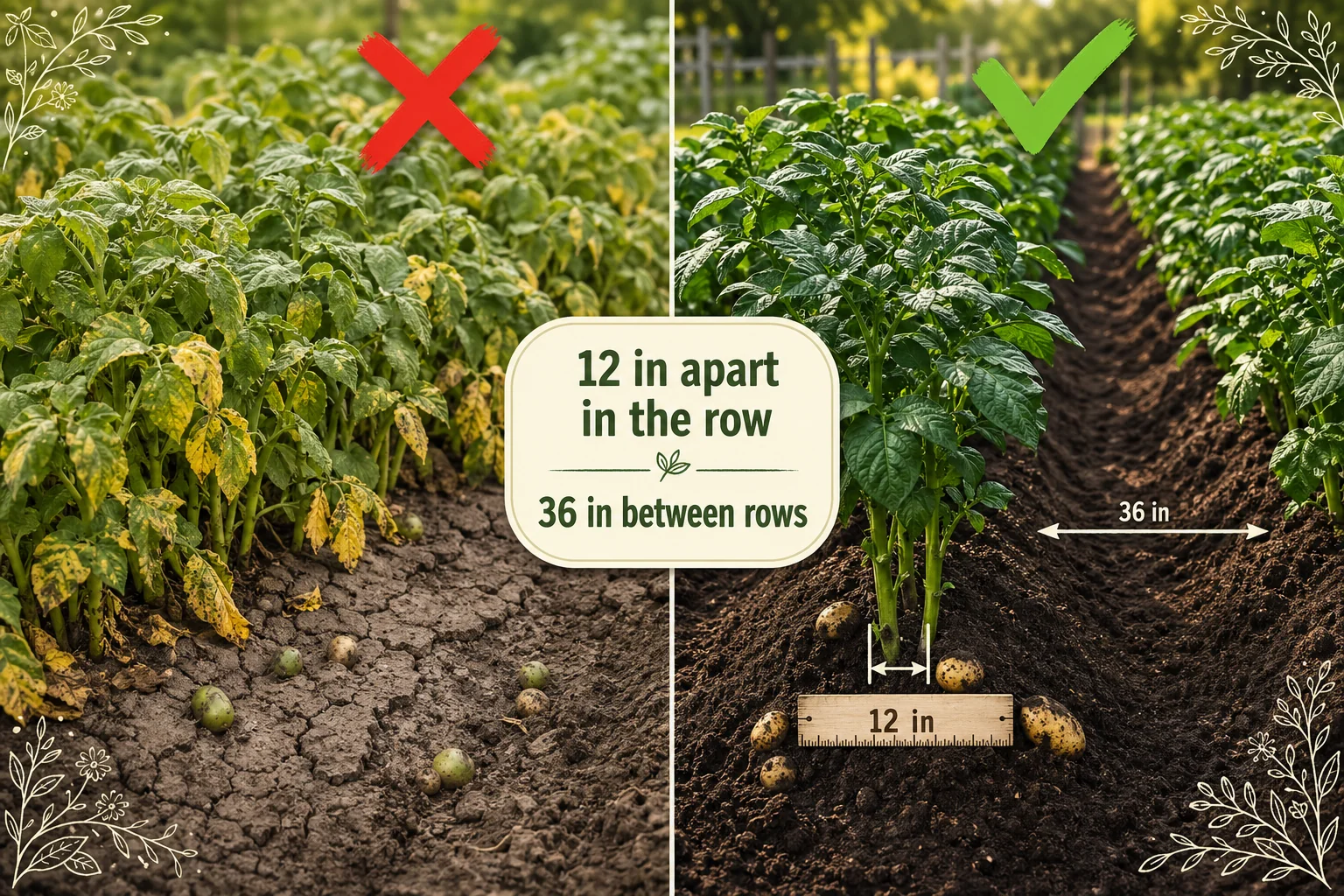
The classic in-ground method uses a trench — a straight furrow 6–8 inches deep — dug with a spade or hoe. Seed potatoes go in 12 inches apart along the bottom of the trench, eyes facing up, then covered with 3–4 inches of soil. You leave the rest of the trench depth to fill in gradually as the plants grow.
Why 12 inches? Each seed potato sends out a cluster of underground stolons — lateral shoots that swell into tubers. At 12 inches, those stolons expand freely without running into a neighbour’s root zone. Closer than 10 inches and you get competition; the plants redirect energy into foliage rather than tubers.
Row spacing: 30–36 inches. The wider range (36 in) is standard for most home gardens. The gap serves two purposes: it gives you working space to hill without stepping on plants, and it acts as a soil reservoir — you pull loose soil from the middle of the row gap and mound it around the stems. Narrow the gap to 30 inches only if your bed is compact and you’re using a lightweight soil that’s easy to mound.
For a raised bed with uniformly loose, deep soil, you can drop the row gap entirely and plant on a 12-inch grid in every direction. The soil is loose enough that tubers expand sideways without compaction, and you don’t need gaps for walking machinery or working with a spade.
Hilling spacing
Hilling is the technique of repeatedly mounding soil around potato stems as they grow. Each mound burial triggers more tuber formation along the now-underground section of stem. The trade-off is that each plant needs more horizontal space for the mound itself.
For the hilling method:
- 18 inches between plants in the row — the mound you build can reach 8–10 inches out from the stem at its base, so 18 inches between plant centres gives each mound its own footprint without overlapping.
- 36 inches between rows — you’re pulling soil from the centre of the row gap to build mounds on both sides simultaneously. At 30 inches the gap runs out of material by the third hilling.
Start hilling when the stems are 6–8 inches above the soil surface. Mound soil (or compost) up around the stems until only the top 2–3 inches of foliage shows. Repeat every 1–2 weeks throughout the growing season. Three to four hillings is typical for a main-crop variety.
Container and grow bag spacing
Container growing follows a different logic: you’re managing soil volume per plant, not lateral spread. The rule of thumb from Iowa State Extension and the RHS is 1–2 seed potatoes per 5-gallon (20 L) container.
Practical guide by container size:
| Container size | Seed potatoes |
|---|---|
| 5-gallon bucket | 1–2 |
| 10-gallon grow bag | 2 |
| 15-gallon grow bag | 3 |
| Half wine barrel (25 gal) | 4–5 |
The “spacing” in a bag is less about a measured gap and more about distributing the seed potatoes evenly across the container floor — triangle formation for 3, corners for 4. What matters most is that no seed potato is within 4 inches of the bag wall, where soil dries fastest and temperature swings most.
Container potatoes still benefit from hilling: fill the bag one-third full to start, plant the seed potatoes, then add growing medium as the foliage rises until the bag is nearly full. This is the same principle as the in-ground trench — more buried stem, more tubers.
See the full step-by-step container method in How to plant potatoes in a bucket.
Tower spacing
A potato tower stacks growing medium vertically — typically inside a wire cage, stack of tyres, or a purpose-built tower planter — with seed potatoes added at the base and more medium added as the plants grow. The theory is that each new layer of buried stem produces a new layer of tubers, multiplying yield in a small footprint.
Tower spacing rules:
- Minimum tower diameter: 18 inches. Narrower than 18 inches and the soil volume per plant drops too low for good tuber formation.
- 2–4 seed potatoes per base ring, spaced 6–8 inches apart from each other and 3–4 inches from the tower wall.
- Add medium in 4–6 inch layers each time the foliage grows 6–8 inches above the current surface.
- Maximum practical height: 3–4 feet. Taller towers dry out unevenly and the lower layers become compacted and oxygen-deprived, which actually stops tuber formation.
One note on yield expectations: university extension trials have found mixed results with potato towers. The UC ANR and Iowa State data suggest that per-square-foot yields from towers rarely exceed well-managed trench or raised bed plots, partly because the lower layers compact and lack oxygen. Towers are worth growing for the space-saving form factor and the novelty, but don’t expect two to three times the yield of an in-ground row.
Row spacing for companion planting
The 30–36-inch gap between potato rows isn’t wasted space. Several companions thrive there and actively benefit the potato crop:
- Bush beans — fix nitrogen and repel Colorado potato beetles. Plant a double row of bush beans down the centre of the row gap once potatoes are established. Keep them trimmed so they don’t shade the potato foliage.
- Horseradish — a traditional deterrent for potato beetles and aphids. Plant one or two horseradish plants at the corners of your potato bed, not within the row gap (horseradish spreads aggressively).
- Marigolds (Tagetes) — repel nematodes and aphids. A single row along the outside edge of the potato bed is effective; interplanting within the row gap works too.
Avoid planting tomatoes, peppers, aubergines, or fennel near potatoes. Tomatoes and potatoes share late blight (Phytophthora infestans), and fennel inhibits potato root development.
Why spacing directly affects yield and disease
Getting spacing right is not about tidiness — it has measurable effects on both yield and plant health.
Yield. Each seed potato’s stolon network expands outward and upward in a roughly cylindrical volume of soil. When two plants’ stolon networks meet, both plants respond by reducing tuber size rather than count — you get more, smaller potatoes. The 12-inch minimum preserves each plant’s productive cylinder of soil.
Disease. Crowded plants create a microclimate of still, humid air between the foliage — the exact conditions that accelerate late blight and early blight. The 30–36-inch row gap allows air to move freely between rows, drying the foliage after rain or irrigation. RHS guidance specifically cites good air circulation as a key cultural control for blight in the home garden.
Moisture competition. Potatoes need consistent moisture to avoid hollow heart — a condition where inconsistent watering during rapid tuber growth creates a cavity inside the tuber. Crowded plants drain the shared soil volume unevenly, creating dry pockets even when you water regularly. Proper spacing means each plant draws from its own stable reservoir.
A free plant care app like Tazart can hold your planting layout, track the watering schedule for each container or row, and remind you when it’s time for the next hilling — especially useful when you’re running multiple methods at once.
Common spacing mistakes
- Planting at 6 inches because it “feels like enough.” It isn’t. The stolon network of a vigorous variety extends 8–10 inches out from the seed potato. Six-inch spacing means instant competition from the moment tubers start forming.
- Ignoring row width when planning hilling. Many gardeners measure in-row spacing correctly but set rows 24 inches apart — then run out of soil to hill with after the first mounding. Measure 36 inches between row centres before you dig the trenches.
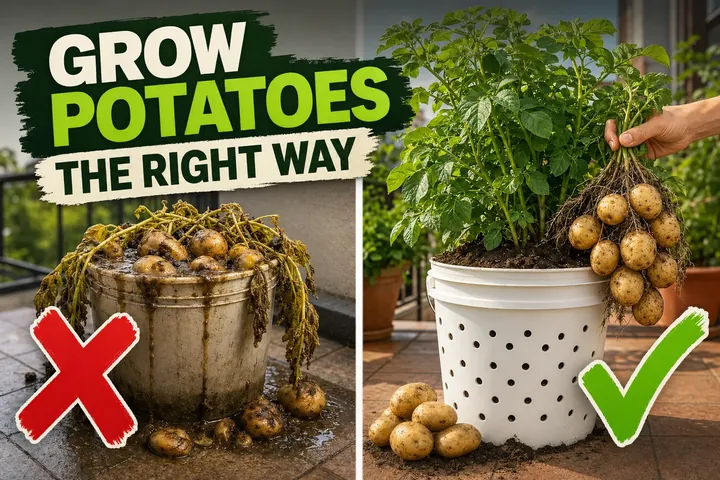
- Overfilling a grow bag. Three or four seed potatoes in a 5-gallon bag is the most common container mistake. Two is already the upper limit; one is safer for a full-sized harvest.
- Building a tower narrower than 18 inches. A 12-inch tower looks neat but doesn’t hold enough soil volume per plant for proper tuber development.
Related reading
- How to plant potatoes in a bucket — full step-by-step on container spacing, drainage, and hilling in a 5-gallon bucket.
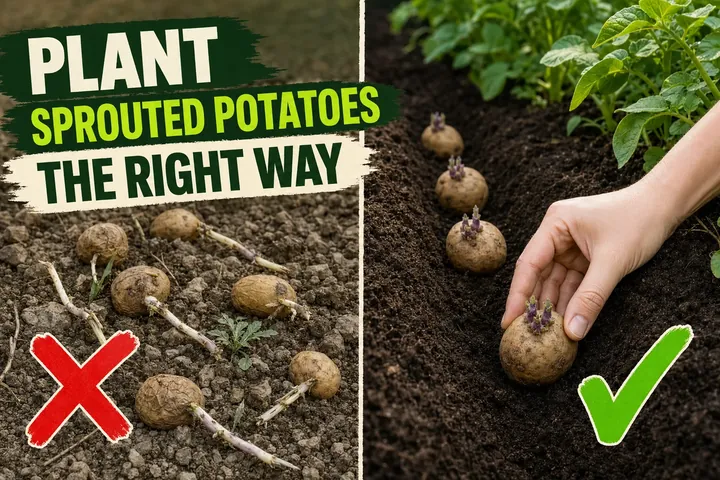
- How to plant sprouted potatoes — depth, spacing, and hilling rules for kitchen sprouted potatoes going into a garden bed.
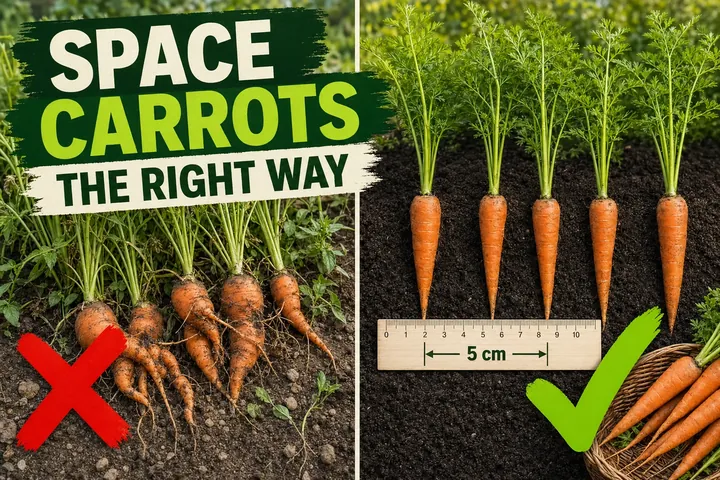
- How far apart to plant carrots — pair a carrot row in the gap between your potato rows for a full small-space vegetable bed.
- How deep to plant potatoes — 10 cm (4 in) initial depth plus aggressive hilling is what triples the yield from your spaced rows.
A note on variety
Spacing recommendations assume a standard main-crop or second-early variety. Very compact early varieties like Rocket or Swift can tolerate the lower end of the range (10–11 inches in-row). Very vigorous maincrop varieties like Maris Piper or Desiree benefit from the upper end (14–15 inches in-row). If you’re not sure of the variety, use 12 inches in-row and 36 inches between rows — that covers the full range safely.
Highly recommended
The supplies that make this guide work
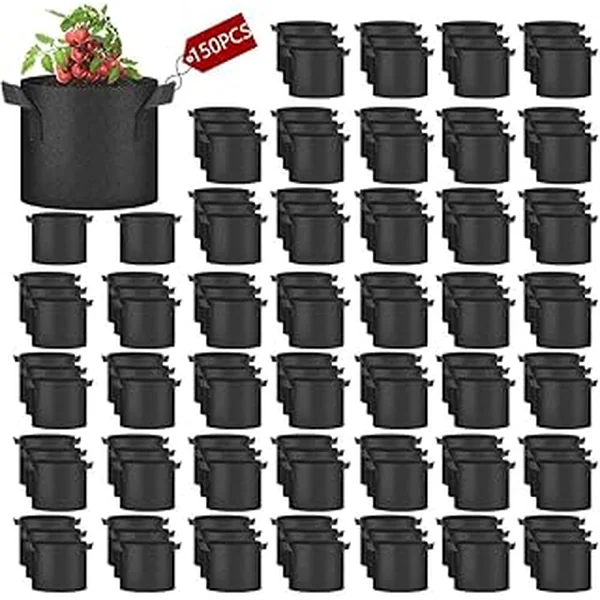
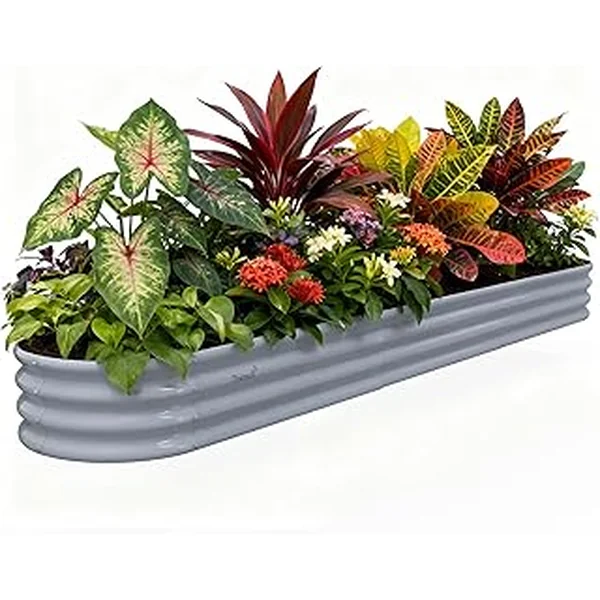


Tazart is an Amazon Associate — we earn from qualifying purchases at no extra cost to you. Thank you for helping us keep these guides free.
Frequently asked questions
How far apart do you plant seed potatoes in the ground?
Space seed potatoes 12 inches (30 cm) apart within the row for standard trench planting. For the hilling method — where you mound soil up around tall stems — give each plant 18 inches (45 cm) in the row so you have room to build the mound without crowding neighbouring plants.
How much space between potato rows?
Leave 30 to 36 inches (75–90 cm) between rows. The wider end of that range is better when you plan to hill aggressively, because you need a soil reservoir on each side to mound up around the stems without robbing the adjacent row.
How many seed potatoes per grow bag?
One to two seed potatoes per 5-gallon (20 L) grow bag. Most commercially sold potato grow bags hold 10–15 gallons — plant two to three seed potatoes in those. Overcrowding a bag reliably produces marble-sized tubers and a disappointing harvest.
What is the correct spacing for hilling potatoes?
For the hilling method, space plants 18 inches (45 cm) apart in the row with 36 inches (90 cm) between rows. The extra room gives you enough loose soil on either side to build 20–25 cm (8–10 in) mounds as the plants grow tall.
How far apart do you plant potatoes in a raised bed?
In a raised bed, use 12 inches (30 cm) between plants in every direction — the square-foot gardening spacing. Raised beds have uniformly loose, deep soil, so you don't need wide row gaps for machinery or working space. Keep the bed at least 12 inches (30 cm) deep.
Can you plant potatoes closer together to get more?
No — planting closer than 12 inches reduces yield per plant significantly. Underground tubers compete for the same soil volume. You end up with more plants but far fewer full-sized potatoes. Maximum total yield from a given area comes from respecting the recommended spacing.
What is potato tower spacing?
A potato tower starts with one layer of 2–4 seed potatoes spaced 6–8 inches apart in a ring or grid at the base. As the foliage grows to 6–8 inches above the soil, add another layer of growing medium. Repeat until the tower is 3–4 feet tall. The tower itself should be at least 18 inches in diameter to give roots enough volume.
Do companion plants affect potato spacing?
Not structurally — companion plants like bush beans and horseradish go between rows in the 30–36 inch gap, not between individual potato plants. Keep the 12-inch within-row spacing intact for the potatoes themselves; use the row gap for companions.