Edible
How Far Apart to Plant Peppers (Spacing by Variety)
How far apart to plant peppers: 18-24 in for sweet bells, 12-18 in for jalapeños and serranos, rows 24-36 in apart. One plant per 5-gallon pot. Full spacing guide.
On this page
- Quick answer: spacing by pepper type
- Sweet bell peppers vs hot peppers: why the spacing differs
- Row spacing: 24-36 inches for all pepper types
- In-bed spacing: raised bed vs in-ground
- Container spacing: one plant per 5-gallon pot
- Companion planting: what to put close and what to keep far
- Why spacing matters: airflow, sun, and fruit set
- Tips for tight gardens: getting more from less space
- Care after transplanting at correct spacing
- Common spacing mistakes to avoid
- Related reading
- A note on conditions
Watch the visual walkthrough
4 Tips For a Huge PEPPER Harvest
In this video I'm going to go through my top 4 tips to get a huge pepper harvest. Organic gardening doesn't have to be difficult.
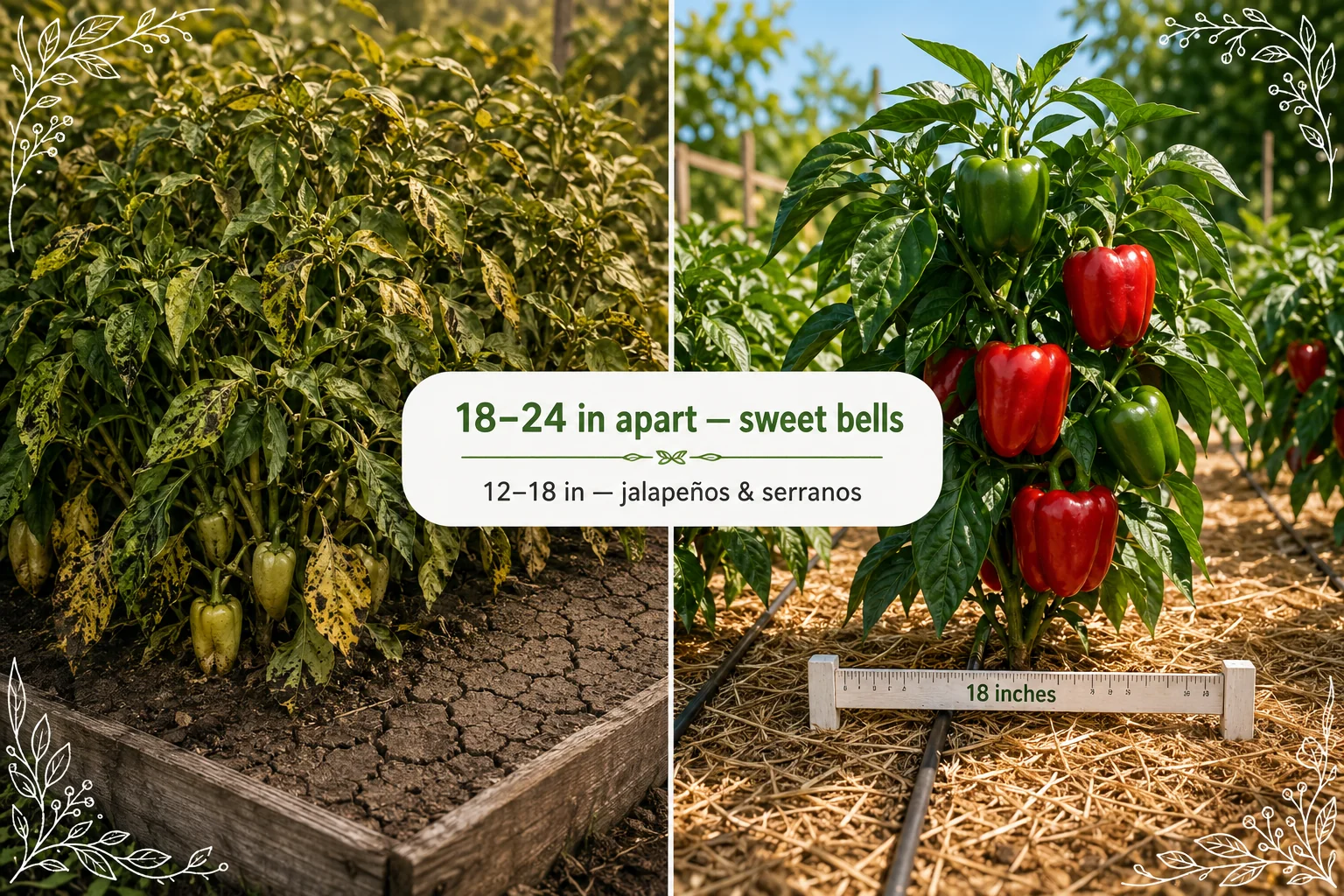
Get the spacing right and a pepper bed almost takes care of itself — wrong spacing and no amount of fertilizer or watering fixes the yield. Plant sweet bell peppers 18-24 inches apart, compact hot peppers 12-18 inches apart, and keep rows 24-36 inches apart. In containers, one plant per 5-gallon pot, no exceptions.
This guide covers every pepper type, in-ground spacing, raised bed spacing, container spacing, companion planting distances, and why spacing affects yield more than most gardeners expect.
Quick answer: spacing by pepper type
| Pepper type | Between plants | Between rows |
|---|---|---|
| Sweet bell (California Wonder, Big Red) | 18-24 in (45-60 cm) | 30-36 in (75-90 cm) |
| Mini sweet / snacking pepper | 14-18 in (36-45 cm) | 24-30 in (60-75 cm) |
| Jalapeño | 14-18 in (36-45 cm) | 24-30 in (60-75 cm) |
| Serrano | 12-18 in (30-45 cm) | 24-30 in (60-75 cm) |
| Cayenne | 12-18 in (30-45 cm) | 24-30 in (60-75 cm) |
| Habanero / Scotch bonnet | 18-24 in (45-60 cm) | 30-36 in (75-90 cm) |
| Poblano / Ancho | 18-24 in (45-60 cm) | 30-36 in (75-90 cm) |
| Thai / Bird’s eye | 12-15 in (30-38 cm) | 24 in (60 cm) |
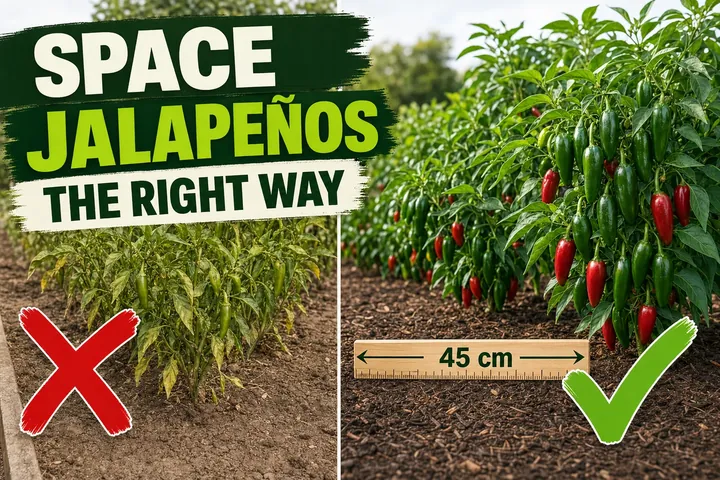
Use the lower end of each range in raised beds with rich, amended soil. Use the higher end in-ground, in heavy soil, or in humid climates where airflow is a concern.
Sweet bell peppers vs hot peppers: why the spacing differs
Bell peppers (Capsicum annuum) grow larger plants than most hot pepper varieties — taller stems, bigger leaf canopy, and heavier fruit loads that need more room to hang without crowding. A mature California Wonder or King Arthur bell pepper plant can span 24-30 inches across at peak fruiting. Pack them at 12 inches and their canopies merge — airflow drops, foliage stays wet after rain, and disease pressure spikes.
Hot peppers like jalapeños, serranos, and cayenne grow more upright and compact. Their fruit is smaller and lighter, and the plant’s natural shape keeps branches more vertical, so slightly tighter spacing (12-18 in) still allows reasonable airflow. That said, even hot peppers lose yield when crowded — the difference is they tolerate the lower end of the range without as steep a penalty.
Habaneros and Scotch bonnets are the exception among hot peppers: they grow large bushy plants and need the same 18-24 inch spacing as sweet bells.
Row spacing: 24-36 inches for all pepper types
Row spacing is often underestimated. Spacing rows 24-36 inches apart does three things:
- Lets you walk between plants at harvest without snapping branches or compacting root zones
- Allows air to move through the canopy from row to row, reducing leaf wetness and fungal disease
- Allows sunlight to reach the lower canopy, where many peppers set their early-season fruit
For tall bell pepper varieties and large bushes like habanero, use 30-36 inch rows. For compact upright types like jalapeño, cayenne, and serrano, 24-30 inch rows are workable in a well-maintained garden.
In a square-foot or intensive raised bed without traditional rows, space plants on a grid: 18 inches for bells, 15 inches for jalapeños, measured center to center in every direction.
In-bed spacing: raised bed vs in-ground
In-ground beds often have denser, less-aerated soil than raised beds. Roots spread more slowly and compete more with weeds and compacted zones. Use the upper end of each spacing range — 24 inches for sweet bells, 18 inches for jalapeños — and work in compost across the full planting area before transplanting.
Raised beds with fluffy, well-amended soil let roots expand more freely and the improved drainage reduces fungal pressure, so you can trim spacing slightly. Sweet bell peppers do well at 15-18 inches in a deep raised bed; jalapeños at 12-15 inches. Never go below 12 inches for any pepper variety — airflow benefits stop below that threshold.
A 4x8 raised bed fits:
- 8 bell pepper plants at 18 inches (two rows of four, rows 24 inches apart)
- 12-16 jalapeño or cayenne plants at 12-15 inches (two rows with closer centers)
Container spacing: one plant per 5-gallon pot
Pepper roots need space to expand — a confined root system directly limits fruit production. The rule is firm:
- Sweet bell peppers: one plant per 7-10 gallon container (the larger root mass needs more room)
- Jalapeños, serranos, cayenne: one plant per 5-gallon container minimum
- Thai/Bird’s eye chili, Pequin: one plant per 3-5 gallon container (compact root system tolerates it)
When placing containers on a patio or balcony, give each pot at least 18-24 inches of clearance from neighboring pots so the plant canopies don’t merge. Merged canopies in containers create the same humid, poorly-aerated microclimate as crowded in-ground plants.
Use a pot with drainage holes, a quality potting mix (not garden soil, which compacts hard in pots), and a stake or small cage installed at planting.
Companion planting: what to put close and what to keep far
Good neighbors to plant within 12-18 inches of peppers:
- Basil — repels aphids and thrips, which are common pepper pests; compatible root depth
- Parsley — attracts beneficial parasitic wasps that prey on hornworms
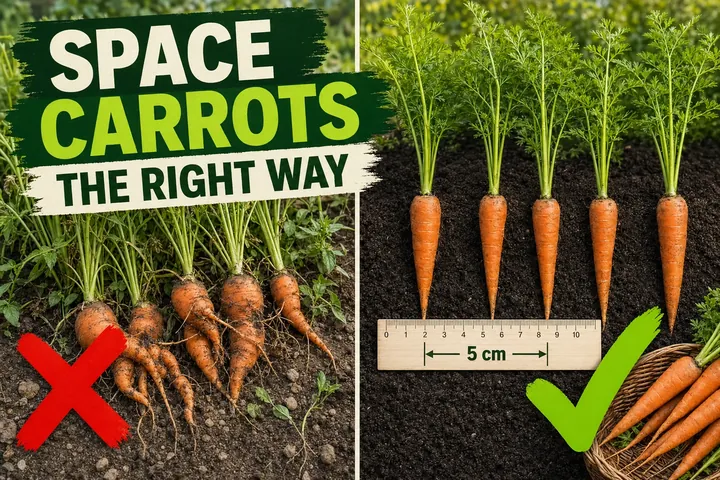
- Carrots — grown nearby at standard 5-inch spacing; their shallow rows don’t compete with deep pepper roots
Keep at least 24-36 inches away:
- Fennel — allelopathic; its root exudates stunt many vegetable plants including peppers
- Tomatoes — same water and nutrient demands; planting too close creates fierce competition, and shared pest pressure (hornworm, aphids) spreads fast between them
Cross-pollination note: If you’re saving seed from multiple pepper varieties in the same garden, keep them at least 300-500 feet apart or hand-pollinate under bags. For eating, proximity between varieties is irrelevant — cross-pollination doesn’t affect the fruit you harvest this season, only the seed.
Why spacing matters: airflow, sun, and fruit set
Three measurable things happen when peppers have enough space:
1. Airflow reduces disease pressure. Pepper foliage that stays wet after rain or irrigation invites powdery mildew, Botrytis (grey mould), and bacterial leaf spot. When plants are spaced correctly, air moves freely through the canopy and leaves dry quickly. Crowded plants in humid summers often lose 30-50% of their leaf area to fungal disease before peak fruiting.
2. Full sun reaches each plant. Peppers need 6-8 hours of direct sunlight for strong fruit set and thick walls. A crowded bed creates mutual shading — plants in the interior of a tight planting may get only 4-5 hours of real sun by midsummer, when neighbor canopies fill in. Shaded peppers grow leggy, drop flowers, and produce thin-walled, undersized fruit.
3. Root zones don’t compete. A mature pepper plant in good soil explores a root zone roughly 18-24 inches wide and 24-36 inches deep. Two plants spaced at 10 inches share most of that zone — they pull from the same water and nutrient pool, and both suffer reduced yields as a result. Correct spacing means each plant has its own largely uncontested root zone for the whole season.
Tips for tight gardens: getting more from less space
If you’re short on garden space, these strategies let you grow more peppers without sacrificing the spacing rules:
Grow vertical. Staking peppers and training them upright rather than letting them sprawl wide reduces lateral canopy spread. A caged, staked jalapeño at 12-inch spacing is more productive than an unstaked one that leans into its neighbor.
Prioritize compact varieties. In a small space, choose varieties that stay under 24 inches tall: Yardlong jalapeño, Lunchbox snacking peppers, or Pequin chilies all produce heavily in less horizontal room.
Use containers on a tiered shelf or railing. A 5-gallon pot on a railing bracket takes up zero ground space. Even 4-6 pots on a south-facing balcony can produce enough jalapeños or sweet minis for a full season.
Succession-plant a small number. Rather than planting 12 crowded peppers, plant 6 properly spaced ones, pick regularly to encourage new fruit set, and feed every two weeks. Six properly-fed, well-spaced plants outperform 12 crowded ones in total seasonal yield.
A free plant care app like Tazart can track each plant’s watering schedule and send reminders for fertilizing — useful when you’re managing a mix of bell peppers, jalapeños, and container plants that all have slightly different needs.
Care after transplanting at correct spacing
Once plants are in the ground at the right distance, keep these schedules:
| Task | When |
|---|---|
| Water | 1-2 times per week; 1 inch of water total; adjust for heat |
| Fertilize | Every 2 weeks once first flowers appear; use balanced or low-N formula |
| Mulch | Apply 2 in of straw or bark at planting; replenish at midseason |
| Stake or cage | At planting — not after branches are loaded |
| Side-dress | Compost tea or granular fertilizer at mid-season if growth slows |
Even watering is the most important single factor after spacing. Erratic moisture — dry spells followed by heavy soaking — causes blossom-end rot and blossom drop regardless of how well spaced the plants are. A drip line set to run every 2-3 days in summer handles this automatically.
Common spacing mistakes to avoid
- Planting at nursery-tray spacing. Six-packs hold peppers at 2-3 inch centers — never use that as a guide. The numbers on the tag are real; use them.
- Assuming smaller pots work for containers. A pepper plant in a 3-gallon pot in July heat dries out daily and restricts fruit size. Five gallons is the functional minimum for jalapeños.
- Closing gaps with extra plants mid-season. If you have space left in a bed in June, fill it with basil or parsley — not more peppers. Adding a pepper plant after established plants are 12 inches tall creates a permanent disadvantage for the latecomer.
- Ignoring row spacing while getting plant spacing right. Planting 18 inches apart in rows only 18 inches apart gives correct plant density but collapses the airflow that correct spacing is supposed to create.
Related reading
- How far apart to plant jalapeños — full spacing breakdown for jalapeño varieties specifically, including container density and row width for market-scale growing.
- How to grow bell peppers — the full care guide covering soil prep, watering, feeding, staking, and getting peppers to turn red on the plant.
- How far apart to plant carrots — another spacing-critical crop that shares the same raised bed logic; also a good companion plant for peppers.
- What conditions do red peppers need to grow — temperature, light, soil pH, and water requirements that pair with correct spacing.
- How far apart to plant cherry tomatoes — companion crop in the same warm-season bed; full vining-vs-bush spacing chart.
- Scan any plant you bring home with the free Tazart plant identifier and get a tailored watering and care schedule for your specific variety.
A note on conditions
Spacing recommendations are starting points — your specific soil richness, climate humidity, and variety size all shift the ideal number slightly. Use the variety table at the top as your baseline. If you garden in a persistently humid climate (southeast US, Pacific Northwest), move to the upper end of each range; the extra airflow is worth the reduced plant count. In hot, dry climates with strong sun, the lower end works well because disease pressure is lower and plants stay compact. Adjust based on what your garden does, not just what the seed packet says.
Highly recommended
The supplies that make this guide work
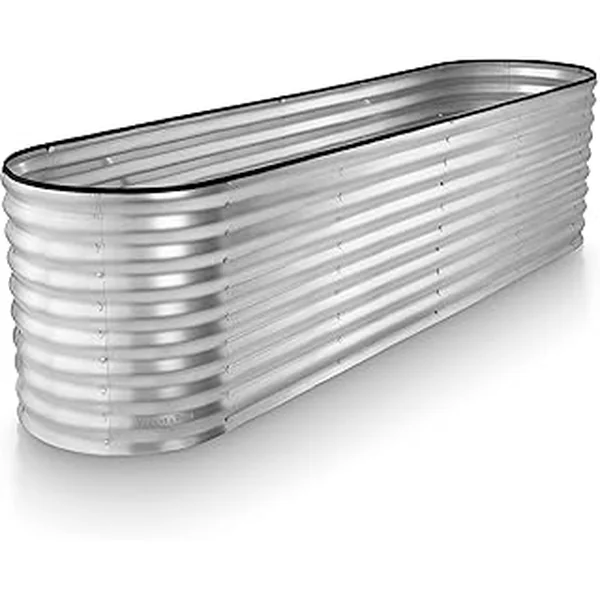
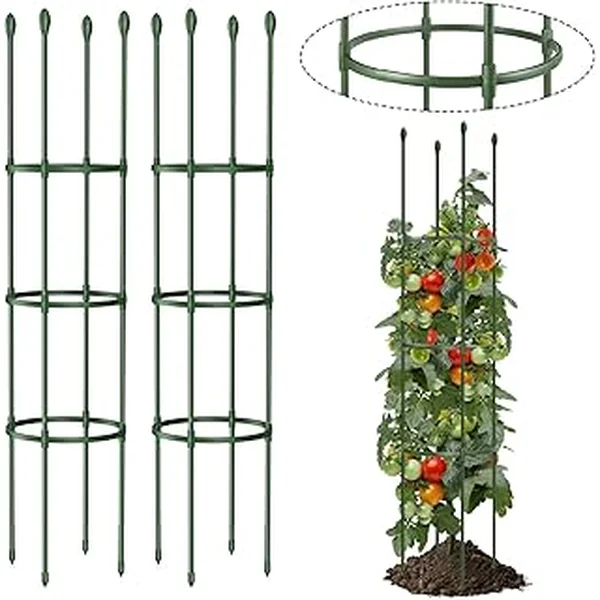
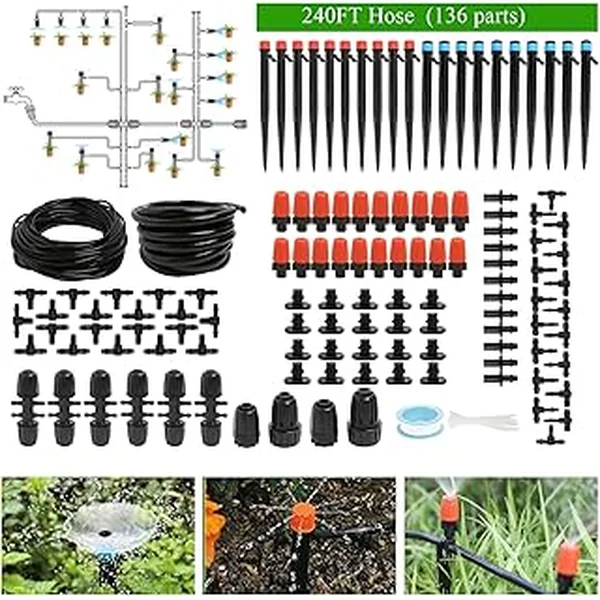
Tazart is an Amazon Associate — we earn from qualifying purchases at no extra cost to you. Thank you for helping us keep these guides free.
Frequently asked questions
How far apart should I plant peppers?
Space sweet bell peppers 18-24 inches apart. Compact hot pepper varieties like jalapeños and serranos need 12-18 inches between plants. All peppers do best with 24-36 inches between rows to allow airflow and room to work between plants.
How far apart should rows of peppers be?
Keep rows 24-36 inches apart for all pepper types. Wider rows (30-36 in) suit tall varieties like California Wonder bell peppers. Compact chiles like cayenne and serrano can manage 24-inch rows, but wider is always better for airflow and easier harvesting.
How many pepper plants per container?
One pepper plant per 5-gallon (19-litre) pot. Sweet bell peppers are best in 7-10 gallon containers due to their larger root systems. Do not double-plant — two pepper plants sharing a 5-gallon pot compete for water and nutrients and both yield poorly.
What happens if peppers are planted too close together?
Crowded pepper plants share light, water, and nutrients, leading to smaller fruits and lower yields. Poor airflow between plants creates humid conditions that invite powdery mildew, Botrytis, and bacterial leaf spot. Blossom drop also increases when plants are stressed from competition.
Can I plant different pepper varieties next to each other?
Yes — different pepper varieties can share a bed without issue as vegetables. However, hot and sweet peppers can cross-pollinate via bees if you're saving seed. If you want to save true-to-type seed, keep varieties at least 300-500 feet apart or bag a few flowers. For eating only, proximity doesn't matter.
How far apart to plant jalapeños?
Plant jalapeños 12-18 inches apart with rows 24-30 inches apart. Jalapeños are more compact than bell peppers and can tolerate the closer end of that range in rich, well-watered soil — but 18 inches gives each plant the airflow it needs to stay disease-free through a long season.
Do peppers need more space in raised beds than in-ground?
No — raised beds typically allow slightly tighter spacing because the loose, well-drained soil improves root penetration and reduces competition. In a raised bed you can plant sweet peppers at 15-18 inches and hot peppers at 12-15 inches, but never less — airflow benefits from spacing apply regardless of bed type.
Can I grow peppers in a 3-gallon pot?
A 3-gallon pot works for a small compact hot pepper like Pequin or Thai chili, but it's too small for bell peppers or large jalapeño plants. A 3-gallon pot dries out quickly in summer heat and restricts root expansion — expect lower yield and more frequent watering. Upgrade to 5 gallons for reliable production.