Flowers
How Far Apart to Plant Hydrangeas (Spacing by Variety)
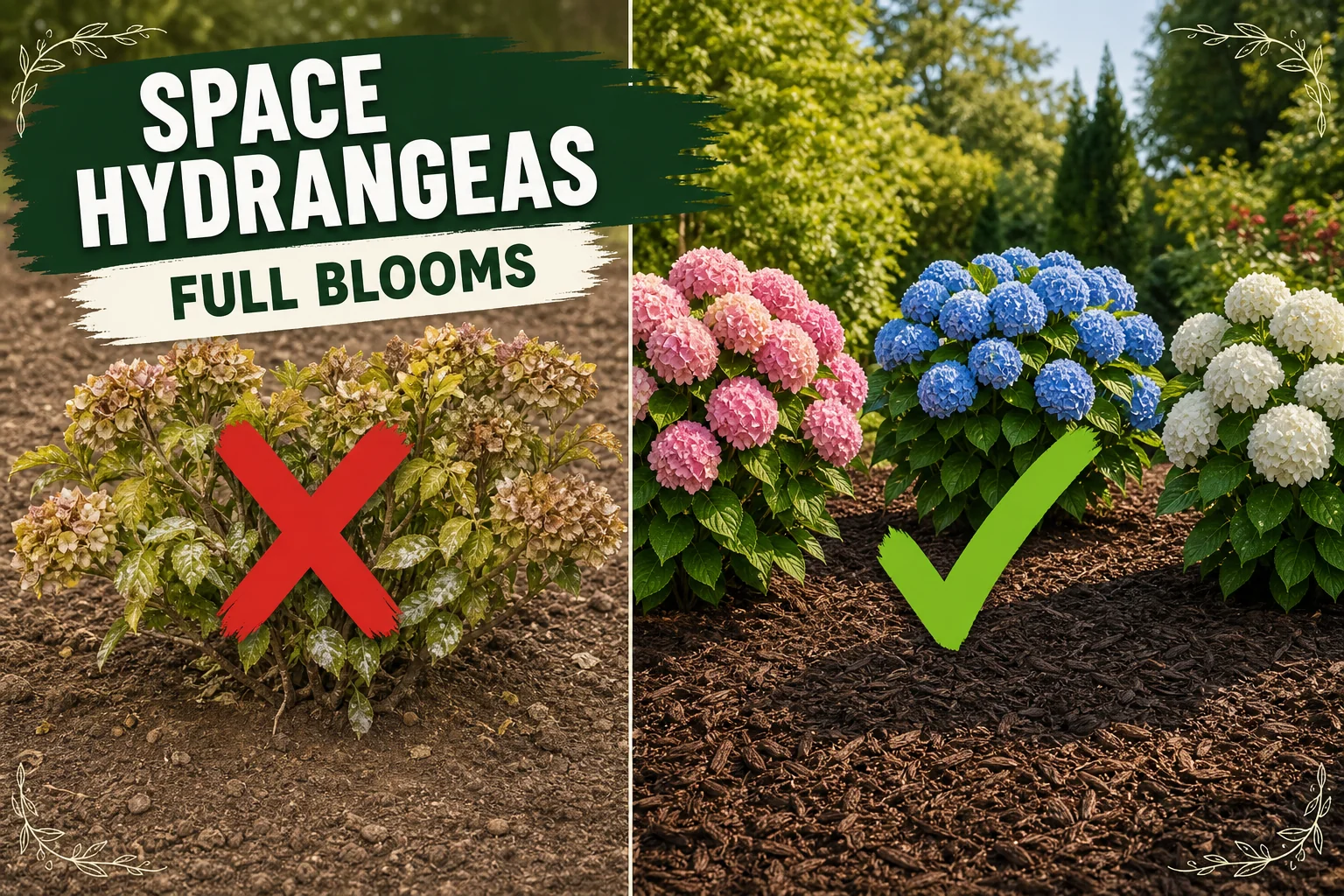
Plant bigleaf hydrangeas 1.2–1.8 m (4–6 ft) apart, panicle 1.8–3 m (6–10 ft), smooth 1–1.5 m (3–5 ft) — spacing by mature size for healthy blooms.
On this page
- Quick answer
- Why species matters more than “hydrangea” as a label
- Spacing by hydrangea species
- How deep to plant hydrangeas
- Soil prep before spacing
- Hedge spacing — the 75% rule
- Spacing from buildings and fences
- Spacing in containers
- Spacing affects bloom colour (bigleaf only)
- Watering after planting
- Common spacing mistakes
- Troubleshooting
- Watch: spacing hydrangeas in a hedge
- Related reading
- A note on conditions
Watch the visual walkthrough
Limelight Hydrangeas // 1 Year Update // Garden Answer
LINKS Planting Limelights Video - https://youtu.be/Yu3Z2F1xyGc Limelight Hydrangea - https://goo.gl/4zWyww Holly Tone ...
How far apart you plant hydrangeas is the difference between a tidy border that looks established in three years and a crowded mess that needs digging up and replanting in five. The spacing rule is simple — plant at the cultivar’s mature width — but the trap is that hydrangeas come in five very different species with mature widths from 90 cm (36 in) to 9 m (30 ft).
A ‘Bobo’ panicle planted at ‘Limelight’ spacing leaves yawning gaps; a ‘Limelight’ planted at ‘Bobo’ spacing crowds itself within two summers and stops blooming on the inner branches.
This guide gives spacing by species and popular cultivar, depth, root-ball positioning, and the airflow rule that decides whether your hydrangea border stays full or thins from the middle.
Quick answer
Plant bigleaf hydrangeas (mophead/lacecap) 1.2–1.8 m (4–6 ft) apart, panicle hydrangeas 1.8–3 m (6–10 ft) apart, smooth (‘Annabelle’) hydrangeas 1–1.5 m (3–5 ft) apart, and oakleaf hydrangeas 1.8–2.5 m (6–8 ft) apart. For a hedge, plant at 75% of mature width on-center. Set root ball with the crown level with or 2.5 cm (1 in) above surrounding soil — never deeper. Mulch 5–8 cm (2–3 in), keeping mulch 10 cm (4 in) off the stems.
Why species matters more than “hydrangea” as a label
Five hydrangea species are commonly sold for the garden, and they grow to wildly different sizes:
- Bigleaf (Hydrangea macrophylla) — the classic mophead and lacecap, blue/pink/purple blooms, mature 1.2–1.8 m (4–6 ft) wide
- Panicle (H. paniculata) — cone-shaped white-to-pink blooms (‘Limelight’, ‘Pinky Winky’, ‘Vanilla Strawberry’), mature 1.8–3 m (6–10 ft) wide
- Smooth (H. arborescens) — round white globes (‘Annabelle’, ‘Incrediball’), mature 1–1.5 m (3–5 ft) wide
- Oakleaf (H. quercifolia) — long white panicles, oak-shaped foliage, mature 2–2.5 m (6.5–8 ft) wide
- Climbing (H. anomala petiolaris) — wall-clinging vine, mature 6–9 m (20–30 ft) up a vertical surface
Within each species, dwarf and compact cultivars (often labelled “Little”, “City”, “Bobo”, “Tiny”) are bred to half or a third of standard width — making variety-specific spacing essential.
Spacing by hydrangea species
| Species | Standard mature width | Spacing (single shrub) | Spacing (hedge, on-center) |
|---|---|---|---|
| Bigleaf (macrophylla) | 1.2–1.8 m (4–6 ft) | 1.5–2 m (5–6.5 ft) | 1.1–1.4 m (3.5–4.5 ft) |
| Panicle (paniculata) | 1.8–3 m (6–10 ft) | 2–3 m (6.5–10 ft) | 1.5–2.4 m (5–8 ft) |
| Smooth (arborescens) | 1–1.5 m (3–5 ft) | 1.2–1.8 m (4–6 ft) | 90 cm–1.2 m (3–4 ft) |
| Oakleaf (quercifolia) | 2–2.5 m (6.5–8 ft) | 2.4–3 m (8–10 ft) | 1.5–2 m (5–6.5 ft) |
| Climbing (petiolaris) | 6–9 m (20–30 ft) horizontal spread up a wall | 3 m (10 ft) between plants on the same wall | n/a |
Within each species, look up the specific cultivar before measuring. Examples:
| Cultivar | Species | Mature width | Spacing |
|---|---|---|---|
| ’Annabelle’ | Smooth | 1.5 m (5 ft) | 1.5 m (5 ft) |
| ‘Incrediball’ | Smooth | 1.8 m (6 ft) | 1.8 m (6 ft) |
| ‘Limelight’ | Panicle | 2.5 m (8 ft) | 2.5 m (8 ft) |
| ‘Little Lime’ | Panicle | 90 cm (36 in) | 90 cm (36 in) |
| ‘Bobo’ | Panicle | 75 cm (30 in) | 75 cm (30 in) |
| ‘Endless Summer’ | Bigleaf | 1.2–1.5 m (4–5 ft) | 1.5 m (5 ft) |
| ‘Cityline Paris’ | Bigleaf | 90 cm (36 in) | 90 cm–1.2 m (3–4 ft) |
| ‘Snow Queen’ | Oakleaf | 2 m (6.5 ft) | 2.4 m (8 ft) |
How deep to plant hydrangeas
Plant the root ball with the top level with or 2.5 cm (1 in) above the surrounding soil surface. This single rule kills more new hydrangeas than spacing mistakes do.
Why above-grade matters:
- The root ball settles 1–2.5 cm (0.5–1 in) within the first season as soil compacts and water drives out air pockets.
- Settling below grade puts the crown underwater every time it rains, which invites stem and crown rot.
- The flare where stems meet roots needs air circulation. Buried, it stays damp and rots.
Dig the hole twice as wide as the root ball — width is more important than depth because the new feeder roots grow horizontally, not down. Hydrangeas are shallow-rooted shrubs that find most of their water in the top 30 cm (12 in) of soil.
For a full step-by-step planting walkthrough, see how to plant hydrangeas in the ground.
Soil prep before spacing
Hydrangeas need rich, moisture-retentive but well-drained soil. Before measuring spacing, prep the entire bed — not just the holes. The roots of mature hydrangeas spread well beyond the original hole, and amended bed-wide soil supports faster establishment than amended individual holes.
For each shrub:
- Mix 30% compost into the existing soil
- Test soil pH if you’re growing bigleaf or lacecap and want a specific bloom colour (acidic = blue, alkaline = pink)
- Loosen the soil to 30 cm (12 in) deep over the whole planting area
- Water the bed deeply 24 hours before planting if soil is dry
Hedge spacing — the 75% rule
For a continuous hedge effect, plant at roughly 75% of mature width on-center:
- ‘Limelight’ panicle (2.5 m / 8 ft mature) → plant 1.8 m (6 ft) apart
- ‘Annabelle’ smooth (1.5 m / 5 ft mature) → plant 1.1 m (3.5 ft) apart
- ‘Endless Summer’ bigleaf (1.5 m / 5 ft mature) → plant 1.1 m (3.5 ft) apart
- ‘Bobo’ panicle (75 cm / 30 in mature) → plant 60 cm (24 in) apart
Tighter than 50% of mature width creates the “doughnut hedge” effect — full outer canopy, dead bare centre. The middles starve for light, drop leaves, and stop blooming.
For double-row hedges (two rows offset for a thicker screen), plant rows 75% of mature width apart and stagger plants between rows.
Spacing from buildings and fences
Hydrangeas spread roots and canopy outward in all directions. Tight planting against walls causes:
- One-sided growth (front-only blooms)
- Damp foliage on the back from wall-bounce humidity → mildew
- No access for pruning, mulching, or division
Minimum spacing from structures:
- Standard fence or wall: 90 cm (36 in) from centre of root ball
- Heated building wall: 1.2 m (4 ft) — wall radiates dry heat that bigleaf hydrangeas hate
- Driveway or walkway: half the mature width plus 30 cm (12 in) for canopy clearance
- Other shrubs: 50% of combined mature widths
Spacing in containers
Most hydrangeas can grow in pots if the pot is large enough — but it’s one shrub per pot, no multi-plantings:
| Cultivar size | Pot diameter | Pot depth |
|---|---|---|
| Compact (under 90 cm / 36 in) | 35–45 cm (14–18 in) | 30 cm (12 in) |
| Standard (1.2–1.5 m / 4–5 ft) | 50–60 cm (20–24 in) | 40 cm (16 in) |
| Large (over 1.8 m / 6 ft) | 75 cm (30 in)+ | 50 cm (20 in)+ |
Pots dry out fast — water containerized hydrangeas every 1–2 days through summer and feed every 4 weeks. A free plant care app like Tazart tracks watering and feeding intervals so you don’t lose a $40 shrub to one missed week.
Spacing affects bloom colour (bigleaf only)
For bigleaf and lacecap hydrangeas, soil pH around each plant determines bloom colour:
- Acidic soil (pH below 6.0): aluminum is plant-available → blue blooms
- Neutral to alkaline (pH 6.5–7.5): aluminum locked up → pink blooms
- Slightly acidic (pH 6.0–6.5): mixed purple-mauve
Tightly spaced hydrangeas share root zones, which means an aluminum sulfate amendment on one plant can drift into a neighbour’s root zone. Wider spacing lets you maintain different colours on adjacent shrubs without one bleeding into the other.
This rule does NOT apply to panicle, smooth, or oakleaf hydrangeas — their bloom colour is genetic, not pH-driven.
Watering after planting
New hydrangeas need consistent moisture for the first 6–8 weeks while feeder roots establish:
- Weeks 1–2: water deeply every other day (about 8 L / 2 gal per plant)
- Weeks 3–6: water deeply 2–3 times per week
- After 6 weeks: water deeply once a week, more in heatwaves above 30°C (86°F)
A hydrangea that wilts in afternoon sun has shallow roots and needs more frequent watering. A hydrangea that wilts in the morning is in too much sun, too dry soil, or too tight spacing competing for moisture.
Common spacing mistakes
- Spacing by what fits today. A 30 cm (12 in) hydrangea in a nursery pot grows into a 1.5 m (5 ft) shrub. Plant for the future plant, not today’s nursery container.
- Treating all hydrangeas as one species. Spacing ‘Limelight’ (panicle, 2.5 m / 8 ft) and ‘Bobo’ (panicle, 75 cm / 30 in) the same is the most common cultivar mistake.
- Tight planting against walls. Hydrangeas spread, root-prune themselves on walls, and develop one-sided growth. Always 90 cm (36 in) minimum from any wall.
- Burying the crown. Plant ABOVE-grade — root ball 2.5 cm (1 in) above surrounding soil. Buried crowns rot.
- Skipping bed prep. Amending only the planting hole leaves a “pot” of nice soil surrounded by hard clay — roots circle in the amended zone and never spread.
Troubleshooting
| Symptom | Likely cause | Fix |
|---|---|---|
| Blooms only on outer edges, bare middle | Spacing too tight; centre branches dying from no light | Thin lower branches; widen spacing on next planting; rejuvenate-prune in late winter |
| Powdery mildew on lower leaves | Crowded spacing + damp foliage from overhead watering | Increase spacing; switch to ground-level watering; thin interior branches for airflow |
| Wilting in afternoon sun | Newly planted with shallow root ball + too dry | Water deeply 2–3× per week; mulch 5–8 cm (2–3 in); shade with row cover for first 2 weeks if possible |
| Few or no blooms on bigleaf type | Late frost killed flower buds OR pruned at wrong time | Don’t prune bigleaf after July; protect emerging buds with frost cloth in late spring |
| Lopsided growth toward path | Planted too close to wall — back side starves for light | Move plant; trim wall-side branches to encourage front-side density |
| Leaves yellowing between veins | Iron chlorosis from alkaline soil | Test soil; apply chelated iron foliar feed; mulch with pine needle compost |
| Stems flop after rain | Overcrowded + smooth hydrangea variety | Smooth types (‘Annabelle’) flop naturally; use peony rings or interplant with sturdier shrubs |
Watch: spacing hydrangeas in a hedge
A short visual walkthrough pairs well with the steps above. If you’re a visual learner, watch a quick step-by-step video that shows mature spacing, root-ball depth, and the difference between species, then come back to the spacing tables in this guide.
Related reading
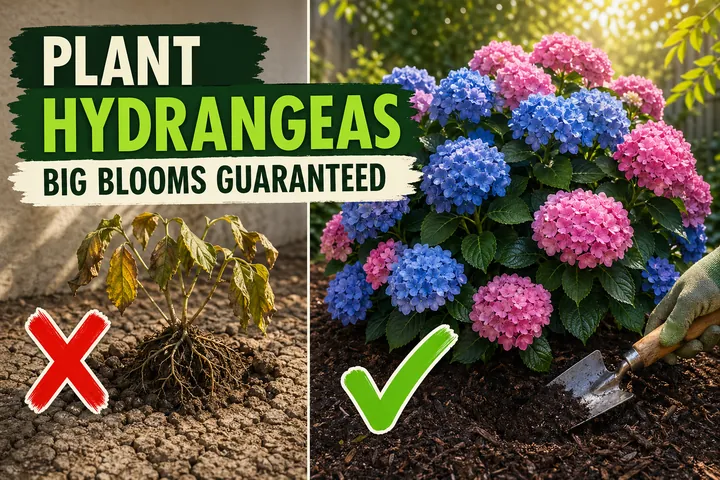
- How to plant hydrangeas in the ground — the full planting walkthrough that pairs with this spacing guide.
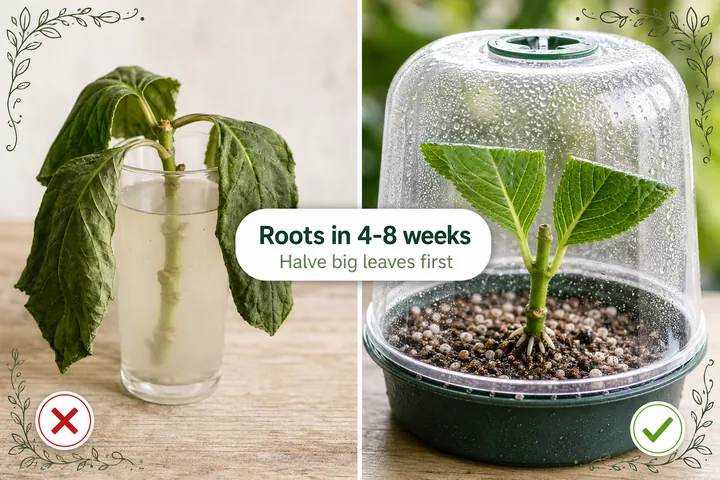
- How to propagate hydrangeas from cuttings — fill out a hedge with free plants instead of buying more nursery shrubs.
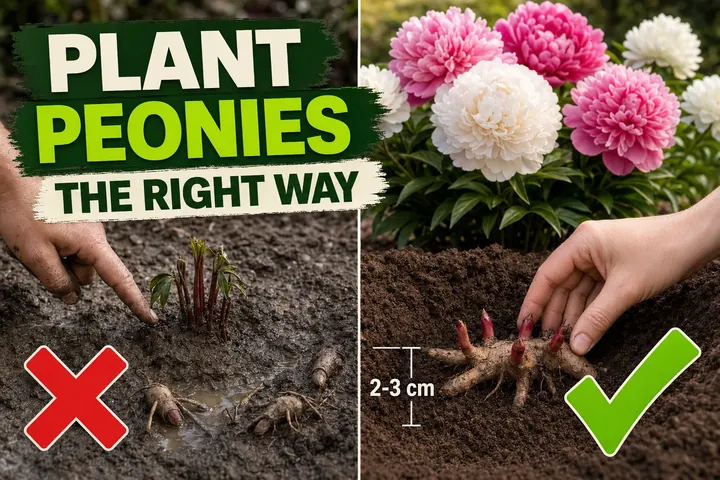
- How to plant peony bulbs for years of blooms — peonies pair beautifully behind smooth hydrangeas and bloom before the hydrangea border peaks.
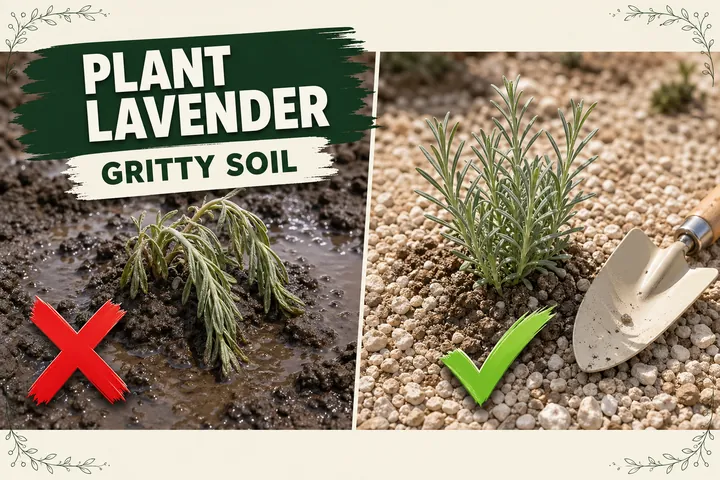
- How to plant lavender — drought-tolerant edging that frames a hydrangea border with contrasting silvery foliage.
A note on conditions
Every garden is different. USDA zone, soil texture, summer rainfall, and how much afternoon sun the bed gets all change how hydrangeas respond to spacing. Use the numbers in this guide as a starting point and adjust based on how your shrubs grow in their first three seasons — that’s how every good gardener sets a permanent border.
Highly recommended
The supplies that make this guide work



Tazart is an Amazon Associate — we earn from qualifying purchases at no extra cost to you. Thank you for helping us keep these guides free.
Frequently asked questions
How far apart should I plant hydrangeas?
Spacing depends entirely on the species and cultivar. Bigleaf hydrangeas (Hydrangea macrophylla — the classic mophead and lacecap types) go 1.2–1.8 m (4–6 ft) apart. Panicle hydrangeas (H. paniculata — 'Limelight', 'Vanilla Strawberry', 'Pinky Winky') go 1.8–3 m (6–10 ft) apart. Smooth hydrangeas (H. arborescens — 'Annabelle', 'Incrediball') go 1–1.5 m (3–5 ft) apart. Oakleaf hydrangeas (H. quercifolia) go 1.8–2.5 m (6–8 ft) apart. Always plant at the cultivar's mature width — not what looks good in year one.
How far apart should hydrangeas be for a hedge?
For a solid hedge, plant at 75% of mature width — close enough to grow into each other, far enough to keep airflow. For bigleaf hydrangeas with a 1.5 m (5 ft) mature width, that's roughly 1.1 m (3.5 ft) on-center. For panicle 'Limelight' at 2.5 m (8 ft) mature width, plant at 1.8 m (6 ft) on-center. Tighter than 50% of mature width and the centre branches die from lack of light, leaving a hedge with bare middles and full ends.
How deep do you plant hydrangeas?
Plant hydrangeas with the top of the root ball level with — or 2.5 cm (1 in) above — the surrounding soil surface. The hole should be twice as wide as the root ball but no deeper. Burying the crown deeper than the original pot depth slows establishment and invites stem rot. After backfilling with native soil amended with compost, water deeply and add 5–8 cm (2–3 in) of mulch — keep mulch 10 cm (4 in) clear of the stems.
Can hydrangeas be planted close together?
Tighter than recommended spacing crowds the centre of each shrub, drops airflow, and creates a wall of damp foliage that invites powdery mildew and leaf spot. Bigleaf hydrangeas are especially prone to fungal issues in crowded plantings. The minimum airflow rule is roughly 60 cm (24 in) of clear space between mature canopies — closer than that and the shrubs bloom only on the outer edges.
How wide do hydrangeas get?
Mature width varies by species: bigleaf 1.2–1.8 m (4–6 ft), panicle 1.8–2.5 m (6–8 ft), smooth 1.5 m (5 ft), oakleaf 2–2.5 m (6.5–8 ft), climbing 6–9 m (20–30 ft) up a wall. Compact cultivars like 'Bobo', 'Little Lime', or 'Cityline' stay closer to 90 cm (36 in) wide. Always check the specific cultivar tag — within one species, mature size can vary by a factor of three.
How far from a fence should hydrangeas be planted?
Plant the centre of the root ball 90 cm (36 in) from a fence or wall for any standard-size hydrangea, or 1.2 m (4 ft) for panicle and oakleaf types. The shrub fills toward the path side once it establishes, and you need access behind for pruning, mulching, and eventually division. Closer than 60 cm (24 in) to a fence and the back side of the shrub stays in shade, doesn't bloom, and develops mildew.