Flowers
How Deep to Plant Zinnia Seeds (1/4 Inch — Barely Cover)
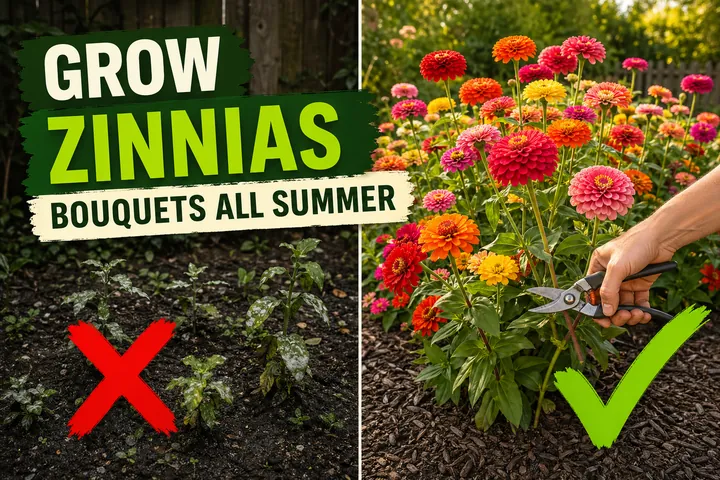
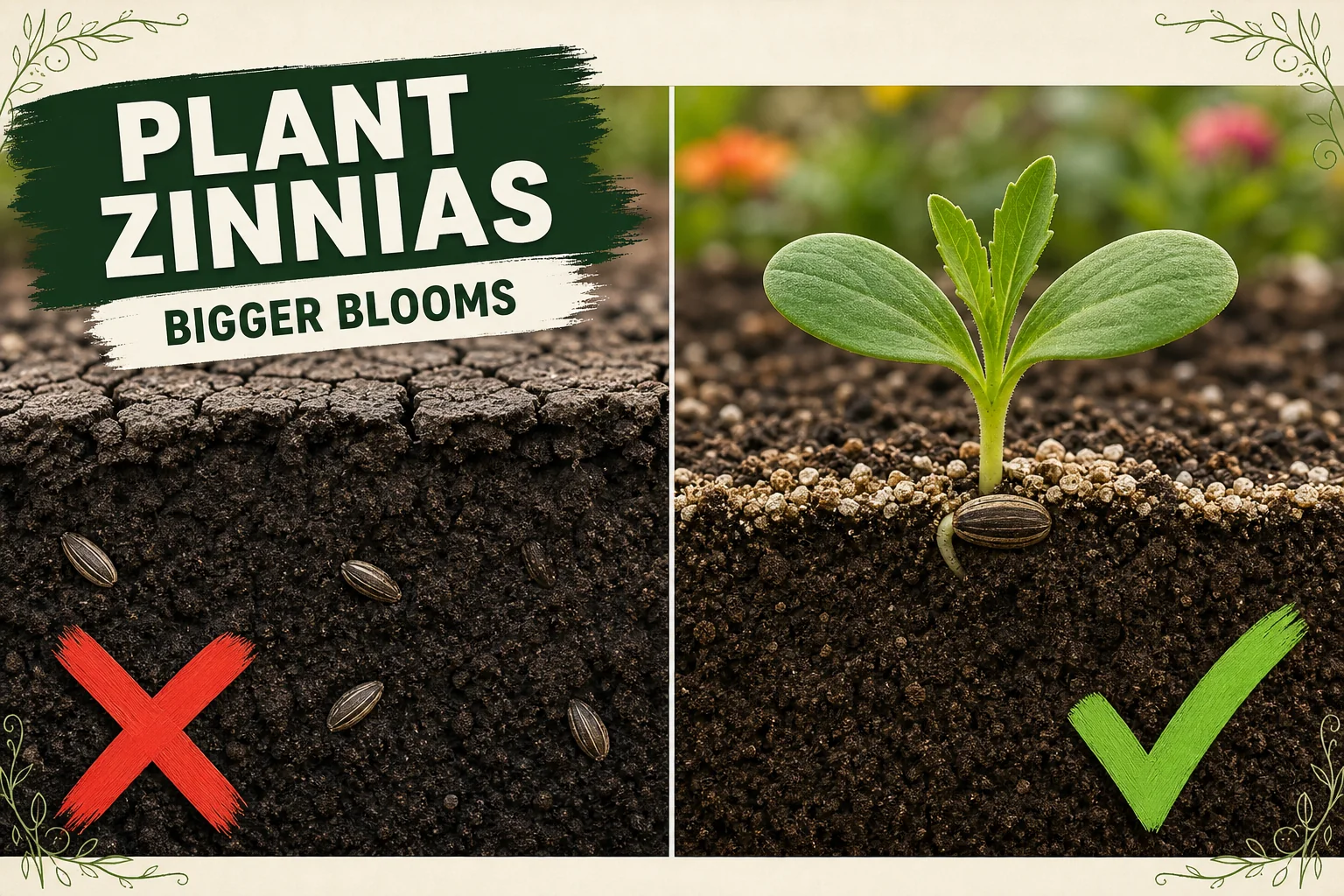
Plant zinnia seeds 1/4 inch (0.5 cm) deep — barely cover them. Zinnias germinate fastest with light, warm soil, and 6–12 inch spacing. Succession sow every 2 weeks.
On this page
- Quick answer
- Why zinnias need shallow planting
- The exact depth rule: 1/4 inch, no deeper
- Soil temperature is the other half of the equation
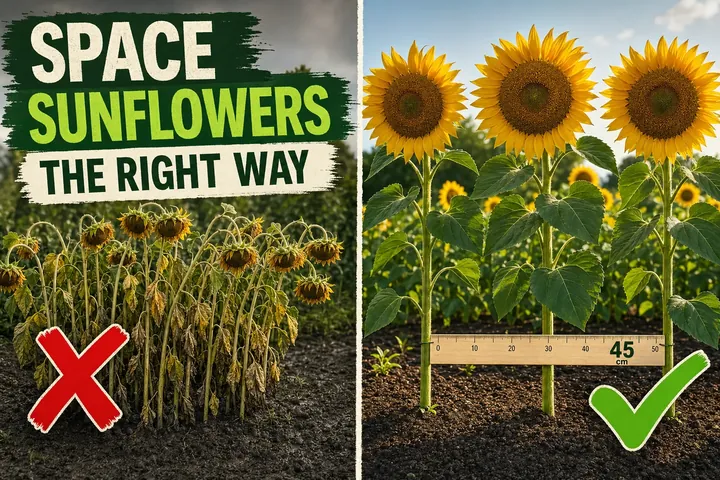
- Spacing: 6 inches for borders, 12 inches for cuts
- Thinning: the step everyone skips
- Succession planting for continuous blooms
- Watering after sowing
- Indoor starting vs. direct sow
- Common mistakes
- Troubleshooting table
- Related reading
- A note on conditions
Watch the visual walkthrough
Zinnias: The Perfect Flower to Grow in Your Garden?
Get free seeds, shipping, and returns: https://www.epicgardening.com/greenhouse/ Learn to grow zinnias and add them to your ...
Most zinnia failures aren’t about variety, soil, or weather — they’re about depth. Plant the seeds half an inch under and germination drops by half. Press them into a properly warm bed and barely cover them, and you’ll see green in a week.
Zinnias are one of the easiest cut flowers in the world to grow from seed, but only if you respect what they actually want: a thin soil cover, real warmth, and full sun.
This guide covers the exact planting depth, why shallow matters, spacing for cut flowers vs. borders, and the succession-sowing schedule that gives you blooms from early summer to first frost.
Quick answer
Plant zinnia seeds 0.5 cm (1/4 in) deep — just barely covered with fine soil or vermiculite. Wait for soil temperature to reach 21°C (70°F) at 5 cm (2 in) depth. Space final plants 15–30 cm (6–12 in) apart depending on variety. Germination takes 5–7 days in warm soil. Succession sow every 2–3 weeks from last frost through 10 weeks before first frost for continuous blooms.
Why zinnias need shallow planting
Zinnia seeds are flat, papery, and small — about the size of a fingernail clipping. They have a thin seed coat and a small reserve of stored energy. Bury them deep and they exhaust that energy pushing through soil before they ever reach light.
Shallow planting works for three connected reasons:
- Light triggers germination. Zinnias aren’t strictly light-required like lettuce, but a thin soil layer that lets diffused light reach the seed speeds the process dramatically.
- Warmth penetrates faster near the surface. Soil at 0.5 cm (1/4 in) depth heats up far more reliably than soil at 2.5 cm (1 in) depth, especially in spring beds.
- Seedlings emerge before they rot. A shallowly planted seed reaches the surface in 5–7 days. A deeply planted one takes 10–14 days, and during those extra days fungal disease (damping-off) is a real threat.
This is the opposite of how you’d plant beans, corn, or garlic cloves — those crops need depth for stability, moisture access, and frost protection. Zinnias want light, warmth, and speed instead.
The exact depth rule: 1/4 inch, no deeper
Plant every zinnia seed at 0.5 cm (1/4 in) — about the thickness of two stacked dimes. The easiest way to hit this depth without measuring is to:
- Press the seed flat onto firm, raked soil.
- Sprinkle a pinch of fine soil or vermiculite over it until it disappears.
- Stop. That’s it.
If you can still see a faint outline of where the seed is, you’re at the right depth. If you’ve got a clear soil mound covering it, you’ve gone too deep.
Variety adjustment: Massive Benary’s Giant or Queen Lime Red seeds are slightly larger than dwarf bedding types, but they still germinate best at 0.5 cm (1/4 in). Don’t compensate with extra depth for big varieties.
Soil temperature is the other half of the equation
Depth without warmth is wasted effort. Zinnias are tropical American annuals — native to Mexican grasslands — and their seeds actively refuse to germinate in cool soil.
| Soil temperature | Germination time | Notes |
|---|---|---|
| 16–18°C (61–65°F) | 10–14 days | Risky — high damping-off risk |
| 18–21°C (65–70°F) | 7–10 days | Acceptable, slow start |
| 21–24°C (70–75°F) | 5–7 days | Sweet spot |
| 24–27°C (75–81°F) | 4–6 days | Fastest, watch for surface drying |
| Above 27°C (81°F) | 4–5 days | Watch seedlings for scorch |
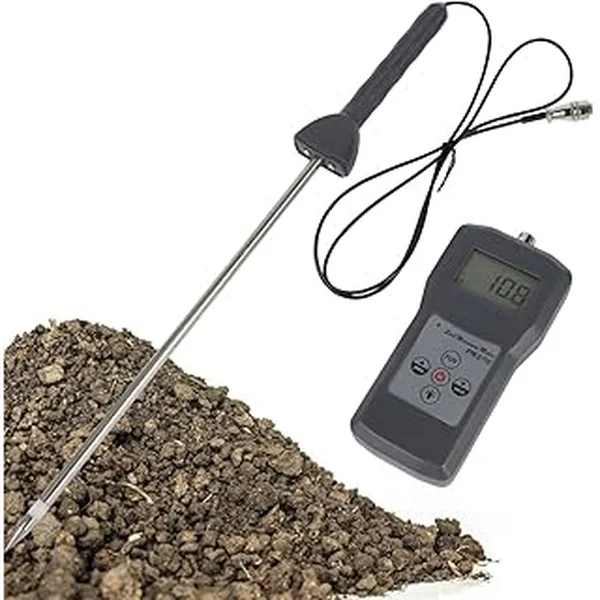
A probe soil thermometer is the cheapest investment you can make for a zinnia bed. Push it 5 cm (2 in) into the soil at midday and read it three days running before sowing. Don’t trust calendar dates — soil warms unevenly depending on aspect, mulch, and rainfall.
In most US zones, the soil hits 21°C (70°F) about 2–3 weeks after the last frost date — which is why direct sowing from mid-May through early June is the practical window for most home gardens.
Spacing: 6 inches for borders, 12 inches for cuts
Zinnia spacing depends entirely on what you want to do with the flowers.
Bedding and borders — 15 cm (6 in) apart:
- Compact varieties: Profusion series, Zahara series, dwarf Pumila mixes
- Use this spacing for solid color blocks in a sunny border or annual bed
- Plants reach 20–30 cm (8–12 in) tall with dense flowering across the top
Cut flowers — 30 cm (12 in) apart:
- Tall varieties: Benary’s Giants, Oklahoma series, Queen Lime, State Fair Mix
- Use this spacing for long, straight stems for vases
- Plants reach 90–120 cm (3–4 ft) tall with massive blooms on individual stems
- Each plant produces 15–25+ stems over the season with regular cutting
Mass planting in cutting beds: Sow seeds 5–8 cm (2–3 in) apart at planting time, then thin to final 30 cm (12 in) once seedlings have their first true leaves. Thinning seems wasteful but it’s mandatory — overcrowded zinnias produce smaller flowers, fewer stems, and develop powdery mildew far earlier in the season.
Thinning: the step everyone skips
Newly emerged zinnia seedlings look fragile and you’ll want to leave them all in. Don’t.
When seedlings have two sets of true leaves (typically 14–18 days after sowing), thin them to final spacing. Use sharp scissors and snip the weakest at soil level — pulling disturbs the roots of neighbors you’re keeping.
A zinnia that grew up with three crowding siblings produces 50% fewer stems and 30% smaller flowers than one that had its full 30 cm (12 in) of room. The math is brutal, but it’s the difference between a forgettable bed and a cutting garden that fills 10+ vases a summer.
Succession planting for continuous blooms
A single sowing of zinnias blooms hard for 4–6 weeks, then slows. Succession sowing keeps the supply going all season.
Schedule for a typical zone 5–7 garden:
| Sow date | First bloom | Notes |
|---|---|---|
| 2 weeks after last frost (mid-May) | Late June | First wave |
| 4 weeks later (mid-June) | Late July | Peak summer wave |
| 4 weeks later (mid-July) | Late August | Late-season cut flowers |
Stop succession sowing 10 weeks before your average first fall frost — anything later won’t have time to bloom. In zone 7, that’s roughly the end of July; in zone 9, you can keep sowing through August.
Each sowing only needs a small space. A 1.5 m × 1 m (5 ft × 3 ft) bed planted three times across the season will keep a single household in cut flowers from June through October.
Watering after sowing
The first 10 days after sowing are when most direct-sown zinnia failures happen — usually from a single heavy watering that washes the barely-covered seeds out of place.
First 10 days:
- Mist daily if the top 2.5 cm (1 in) of soil feels dry
- Use a fine spray nozzle, never a strong jet
- Aim to keep the surface evenly damp, not saturated
After germination (week 2 onward):
- Water deeply 2–3 times per week, soaking the top 10 cm (4 in)
- Switch to base watering — avoid wetting foliage to reduce powdery mildew risk
- Reduce to 1–2 times per week once plants have 4–5 sets of leaves and roots are established
A 5 cm (2 in) layer of straw or shredded leaf mulch around established plants holds moisture, keeps soil temperature stable, and dramatically reduces watering frequency. Apply it once seedlings are 10 cm (4 in) tall.
Indoor starting vs. direct sow
Zinnias resent transplanting. They have a sensitive taproot that breaks easily, and disturbed seedlings often sulk for weeks before resuming growth — sometimes losing the season entirely.
If you must start indoors (short-season gardens, zone 4 or colder):
- Sow in 7.5 cm (3 in) biodegradable peat or coir pots — they go in the ground intact
- Sow 4–6 weeks before your last frost
- Harden off carefully over 7–10 days
- Plant out only after soil has reached 21°C (70°F)
For everyone else: direct sow. The seedlings catch up to indoor-started plants within 2–3 weeks, and you avoid the transplant-shock setback entirely.
This is the same direct-sow logic that applies to cosmos and nasturtiums — annuals with sensitive roots almost always do better sown straight into the bed.
Common mistakes
- Planting too deep. Anything more than 0.5 cm (1/4 in) cuts germination rates and slows emergence. The single biggest cause of “zinnia seeds didn’t come up.”
- Sowing in cold soil. Below 18°C (65°F), seeds rot before they sprout. Use a soil thermometer, not a calendar.
- Skipping the thinning step. Crowded zinnias produce fewer, smaller flowers and develop disease faster.
- Heavy watering after sowing. A single forceful spray washes barely-covered seeds out of place. Mist gently for the first 10 days.
- Starting indoors and transplanting bare-root. Zinnias hate root disturbance. Direct sow or use biodegradable pots.
- Not pinching at 20 cm (8 in). Skipping the pinch step costs you 60–70% of your potential flower count over the season.
- Sowing once and stopping. Without succession sowing, blooms peter out by mid-August. Stagger plantings every 2–3 weeks.
Troubleshooting table
| Symptom | Likely cause | Fix |
|---|---|---|
| Seeds don’t germinate | Too deep, too cold, or rotted | Check depth (0.5 cm/1/4 in), soil temp ≥21°C (70°F), and try fresh seed |
| Seedlings damping off | Damp soil + cool weather | Improve drainage, mist instead of soaking, wait for warmer soil |
| Stretched leggy seedlings | Insufficient light | Move to full sun (6+ hours direct) ASAP |
| Few flowers per plant | Skipped pinching | Pinch tip at 20 cm (8 in) tall to force branching |
| Powdery mildew on leaves | Crowding + overhead watering | Thin to full spacing, water at base only, improve airflow |
| Plants flop in summer | Tall variety, no support | Stake or net 90 cm+ (36 in+) varieties early |
Related reading
- How to grow zinnias from seed (full season-long guide) — the start-to-finish growing guide that covers everything after planting depth: pinching, cutting for vase, deadheading, and disease prevention.
- How far apart to plant sunflowers — sunflower spacing for cut flowers, a perfect zinnia companion in a cutting garden.
- How to grow cosmos flowers — another direct-sow annual with similar warm-soil and shallow-planting requirements.
- How to plant nasturtium seeds — direct-sow technique for another transplant-sensitive annual that pairs beautifully with zinnia borders.
- How to plant morning glory seeds — companion vine for zinnia beds, also direct-sown after frost.
- Track every sowing date, germination check, and pinch reminder with the free Tazart plant care app — it adjusts care reminders for your local frost dates and weather.
A note on conditions
Soil type, climate, and seed source all affect results. Fresh seed (within 2 years of harvest) germinates dramatically better than older seed. South-facing beds warm faster than east or north-facing ones — adjust your sowing date by 7–14 days for slower-warming aspects. If a late frost threatens after sowing, cover the bed with row cover overnight. The 0.5 cm (1/4 in) depth, 21°C (70°F) soil temperature, and 6–12 inch spacing are the three knobs that actually move the needle. Get all three right and zinnias practically grow themselves.
Highly recommended
The supplies that make this guide work
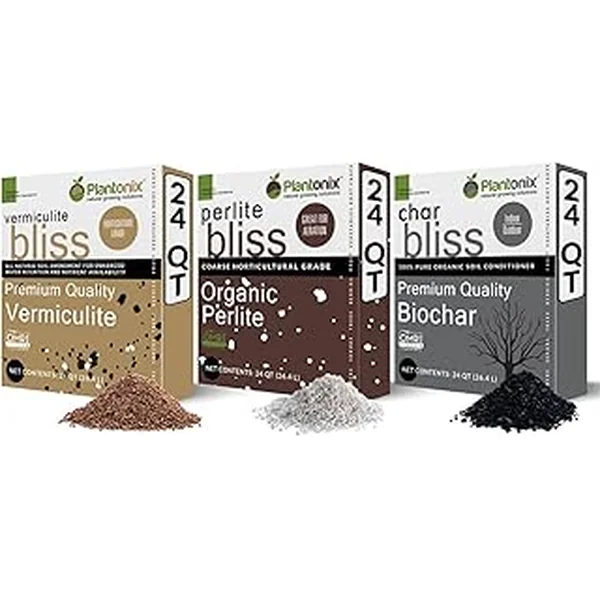

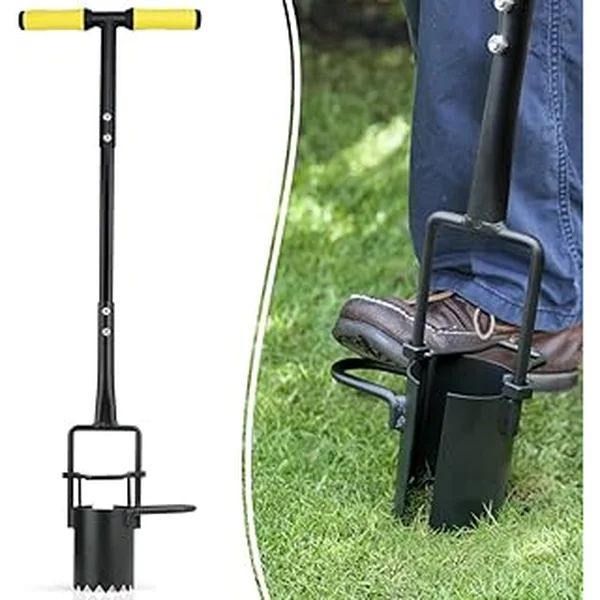
Tazart is an Amazon Associate — we earn from qualifying purchases at no extra cost to you. Thank you for helping us keep these guides free.
Frequently asked questions
How deep should you plant zinnia seeds?
Plant zinnia seeds 0.5 cm (1/4 in) deep — barely covered with fine soil. Zinnias germinate fastest with a light dusting of soil over the seed, not a deep burial. Anything more than 1.25 cm (1/2 in) deep delays germination by 5–10 days and can cause seeds to rot in cool, damp soil before they reach the surface.
Do zinnia seeds need light to germinate?
Zinnia seeds germinate faster with light contact, which is why the 0.5 cm (1/4 in) depth rule matters. They are not strictly light-required like lettuce, but a thin soil cover lets light penetrate enough to trigger fast germination — typically 5–7 days at 21–24°C (70–75°F). Burying them in the dark slows the process or causes failure outright.
How far apart should zinnia seeds be spaced?
Space zinnia seeds 15–30 cm (6–12 in) apart depending on variety. Compact bedding zinnias do well at 15 cm (6 in); large cut-flower types like Benary's Giants need 30 cm (12 in) for full airflow and bloom size. You can sow seeds 5 cm (2 in) apart at planting and thin to final spacing once seedlings have two true leaves.
When can you direct sow zinnia seeds outdoors?
Direct sow zinnia seeds outdoors after the last frost date when soil temperature is consistently above 21°C (70°F). They are very frost-tender — even a light frost kills seedlings. In most US zones that means mid-May to early June. Soil temperature matters more than calendar date — use a soil thermometer at 5 cm (2 in) depth to confirm warmth.
How long do zinnia seeds take to germinate?
Zinnia seeds germinate in 5–7 days at 21–24°C (70–75°F). Cooler soil at 16–18°C (61–65°F) extends germination to 10–14 days and increases the risk of damping-off disease. Above 27°C (80°F) germination is fast but seedlings can scorch if direct sun is too intense.
Should you soak zinnia seeds before planting?
Soaking is unnecessary for zinnia seeds. Their hulls are thin and absorb moisture quickly from the surrounding soil. Soaking can actually cause the seeds to crack or rot before they reach the soil. Just sow them dry into moist soil and water gently from above.
How often should you succession sow zinnias?
Succession sow zinnias every 2–3 weeks from your last frost date until 10 weeks before your first fall frost. Each sowing produces blooms for 4–6 weeks, so staggered sowings give you continuous cut flowers from early summer through the first fall frost. Two or three sowings is the practical sweet spot for home gardens.