Flowers
How Deep to Plant Sunflower Seeds (For Tall, Strong Stems)
How deep to plant sunflower seeds for the strongest stems and biggest heads — exact 2.5 cm (1 in) depth, soil temp, spacing, and a 7–10 day germination timeline.
On this page
Watch the visual walkthrough
How to Grow Sunflowers Successfully At Home 🌻
Get free seeds, shipping, and returns: https://www.epicgardening.com/greenhouse/ More flower guides: https://bit.ly/3zhebGf ...
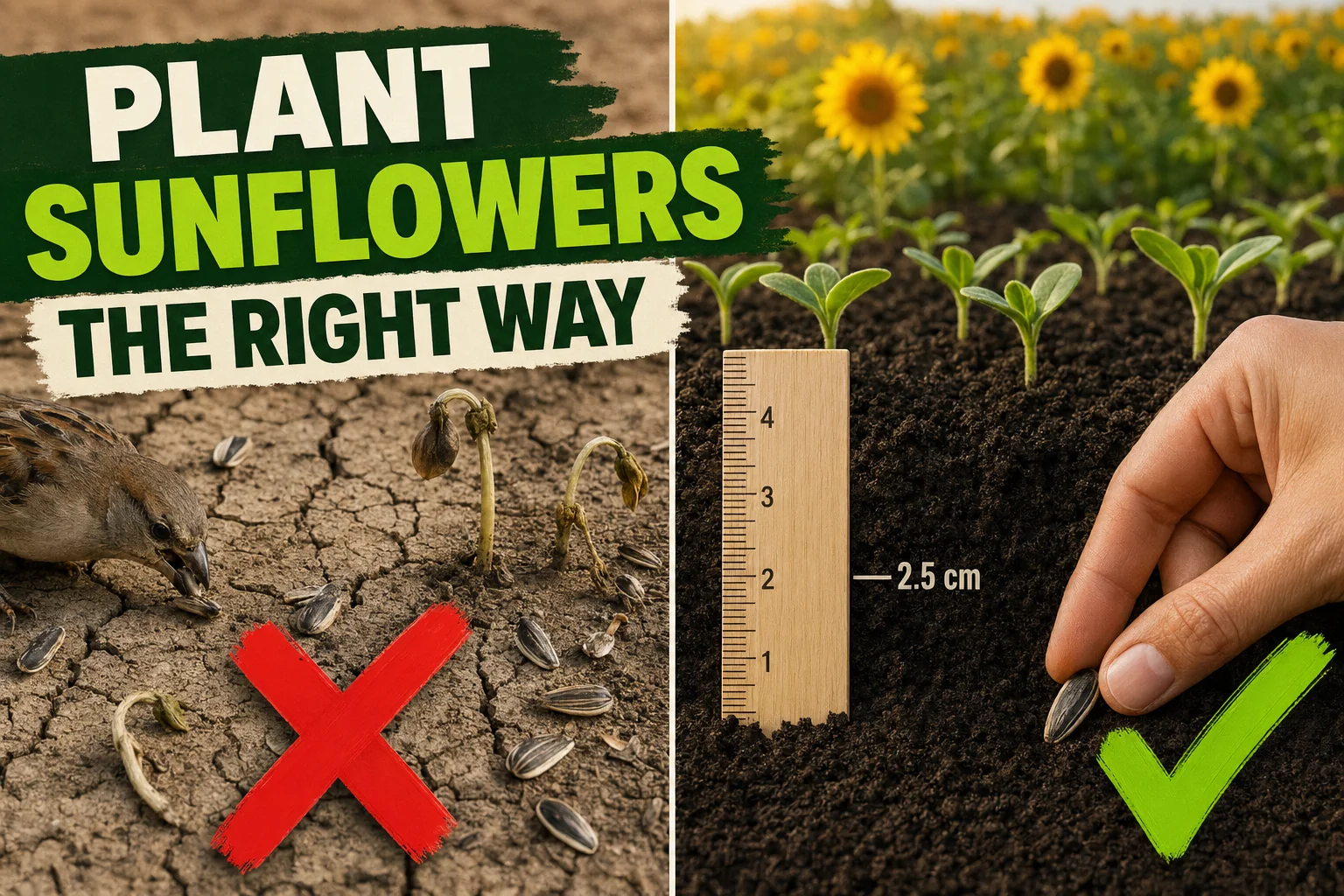
Plant sunflower seeds 2.5 cm (1 in) (1 inch) deep in regular garden soil — that’s the sweet spot for fast germination and a strong stem. In sandy, fast-draining soil you can go up to 5 cm (2 inches) because the seed needs more moisture contact, but never deeper than that.
The most common mistake new gardeners make is burying the seed too deep “for protection.” A sunflower seed only carries enough stored energy to push through about 5 cm (2 in) of soil. Beyond that, the shoot exhausts itself before it ever sees light — and the few seedlings that do emerge come up thin, leggy, and ready to flop in the first windy week.
Quick answer
Plant sunflower seeds 2.5 cm (1 in) (1 inch) deep in regular soil, up to 5 cm (2 inches) in sandy soil. Space them 30–45 cm (12–18 in) apart, water gently, and pick a spot with full sun (6+ hours). Sow only after your last frost, once soil is at least 18°C (64°F). Expect emergence in 7–10 days.
Why depth matters more than people think
A sunflower seed is a tiny battery. It carries a fixed amount of stored energy that fuels the shoot from “germinated” to “first true leaf above the soil.” After that, the seedling has to make its own food through photosynthesis.
Plant too deep and the battery runs out underground — the seedling either never surfaces or arrives weak, with a long, thin, pale stem that can’t support a 2-meter plant later. Plant too shallow (or worse, on top of the soil) and the seed dries out, gets pecked by birds, or washes away in the first rain.
The 2.5 cm (1 in) depth gives the shoot a short, energy-efficient trip to the surface and leaves enough stored energy for a thick, sturdy stem. Sunflowers grow a deep taproot straight down within the first few weeks — that taproot is what anchors a 3-meter Mammoth in summer wind, and it starts forming the day the seed germinates.
Variety chart
Different sunflowers want slightly different depths and a lot of different spacing. Match your variety to its needs:
| Variety | Depth | Final spacing | Bloom height |
|---|---|---|---|
| Mammoth Russian | 2.5 cm (1 in) | 60 cm (24 in) | 3 m |
| Teddy Bear | 2 cm (0.75 in) | 30 cm (12 in) | 60 cm (24 in) |
| Lemon Queen | 2.5 cm (1 in) | 45 cm (18 in) | 1.5 m |
| Italian White | 2.5 cm (1 in) | 45 cm (18 in) | 1.8 m |
| Autumn Beauty | 2.5 cm (1 in) | 45 cm (18 in) | 1.5 m |
If your variety isn’t listed, default to 2.5 cm (1 in) depth and 45 cm (18 in) spacing — that combination works for the vast majority of Helianthus annuus cultivars sold today.
What you’ll need
- Fresh sunflower seeds (under 2 years old for best germination)
- A sunny spot with 6+ hours of direct sun per day
- Loose garden soil worked to a depth of at least 30 cm (12 in)
- A ruler, a chopstick, or your finger to mark depth
- A watering can with a gentle rose head
- Optional: a row of stakes and twine to mark straight rows
That’s it. Sunflowers don’t need fancy seed-starting trays — they’re happiest direct-sown straight into the ground, because their taproot hates being transplanted.
Step-by-step: planting sunflower seeds at the right depth
1. Pick the right time
Wait until your last frost date has passed and daytime soil temperature is reliably above 18°C (64°F). In most temperate climates, that’s mid-to-late spring. A cheap soil thermometer takes the guesswork out — push it 5 cm (2 in) into the soil mid-morning and read after 3 minutes.
The same timing and depth logic applies to zinnias sown alongside sunflowers — for a side-by-side reference on zinnia seed depth, see the zinnia seed depth guide.
2. Prep loose, deep soil
Dig or fork the planting bed to a depth of at least 30 cm (12 in). Sunflowers send a taproot straight down, and compacted soil stunts that root before the plant ever flowers. Mix in a small handful of compost per planting spot if your soil is heavy clay or sandy.
3. Mark the depth
Press a finger, chopstick, or pencil into the prepared soil to a depth of exactly 2.5 cm (1 in). If you’re sowing a row, do this every 30–45 cm (12–18 in) depending on your variety. A wooden ruler held alongside makes the depth visible — useful when you’re teaching kids or planting with a friend.
4. Place the seed flat-side down
Drop one seed into each hole, pointed end down, flat end up — the shoot emerges from the pointed end and the root from the flat end, so this orientation gives the seedling the shortest path to daylight. If you want insurance, drop two seeds per hole and plan to thin later.
5. Cover with 2.5 cm (1 in) of soil
Pinch the soil closed over the seed and press lightly with the back of your hand. The seed should be in firm contact with the soil but not packed down hard. Air pockets dry the seed out; rock-solid soil suffocates it.
6. Water gently and wait
Water with a gentle rose head until the soil is moist 5 cm (2 in) down — not soggy, not flooded. Keep the soil consistently damp until you see seedlings, which usually happens in 7 to 10 days. Don’t be tempted to dig and check; the seed needs the dark and moisture undisturbed.
Care after planting
Once the seedlings are up, sunflowers are remarkably low-maintenance:
- Water: 2–3 cm (0.75–1 in) per week, more in heat. Deep, infrequent watering trains the taproot to grow down, which is what you want.
- Thin: if you sowed two seeds per spot, snip the weaker seedling at soil level once the strongest is 10 cm (4 in) tall. Never pull — you’ll damage the keeper’s roots.
- Stake: tall varieties (over 1.5 m) benefit from a single bamboo stake from week 4 onward. Loosely tie the stem to the stake every 30 cm (12 in) of growth.
- Don’t fertilize early. Hold off on any feed until the plant is 30 cm (12 in) tall. Too-rich soil during weeks 1–3 makes leafy plants with weak stems.
A free plant care app like Tazart can hold this watering and staking schedule for you, adjust it for your local rainfall, and ping you on Apple Watch when the next task is due — handy when you’re growing a row of 20.
When you’ll see blooms
From sowing to first open bloom is 60 to 100 days, depending on variety:
- Compact dwarfs (Teddy Bear, Sunspot): 60–70 days
- Mid-size cuts (Lemon Queen, Italian White): 75–85 days
- Giants (Mammoth Russian, Skyscraper): 85–100 days
Young sunflowers are heliotropic — the developing flower bud tracks the sun across the sky from east to west. Once the head fully opens, this stops, and most sunflowers settle facing east permanently to warm up faster in the morning sun.
Common mistakes to avoid
- Planting too deep. More than 5 cm (2 in) and the seedling exhausts itself before reaching the surface. Stick to 2.5 cm (1 in) in normal soil.
- Planting too shallow. Surface-sown seeds get eaten by birds, dried by sun, or washed away by rain within the first day.
- Sowing before the last frost. Cold soil rots sunflower seeds. Wait until soil hits 18°C (64°F) consistently.
- Soggy soil. Sunflowers drown easily as seedlings. Water until moist, not flooded, and let the surface dry slightly between waterings.
- Skipping the thinning step. Two seedlings sharing one spot compete and both stay weak. Thin to the strongest by week 2.
- Ignoring birds and squirrels. Both will dig up freshly sown seeds. A light layer of mesh or floating row cover for the first 7 days solves it.
Troubleshooting
| Symptom | Likely cause | Fix |
|---|---|---|
| No emergence after 14 days | Too deep, cold soil, or eaten | Dig one up to check; reseed at 2.5 cm (1 in) in warmer soil; cover with mesh |
| Tall, thin, pale seedlings | Planted too deep or not enough sun | Move location next time; thin and stake survivors; ensure 6+ hours of sun |
| Seedlings flop overnight | Damping-off fungus from soggy soil | Reduce watering; let surface dry; reseed in fresh, well-drained soil |
| Stems break in the first wind | Weak stems from over-fertilizing or shade | Skip fertilizer for first 30 cm (12 in) of growth; relocate to full sun next year |
| Seeds dug up the day after sowing | Birds or squirrels | Cover the row with floating row cover or fine mesh for the first 7–10 days |
| Plant grows leaves but never flowers | Day length or shade | Sunflowers need long days and full sun — confirm 6+ hours of direct sunlight |
Watch: planting sunflower seeds
A short visual walkthrough pairs well with the steps above. If you’re a visual learner, watch a quick tutorial on planting sunflower seeds at the correct depth and then come back to follow the timing and spacing in this guide.
Related reading
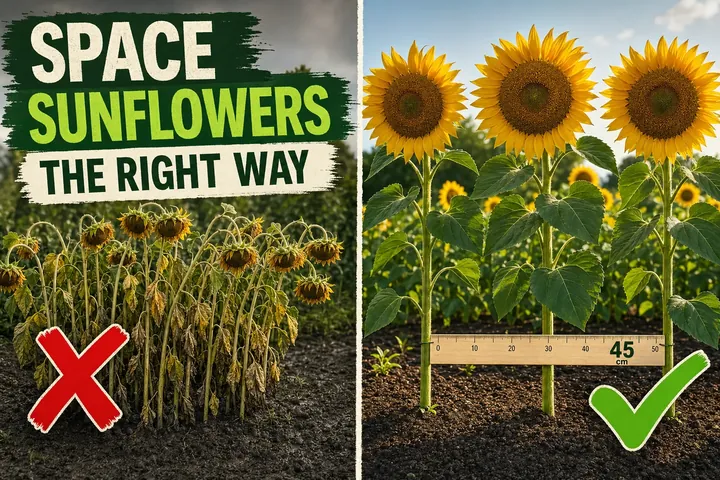
- How far apart to plant sunflowers — once depth is sorted, spacing is the next thing that decides whether your row produces strong-stemmed plants or skinny crowded ones.
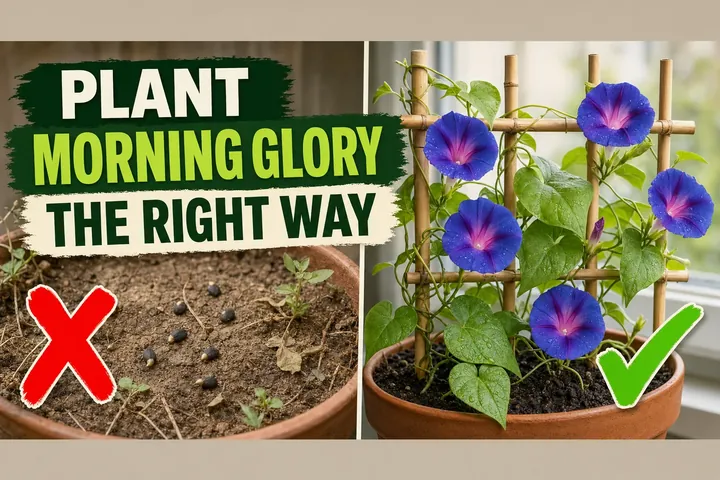
- How to plant morning glory seeds — another direct-sown summer flower that wants warm soil, full sun, and a similar planting routine.
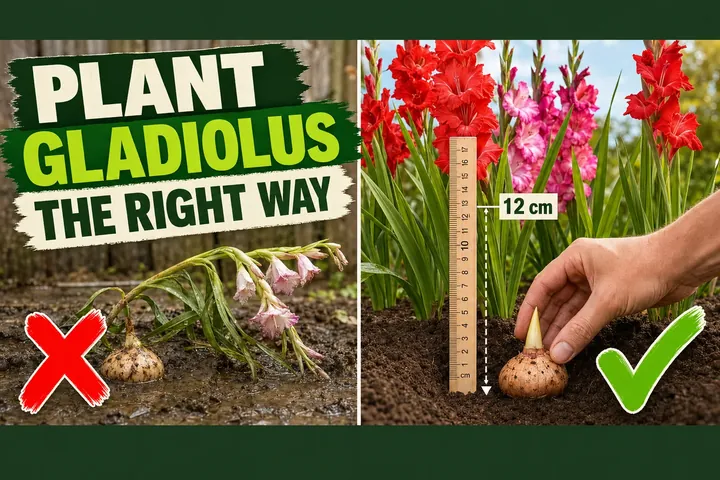
- How deep to plant gladiolus bulbs — if you’re planting a cutting border alongside your sunflowers, gladiolus depth is the next thing to get right.
- Plumeria plant care (frangipani tropical bloom guide) — pair fragrant tropical plumeria pots behind a sunflower row for a sun-loving summer display in zones 9–12.
- Track watering, staking dates, and bloom progress for every sunflower you sow with the free Tazart plant care app — especially useful across a row of mixed varieties.
A note on conditions
Every garden is different. Soil type, climate, sun exposure, frost date, rainfall, and the freshness of your seed packet all change how fast a sunflower comes up and how tall it ends up. Use the 2.5 cm (1 in) depth and 30–45 cm (12–18 in) spacing as your starting point, then adjust based on what your seedlings actually do in week two — that’s how every good grower dials in their patch.
Highly recommended
The supplies that make this guide work
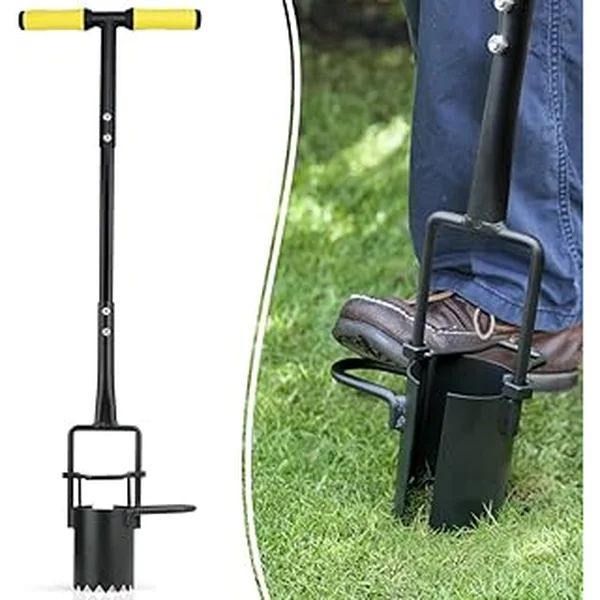

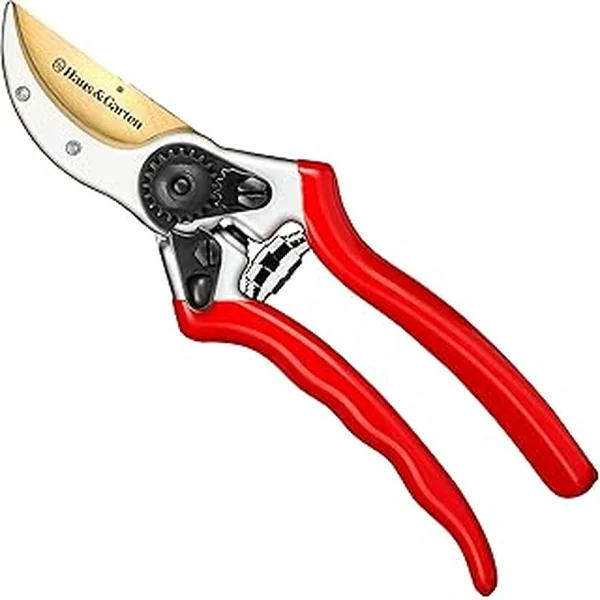
Tazart is an Amazon Associate — we earn from qualifying purchases at no extra cost to you. Thank you for helping us keep these guides free.
Frequently asked questions
How deep should sunflower seeds be planted?
Plant sunflower seeds 2.5 cm (1 in) (1 inch) deep in regular garden soil. In sandy, fast-draining soil you can go a little deeper — up to 5 cm (2 inches) — because the seed needs more contact with moisture. Heavy clay soil should stay at the shallower 2.5 cm (1 in) to avoid suffocating the seedling.
Can you plant sunflower seeds too deep?
Yes, and this is the single most common reason sunflowers fail to come up or come up weak. A seed buried more than 5 cm (2 in) runs out of stored energy before the shoot reaches the surface. If you do see emergence from a deep planting, the stem will often be thin, leggy, and prone to flopping in the first windy week.
How long do sunflower seeds take to germinate?
Sunflower seeds typically germinate in 7 to 10 days when soil temperature is at least 18°C (64°F) and the soil is consistently moist. Cooler soil can stretch germination to 14 days, and dry soil may delay it indefinitely. Once the soil warms past 21°C (70°F), you'll often see emergence in 5 to 7 days.
What soil temperature do sunflower seeds need?
A minimum of 18°C (64°F) at planting depth. Sunflowers are warm-season annuals — sown into cold soil, the seeds tend to rot before they sprout. Wait until daytime soil temperatures stay reliably above 18°C (64°F), which is usually 1 to 2 weeks after your last frost date.
Should you soak sunflower seeds before planting?
Soaking is optional and not necessary for fresh seed. If your seed packet is older than 2 years or your soil is on the dry side, soaking the seeds in room-temperature water for 8 to 12 hours can speed up germination by a day or two. Don't soak longer than that — the seeds will start to ferment.
How far apart should sunflower seeds be planted?
Space sunflower seeds 30 to 45 cm (12 to 18 inches) apart for most varieties. Giant types like Mammoth Russian need 60 cm (24 in), while compact varieties like Teddy Bear are happy at 30 cm (12 in). You can sow two seeds per spot and thin to the strongest seedling once they're 10 cm (4 in) tall.