Edible
How Deep to Plant Potatoes (Plus Hilling for Big Yields)
Plant seed potatoes 10 cm (4 in) deep with eyes facing up. Hill soil up around stems to 30 cm (12 in) total depth. Chart by method and bed style.
On this page
Watch the visual walkthrough
If You Plant Potatoes Like This… You’ll Harvest Buckets
Link to Quictent Greenhouses ...
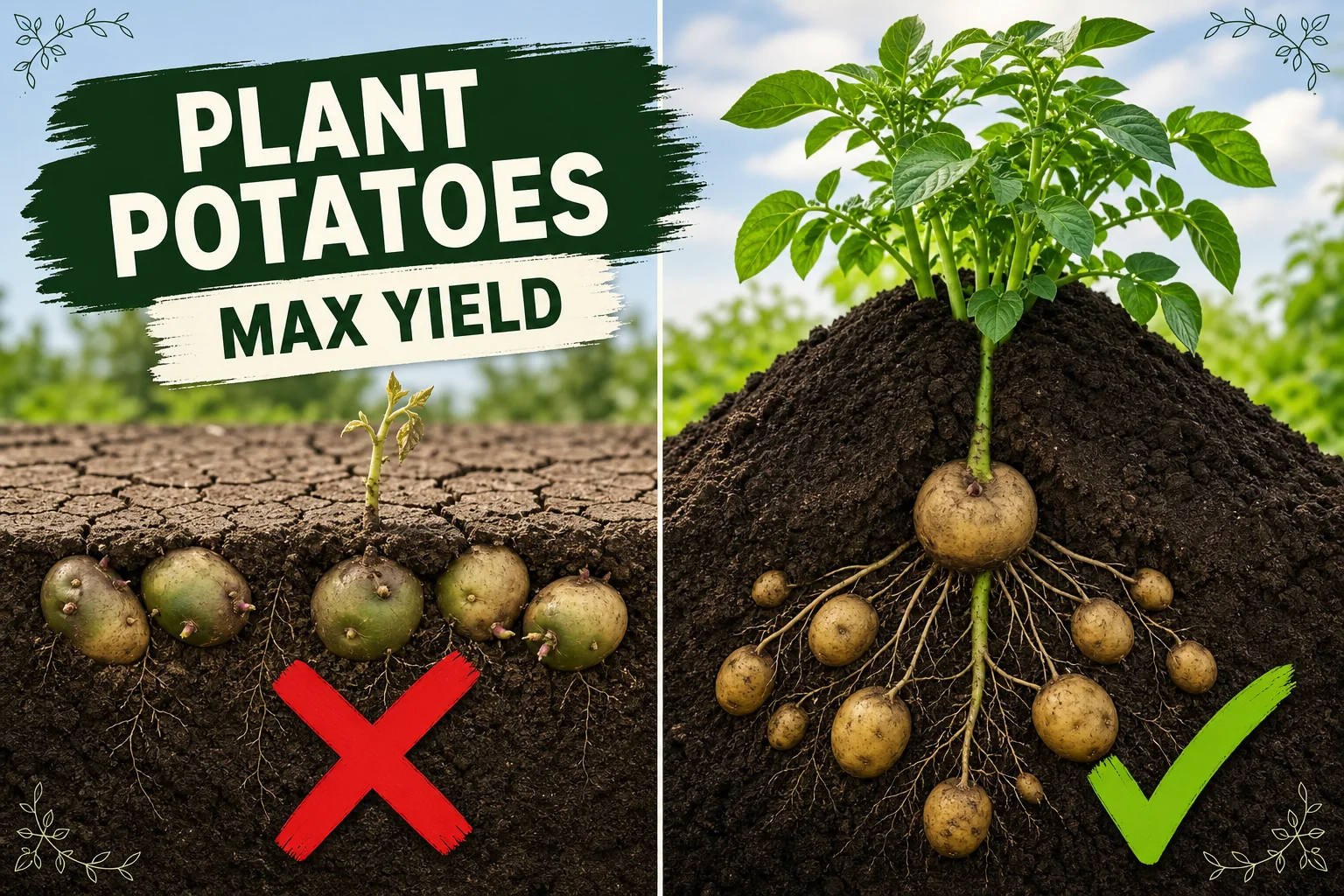
Potato planting depth is genuinely a two-step operation: how deep you start, plus how high you hill. Most beginners get the first step right (10 cm / 4 in) but skip the hilling, ending up with half the yield they could have had. The buried stem zone is where 60–70% of your tubers form — and that zone exists only if you hill properly.
This guide covers initial planting depth, hilling technique, and the variations for trench, hill, grow bag, and bucket methods.
Quick answer
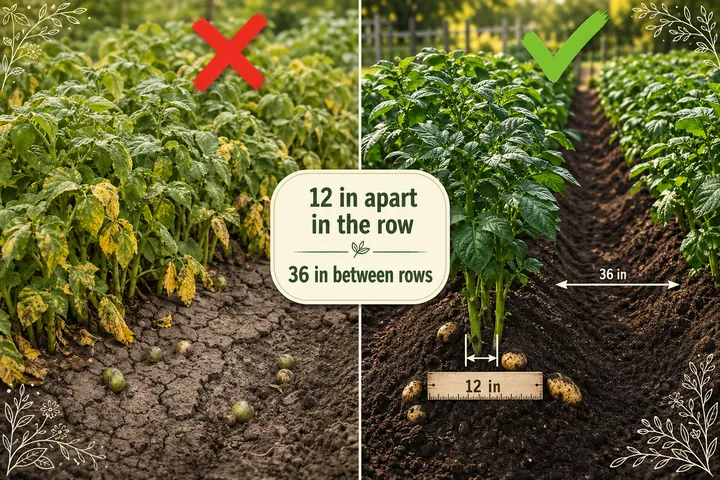
Plant seed potatoes 10 cm (4 in) deep, eyes facing up, spaced 30 cm (12 in) apart in rows 75 cm (30 in) apart. Hill soil up around stems as they grow until total burial reaches 25–30 cm (10–12 in). The buried-stem zone is where new tubers form — depth + hilling controls yield more than fertiliser.
Table of contents
- Why depth matters for potato yield
- Standard 10 cm (4 in) planting depth
- Eyes up or down — the answer
- Hilling — the second-half of depth
- Depth by planting method
- Spacing alongside depth
- Common depth mistakes
- Troubleshooting
- FAQ
Why depth matters for potato yield
A potato plant doesn’t grow tubers from its roots — it grows tubers from underground sections of its stem. Specifically, from short side-stems called stolons that emerge from the buried portion of the main stem.
This means: the more buried stem, the more tuber-producing zone.
A seed potato planted 10 cm (4 in) deep but never hilled produces tubers in a 10 cm (4 in) zone. The same seed potato hilled up to 30 cm (12 in) of buried stem produces tubers in three times the volume — and yield can roughly triple.
This is why potato growers obsess over hilling. It’s not optional fuss; it’s where the harvest comes from.
Standard 10 cm (4 in) planting depth
The 10 cm (4 in) initial depth is the universally recommended starting point. Here’s why each part of that number matters:
| Depth | Result |
|---|---|
| 5 cm (2 in) — too shallow | Late frost can damage; tubers grow upward and green |
| 7 cm (3 in) | Acceptable; emerges fast but vulnerable |
| 10 cm (4 in) — sweet spot | Frost protection + fast warm-soil emergence |
| 13 cm (5 in) | Acceptable in warm climates with sandy soil |
| 15 cm (6 in) — too deep | Cool soil slows emergence; rot risk in wet years |
| 20+ cm (8+ in) — risky | Seed potato may rot before sprout reaches surface |
The 10 cm (4 in) figure assumes loose well-drained soil. In heavy clay, plant slightly shallower (8 cm / 3 in). In sandy soil that warms fast, you can go slightly deeper (12 cm / 5 in).
Eyes up or down — the answer
Eyes face UP.
The eyes are dormant buds — when they break dormancy, they grow shoots that head upward toward light. Roots emerge from the opposite end of the seed potato.
Planting eyes-up means the shoots emerge faster (4–7 days sooner than eyes-down) because they don’t have to redirect around the seed potato.
That said, potatoes are remarkably forgiving. Eyes-down planting still works — the shoot just curls around and heads up. The seed potato wastes a small amount of stored energy on the detour, but a healthy seed potato has plenty in reserve.
If a seed potato has eyes on multiple sides, plant the most active eye facing up. Don’t agonise over the others.
Hilling — the second-half of depth
Hilling is the soil-mounding operation that takes potatoes from “good yield” to “great yield”.
When to hill
- First hilling: When stems reach 15–20 cm (6–8 in) tall (typically 3–4 weeks after emergence)
- Second hilling: 2–3 weeks later, when stems have grown another 15 cm (6 in)
- Third hilling (optional): Another 2–3 weeks if plants are still vigorous
- Stop hilling: Once plants flower or reach mature height
How to hill
- Use a draw hoe or shovel to pull soil from the row centres (paths) up against the potato stems.
- Bury the bottom half of each stem — the leaves above the soil keep photosynthesising.
- Aim to bury 7–10 cm (3–4 in) of stem each time.
- Don’t pack soil hard — loose mounds let oxygen reach the new tubers.
Alternative — straw hilling
In place of soil, you can use clean straw. Pile straw 15 cm (6 in) deep around stems, repeat as plants grow. Straw-hilled potatoes harvest is almost effortless — pull back the straw and pick clean tubers off the surface.
The catch: straw-hilled tubers can be slightly green-shouldered if straw lets light through. Use thick mulch or top with a thin soil layer to prevent.
Depth by planting method
Trench method (in-ground)
- Dig trenches 10 cm (4 in) deep, 15 cm (6 in) wide
- Trenches 75 cm (30 in) apart
- Place seed potatoes 30 cm (12 in) apart in trench
- Cover with 10 cm (4 in) soil
- Hill from trench edges up as plants grow
The trench method is the easiest to hill because soil is already piled along the trench edges.
Hill / mound method (in-ground)
- Build a long mound 15 cm (6 in) tall, 30 cm (12 in) wide
- Plant seed potatoes 10 cm (4 in) into the mound (so they sit at original ground level)
- Hill upward by extending the mound
Best for poorly drained heavy soils — the raised mound drains better than a trench.
Grow bag (38–60 L / 10–15 gal fabric bag)
- Start with 15 cm (6 in) of soil/compost mix in the bottom
- Plant 1–3 seed potatoes 10 cm (4 in) deep into that layer
- As stems grow, add more soil/compost — eventually filling the bag to 45–60 cm (18–24 in)
- Total stem-burial of 30 cm (12 in) yields 1.5–2.5 kg (3–5 lb) per bag
See how to plant potatoes in a bucket for the smaller-container version.
Raised bed
- Plant 10 cm (4 in) deep, eyes up, 30 cm (12 in) apart
- Hill with extra soil from a stockpile, or top up with straw and compost
- Raised beds drain well and warm fast — potatoes love them
No-dig (straw mulch only)
- Lay seed potatoes directly on prepared soil surface
- Cover with 15 cm (6 in) of clean straw
- Add more straw as stems grow, eventually 30 cm (12 in) deep
- Harvest by pulling straw aside
Yields are slightly lower than in-soil methods but harvest is dramatically easier and tubers are immaculate.
Spacing alongside depth
Depth and spacing work together. Standard recommendations:
- In-row spacing: 30 cm (12 in) for main-crop, 25 cm (10 in) for early/new potatoes
- Row spacing: 75 cm (30 in) — enough for hilling soil from row centres
- Grow bag: 1–3 seed potatoes per 38 L (10 gal) bag
- Bucket: 1 seed potato per 19 L (5 gal) bucket
For full spacing detail, see how far apart to plant potatoes.
Common depth mistakes
- Skipping hilling. The single biggest yield reducer. Plant deep AND hill — both halves matter.
- Planting eyes down without realising. Slows emergence by a week. Check before covering.
- Planting in cold wet soil deep. 15 cm (6 in) deep in 5°C (41°F) soggy soil = rot. Wait for soil to warm to 7°C (45°F).
- Hilling once and stopping. Multiple hillings beat one big hill — stems form tubers along the entire buried length.
- Hilling after flowering. Tuber set has finished; hilling after flowering does nothing useful.
- Using supermarket potatoes. Often treated with sprout inhibitors; may carry virus. Buy certified seed.
- Ignoring greening. Tubers exposed to light turn green and produce solanine (mildly toxic). Keep them buried — that’s the point of hilling.
- Cutting seed potatoes without callousing. Fresh-cut surfaces rot in soil. Let cut surfaces dry 1–2 days first.
Troubleshooting
| Symptom | Likely cause | Fix |
|---|---|---|
| No emergence after 4 weeks | Cold soil, planted too deep, seed rot | Dig one to check; replant if rotten |
| Yellow stunted plants | Nitrogen deficiency or planted in old potato bed | Side-dress with balanced fertiliser; rotate bed |
| Green-shouldered tubers at harvest | Insufficient hilling | Hill earlier and more next year; cut off green flesh before eating |
| Small overall yield | Skipped hilling | Hill aggressively next year — yield can triple |
| Hollow centres in tubers | Inconsistent watering during tuber set | Mulch heavily; water consistently 2.5 cm (1 in) per week |
| Scab (rough corky patches) | High pH soil, dry conditions during tuber set | Lower pH to 5.0–5.5; consistent water |
| Rotting seed potatoes | Cold wet soil at planting | Wait for warmer drier soil next year |
| Late blight (brown leaf spots) | Wet humid weather | Remove infected plants; resistant varieties next year |
Final notes
If you remember just three numbers: 10 cm (4 in) initial depth, 30 cm (12 in) final hill depth, 30 cm (12 in) plant spacing — you have everything you need to grow a heavy potato crop. Hill aggressively and your harvest can triple.
For more potato guidance:
- How to plant seed potatoes — full planting walkthrough
- How to plant potatoes in a bucket — small-space container method
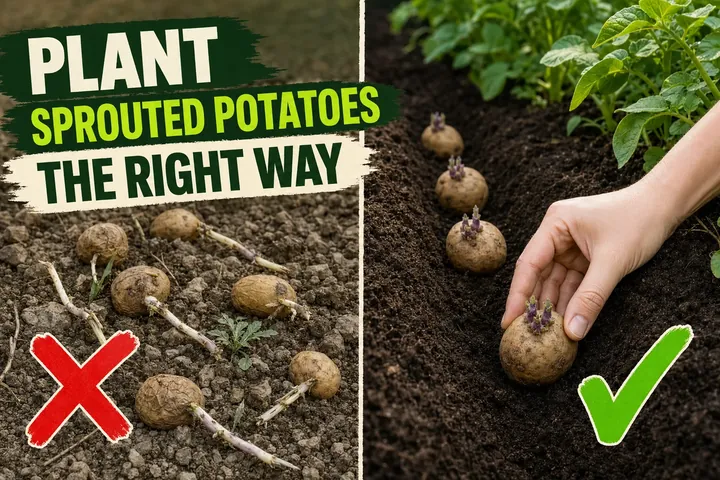
- How to plant sprouted potatoes — using kitchen-counter sprouted tubers
- How far apart to plant potatoes — full spacing chart
- How to plant sweet potato slips — different crop, different method
Track planting and hilling reminders with the free Tazart plant care app.
A note on conditions
Soil type, climate zone, and variety all shift these numbers slightly. The depths above are well-tested averages from university extension trials — adjust by 2–3 cm (1 in) based on your specific soil drainage and what your seed-potato supplier recommends.
Highly recommended
The supplies that make this guide work
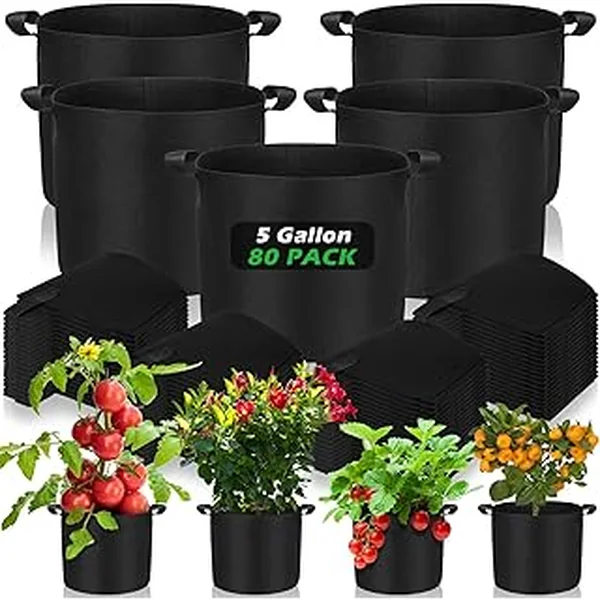



Tazart is an Amazon Associate — we earn from qualifying purchases at no extra cost to you. Thank you for helping us keep these guides free.
Frequently asked questions
How deep should you plant seed potatoes?
Plant seed potatoes 10 cm (4 in) deep with eyes (sprouts) facing up. As the plant grows, hill soil up around the stems to bring final soil cover to 25–30 cm (10–12 in). The deep buried-stem zone is where new tubers form, so depth + hilling determines total potato yield.
Do potato eyes go up or down?
Eyes face UP. The eyes are buds that send shoots upward toward light, while roots emerge from the bottom. Planting eyes-up gets the plant out of the soil 4–7 days faster. Eyes-down still works but slows emergence and wastes the seed potato's stored energy on redirecting growth.
Why do you hill potatoes?
Hilling — mounding soil around growing stems — buries more of the stem, which is where new tubers form. Each 5 cm (2 in) of hilled stem can produce additional tubers above the original seed potato. Hilling also prevents tubers from greening (turning toxic) when exposed to light, and supports tall potato foliage so it doesn't flop over.
How deep do potatoes need in a grow bag?
Start by filling a grow bag 15 cm (6 in) deep with soil. Plant seed potatoes 10 cm (4 in) deep into that initial layer. As stems grow, add more soil around them, eventually filling the bag to 45–60 cm (18–24 in) total depth. The deep stem creates a long tuber zone — grow bag yields can match or beat in-ground.
Can potatoes be planted too deep?
Yes. Below 15 cm (6 in) initial depth, soil is too cool and oxygen-poor for fast emergence. Seed potatoes can rot before sprouts reach the surface. The 10 cm (4 in) initial depth is the sweet spot — deep enough for protection from late frost, shallow enough for fast warm-soil emergence.
When should I plant potatoes?
Plant 2–4 weeks before last frost in spring, when soil temperature is reliably above 7°C (45°F). Potatoes are slightly frost-tolerant and tolerate light spring frost on shoots. In mild climates (zones 8+), an autumn planting in late August produces a winter harvest. Avoid planting in cold wet soil — seed potatoes rot.
Should I chit seed potatoes before planting?
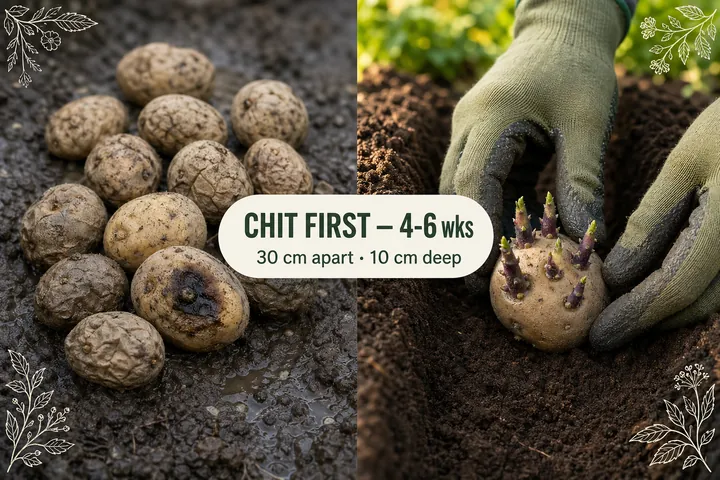
Optional but helpful. Chitting (pre-sprouting) means standing seed potatoes eyes-up in a cool bright place for 4–6 weeks before planting. Short stubby green sprouts develop. Chitted potatoes emerge 1–2 weeks faster after planting and can produce earlier harvests, especially in cool climates.
How does depth affect potato yield?
Initial planting depth has a small effect; total final stem depth (after hilling) has a huge effect. A potato plant with 30 cm (12 in) of buried stem produces 2–3× the tubers of one with only 10 cm (4 in) of buried stem. The lesson: plant 10 cm (4 in) deep, then hill aggressively as the plant grows.