Flowers
Firecracker Plant Care: Russelia & Hummingbird Guide
Firecracker plant care: Russelia equisetiformis cascade, full sun, sandy well-drained soil, drought-tolerant USDA 9-11, hummingbird-magnet tubular reds.

On this page
Watch the visual walkthrough
RIGHT Way To GROW & CARE for Crossandra/Firecracker Flower
How to grow and care for Crossandra infundibuliformis or Firecracker flower? Crossandra is yet another beautiful flowering plant ...
The firecracker plant has one of the most distinctive silhouettes in warm-climate gardens: a fountain of slender, almost rush-like green stems cascading down from a central crown, dotted with hundreds of small tubular bright-red flowers. It thrives on neglect once established, draws hummingbirds in steady traffic, and works equally well as ground cover, retaining-wall cascade, or hanging-basket centrepiece.
This guide covers Russelia equisetiformis from the ground up: how to distinguish it from the unrelated “firecracker vine,” light, soil, water, propagation, pruning, overwintering, and the small set of pests that occasionally bother it.
Quick answer
Plant Russelia equisetiformis in full sun (6-8 hours) in sandy, free-draining soil at pH 6.0-7.5. Water deeply twice a week during establishment, then sparingly — it’s highly drought tolerant once rooted. Hardy USDA zones 9-11; container-grow and bring indoors in colder zones. Prune 30-50% back in late winter. Excellent hummingbird plant. Distinguish from firecracker vine (Manettia luteorubra), which has different care needs.
Table of contents
- What a firecracker plant is
- Firecracker plant vs firecracker vine
- Light
- Soil and pH
- Watering
- Fertilizing
- Container and hanging-basket growing
- Pruning
- Hummingbird gardening
- Propagation
- Overwintering
- Pests and disease
- Troubleshooting
- FAQ
What a firecracker plant is
Russelia equisetiformis (sometimes still called Russelia juncea) is an evergreen, multi-stemmed perennial in the Plantaginaceae family, native to Mexico and Guatemala. The common names — firecracker plant, coral plant, fountain plant — all describe the same species.
Distinctive features:
- Slender weeping stems that look almost leafless — the leaves are reduced to tiny scales, with the green stems handling most photosynthesis (hence equisetiformis, meaning “horsetail-like”).
- Tubular bright-red flowers about 2.5 cm (1 in) long, in loose clusters along the stem ends.
- Cascading habit — stems arch outward and downward, reaching 1-1.5 m (3-5 ft) in any direction.
- Long bloom season — spring through frost in warm climates, nearly continuous in zones 10-11.
- Drought tolerant once established; intolerant of waterlogged soil.
Hardy in USDA zones 9-11. In zones 8 and colder, it’s grown in containers and overwintered indoors.
Firecracker plant vs firecracker vine
The most common confusion in plant catalogues. Two completely different species share the “firecracker” common name:
| Feature | Russelia equisetiformis | Manettia luteorubra |
|---|---|---|
| Common name | Firecracker plant, coral plant | Firecracker vine, candy corn vine |
| Family | Plantaginaceae | Rubiaceae |
| Habit | Cascading shrub | Twining vine, climbs to 3-4 m (10-13 ft) |
| Stems | Slender, rush-like, green | Wiry vines, climbing |
| Flowers | Solid bright red, 2.5 cm (1 in) tubes | Red with yellow tips (“candy corn” pattern) |
| Soil moisture | Drier — drought-tolerant | Moister — more even watering |
| Light | Full sun | Part shade to filtered sun |
| Zone | 9-11 | 10-11 |
| Use | Ground cover, walls, hanging basket | Trellises, fences, arbors |
Buy from a labelled source. If the plant has climbing tendrils, it’s the vine; if the stems arch and weep, it’s Russelia.
Light
Full sun is essential for the firecracker plant — 6-8 hours of direct sun for compact, densely flowering growth. In zones 10-11 with intense afternoon temperatures above 35°C (95°F), a little afternoon shade (maximum 2 hours) prevents bleaching of the green stems but should not be longer.
Shade symptoms:
- Longer, weaker stems with wider gaps between leaf scales.
- Sparse flowering, fewer flower clusters per stem tip.
- Loss of the dense fountain silhouette.
- Reduced hummingbird visits.
If you’re growing it in a container, choose your sunniest patio or balcony spot. East or south-facing positions are ideal in temperate zones; west-facing in cooler microclimates.
Soil and pH
Target pH: 6.0-7.5 — broadly tolerant of slightly acidic to slightly alkaline soils.
Texture matters most:
- Sandy, free-draining loam is ideal.
- Heavy clay must be amended with coarse sand, grit, and compost, or the plant lifted into a raised bed.
- Pure sand is fine if amended with 2-3 cm (1 in) of compost at planting; the plant tolerates lean soil better than most.
Pre-plant prep:
- Dig the bed to 25 cm (10 in) and loosen it.
- Mix in 5 cm (2 in) of compost (don’t overdo organic matter — Russelia is not a heavy feeder).
- Plant on a slight mound if drainage is suspect.
Container plants need a free-draining cactus or succulent mix or standard potting soil with 25% added perlite or pumice.
Watering
This is where most container growers go wrong: they water Russelia like a fern, and the roots rot.
- Establishment phase (weeks 1-6): deep soak twice a week.
- Established in-ground plants: deep soak once every 7-10 days in hot weather, less in cooler weather.
- Established containers: water when the top 5 cm (2 in) of soil is dry — typically 1-2 times a week in summer, every 10-14 days in cooler weather.
- Winter (zones 9-11 outdoors): sparingly. Natural rain handles most needs.
- Winter (indoors as overwintering plant): every 2-3 weeks; the plant is resting.
Symptoms of overwatering: yellow stems near the base, soft mushy crown, leaves on the small scales falling. Underwatering symptoms are far less common — slightly drooping stems that perk up after one good soak.
Drip irrigation at the base is ideal. Avoid overhead watering, which can knock off the flowers prematurely.
Fertilizing
Russelia is a moderate feeder. The plant grows well in lean soil and rebels against over-fertilization.
- Spring (new growth starts): balanced 10-10-10 granular fertilizer at half-rate, scratched in around the drip line.
- Late spring and mid-summer: balanced liquid fertilizer at half-strength every 4-6 weeks.
- Autumn: stop feeding. The plant is going into reduced winter activity.
- Winter (overwintered indoors): no feeding.
Avoid heavy nitrogen — produces a leafy, sprawling plant with reduced flowering. Compost-amended soil at planting plus light liquid feeding maintains an excellent specimen. Our starter fertilizer guide covers fertilizer basics across plant types.
Container and hanging-basket growing
This is where Russelia shines for gardeners outside zones 9-11.
Pot or basket size: 25-40 L (7-10 gal) wide shallow container or 35-40 cm (14-16 in) hanging basket. Wider beats deeper — the plant has a relatively shallow root system.
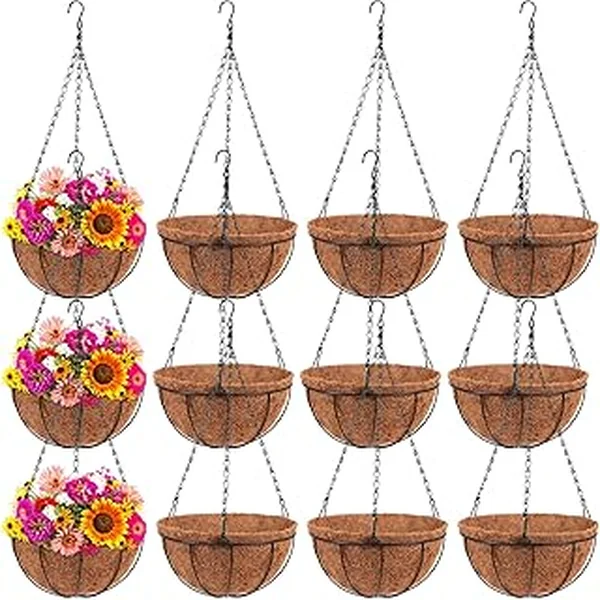
Material: terracotta or fibre/coco-lined basket breathes well and helps regulate moisture. Avoid pots without drainage holes.
Mix: standard potting soil with 25% added perlite, or a sandy succulent mix.
Position: the brightest available outdoor spot — south or east-facing patio, full sun. The plant cascades dramatically over the basket rim, so allow vertical room for the stems to fall 60-90 cm (24-36 in).
Topdress: 2-3 cm (1 in) of compost or a slow-release pellet fertilizer in early spring.
Repotting: every 2-3 years, refresh the soil and lightly root-prune. Russelia tolerates root disturbance better in spring than autumn.
Pruning
Russelia equisetiformis benefits from one main prune per year:
Late winter (before spring flush):
- Cut the oldest 30-50% of stems back hard, to within 15 cm (6 in) of the base.
- This refreshes the plant and encourages a dense new flush.
- Save the longest, healthiest stems for soft tip cuttings if you want more plants.
Throughout the growing season (light touches):
- Pinch back overlong stems by 5-10 cm (2-4 in) to maintain shape.
- Remove any stem that’s clearly dead or damaged.
Avoid: heavy summer pruning — you’ll cut off active flowering stems and lose months of bloom. A mature plant tolerates one big winter cutback, not constant heavy shaping.
Hummingbird gardening
Russelia equisetiformis is among the most reliable hummingbird plants for warm climates. Two reasons:
- Flower shape and colour: small tubular flowers in bright saturated red are the exact target for hummingbird foraging. The tube length matches the bird’s bill perfectly.
- Continuous bloom: a healthy mature plant produces hundreds of flowers daily across a long season, giving birds reliable returns to a single location.
To maximize hummingbird visits:
- Plant near a kitchen or patio window where you’ll enjoy them.
- Combine with other red tubular-flowered plants (hibiscus plant care, Salvia greggii, lantana) for a continuous flowering plot.
- Avoid systemic insecticides — they contaminate nectar and harm hummingbirds.
- Provide a perching twig within 1-3 m (3-10 ft) so birds can rest between visits.
Propagation
Russelia propagates readily from softwood cuttings and layering.
Softwood cuttings (easiest):
- In spring or early summer, take 10-15 cm (4-6 in) cuttings from healthy tip growth.
- Strip the lower scales or tiny leaves; trim cut just below a node.
- Dip cut end in rooting hormone (optional but speeds rooting).
- Stick in moist, sandy seed-starting mix or 50/50 perlite-coir.
- Cover loosely with a clear plastic dome or bag to maintain humidity.
- Keep at 21-27°C (70-80°F) in bright indirect light.
- Roots form in 3-5 weeks; pot up when roots are 2.5-5 cm (1-2 in) long.
Layering: pin a cascading stem down to soil at a node, cover lightly with soil, and weight it with a stone or wire pin. Roots form over one growing season; cut from the parent and transplant the following spring.
Seed propagation is rarely used — softwood cuttings are faster and produce flowering-size plants in one season.
Overwintering
In USDA zones 9-11, Russelia stays outdoors year-round, sometimes losing some stem colour or flower count during cold snaps but recovering in spring.
In zones 8 and colder, container plants must come indoors before the first frost:
- Inspect for pests before bringing in — whitefly, mealybugs, spider mites.
- Trim cascading stems by one-third to fit available indoor space.
- Position near the brightest available window — south-facing ideal.
- Reduce watering to every 2-3 weeks; the plant goes nearly dormant.
- No fertilizer from October through February.
- Tolerate leaf drop as a normal response to lower light and humidity.
Move outdoors after the last frost, hardening off gradually over 7-10 days.
Pests and disease
Russelia is largely pest-free in good conditions. Occasional problems:
- Aphids: clusters on new growth. Water-blast or insecticidal soap. See how to get rid of aphids.
- Spider mites: in hot dry conditions or overwintering indoors. Fine yellow stippling, webbing. Raise humidity, rinse foliage forcefully. See how to get rid of spider mites.
- Mealybugs: white cottony tufts in stem joints. Spot-treat with 70% isopropyl alcohol swab. See how to get rid of mealybugs.
- Root rot: from poorly drained soil or overwatering. Soft black crown, falling stems. Lift if salvageable and replant in fresh sandy mix. See how to fix root rot.
- Caterpillars: occasional chewing damage on young stems. Hand-pick or Bt spray if heavy.
Most pest issues happen indoors during overwintering, not outdoors in season.
Troubleshooting
| Symptom | Likely cause | Fix |
|---|---|---|
| Long, weak, sparse stems | Insufficient light | Move to full sun |
| Few or no flowers | Shade, over-feeding nitrogen, or recent transplant | Increase sun; switch to balanced low-N feed; allow 4-6 weeks settling |
| Yellow stems at base | Overwatering | Reduce frequency; check drainage; lift and inspect roots |
| Wilting in summer | Underwatering in heat | Deep soak; mulch with 5 cm (2 in) of bark |
| Brown crispy stem tips | Sunburn (rare) or hot wind | Light afternoon shade in zones 10-11 |
| White cottony tufts | Mealybugs | Swab with 70% alcohol; insecticidal soap on heavy infestation |
| Sticky residue, curled new growth | Aphids | Water-blast or soap spray |
| Stems die back from tips | Cold damage | Cut to healthy growth; protect from frost next time |
| Soft, mushy crown | Root rot | Lift, trim affected roots, repot in sandy mix |
Related reading
- Hibiscus plant care — another tropical flowering plant that draws hummingbirds and shares similar warm-climate needs.
- Lavender plant care — sun-loving Mediterranean companion with the same drainage preferences.
- Plumeria plant care — warm-climate flowering plant that pairs well with Russelia in zones 9-11 patios.
- How to fix root rot — the most common Russelia killer when container drainage fails.
- How to get rid of aphids — the most common pest on new spring growth.
Track late-winter pruning, summer water cadence, and pre-frost lift dates with the free Tazart plant care app — overwintering reminders are easy to miss, and a single hard frost can kill an unprotected Russelia outright.
A note on conditions
Zone, soil drainage, microclimate, and container size all change the numbers. The constants are: full sun, sandy free-draining soil, minimal nitrogen, and patience during establishment. Once Russelia has rooted in and shows its first cascade of flowers, it asks for very little — a winter prune, a couple of summer waterings during droughts, and protection from hard freezes. Plant it in the wrong spot (too shady, too wet) and it tells you immediately with leggy growth and dropped flowers. Plant it in the right spot and you have a hummingbird-magnet fountain for years.
Highly recommended
The supplies that make this guide work
Tazart is an Amazon Associate — we earn from qualifying purchases at no extra cost to you. Thank you for helping us keep these guides free.
Frequently asked questions
How much sun does a firecracker plant need?
Russelia equisetiformis needs full sun — 6-8 hours of direct light per day — for the densest cascade and the heaviest flowering. In zones 9-11 with very hot summers, light afternoon shade keeps the green stems from bleaching but should not exceed 2 hours. Shaded plants get leggy with sparse flowering, longer arching stems, and reduced hummingbird visits because the flowers thin out and become harder to spot.
How often should I water a firecracker plant?
Water deeply twice a week during establishment (the first 6-8 weeks after planting). Once established, firecracker plants are highly drought tolerant — water deeply once every 7-10 days in hot weather and only during prolonged droughts otherwise. In containers, water when the top 5 cm (2 in) of soil is dry — typically 1-2 times a week in summer. The plant tolerates dry soil far better than soggy roots.
Do hummingbirds like firecracker plants?
Yes — Russelia equisetiformis is one of the best hummingbird plants for warm climates. The small tubular bright-red flowers (2.5 cm / 1 in long) are the exact shape and colour hummingbirds prefer, and the plant produces them continuously from spring through frost. A mature plant in full sun produces hundreds of flowers daily during peak bloom. Plant near a window or patio and you'll have constant hummingbird traffic from March through October.
How do I propagate a firecracker plant?
Easiest method is softwood cuttings: take 10-15 cm (4-6 in) tip cuttings in spring or early summer, strip the lower leaves, dip in rooting hormone, and stick in moist sandy seed-starting mix. Roots form in 3-5 weeks at 21-27°C (70-80°F). Layering also works — pin a cascading stem down to soil and cover the node lightly; it roots in place over a season, then cut from the parent and transplant.
What is the difference between firecracker plant and firecracker vine?
Different species. Firecracker plant is Russelia equisetiformis — a low cascading shrub with slender rush-like green stems and small bright-red tubular flowers, often used as ground cover or fountain-shaped patio plant. Firecracker vine is Manettia luteorubra (or M. cordifolia) — a true twining vine that climbs trellises with red-and-yellow tubular flowers. Care needs differ: Russelia wants drier soil and cascades; Manettia wants moister soil and climbs.
Can I grow firecracker plant in a container?
Yes, and it's the best way to grow it outside USDA zones 9-11. Use a 25-40 L (7-10 gal) wide shallow container or hanging basket. Free-draining sandy potting mix with 25% added perlite is ideal. Position in full sun, water when top 5 cm (2 in) of soil is dry, and feed monthly with a balanced liquid fertilizer in spring and summer. Move indoors or to a frost-free location before nighttime temperatures drop below 5°C (41°F).
How do I prune a firecracker plant?
Prune in late winter before new spring growth: cut back 30-50% of the older stems near the base to refresh the plant and encourage dense fresh growth. Light tip-pruning during the growing season — pinching back overlong stems by 5-10 cm (2-4 in) — keeps the fountain shape tidy and stimulates branching. Avoid heavy summer pruning; you'll cut off active flowering stems.