Houseplants
Elephant Ear Plant Care: Colocasia & Alocasia Guide
Elephant ear plant care: part shade for most, rich moist soil, USDA 8-11 hardy, and the key difference between Colocasia and Alocasia growers miss.
On this page
Watch the visual walkthrough
Alocasia Plant Care Guide 🌱 Care TIPS For Elephant Ear
Alocasia plant care guide - care tips for elephant ear - elephant ear plant care tips - alocasia plant care tips - alocasia care ...
“Elephant ear” is a name attached to at least three genera in the arum family — Colocasia, Alocasia, and Caladium — and the care notes you find online lump them together. The result: people buy an Alocasia and treat it like a bog plant, or buy a Colocasia and let it dry out. Both die quickly.
This guide separates the two main groups, gives you the right water habit for each, and covers planting, light, feeding, pests, dormancy, and pet safety. By the end you’ll know which one you’ve got and how to grow it.
Quick answer
Most elephant ears want part shade (4-6 hours of morning sun), rich moist soil, and warm temperatures of 21-29°C (70-85°F). Colocasia (down-pointing leaves) thrives in wet feet and pond margins. Alocasia (up-pointing leaves) wants moist but well-drained soil — never soggy. Both are hardy USDA 8-11; in zones 7 and colder, lift corms after frost and store at 10-13°C (50-55°F). All are toxic to cats, dogs, and children due to calcium oxalate.
Table of contents
- Colocasia vs Alocasia — get this right first
- Light
- Soil and pH
- Watering
- Temperature and humidity
- Fertilizing
- Container growing
- Overwintering
- Pet and child safety
- Pests and disease
- Troubleshooting
- FAQ
Colocasia vs Alocasia — get this right first
The single biggest source of failure with elephant ears is treating the wrong species with the wrong water habit. The leaf orientation tells you which is which:
Colocasia (taro-type) — leaves arch over and point downward, tip facing the ground. Petiole attaches near the centre of the leaf back. Native to wet tropical Asia. Wants rich, moist, almost boggy soil; tolerates standing water; thrives at pond margins and in rain gardens. The classic “elephant ear” silhouette. Common cultivars: Colocasia esculenta, ‘Black Magic’, ‘Mojito’, ‘Pink China’.
Alocasia — leaves point upward or outward, often with prominent silver, white, or red veins. Petiole attaches at the edge of the leaf. Native to drier rainforest understory. Wants rich, moist, well-drained soil; root rot is a constant risk if waterlogged. Common cultivars: Alocasia amazonica (‘Polly’), Alocasia ‘Stingray’, Alocasia macrorrhizos.
A third species you may run into: Xanthosoma (yautía, malanga) — similar to Colocasia but petiole attaches near the leaf edge. Care is closer to Colocasia.
Pick the species first, then apply the care notes. Everything downstream depends on it.
Light
Most elephant ears do best in part shade: 4-6 hours of morning sun with afternoon shade or bright filtered light all day. There are species-level differences:
- Colocasia tolerates more sun if soil stays consistently wet. A Colocasia in full sun by a pond grows enormous; the same plant in dry soil burns.
- Alocasia prefers brighter shade. Direct afternoon sun in zones 8-10 burns the leaves of most cultivars. Indoors, place near an east or north window, or 1-2 m (3-6 ft) back from a south window with sheer curtains.
In deep shade both genera get leggy with smaller leaves. Aim for bright filtered light if you can’t read the species-specific cue.
Soil and pH
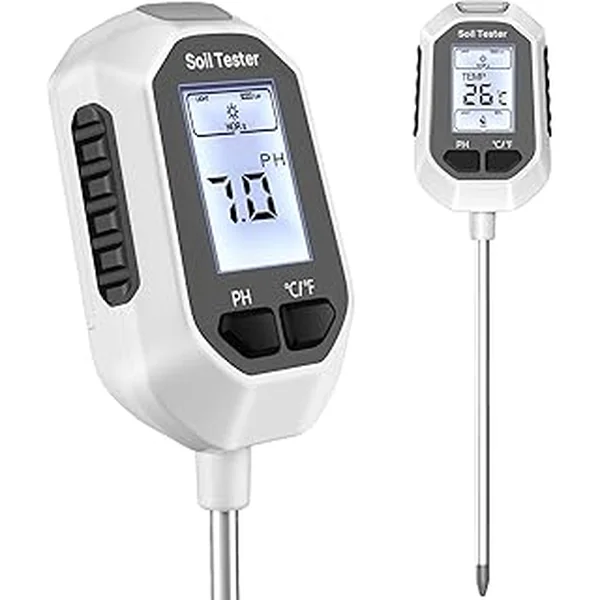
Target pH: 5.5-7.0 — slightly acidic to neutral, with some cultivars happy down to 5.0. The bigger driver is texture and organic matter:
- Colocasia: rich, heavy, moisture-retentive loam or peat-based mix. Heavy clay is fine if the rest of the bed drains — they actually appreciate the water-holding capacity.
- Alocasia: chunky aroid mix with bark chips, perlite, coco coir, and orchid bark. Drainage matters more than total moisture. A standard houseplant potting mix is usually too dense and stays too wet for an Alocasia.
Add 5-7 cm (2-3 in) of compost or aged manure at planting for both. The plants are heavy feeders with big leaves and need the organic matter.
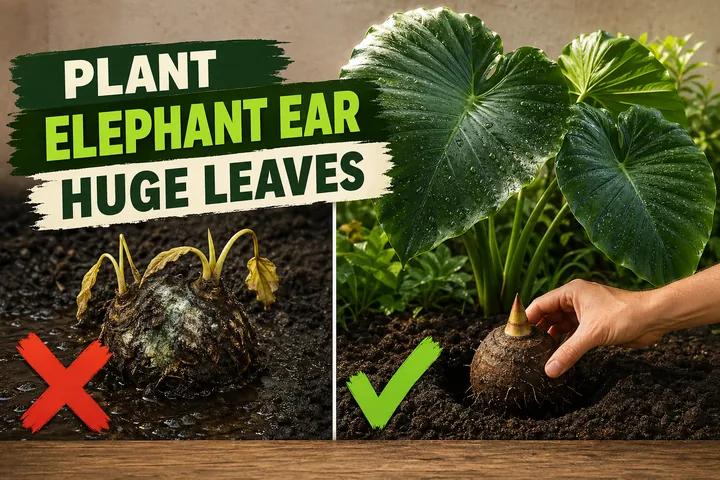
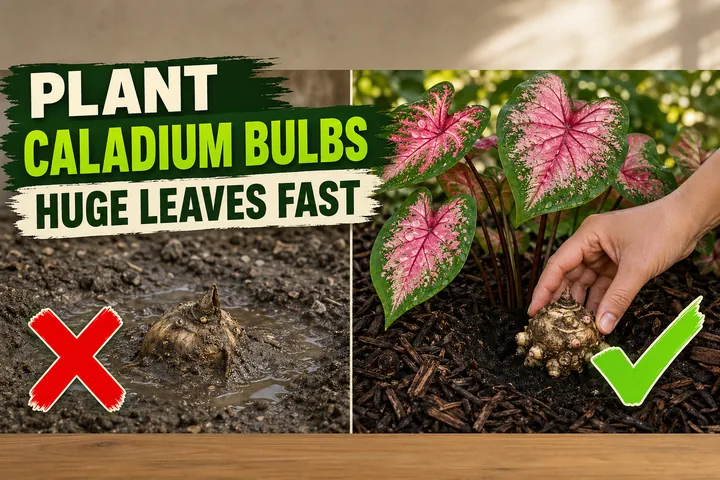
For bulb planting depth and orientation, see how to plant elephant ear bulbs — getting the eye facing the right way and the depth correct is the difference between a fast sprout and a dud.
Watering by species
This is where most failures happen.
Colocasia
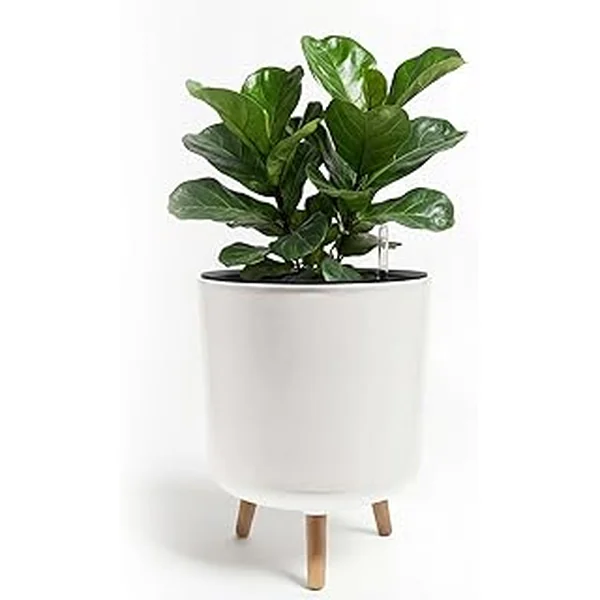
Treat as a bog plant. Water 2-3 times a week in heat, more in containers. Tolerates standing water around the base — pond margins or rain-garden positions are ideal. In containers, choose self-watering planters or stand the pot in a 5 cm (2 in) saucer of water during summer. Never let a Colocasia dry out fully — the leaves wilt dramatically and recover slowly.
Alocasia
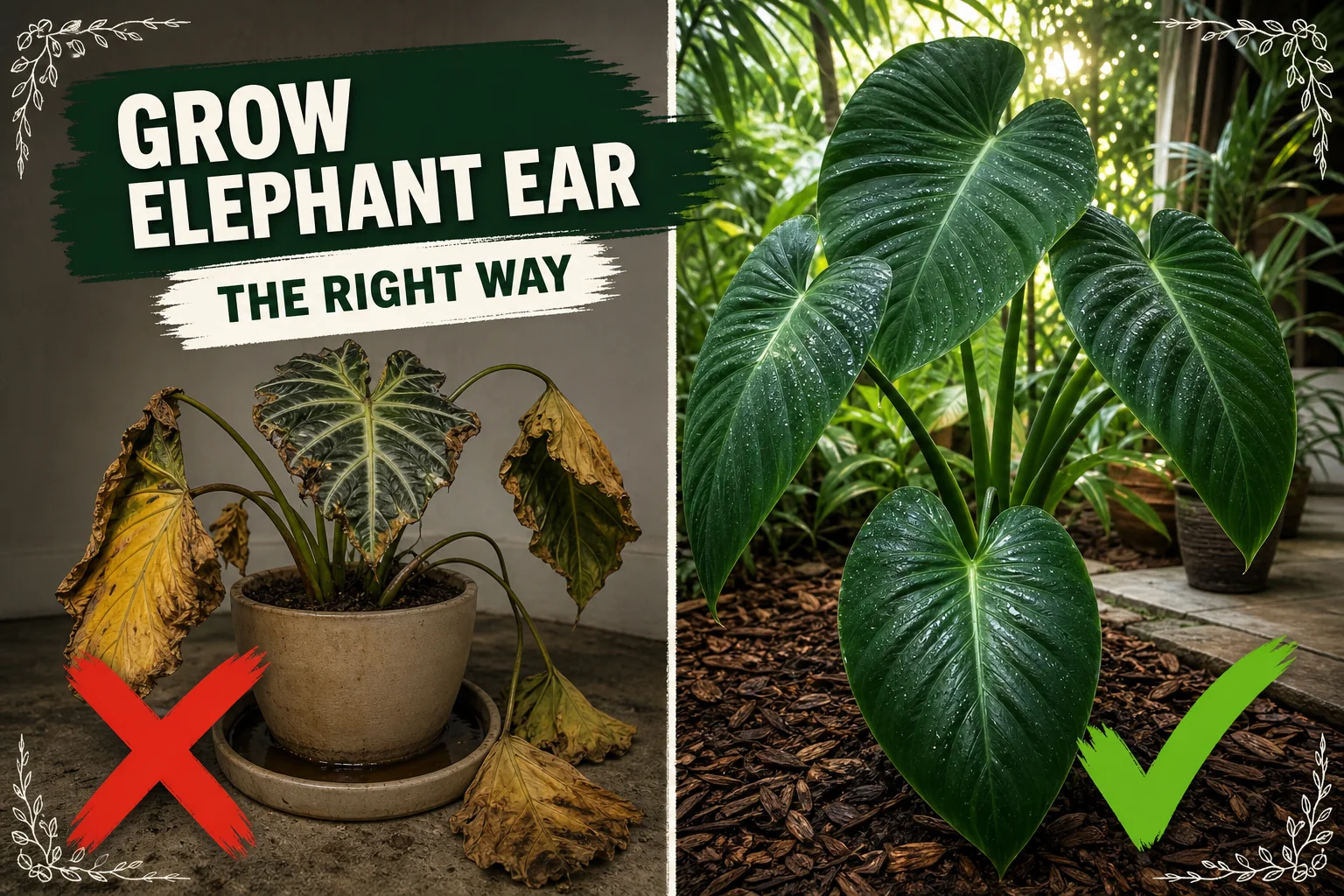
Treat as a regular tropical foliage plant. Water when the top 2.5 cm (1 in) of soil is dry to the touch — typically every 5-7 days indoors, more often in containers in summer outdoors. Always pour off excess water from the saucer. Soggy roots cause root rot fast in this genus; the leaves yellow and drop one by one.
Both species in winter dormancy
Reduce watering by 50% from late autumn through early spring. Indoor Alocasia often loses some lower leaves naturally as days shorten — this is normal dormancy, not a watering problem.
Temperature and humidity
Elephant ears are tropical. They want:
- Day temperature: 21-29°C (70-85°F).
- Night temperature: above 18°C (65°F).
- Below 13°C (55°F): growth stalls, leaves yellow.
- Below 5°C (41°F): foliage dies back; below freezing kills the corm in unprotected ground.
- Humidity: 50-60% minimum for Alocasia indoors. Brown crispy leaf edges = humidity too low. A cool-mist humidifier or pebble tray fixes it. Colocasia outdoors in humid climates has no humidity problem.
Fertilizing
Both genera are heavy feeders. The bigger the leaf, the more nutrients it pulls.
Outdoors: apply a balanced 10-10-10 granular fertilizer at planting and again every 4-6 weeks during the growing season. Or top-dress with 2-3 cm (1 in) of compost monthly.
Indoors: liquid balanced houseplant fertilizer every 2-4 weeks at half strength during spring and summer growth. Skip feeding from late October through February (dormancy).
Avoid pure high-nitrogen lawn feeds — the same problem as with dahlias, leafy at the expense of corm development. For wider guidance on fertilizing different plants, our starter fertilizer guide covers the basics.
Container growing
Elephant ears excel in containers, especially Colocasia for a dramatic patio statement.
- Pot size: start a 30 cm (12 in) corm in at least a 35 L (10 gal) container. Bigger Colocasia varieties (1.8 m / 6 ft tall) want 50-75 L (15-20 gal).
- Drainage: Colocasia tolerates blocked drainage; Alocasia never. Match the pot to the species.
- Pot material: glazed ceramic or plastic for Colocasia (holds moisture); terracotta for Alocasia (breathes, prevents soggy roots).
- Topdress: a 2 cm (1 in) layer of compost in spring.
Refresh container soil every 2-3 years. Tubers in pots exhaust the medium faster than ground-grown plants.
Overwintering
In zones 8-11, mulch heavily (10-15 cm / 4-6 in of bark) after the first frost and leave the corm in the ground. In zones 7 and colder, lift the corms.
Step-by-step:
- After the first hard frost blackens the foliage, cut stems to 7-10 cm (3-4 in).
- Dig the corm with a fork, lifting from the side to avoid spearing it.
- Brush off loose soil; rinse only if very dirty, then dry the corm well.
- Air-dry under cover for 5-7 days until the skin firms up.
- Pack in dry peat or sawdust in a cardboard box.
- Store at 10-13°C (50-55°F) — warmer than dahlias. Cold below 7°C (45°F) damages elephant ear corms.
- Replant after soil reaches 18°C (65°F) in spring — usually 2-3 weeks after your last frost date.
Indoor Alocasia container plants overwinter in place — reduce water and feed, and keep them in their warmest, brightest indoor spot.
Pet and child safety
All elephant ears contain insoluble calcium oxalate crystals in every part of the plant — leaves, stems, corms. Chewing the plant releases needle-like raphides that pierce the soft tissues of the mouth, tongue, and throat.
Symptoms in pets and children:
- Intense burning sensation, drooling, foaming
- Pawing at the mouth (cats and dogs)
- Swelling of lips, tongue, and throat
- Difficulty swallowing
- In severe cases, swelling that interferes with breathing
It is rarely fatal but is painful and frightening. If your cat, dog, or child bites a leaf, rinse the mouth with cool water or milk and call your vet or poison control immediately.
In a home with curious pets or small children, choose a different statement plant. Our cat-safe houseplants and dog-safe houseplants guides list good large-leaf alternatives like calatheas and parlour palms.
Pests and disease
- Spider mites (indoor Alocasia in dry winter air): fine webbing under leaves. Raise humidity and rinse forcefully. See how to get rid of spider mites.
- Mealybugs: white cottony tufts in leaf axils. Spot-treat with a 70% isopropyl alcohol swab. Full protocol in how to get rid of mealybugs.
- Aphids: clusters on new growth. Knock off with water; insecticidal soap for stubborn infestations.
- Fungus gnats: common around bog-wet Colocasia containers. See how to get rid of plant gnats.
- Root rot: the most serious problem. Soggy Alocasia roots turn black and mushy; yellow falling leaves are the surface symptom. See how to fix root rot.
Troubleshooting
| Symptom | Likely cause | Fix |
|---|---|---|
| Lower leaves yellow, fall off | Overwatering Alocasia OR natural dormancy in winter | Check species; reduce watering for Alocasia; accept winter dormancy |
| Wilted, drooping leaves | Underwatering (especially Colocasia) | Deep soak immediately; check soil daily for a week |
| Brown crispy leaf edges | Low humidity (Alocasia) | Add humidifier, group with other plants, mist daily |
| Brown leaf tips only | Tap-water chlorine / fluoride sensitivity | Use rainwater or filtered water |
| Pale, stretched stems | Too little light | Move to brighter filtered light |
| Burnt patches on leaves | Direct afternoon sun (Alocasia) | Move to part shade |
| White cottony tufts | Mealybugs | Swab with 70% isopropyl alcohol |
| Fine webs under leaves | Spider mites | Raise humidity, rinse forcefully, oil spray if severe |
| Corm soft / hollow at lifting | Frost damage or rot | Discard; corm cannot be saved |
Related reading
- How to plant elephant ear bulbs — exact depth, orientation, and timing for first sprouts.
- Caladium plant care — close cousin with similar care needs and the same calcium oxalate caution.
- How to plant caladium bulbs — soft tissue, eyes-up, shallow planting matches elephant ear technique.
- Cat-safe houseplants — large-leaf alternatives if your home has pets.
- How to fix root rot — the most common Alocasia killer when treated like a bog plant.
Track your watering rhythm, fertilizer windows, and dormancy lift dates with the free Tazart plant care app — the species-specific watering cadence is easy to mix up between a Colocasia in a pond pot and an Alocasia on a sideboard.
A note on conditions
Light, humidity, container size, and zone all shift the numbers. The constants are: identify the species first (Colocasia = bog; Alocasia = drained), keep the plant warm above 18°C (65°F), and never leave a feeding gap during the growing season. Everything else you fine-tune by watching the leaves. Elephant ears communicate honestly — yellow lower leaves mean check water; brown crisp edges mean check humidity; burnt patches mean check sun exposure.
Highly recommended
The supplies that make this guide work
Tazart is an Amazon Associate — we earn from qualifying purchases at no extra cost to you. Thank you for helping us keep these guides free.
Frequently asked questions
How much sun do elephant ears need?
Most elephant ears prefer part shade — 4-6 hours of morning sun with afternoon shade is ideal. Colocasia (the classic 'taro' type) tolerates more sun if soil stays consistently wet. Alocasia generally prefers brighter shade and burns in direct afternoon sun, especially in zones 8-10. In deep shade, leaves stay smaller and stems stretch — aim for bright, filtered light.
What is the difference between Colocasia and Alocasia?
Colocasia (taro-type) leaves point down with the tip facing the ground, like a true elephant ear hanging. They love wet feet — even bog or pond margins. Alocasia leaves point up or out, often with prominent silvery veins. They want rich, moist but well-drained soil — never soggy. Treat Colocasia as a bog plant and Alocasia as a regular tropical foliage plant and most care problems disappear.
How often should I water elephant ears?
Colocasia loves consistent moisture — water 2-3 times a week in heat, more in containers. They tolerate standing water around the base. Alocasia wants soil moist 2.5 cm (1 in) below the surface but never waterlogged — typically water once every 5-7 days when the top inch dries. Both wilt fast in dry soil; reduce watering in winter dormancy to roughly half-rate.
Are elephant ears toxic to pets?
Yes — all elephant ears (Colocasia, Alocasia, and Caladium) contain insoluble calcium oxalate crystals in their leaves, stems, and roots. Cats, dogs, and small children who chew the plant experience intense mouth burning, drooling, and swelling that can interfere with breathing in severe cases. Keep elephant ears out of reach or skip them in homes with curious pets. Caladium is in the same family and equally toxic — see our cat-safe houseplant list for alternatives.
How do I overwinter elephant ear bulbs?
In USDA zones 8-11, leave them in the ground with a thick mulch. In zones 7 and colder, lift the corms after the first frost blackens the foliage. Cut stems to 7-10 cm (3-4 in), dig the corm, brush off soil, and dry for 5-7 days under cover. Pack in dry peat or sawdust in a cardboard box and store at 10-13°C (50-55°F) — slightly warmer than dahlias, since elephant ears resent cold storage. Replant after soil hits 18°C (65°F) in spring.
Why are my elephant ear leaves turning yellow?
The three most common causes: overwatering an Alocasia (treat it as a regular houseplant, not a bog plant), underwatering a Colocasia (it droops then yellows when dry), or natural dormancy as days shorten in fall. Check the species first, then the watering pattern. Yellow lower leaves in winter on an indoor plant usually means the plant is going dormant — reduce water, hold off feed, and let it rest.
Can elephant ears grow indoors?
Alocasia varieties (Alocasia 'Polly', Alocasia amazonica) make excellent houseplants with bright filtered light, 50-60% humidity, and well-drained potting mix. Large Colocasia varieties are too big for most homes — they want 1.5-1.8 m (5-6 ft) of vertical space and standing water — better as patio or pond-margin plants. Indoor success comes down to humidity, drainage, and not overwatering.