Houseplants
Dieffenbachia Plant Care (Dumb Cane Complete Guide)
Complete Dieffenbachia care guide: light, watering, humidity, toxicity warning, propagation, and troubleshooting for dumb cane plants indoors.
On this page
Watch the visual walkthrough
Grow HUGE + Healthy Dumb Cane 🌱 Dieffenbachia Care Tips, Propagation + Common Problems SOLVED
For BONUS planty content with me (and Joli), feel free to check out our Patreon! https://www.patreon.com/thejunglehaven ...
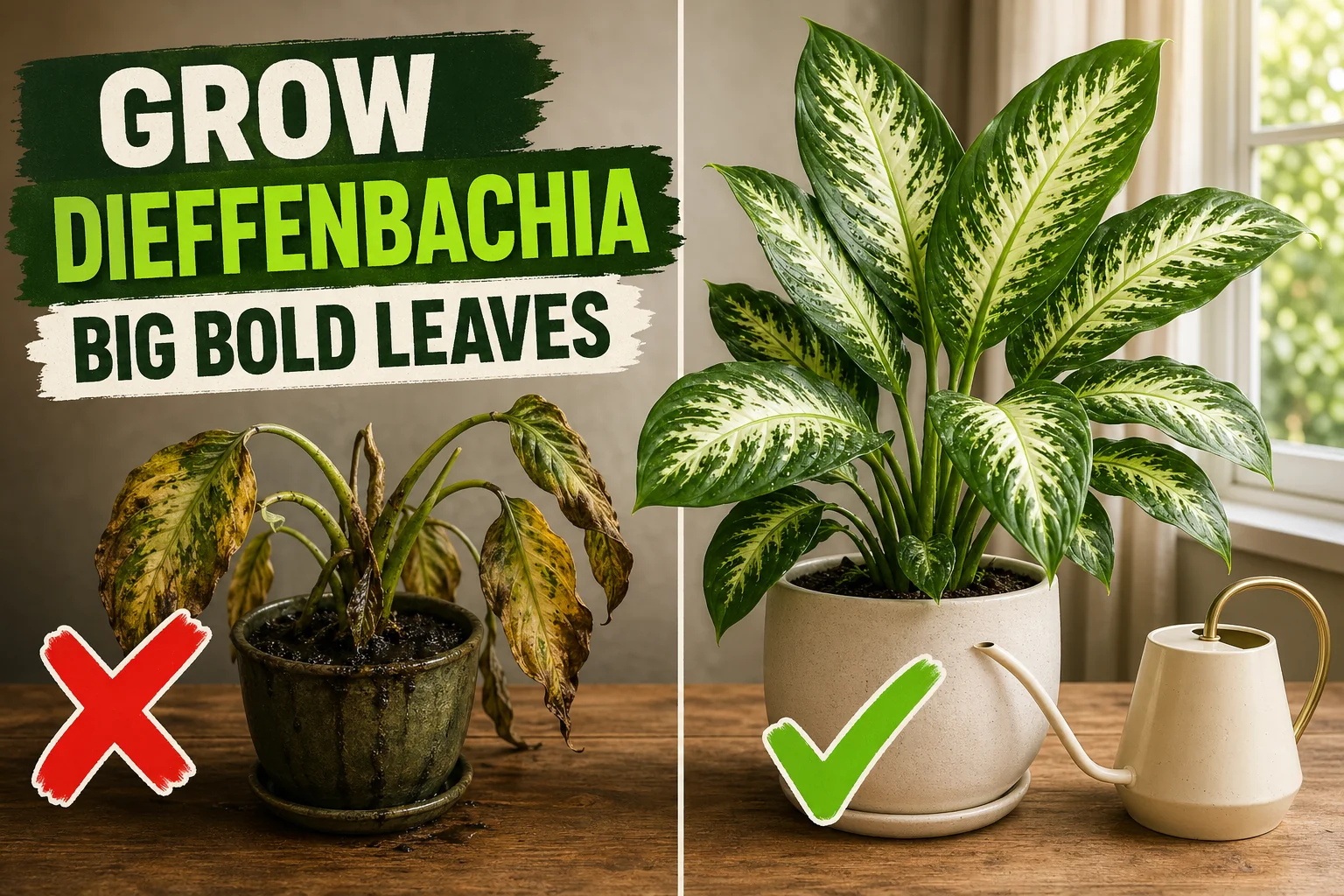
Dieffenbachia — also called dumb cane — is one of the boldest, easiest large-leaf houseplants you can grow indoors. Those big, creamy variegated leaves can fill a corner like almost nothing else, and the plant asks for very little: bright indirect light, infrequent watering, and decent humidity.
There is one critical thing to know before you bring one home, though. Dieffenbachia sap contains calcium oxalate crystals — the same compound that makes it dangerous if chewed. Swallowing any part of the plant causes intense burning, painful swelling of the mouth and throat, and temporary loss of speech (the literal origin of “dumb cane”). It is toxic to cats, dogs, and children. That does not make it a bad houseplant — it just means you need to place it thoughtfully and wear gloves whenever you handle the stems.
Quick answer
Dieffenbachia needs bright indirect light, watering when the top 5 cm (2 in) of soil dries out, a peat-based well-draining mix, temperatures of 18–26°C (64–79°F), and 60 %+ humidity. It can grow 1–3 m tall indoors. The sap is toxic — keep it away from children and pets, and wear gloves when pruning or propagating.
Table of contents
- Toxicity and safety — read first
- Light
- Watering
- Soil and potting
- Humidity and temperature
- Feeding
- Pruning
- Propagation
- Common mistakes
- Troubleshooting
- Watch: Dieffenbachia care video
- Related reading
Toxicity and safety — read first
This section belongs at the top because most care guides bury it.
Dieffenbachia belongs to the Araceae family and every part of the plant — leaves, stems, roots, sap — contains calcium oxalate crystals. When the plant is chewed or when sap contacts mucous membranes, the crystals cause:
- Immediate intense burning and stinging in the mouth and throat
- Painful swelling of the lips, tongue, and throat
- Temporary loss of speech (this is where “dumb cane” comes from)
- In severe cases: difficulty swallowing, drooling, nausea
Keep Dieffenbachia out of reach of children and pets. Cats and dogs are particularly at risk because they chew leaves out of curiosity. A shelf or hanging planter works well; a floor-level decorative pot does not.
Always wear nitrile or latex gloves when pruning, repotting, or taking cuttings. The sap that gets on skin causes irritation; in eyes it causes serious pain. Wash your hands after any contact with cut stems.
If a person or pet ingests any part of the plant, rinse the mouth thoroughly with water and contact a poison control centre or vet immediately.
Light
Dieffenbachia thrives in bright indirect light. The ideal position is a metre or two back from a bright east- or west-facing window, or right beside a north-facing window in a well-lit room.
Avoid direct sunlight. The large, often light-coloured variegated leaves are sensitive — direct sun bleaches the creamy white areas, scorches the edges, and permanently damages the variegation pattern.
Lower light is tolerated, but growth slows significantly and the beautiful variegation fades toward plain green as the plant tries to maximise photosynthesis. A spot that feels dim to you will produce a disappointing Dieffenbachia over time.
A good rule: if you can comfortably read a book without switching on a lamp, the light is probably sufficient for survival. For genuine growth and good leaf colour, you want noticeably bright (but not sunny) conditions.
Watering
Water your Dieffenbachia when the top 5 cm (about 2 inches) of soil feels dry. Push your finger into the soil to check — do not rely on a fixed day of the week, because seasons, pot size, and your home’s humidity all change how fast it dries out.
In practice this usually means:
- Spring and summer (active growth): every 7–10 days
- Autumn and winter (slower growth): every 12–18 days
When you water, do it thoroughly. Pour slowly until water drains freely from the bottom of the pot, then empty the saucer within 30 minutes. Sitting in collected water is the fastest route to root rot.
Overwatering is by far the most common cause of Dieffenbachia failure. A slightly underwatered plant droops and tells you it is thirsty. A chronically overwatered one silently rots at the roots, and by the time the leaves yellow you may have already lost significant root mass.
Soil and potting
Use a peat-based, well-draining potting mix. A good recipe:
- 2 parts standard peat or coco coir potting mix
- 1 part perlite
- 1 part coarse bark chips (optional but helpful for drainage)
The mix should hold enough moisture to stay consistently damp for several days after watering, but never feel waterlogged. If you squeeze a handful and water streams out, add more perlite.
Repotting: Young or fast-growing plants need repotting every 1–2 years, moving up one pot size (roughly 5 cm (2 in) wider). Mature plants can go 2–3 years before the roots completely fill the pot. Spring is the best time. Always wear gloves — repotting exposes you to sap.
Choose a pot with drainage holes. Terracotta dries faster than ceramic, which is useful if you tend to overwater; ceramic retains moisture longer if you often forget to water.
Humidity and temperature
Ideal temperature: 18–26°C (64–79°F). Dieffenbachia is a tropical plant and dislikes cold.
If you want a second bold-leafed tropical houseplant with similarly vibrant colour and the same humidity needs, the croton plant care guide covers a striking foliage plant that makes an excellent partner in a warm, humid indoor corner.
- Below 15°C (59°F): growth stops, leaves may yellow or droop
- Below 10°C (50°F): cold damage sets in, leaves turn mushy
- Avoid cold drafts from open windows in winter and air conditioning vents blowing directly on the plant
Ideal humidity: 60% or higher. Most homes sit at 40–50%, which the plant copes with, but you will see faster growth, fewer brown leaf tips, and richer variegation in higher humidity.
Ways to raise humidity:
- Group it with other plants (they raise each other’s local humidity)
- Place the pot on a tray of pebbles filled with water, keeping the pot above the water line
- Run a small humidifier nearby during dry winter months
- Mist the leaves occasionally in the morning — not at night, as wet leaves in cool/dark conditions invite fungal issues
Feeding
Feed once a month during spring and summer with a balanced liquid fertiliser (20-20-20 or similar), diluted to half strength. Do not feed in autumn or winter — the plant is growing slowly and excess fertiliser accumulates as salts in the soil, burning the roots.
Flush the soil with plain water every 2–3 months to wash out any salt build-up, especially if you see a white crust forming on the soil surface or the pot rim.
Pruning
Dieffenbachia rarely needs heavy pruning. The main reasons to cut:
- Remove dead or yellowed lower leaves to keep the plant tidy
- Cut back a leggy stem that has lost its lower leaves to encourage branching
- Remove a diseased or damaged stem before it spreads
Always wear gloves. Cut with sharp, clean scissors or pruning shears. Make cuts just above a node (the point where a leaf meets the stem) if you want the stem to branch. The cut stem will weep sap — let it dry naturally for a few minutes before handling further.
Wipe the blades with rubbing alcohol before and after cutting to prevent spreading any disease.
Propagation
The easiest and most reliable method is stem cuttings, and it works on any healthy stem. Always wear gloves throughout.
Step-by-step:
- Choose a stem with at least 2–3 nodes. A cutting 10–15 cm (4–6 in) long is ideal.
- Cut cleanly just below a node with a sharp, sterilised blade.
- Set the cut end aside for 20–30 minutes to let the sap dry slightly and the wound callous.
- Place the cutting in a jar of water, or stick it 3–5 cm (1–2 in) deep into moist perlite or a 50/50 perlite-and-potting-mix blend.
- Keep in a warm spot (21–26°C (70–79°F)) with bright indirect light. Cover loosely with a clear plastic bag to hold humidity if you have it.
- Roots emerge in 3–5 weeks. Once roots are 2–4 cm (0.75–1.5 in) long, pot into normal Dieffenbachia mix.
You can also propagate from cane sections — cut a leafless stem into 5 cm (2 in) sections, each with at least one node, and lay them horizontally in moist mix, half-buried. New shoots emerge in 4–8 weeks.
Common mistakes
- Overwatering on a schedule. Watering every Sunday regardless of soil moisture is how most Dieffenbachias die. Check the soil first, every time.
- Placing in direct sun. The variegated leaves bleach and scorch within days in a sunny south-facing window. Bright indirect is non-negotiable.
- Cold drafts. A beautiful plant by a draughty window will steadily decline from October onward. Keep it away from cold air sources.
- Ignoring the toxicity. A Dieffenbachia on a low shelf with a curious toddler or cat is an avoidable emergency. Place it high.
- Forgetting gloves. Sap on your hands and then accidentally touching your eyes is genuinely painful. Keep a pair of cheap nitrile gloves near the plant.
- Using a pot without drainage. Decorative pots without holes look great until the roots drown. Either use a nursery pot inside the decorative one, or drill a hole.
Troubleshooting
| Symptom | Likely cause | Fix |
|---|---|---|
| Yellow leaves (lower) | Overwatering or natural ageing | Let soil dry out between waterings; remove dead leaves |
| Leaves drooping and soft | Cold, overwatering, or root rot | Check roots, cut any rotten sections, repot in fresh mix, move away from drafts |
| Brown crispy leaf edges | Low humidity or underwatering | Raise humidity to 60%+; water more consistently |
| Faded, washed-out variegation | Too much direct sun or too little light | Move to bright indirect light away from direct sun |
| Leggy stem with bare lower section | Normal ageing or too little light | Cut the top growth and propagate it; move to brighter spot |
| White crusty deposit on soil | Salt build-up from fertiliser | Flush thoroughly with plain water; reduce fertiliser frequency |
Watch: Dieffenbachia care video
A visual walkthrough pairs well with the steps above. Search YouTube for “Dieffenbachia care dumb cane complete guide” to find a practical tutorial that covers light positioning, watering technique, and repotting. Watch it alongside this guide for the full picture.
Related reading
If you enjoy easy, bold tropical houseplants like Dieffenbachia, these guides cover plants with similar care needs:
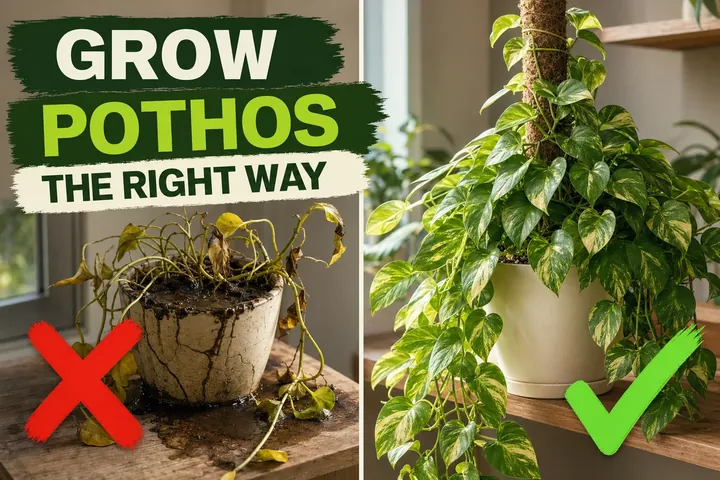
- Pothos plant care: the complete guide — another low-maintenance trailing tropical that tolerates lower light
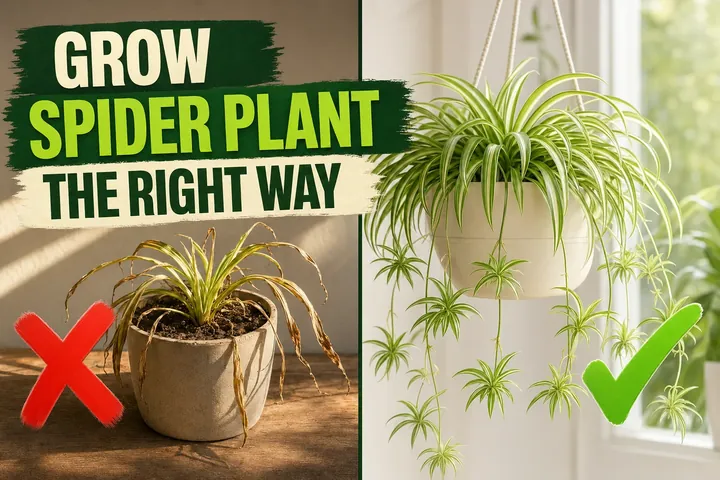
- How to take care of a spider plant — fast-growing, humidity-loving, and equally easy to propagate
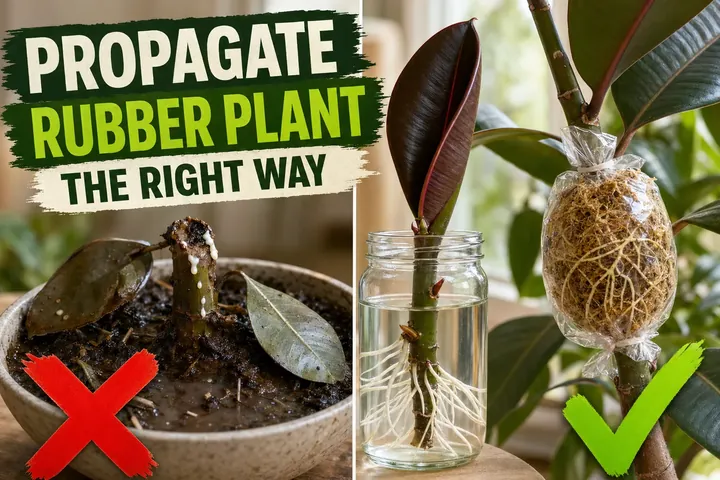
- How to propagate a rubber plant — stem cutting method almost identical to Dieffenbachia propagation
- Corn plant care (Dracaena fragrans) — another tall, easy tropical with the same fluoride-sensitive watering rule and bright-but-not-direct light needs
Let the free Tazart plant care app handle the watering schedule for your Dieffenbachia. It tracks your last watering, adjusts reminders for your local season, and sends you an alert on your phone or Apple Watch before the soil dries out too far.
A note on conditions
Every home is different. The numbers in this guide — water every 7–10 days, 60% humidity, 18–26°C (64–79°F) — are reliable starting points, not rigid rules. A Dieffenbachia near a warm radiator in a dry flat will need water sooner and humidity support that one in a humid bathroom will not. Watch your plant in the first few weeks: it will tell you if it needs adjusting. That attentiveness is the whole skill of growing plants well.
Highly recommended
The supplies that make this guide work


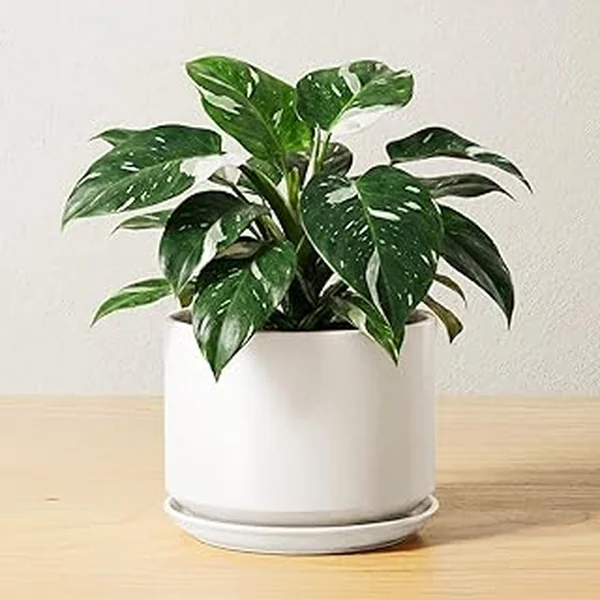
Tazart is an Amazon Associate — we earn from qualifying purchases at no extra cost to you. Thank you for helping us keep these guides free.
Frequently asked questions
Is Dieffenbachia toxic to cats, dogs, and humans?
Yes — Dieffenbachia (dumb cane) is toxic to cats, dogs, and humans. The sap contains calcium oxalate crystals. If any part of the plant is chewed or ingested, it causes intense burning, painful swelling of the mouth and throat, and temporary loss of speech — which is exactly where the name 'dumb cane' comes from. In severe cases it can cause difficulty swallowing or breathing. Keep it out of reach of children and pets, and always wear gloves when pruning or propagating.
How often should I water my Dieffenbachia?
Water when the top 5 cm (2 inches) of soil feels dry. In most indoor conditions that means every 7–10 days in summer and every 14 days or more in winter. Stick your finger into the soil rather than following a fixed schedule — the plant tells you when it's thirsty. Always water thoroughly until it drains from the bottom, then empty the saucer.
How much light does a Dieffenbachia need?
Dieffenbachia grows best in bright indirect light. A spot a metre or two back from a bright east- or west-facing window is ideal. Avoid direct sun — it bleaches and scorches the variegated leaves. It tolerates lower light but growth slows and the variegation fades. It will not survive in a fully dark corner.
Why are my Dieffenbachia leaves turning yellow?
Yellow leaves most often mean overwatering. Check the soil — if it is wet or soggy more than a few days after watering, reduce frequency and make sure the pot drains freely. Other causes include too little light, cold drafts below 15°C (59°F), or natural ageing of lower leaves (normal in older plants).
How big does Dieffenbachia get indoors?
Indoors, Dieffenbachia typically reaches 1–3 metres tall, depending on the variety and the conditions you give it. In a bright, warm room with regular feeding it can put out one or two large new leaves per month during the growing season.
Can I propagate Dieffenbachia at home?
Yes. The most reliable method is stem cuttings. Cut a 10–15 cm (4–6 in) section of stem with at least one node, let the cut end dry for 30 minutes, then place it in moist perlite or water. Roots appear in 3–4 weeks in a warm spot. Always wear gloves — the sap irritates skin and eyes.