Houseplants
Croton Plant Care (Codiaeum variegatum): Complete Color Guide
Croton plant care for Codiaeum variegatum — bright light for the boldest colors, watering, humidity, leaf drop fix, pet safety, and top cultivars.
On this page
Watch the visual walkthrough
How to Keep a Croton Plant HAPPY: Croton Plant Care
Croton Plant Care Simplified! In this video I will explain how to help your croton go from cranky to happy. Croton care explained.
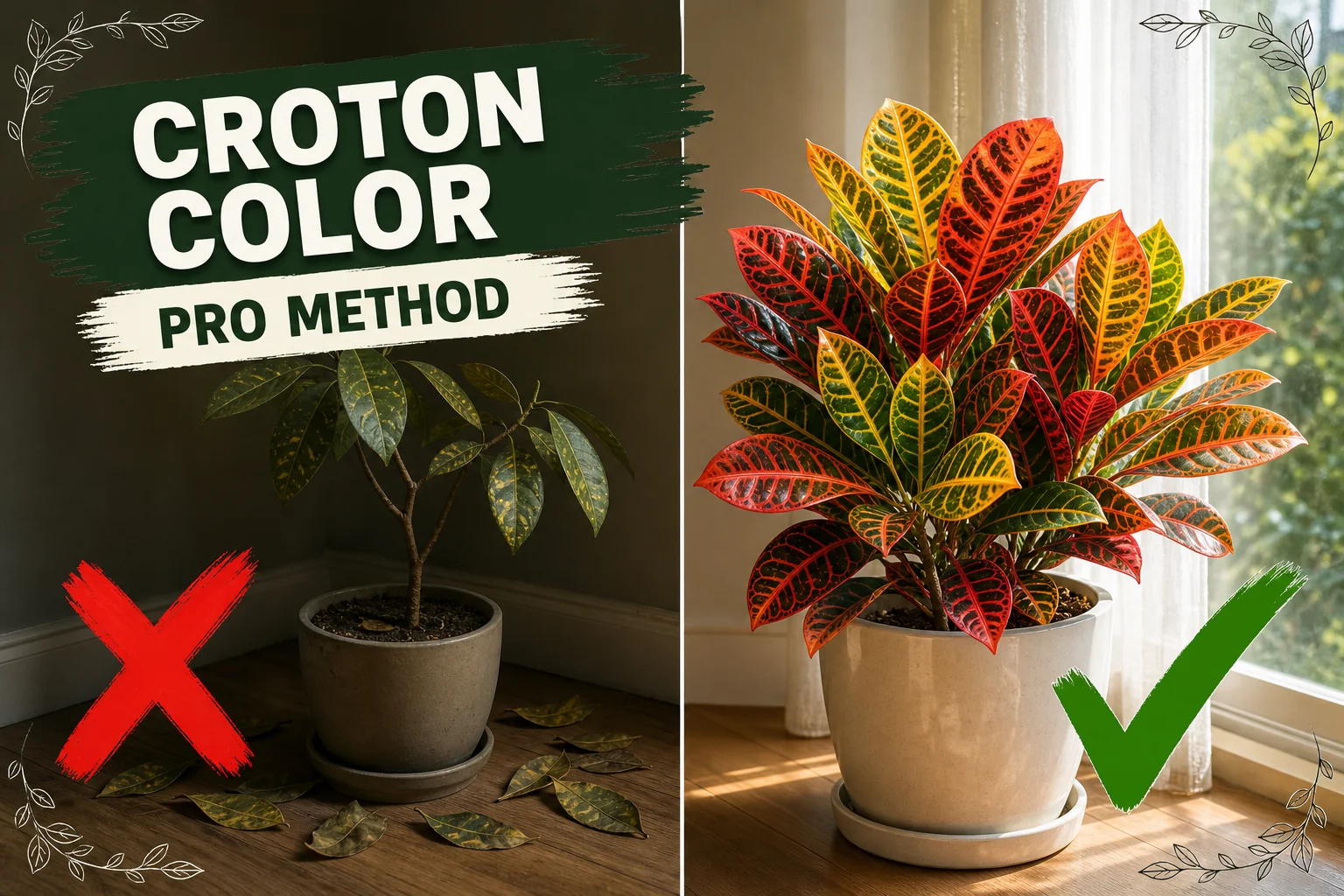
The croton is the houseplant that looks like a paint sample chart growing in a pot — broad leathery leaves splashed with red, orange, yellow, pink, and deep green in patterns no other plant can match. A mature croton in good light is one of the most visually arresting plants you can own.
It also has a reputation for being temperamental, particularly the dramatic leaf drop episode that happens within 2–3 weeks of bringing one home from the nursery. Codiaeum variegatum dislikes change, and the move from greenhouse to living room is the biggest change it experiences in its life.
This guide covers everything that matters for keeping crotons colorful, full, and stable indoors — including the light-driven color story that explains why your plant might look green when the nursery’s looked rainbow-bright.
Quick answer
Crotons (Codiaeum variegatum) need bright filtered light to some direct sun for the boldest leaf color, warm temperatures of 15–24°C (59–75°F), evenly moist (never dry, never soggy) well-draining soil, and 50%+ humidity. Water when the top 2–3 cm (1 in) of soil is dry. Feed monthly in spring and summer. Leaf drop after a move is normal — wait 4–6 weeks for recovery. The sap is mildly toxic to pets and irritating to human skin.
Table of contents
- What croton actually is
- Light — the color story
- Watering
- Humidity
- Temperature
- Soil and pot
- Feeding
- Pruning and pinching
- The relocation leaf drop
- Pet and skin safety
- Top cultivars to look for
- Common mistakes
- Related reading
What croton actually is
Croton is Codiaeum variegatum, a tropical evergreen shrub in the Euphorbiaceae family — the same family as poinsettia and rubber tree. In its native range across Indonesia, Malaysia, and Pacific islands it grows as a 1.8–3 m (6–10 ft) shrub in full sun and warm humidity. Indoors as a houseplant it stays much smaller — typically 60 cm to 1.2 m (2 to 4 ft) — and benefits from regular pinching to maintain a dense bushy shape.
The plant is not related to the genus Croton (a separate genus of about 1,200 species in the same family), despite sharing the common name. Garden centres almost universally label it as “croton” anyway.
The defining feature is the variegation. Each cultivar produces leaves in a distinct pattern and color combination — broad oval leaves, narrow strap-shaped leaves, twisted leaves, oak-leaf-shaped leaves — splashed with red, orange, yellow, pink, cream, and green in proportions that change as the leaf ages. A mature plant can carry 4–5 different color stages on different leaves simultaneously.
Light — the color story
This is the most important thing to understand about croton care.
Light directly controls leaf color.
- Bright filtered light with 1–2 hours of direct sun: the variegation fully develops. Reds turn deep crimson, oranges glow, yellows brighten, the contrast against green is bold.
- Bright indirect light only: colors stay attractive but slightly muted. New leaves may emerge greener than older ones.
- Medium indirect light: colors fade noticeably. Reds turn pink-bronze, oranges turn yellow-green, the plant loses much of its character.
- Low light: the variegation largely disappears. The leaves are still patterned but plain green dominates and the bold color story is gone.
For full-color crotons, aim for 4–6 hours of bright filtered light plus 1–2 hours of gentle direct sun. South- or west-facing windows are ideal, especially with a thin sheer curtain diffusing the harshest midday rays. Direct hot midday sun unfiltered can scorch the leaves brown — observe for the first week and pull back from the window 30 cm (12 in) if you see scorching.
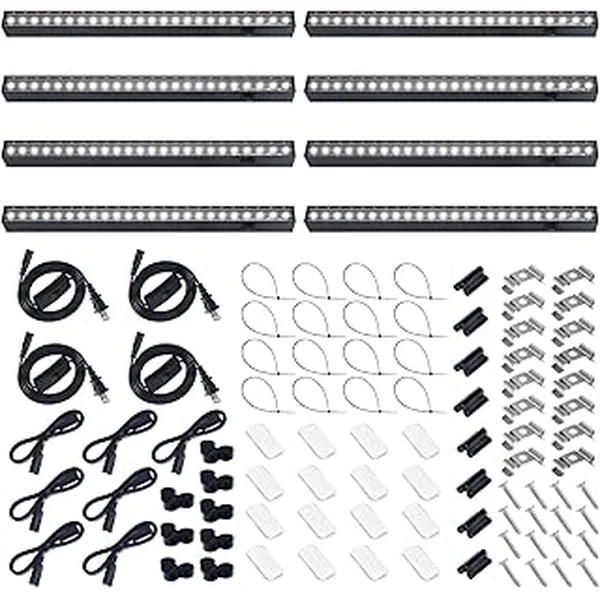
In a darker room, a full-spectrum LED grow light suspended 30–45 cm (12–18 in) above the canopy running 12 hours on / 12 off restores the color. The reds and oranges may not be quite as saturated as in real sun, but the difference between grow-light croton and dim-corner croton is dramatic.
Watering
Crotons want evenly moist soil. Not soggy, not dry. Both extremes trigger leaf drop.
Rule: water when the top 2–3 cm (1 in) of soil feels dry to the touch.
In practice:
- Spring and summer (active growth): typically every 5–7 days.
- Autumn and winter (slow growth): every 10–14 days.
Water thoroughly — pour slowly until water flows from the drainage holes — then empty the saucer immediately. A croton standing in water for more than 30 minutes starts dropping leaves within a week.
Use tepid water; cold tap water shocks the warm-loving root system. Letting the soil dry out fully even once typically triggers a leaf-drop episode and lower-leaf yellowing.
Humidity
Crotons want 50%+ relative humidity, ideally 60–70%. Most centrally heated homes run at 25–35% in winter, which causes the leaf-tip browning and accelerated lower-leaf drop that many croton owners report from October through March.
The fixes (in order of effectiveness):
- A small ultrasonic humidifier near the plant, running 8–12 hours a day.
- Grouping with other tropical houseplants — collective transpiration creates a humid microclimate.
- A pebble tray beneath the pot.
- Moving to a naturally humid room like a bright bathroom or kitchen.
Misting is a brief humidity boost only and does little for long-term humidity. Skip it.
Temperature
Crotons want 15 to 24°C (59 to 75°F) consistently.
Below 13°C (55°F) the plant suffers cold stress and starts shedding leaves; below 10°C (50°F) cold injury sets in and the plant can die. Crotons cannot tolerate frost.
Avoid drafts of any kind. Cold drafts from windows in winter, hot air from radiators or heating vents, and sudden temperature swings (heating turned off overnight and blasted on in the morning) all trigger leaf drop. Position the plant at least 60 cm (24 in) from any vent or drafty window.
Soil and pot
Crotons want a loose, well-draining, organic-rich potting mix.
Recommended mix:
- 60% standard houseplant potting mix
- 25% perlite or pumice
- 15% composted bark fines or coco coir
The combination drains quickly enough to prevent root rot while holding the consistent moisture crotons prefer.
Pot choice: ceramic, plastic, or glazed terracotta all work as long as the pot has drainage holes. Plain unglazed terracotta dries faster than glazed pots, which helps in cool damp environments but causes faster soil dry-out in heated homes — match to your conditions.
Repot every 2–3 years in early spring, moving up one pot size at a time (2–3 cm / 1 in wider than the current pot). Crotons prefer being slightly snug; an oversized pot holds excess soil that stays wet and rots the roots.
Feeding
Feed monthly during the growing season (April–September) with a balanced liquid houseplant fertilizer diluted to half strength. Do not feed in autumn and winter.
A balanced 20-20-20 or 10-10-10 formulation works well. Avoid high-nitrogen formulas — they push soft green growth at the expense of variegation, and the plant can revert to greener leaves with less color contrast.
If you see a white salt crust on the soil surface or pot rim, flush the soil with plain tepid water (running 3–4 times the pot’s volume through the soil slowly) and skip the next 2 feedings.
Pruning and pinching
Crotons respond well to pinching, which keeps them dense and prevents the leggy bare-stemmed look that older plants develop in low light.
In early spring, identify the longest stems and pinch off the top 2–3 cm (1 in) of each just above a leaf node, using clean snips. The plant will exude a small amount of milky white sap from the cut — this is normal and seals the wound within a few minutes. New side shoots emerge from the next two nodes within 4–6 weeks.
For pruning more than a few stems, wear gloves — the sap is irritating to skin and can cause a contact rash on sensitive skin.
The relocation leaf drop
This is the most-discussed croton problem online, and it is almost always misunderstood.
A croton brought home from a nursery loses leaves. Sometimes a lot of leaves. The plant looks ruined.
It is not ruined — it is acclimatising. The greenhouse where the plant grew had different light, different humidity, different temperature, and different watering. The plant drops the leaves that grew under those conditions and produces new ones suited to your environment. This is the croton’s normal response to change.
What to do:
- Pick a permanent spot with bright filtered light and 50%+ humidity.
- Place the plant and do not move it.
- Water consistently (top 2–3 cm dry test) and avoid drafts.
- Wait. New leaves emerge from the tips within 3–6 weeks.
- Resist the urge to repot, fertilize heavily, or experiment during the acclimation period — additional stress prolongs the leaf drop.
By 6–8 weeks the plant has typically replaced most of the lost foliage with new growth suited to its new home, and the leaf drop stops.
Pet and skin safety
Crotons are mildly toxic to cats and dogs. The milky sap contains irritant compounds (5-deoxyingenol esters and others typical of the Euphorbiaceae family). If chewed, the sap causes mouth irritation, drooling, vomiting, and occasional diarrhea. Severe poisonings are rare but reported.
For human skin, the sap can cause a contact rash on sensitive skin and stings noticeably if it gets in eyes or open cuts. Wear gloves when pruning, and wipe up any sap drips with a damp cloth before they dry.
Place crotons out of reach of pets and small children, and avoid them entirely in homes with curious chewers.
Top cultivars to look for
A handful of named cultivars consistently produce the best color and form:
| Cultivar | Leaf shape | Color story | Notes |
|---|---|---|---|
| ’Petra’ | Broad oval | Deep green with red, orange, yellow midribs and veins | The most widely sold and best-recognised croton |
| ’Mammy’ | Narrow strap-shaped, slightly twisted | Green, red, yellow, and purple swirled | Compact growth habit; good for smaller spaces |
| ’Gold Dust’ | Small oval | Deep green heavily speckled with bright yellow | The “rain of gold” look; tolerates slightly less light |
| ’Magnificent’ | Broad oval | Pink, red, orange, and green | Bold flowering-style color in the leaves |
| ’Banana’ | Narrow strap | Yellow-green with darker variegation | The “banana” name comes from the leaf shape |
| ’Oakleaf’ | Lobed oak-leaf shape | Green, red, yellow | Unusual leaf form; collector favorite |
| ’Sunny Star’ | Pointed oval | Green and yellow with light variegation | The most low-light-tolerant cultivar |
For a first croton, ‘Petra’ is the standard recommendation — widely available, reliably colored in moderate to bright light, and the easiest to source replacement plants for if your first attempt struggles.
Common mistakes
- Placing in low light. The variegation fades to plain green and the plant loses its main appeal. Crotons need bright filtered light to perform.
- Letting the soil dry out fully. Triggers leaf drop. Maintain even moisture with a consistent watering routine.
- Standing the pot in water. Root rot follows within a week. Always empty the saucer after watering.
- Cold drafts and temperature swings. Trigger leaf drop. Position away from windows in winter and from heating/cooling vents year-round.
- Repotting too often. Disturbs the root system unnecessarily. Repot every 2–3 years.
- Fertilizing heavily. Causes the plant to revert to greener foliage with less variegation. Half strength, monthly, growing season only.
- Intervening during the relocation leaf drop. Additional repotting, fertilizing, or moving worsens the stress. Stabilise and wait.
- Ignoring pet safety. The sap is mildly toxic. Place out of reach.
Related reading
- Dieffenbachia plant care — another bold-foliage tropical houseplant with similar light and humidity needs.
- Caladium plant care — a colorful-leaf companion that thrives in the same warm humid conditions as croton.
- Anthurium care — a flowering tropical that pairs well with croton in a bright humid corner.
Track croton’s watering schedule and seasonal humidity reminders with the free Tazart plant care app — a stable routine is the single biggest factor in keeping the variegation bold and the leaves on the plant.
A note on conditions
Every home is different. Local humidity, the angle and intensity of light through your windows, ambient temperature, and your heating system all change how a croton behaves in your room. The numbers in this guide — bright filtered light, 15–24°C (59–75°F), 50%+ humidity, water when top 2–3 cm (1 in) is dry — are reliable starting points. Watch the leaves: bold deep color and steady new growth mean keep everything as it is; fading color or progressive leaf drop means one variable is off and worth troubleshooting. Crotons are honest plants — the foliage tells you when conditions are wrong long before the plant itself starts to decline.
Highly recommended
The supplies that make this guide work


Tazart is an Amazon Associate — we earn from qualifying purchases at no extra cost to you. Thank you for helping us keep these guides free.
Frequently asked questions
Why are my croton leaves falling off?
Croton leaf drop is the plant's reaction to any abrupt change — moving locations, a cold draft, a temperature swing, or letting the soil dry out fully. The classic example is leaf drop after bringing a croton home from the nursery. The fix is stability: pick a permanent spot with bright filtered light and steady moisture, and wait 4-6 weeks for new growth to replace the lost leaves.
How much light does a croton need?
Crotons need bright filtered light to some direct light — typically 4-6 hours of bright indirect light plus 1-2 hours of gentle direct sun. Light directly controls leaf color: a croton in dim conditions produces plain green leaves, while bright light unlocks the bold reds, oranges, and yellows of the variegation. South- or west-facing windows are ideal.
Are crotons toxic to cats and dogs?
Yes, mildly. Crotons are in the Euphorbiaceae family and produce a milky sap that contains irritant compounds. If chewed, the sap can cause mouth irritation, drooling, and stomach upset in cats and dogs. The sap can also irritate human skin on contact. Place crotons out of reach of pets and wear gloves when pruning.
How often should I water a croton plant?
Water when the top 2-3 cm (1 in) of soil feels dry — usually every 5-7 days in spring and summer and every 10-14 days in autumn and winter. Crotons want evenly moist soil but cannot tolerate soggy roots. Letting the soil dry out fully triggers immediate leaf drop, so consistency matters as much as frequency.
Why are my croton leaves losing color?
Color loss almost always means too little light. The reds, oranges, and yellows in croton variegation are pigment expressions that depend on bright light to develop. In low light the chlorophyll dominates and the leaves revert to plain green. Move the plant closer to a bright window and the colors return on new leaves within 6-8 weeks.
Can crotons grow in low light?
Crotons survive in low light but they do not thrive there. In dim conditions the famous variegation fades to green, growth slows dramatically, and the lower leaves shed. If you want the bold multicolored foliage, crotons need at least 4 hours of bright filtered or indirect light per day. Low-light alternatives like cast iron plant or pothos are better fits for dim rooms.