Care
Citronella Plant: Care Guide & Mosquito Myth Explained
Citronella plant care: full sun, well-drained soil, USDA 9-11 outdoors. The truth about the mosquito-repellent claim and how to grow it indoors.
On this page
Watch the visual walkthrough
10 Plants That Repel Mosquitoes 🦟🚫
Here's How to Reduce, Repel, and Deter Mosquitos in your backyard or Garden. This Three Pronged Approach will keep the ...
The “citronella plant” is the most confusing plant in any garden centre. Marketed as a natural mosquito repellent, sold as a single item under one name, it is actually two completely different species that work very differently, both of which underperform what the label implies.
This guide clears up the species mix-up, covers the care for both the geranium and the grass, and tells you honestly whether either one will keep mosquitoes off your patio (mostly: no).
Quick answer
The garden-centre ‘citronella plant’ is usually Pelargonium ‘citronella’ (a scented geranium), not true citronella grass (Cymbopogon nardus). Grow it in full sun (6+ hours), free-draining soil, and water when the top 2.5 cm (1 in) is dry. Hardy outdoors in USDA zones 9-11; lift indoors in colder zones. The mosquito-repellent claim is mostly marketing — crushed leaves release some citronellal oil, but undisturbed plants give little to no protection.
Table of contents
- Two different plants, one confusing name
- How to tell them apart
- The mosquito myth, explained
- Light
- Soil and pH
- Watering
- Container growing
- Fertilizing
- Overwintering
- Propagation
- Pet safety
- Troubleshooting
- FAQ
Two different plants, one confusing name
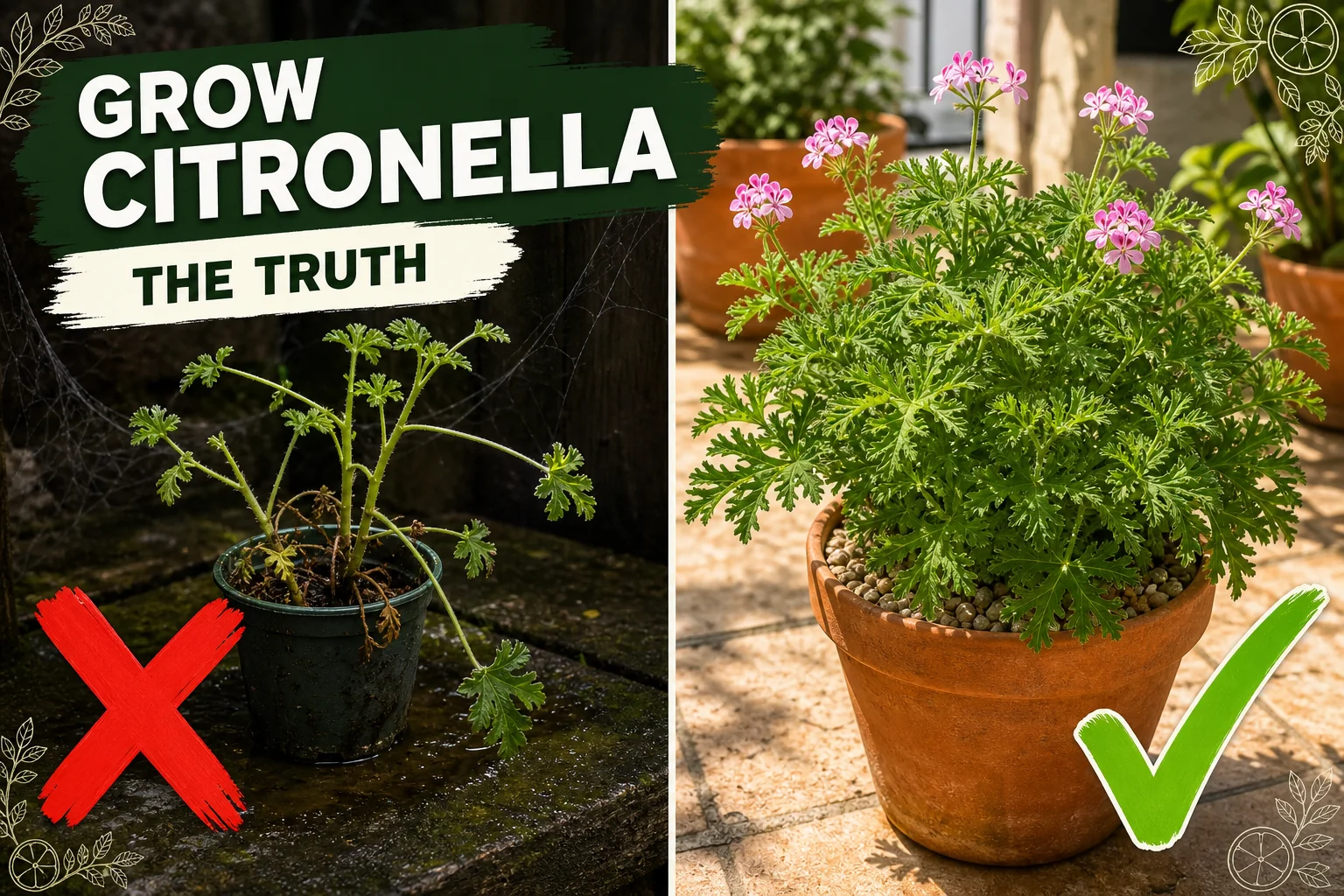
Pelargonium ‘citronella’ is a scented geranium — a perennial in the Geraniaceae family with deeply lobed, lacy green leaves and small pink flowers. The leaves smell strongly of lemon-citronella oil when crushed. This is the plant sold in 1-2 gallon pots at garden centres labelled “mosquito plant” or “citronella plant.” It is sometimes called Pelargonium ‘Van Leenii’ or Pelargonium citrosum.
Cymbopogon nardus is true citronella grass — a tropical clumping grass in the Poaceae family, native to Sri Lanka and Indonesia. It grows 1.5-2 m (5-7 ft) tall with grey-green strap-like blades. This is the commercial source of citronella oil used in candles, sprays, and repellent products.
Same common name, completely different genera, completely different care needs. The garden-centre “mosquito plant” you almost certainly have is the geranium.
How to tell them apart
| Feature | Pelargonium ‘citronella’ | Cymbopogon nardus |
|---|---|---|
| Family | Geraniaceae | Poaceae (grass) |
| Habit | Bushy, branching, 60-90 cm (2-3 ft) | Tall clumping grass, 1.5-2 m (5-7 ft) |
| Leaves | Deeply lobed, lacy, broad | Long strap blades, smooth |
| Flowers | Small pink-purple | Branched grass panicle |
| Citronellal content | Low (cosmetic) | High (commercial oil) |
| Sold as | ”Mosquito plant” / scented geranium | ”Citronella grass” / lemon grass relative |
| Cold tolerance | Hardy zones 9-11 | Hardy zones 10-11, very tender |
| Care similarity | Like other scented geraniums | Like lemongrass (close relative) |
If you bought yours at a chain garden centre and it has lobed leaves, you have the geranium. If you bought it at a tropical nursery or grew it from seed for citronella oil production, you have the grass.
The mosquito myth, explained
The claim that the plant repels mosquitoes by simply existing nearby is largely marketing, not biology. The active compounds — primarily citronellal, geraniol, and citronellol — are stored inside the leaf cells and only released into the air in significant amounts when the leaves are bruised or crushed. An undisturbed plant releases very little volatile oil.
A 2018 University of Guelph evaluation of common “mosquito repellent plants” — including scented geraniums and citronella varieties — found no significant reduction in landing rates on human subjects. Mosquitoes flew through plant canopies and bit volunteers with the plants present at the same rates as plants absent.
What does work:
- Crushed leaves rubbed directly on skin — gives short-term, low-grade repellency (15-30 minutes).
- Lit citronella candles or oil burners in still air — moderate effect at close range (1-2 m / 3-6 ft).
- EPA-registered repellents (DEET, picaridin, IR3535, oil of lemon eucalyptus) — proven, hours-long protection. These are the only products with rigorous efficacy evidence.
Plant a citronella geranium for the fragrance and the architecture, not as pest control.
Light
Pelargonium ‘citronella’: full sun, 6+ hours of direct light. In hot afternoons in zones 9-11, some shade is fine and may actually keep the plant from heat-stressing. In shade the plant goes leggy with weak stems and weaker fragrance.
Cymbopogon nardus: full tropical sun, 8+ hours. The grass needs heat and bright light to grow vigorously. In containers indoors, a south window plus a full-spectrum LED grow light keeps it productive.
For indoor overwintering of either species, the strongest available window is essential. If your indoor light isn’t strong, add supplemental light or accept that the plant will sulk through winter.
Soil and pH
Target pH: 6.0-7.0 — slightly acidic to neutral.
Texture: free-draining is critical. Both species hate wet feet, especially the geranium.
- Outdoors: sandy loam works perfectly. Heavy clay needs amending with coarse sand and compost or planting in raised beds.
- Containers: use a cactus/succulent potting mix or standard potting soil with 25% added perlite. Avoid moisture-retaining mixes designed for peat-bog plants — they kill citronella geraniums.
A 5 cm (2 in) mulch of bark or gravel keeps roots cool and reduces water splash onto leaves.
Watering
The geranium is happier slightly dry than slightly wet.
- Pelargonium ‘citronella’: water when the top 2.5 cm (1 in) of soil is dry. Typically once a week in outdoor containers, more in hot weather. Indoors in winter, every 2-3 weeks. Overwatering causes yellow lower leaves and stem rot.
- Cymbopogon nardus: more thirsty. Water deeply 2-3 times a week in hot growing season; tolerates the same wet-feet treatment as lemongrass. For indoor overwintering, reduce to once a week.
Drainage matters more than frequency. A pot without drainage holes will kill either species in a season.
Container growing
Both citronella plants are excellent container subjects, and for anyone outside zones 9-11, containers are the only practical way to grow them.
- Pot size: Pelargonium ‘citronella’ is comfortable in a 25-30 cm (10-12 in) pot. Cymbopogon nardus needs at least a 38 cm (15 in) pot — the grass grows fast and chokes smaller containers in one season.
- Material: terracotta is ideal for the geranium because it breathes and dries faster, reducing root rot risk. The grass tolerates plastic or glazed ceramic.
- Drainage: drainage holes are mandatory. Stand the pot on feet so water can flow freely after rain.
Move pots indoors before nighttime temperatures drop below 10°C (50°F).
Fertilizing
Both species are moderate feeders.
- Spring through mid-summer: balanced liquid fertilizer (10-10-10 or 20-20-20) every 4-6 weeks at half strength.
- Late summer: stop feeding to harden off growth before winter.
- Indoor winter: no fertilizer; the plant is resting.
Avoid heavy nitrogen — it makes the geranium leggy and reduces oil concentration in the leaves. Compost-amended soil at planting plus light liquid feeding is the simplest approach.
Overwintering
In USDA zones 9-11, citronella plants stay outdoors all year, sometimes losing leaves in winter cold snaps but recovering in spring.
In zones 8 and colder, lift container plants indoors before the first frost. Steps:
- Cut back any leggy growth by one-third.
- Inspect for pests (especially whitefly and spider mites) and treat before bringing indoors.
- Place near the brightest available window — south-facing ideal.
- Reduce watering to once every 2-3 weeks.
- Hold off fertilizer until spring.
- Accept some leaf drop as a normal response to lower light.
Move back outdoors after the last frost, hardening off over 7-10 days. Citronella grass (Cymbopogon nardus) needs warmer indoor conditions than the geranium — 18°C (65°F) minimum — and almost always loses most foliage indoors.
Propagation
Pelargonium ‘citronella’ propagates easily from softwood cuttings:
- Take a 10-15 cm (4-6 in) non-flowering tip in late summer.
- Strip the lower leaves; leave 2-3 leaves on top.
- Dip the cut end in rooting hormone (optional but speeds rooting).
- Stick in moist sandy seed-starting mix or 50/50 perlite-coir.
- Keep at 21°C (70°F) in bright indirect light.
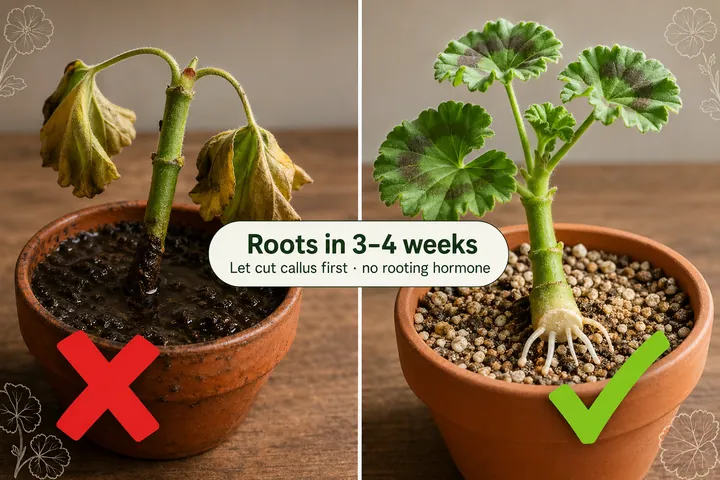
- Roots form in 3-4 weeks; pot up when roots are 2.5 cm (1 in) long.
For more on geranium cuttings see how to propagate geraniums.
Cymbopogon nardus propagates by division. Split the clump in spring or autumn — each division must have several intact roots and several leaf shoots. The same technique as dividing lemongrass; see how to grow lemongrass indoors for related care.
Seed propagation of either species is slow and unreliable; cuttings or division is standard.
Pet safety
Pelargonium ‘citronella’ is toxic to cats and dogs. The ASPCA lists Pelargonium species as toxic; ingestion causes vomiting, anorexia, depression, and dermatitis. Citronella essential oil is also toxic to pets — particularly cats, which lack the liver enzymes (glucuronyl transferase) needed to safely metabolise it. Never use topical citronella products on cats, and keep dilute oils out of reach of dogs.
Cymbopogon nardus is generally non-toxic but is not recommended for grazing or consumption by pets.
If a pet ingests any quantity, call your vet or poison control. For non-toxic alternatives, see cat-safe houseplants and dog-safe houseplants.
Troubleshooting
| Symptom | Likely cause | Fix |
|---|---|---|
| Yellow lower leaves | Overwatering | Allow top 2.5 cm (1 in) to dry; check drainage |
| Leggy, weak stems | Insufficient light | Move to full sun or add grow light |
| No fragrance from leaves | Weak light or wet soil | Improve light and drainage; pinch tips to encourage compact growth |
| White cottony tufts in leaf axils | Mealybugs | Spot-treat with 70% isopropyl alcohol swab |
| Sticky residue, curled new growth | Aphids | Spray with water, repeat; insecticidal soap if persistent |
| Fine webbing under leaves | Spider mites | Raise humidity, rinse foliage, horticultural oil for heavy infestation |
| Black spots on lower leaves | Bacterial leaf spot from wet foliage | Water at base only; remove infected leaves |
| Soft, mushy stem at base | Stem rot from overwatering | Take healthy tip cuttings and discard parent |
| Plant dies after frost | Cold damage | Move indoors before 10°C (50°F) nights |
Related reading
- Lavender plant care — fragrant Mediterranean partner that loves the same hot, free-draining conditions.
- How to grow lemongrass indoors — close relative of true citronella grass with overlapping care needs.
- How to propagate geraniums — the same cutting technique applies to all scented Pelargonium types.
- Cat-safe houseplants — non-toxic options if you’ve got curious pets.
- How to get rid of mealybugs — the most common pest on scented geraniums indoors.
Track summer watering rhythm, lift dates before first frost, and cutting timing with the free Tazart plant care app — the geraniums die fast in a single missed frost, but a five-day overwintering reminder catches them in time.
A note on conditions
Zone, microclimate, container size, and indoor light all change the numbers. The constants: identify your plant first (geranium or grass), full sun, free-draining soil, lift before frost, and don’t expect mosquito repellency from the plant alone. Use proper EPA-registered repellent if biting insects are a real problem. Grow the citronella plant for what it actually is: a fragrant, attractive scented geranium worth a sunny pot on the patio.
Highly recommended
The supplies that make this guide work

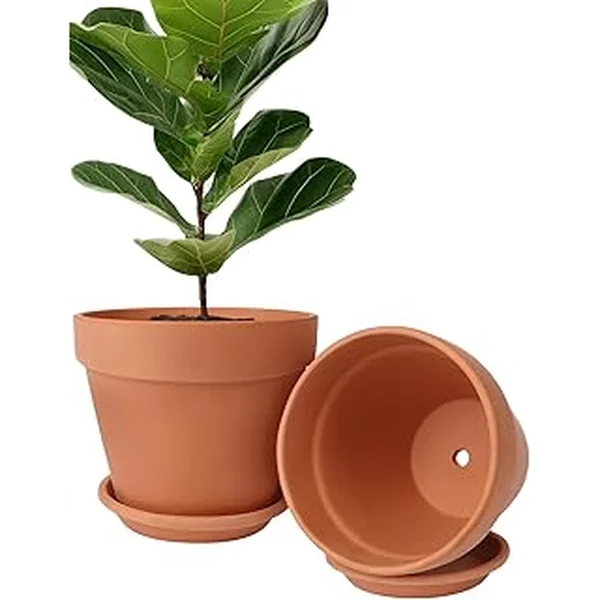
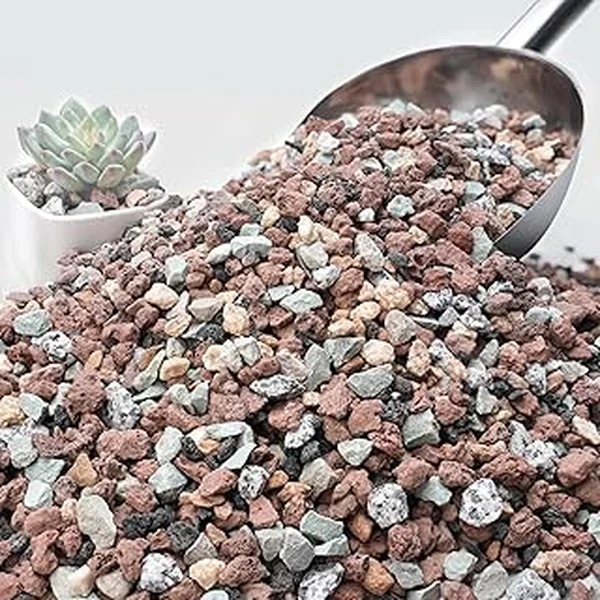
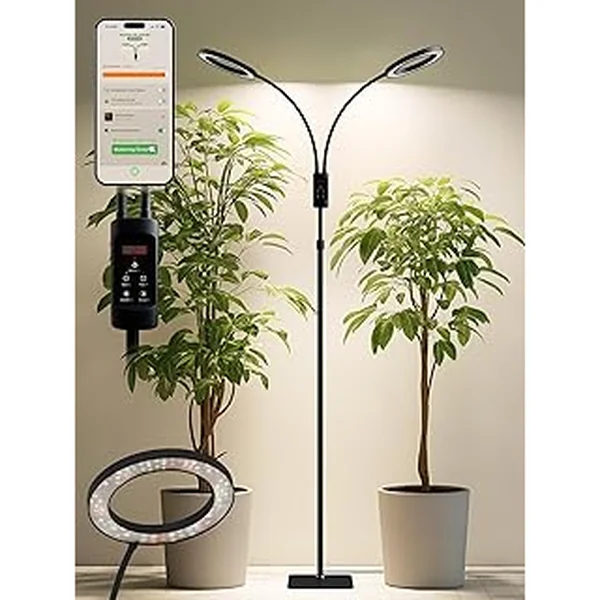
Tazart is an Amazon Associate — we earn from qualifying purchases at no extra cost to you. Thank you for helping us keep these guides free.
Frequently asked questions
Do citronella plants actually repel mosquitoes?
Mostly no — and the marketing is deceptive. The 'citronella plant' sold in garden centres (Pelargonium 'citronella', a scented geranium) only releases citronellal oil when leaves are crushed. Sitting next to an undisturbed plant gives almost no protection. Studies from the University of Guelph found the plant had no measurable effect on mosquito biting rates. The lit citronella candles and oil products do work in still air at close range, but the plant alone is largely cosmetic.
What is the difference between citronella plant and citronella grass?
Two completely different species. 'Citronella plant' usually means Pelargonium 'citronella' — a scented geranium in the Geraniaceae family with lobed leaves and pink flowers. True citronella grass is Cymbopogon nardus — a tall tropical grass in the Poaceae family, source of the commercial citronella oil used in candles. The grass actually contains the active oil; the geranium has only a fraction. Most garden-centre 'mosquito plants' are the geranium, which is why they don't work as advertised.
How much sun does a citronella plant need?
Citronella geraniums need 6+ hours of direct sun for compact growth and strong fragrance. In zones 9-11 they tolerate part shade in hot afternoons. True citronella grass (Cymbopogon nardus) wants full tropical sun — 8+ hours — and warm soil above 21°C (70°F) to grow vigorously. Both go leggy and weak in shade, with weaker oil concentration in the leaves.
Can citronella plants survive winter?
Outdoors only in USDA zones 9-11. In zones 8 and colder, citronella geraniums must come indoors before the first frost. Move container plants to a bright south-facing window, reduce watering, hold off feeding, and accept some leaf drop as a normal response to lower light. They survive at 10-15°C (50-60°F) indoors. True citronella grass is even more cold-sensitive — below 10°C (50°F) damages it.
How do I propagate citronella plants?
Citronella geraniums root easily from softwood cuttings. Take a 10-15 cm (4-6 in) tip cutting in late summer, strip the lower leaves, dip the cut end in rooting hormone, and stick in moist sandy seed-starting mix. Keep at 21°C (70°F) in bright indirect light; roots form in 3-4 weeks. Pot up once roots are 2.5 cm (1 in) long. Citronella grass is divided at the crown — split the clump in spring or fall.
Is the citronella plant safe for pets?
Citronella geraniums (Pelargonium 'citronella') are toxic to cats and dogs — the ASPCA lists Pelargonium as toxic. Ingestion causes vomiting, depression, anorexia, and dermatitis. Citronella essential oil is also toxic, particularly to cats which lack the liver enzymes to metabolise it. Keep plants and oils out of reach of pets, and avoid topical citronella products on cats. Citronella grass (Cymbopogon nardus) is generally non-toxic but still not recommended for grazing.
Can I grow citronella indoors?
Yes, but with caveats. A south-facing window with 6+ hours of direct sun is essential — anything less makes the plant leggy and weak. Use a free-draining cactus or potting mix with 25% perlite. Water when the top 2.5 cm (1 in) of soil is dry; never let it sit wet. Don't expect indoor citronella plants to repel mosquitoes — they need crushed-leaf contact to release oil. Treat them as fragrant houseplants, not pest control.