Edible
Cilantro Plant Care: Stop the Bolting (Complete Grower's Guide)
Cilantro bolts fast in heat — here's the exact planting window, succession schedule, and harvest technique to keep fresh leaves coming all season long.
On this page
- Quick answer
- Why cilantro bolts: the heat trigger
- When to plant cilantro: the cool-season trick
- Light
- Watering
- Soil
- Direct sowing: no transplants
- Succession planting: the only way to have cilantro all season
- Harvesting: cut-and-come-again
- When to let it go to seed: coriander
- Common mistakes
- Troubleshooting
- Watch: understanding why cilantro bolts
- Related reading
- A note on conditions
Watch the visual walkthrough
How to Grow Cilantro...And Stop It From BOLTING!
Get free seeds, shipping, and returns: https://www.epicgardening.com/greenhouse/ Check out more herb guides: ...
Cilantro is the herb everyone wants and almost everyone struggles to keep alive past a few weeks. You sow it, it sprouts beautifully, then the moment summer approaches it throws up a flower stalk, turns fern-like and bitter, and the leaves you actually wanted disappear. It feels like bad luck. It is not.
Bolting is a hardwired survival response to heat and long days — Coriandrum sativum is a cool-season annual that has been setting seed before summer drought since long before anyone grew it in a kitchen garden. Once you understand that trigger, stopping the bolt (or at least staying ahead of it) becomes straightforward: right timing, right temperature, regular harvest, and succession sowing every few weeks.
Quick answer
Sow cilantro directly into its final spot when soil temperature is between 15–22°C (59–72°F) / 60–72°F — early spring or autumn only. Harvest outer leaves at 3–4 weeks. Sow a fresh batch every 2–3 weeks to maintain a continuous supply. Never transplant: cilantro has a taproot that bolts on root disturbance. At 24°C (75°F) / 75°F soil temperature, bolting is inevitable — no watering or fertilizing trick overrides the heat signal.
Why cilantro bolts: the heat trigger
Cilantro is a long-day / warm-temperature detector. When day length increases and soil temperature rises above approximately 24°C (75°F) / 75°F, the plant reads this as “summer is coming — set seed now before you die.” It immediately shifts energy from leaf production to flowering and seed set.
The entire leaf-to-seed cycle from germination takes roughly 90 days — but the plant will compress that timeline as temperatures rise. In a UK summer heat wave, cilantro can go from seedling to flower stalk in under three weeks. In a cool Pacific-coast spring, you might get 6–8 weeks of leaf harvest from a single sowing.
The practical takeaway: bolt resistance is won before the seed goes in the ground, through timing and site choice — not through watering heroics once the bolt has started.
When to plant cilantro: the cool-season trick
Cilantro has two natural growing windows in most climates:
Spring window: Sow 2–4 weeks before your last frost date. The soil is warming up but stays below 22°C (72°F) during the leaf-growth phase. As summer arrives, accept that plants will bolt and switch to your next succession.
Autumn window: Sow 6–8 weeks before your first frost date. Cooling temperatures slow the bolt trigger. Autumn cilantro often lasts longer than spring sowings in warm climates because temperatures move in the right direction (downward).
Year-round in mild climates: In Mediterranean, coastal, or mild-winter climates (USDA zones 9–11), cilantro grows well through the cool season — roughly October through April — and is essentially treated as a winter crop.
Skip: Sowing in late spring or midsummer when soil temperatures are already above 22°C (72°F). The seeds germinate fine, but the seedlings bolt almost immediately.
Light
In cool weather (spring, autumn), cilantro performs best in full sun — 6+ hours of direct light. Good light in cool conditions means faster leaf production and denser growth.
In warm weather or climates where full sun drives soil temperatures above 24°C (75°F) by midday, shift to part shade: 4–5 hours of morning sun with afternoon shade. This is one of the most effective bolt-delay strategies available in warm gardens. A spot on the east side of a taller plant or fence works well.
Indoors, a south- or west-facing window in spring or autumn gives enough light for leaf production. Supplement with a basic grow light if natural light drops below 4 hours.
Watering
Cilantro needs 2–3 cm (0.75–1 in) (about 1 inch) of water per week, delivered consistently. Irregular watering — especially drought stress — is a bolt accelerant.
- Outdoors in cool weather: weekly deep watering is usually enough; rain fills the gap.
- Containers: check the top 2–3 cm (0.75–1 in) of soil daily in warm weather. Pots dry out fast. Water deeply when that top layer is dry, not on a calendar schedule.
- Avoid waterlogging: cilantro has a long taproot that rots in standing water. Every container must have drainage holes.
The goal is consistently moist but never soggy soil. Wilting from heat stress (not drought) is a sign you need more shade, not more water.
Soil
Cilantro is not fussy about soil fertility, but it needs good drainage and a loose, uncompacted structure so the taproot can descend freely.
- pH: 6.2–6.8 is ideal (mildly acidic to neutral)
- Fertility: moderately fertile is fine. Overly rich soil produces lush foliage that is actually slightly more prone to bolting.
- Containers: use a quality all-purpose potting mix. Garden soil compacts in pots and restricts taproot growth — a restricted taproot triggers early bolting.
- Amend poor beds: a single handful of compost worked into the top 10 cm (4 in) is enough.
Direct sowing: no transplants
This is the rule beginners most often break: cilantro does not transplant well and should always be direct sown into its final spot.
If you’re setting up a herb bed alongside cilantro, the cilantro seed sowing guide covers depth, spacing, and succession timing in a quick start-to-harvest format.
The taproot is long, fragile, and highly sensitive to disturbance. Transplanting — even carefully — causes root stress that sends the plant into bolt mode within days. Shop-bought cilantro seedlings in multipacks are almost always bolting within a week of transplanting for exactly this reason.
How to direct sow:
- Prepare a patch or container with loose, moist potting mix or garden soil.
- Scatter seeds (or lightly crush the seed husks to expose the two seeds inside each one — this improves germination speed).
- Cover with 0.5–1 cm (0.25–0.5 in) of soil.
- Water gently and keep moist until germination (7–14 days at 15–20°C (59–68°F)).
- Thin seedlings to 15–20 cm (6–8 inches) spacing once they reach 5 cm (2 in) tall. Do not pull — snip thinnings with scissors to avoid root disturbance in the remaining plants.
Germination is most reliable at 15–20°C (59–68°F) soil temperature. Below 10°C (50°F) it stalls; above 25°C (77°F) germination rate drops.
Succession planting: the only way to have cilantro all season
A single sowing gives you a few weeks of leaves, then it bolts. The solution is not to find a magic bolt-proof trick — it is to sow a new batch every 2–3 weeks through spring and again through autumn.
A simple succession schedule for a temperate climate (e.g., UK, northern Europe, US zones 5–7):
| Sowing | When | Expected leaf harvest window |
|---|---|---|
| Batch 1 | Late March / early April | Late April – mid May |
| Batch 2 | Mid April | Mid May – early June |
| Batch 3 | Early May | Early June – late June |
| Batch 4 | Late August | Late September – October |
| Batch 5 | Mid September | October – November |
You only need a small row or a single 25 cm (10 in) pot per batch. The overhead is low; the payoff is continuous fresh leaves.
Harvesting: cut-and-come-again
Begin harvesting when plants are 3–4 weeks old and reach about 10–15 cm (4–6 in) tall. Do not wait for the plant to be “big enough” — early, regular harvesting is one of the best tools for delaying the bolt.
How to harvest:
- Use small scissors or snip with your fingers.
- Cut outer stems first, leaving the inner growth tip intact.
- Never remove more than one-third of the plant in a single harvest.
- Harvest early in the morning when leaves are most turgid and aromatic.
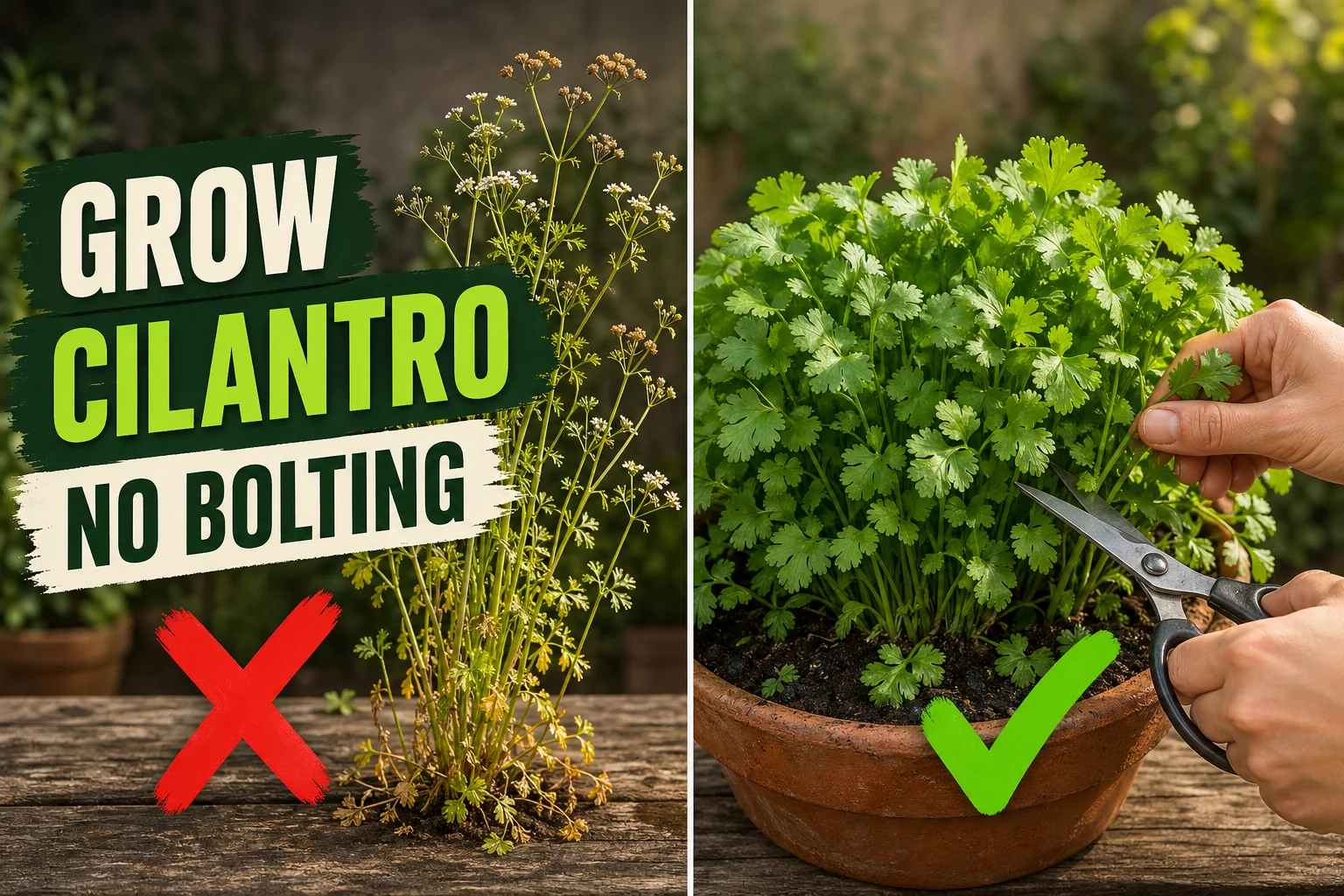
Once you see the central stem elongating rapidly and the leaves becoming fern-like (finely divided, feathery), the bolt has started. At this point, harvest everything you want from that plant — leaves, stems, young flower heads — and sow your next batch.
When to let it go to seed: coriander
A bolted cilantro plant is not a failed plant — it is a spice crop in progress.
The seeds (coriander) develop after the white flowers fade, starting green and ripening to tan/brown. The full seed-to-seed cycle from germination is approximately 90 days.
Harvesting coriander seeds:
- Wait until seeds turn tan-brown and feel dry on the stem.
- Cut the seed heads into a paper bag — the seeds shatter when fully dry.
- Air-dry for 1–2 weeks in a warm spot.
- Store in an airtight jar for cooking, or save a handful for replanting.
Leaving one or two plants to go fully to seed each season also gives you free seeds for next year’s succession sowings.
Common mistakes
-
Sowing too late in spring. Cilantro planted when soil temperature is already above 22°C (72°F) will bolt within 2–3 weeks of germinating. Always check soil temperature, not just air temperature.
-
Transplanting seedlings from pots or modules. Root disturbance from any transplant operation — even the gentlest — triggers bolting. Always direct sow.
-
Shallow containers. A pot less than 15–20 cm (6–8 in) deep restricts the taproot. Restricted taproot = stressed plant = early bolt.
-
Watering too little in hot spells. Drought stress accelerates bolting. Keep soil consistently moist, especially in containers in warm weather.
-
Harvesting too little, too late. Waiting until plants are large before harvesting lets the plant build toward flowering. Harvest regularly from week 3 onwards.
-
Expecting a single sowing to last all summer. No variety is truly summer-proof in hot climates. Succession sowing every 2–3 weeks is the only reliable strategy.
Troubleshooting
| Symptom | Likely cause | Fix |
|---|---|---|
| Plant bolts within 2 weeks of germination | Sown too late — soil already too warm | Pull and resow in autumn; choose a shadier spot or use shade cloth to drop temperature |
| Leggy, pale stems, small leaves | Not enough light | Move to a brighter spot; supplement with a grow light indoors |
| Yellowing lower leaves, soggy soil | Overwatering or poor drainage | Reduce watering frequency; ensure drainage holes; lift the pot on feet for airflow |
| Seeds fail to germinate after 2 weeks | Soil too cold (<10°C (50°F)) or too hot (>25°C (77°F)) | Check soil temp; germinate indoors on a windowsill and transplant at first true leaf (gently, as young as possible) |
| Bitter or soapy flavour intensifies | Plant is past peak — beginning bolt stage | Harvest immediately; sow fresh batch; accept the older plant is shifting to seed production |
| Tiny white flies or aphids on stems | Pest pressure (common in warm, sheltered spots) | Blast with a strong water stream; introduce companion plants like dill or fennel nearby; avoid nitrogen-heavy fertilizing |
Watch: understanding why cilantro bolts
A short visual guide helps make sense of the leaf-to-seed transition. Search YouTube for “why cilantro bolts and how to prevent it” from a credible kitchen garden channel (Gardener’s World, Epic Tomatoes, or Veggie Garden Remix are reliable sources). Watching the physical difference between a healthy leafy plant and an early-bolt plant helps you catch the transition faster in your own garden.
Related reading
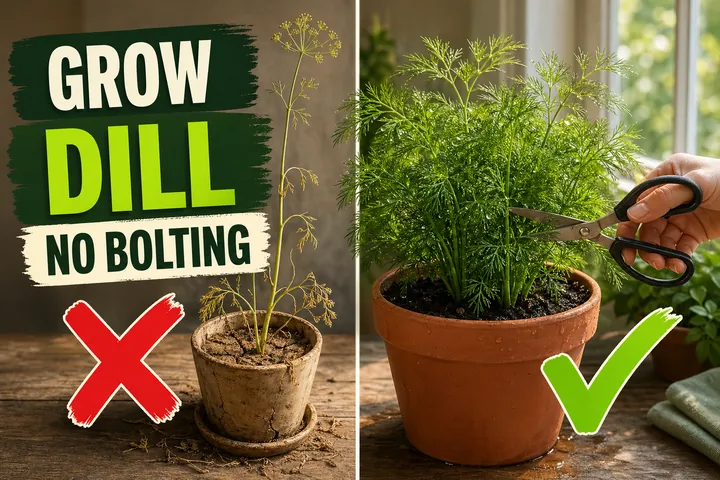
- How to plant garlic cloves the right way — garlic and cilantro share the same cool-season planting window and work well as companion crops.
- How far apart to plant jalapeños — if you are growing a salsa garden, cilantro and jalapeños are natural companions; this guide covers pepper spacing.
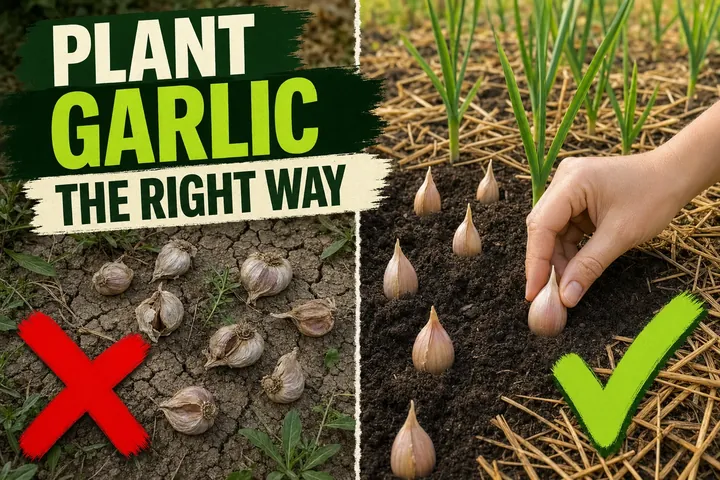
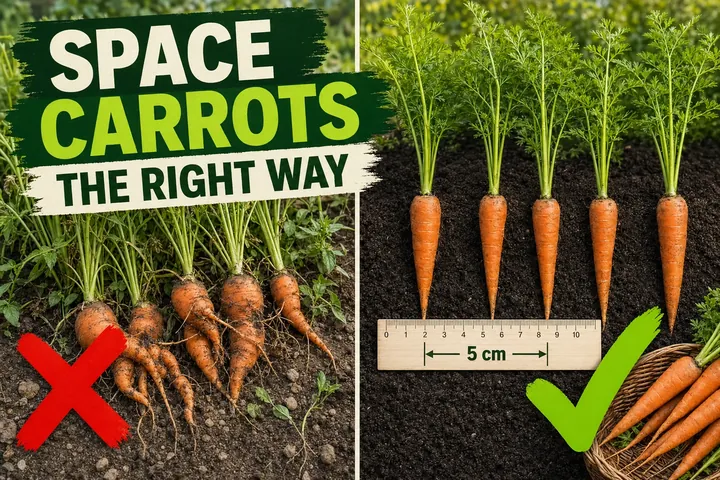
- How far apart to plant carrots — cilantro is a well-known carrot companion plant; get the spacing right for both in a raised bed.
- How to take care of a rosemary plant without killing it — another Mediterranean culinary herb where temperature, soil drainage, and timing make or break the plant.
- How to grow chives (hardy perennial herb) — chives are a perennial herb that comes back every year and pairs beautifully with cilantro in cool-season plantings.
- Track your cilantro succession sowing dates with the free Tazart plant care app — set a repeating reminder every 2–3 weeks and it will ping you on exactly the right day to sow the next batch.
A note on conditions
Every garden is different. Soil temperature, local microclimate, pot size, sun exposure, and seasonal weather all affect how fast cilantro grows and when it bolts. The numbers in this guide (15–22°C (59–72°F) soil temp, 2–3 cm (0.75–1 in) water per week, harvest at 3–4 weeks) are reliable starting points — use them to calibrate, then adjust based on what your plants actually do in the second and third week. That feedback loop is how real growers stay ahead of the bolt.
Highly recommended
The supplies that make this guide work
Tazart is an Amazon Associate — we earn from qualifying purchases at no extra cost to you. Thank you for helping us keep these guides free.
Frequently asked questions
Why does my cilantro bolt so fast?
Cilantro bolts (sends up flower stalks and stops producing leaves) the moment soil temperature climbs above 24°C (75°F) / 75°F. It is a cool-season annual hardwired to set seed before summer heat kills it. Poor timing — planting too late in spring or into summer — is the #1 cause. Sow in early spring or autumn when soil temps stay between 15–22°C (59–72°F) / 60–72°F and you will get weeks of leaf harvest before the bolt trigger fires.
How do I stop cilantro from bolting?
You cannot fully prevent bolting — it is a genetic response to heat and day length. But you can delay it significantly: (1) plant in cool weather (spring or autumn), (2) choose bolt-resistant varieties like 'Leisure' or 'Slo-bolt', (3) give part-shade in warm climates, (4) harvest regularly to slow the plant's reproductive drive, and (5) sow new batches every 2–3 weeks so you always have young plants at the leaf stage.
When should I plant cilantro?
Direct sow 2–4 weeks before your last frost date in spring, or 6–8 weeks before your first frost in autumn. Cilantro prefers soil temperatures of 15–22°C (59–72°F) / 60–72°F. Avoid planting when daytime temperatures are consistently above 27°C (81°F) / 80°F — the seeds still germinate but the plants bolt within days of establishing.
How often should I water cilantro?
Cilantro needs about 2–3 cm (0.75–1 in) (1 inch) of water per week. Water when the top 2–3 cm (0.75–1 in) of soil dries out, then water deeply so moisture reaches the taproot. In containers, check daily in summer — pots dry out fast and drought stress accelerates bolting.
Can I grow cilantro in a pot?
Yes, but choose a pot at least 20–25 cm (8–10 inches) wide and deep. Cilantro has a long taproot that resents being cramped or disturbed — a shallow container causes early bolting. Use good-quality potting mix, keep it in a cool bright spot, and harvest the outer leaves regularly to extend the leaf-production window.
What is the difference between cilantro and coriander?
They are the same plant, Coriandrum sativum. 'Cilantro' refers to the fresh green leaves (and sometimes the stems), while 'coriander' refers to the dried seeds. When the plant bolts and sets seed, those seeds are harvested as coriander spice — so a bolted cilantro plant is not wasted, it just shifts from leaf herb to spice crop.