Houseplants
Christmas Cactus Care (Get It Blooming Every December)
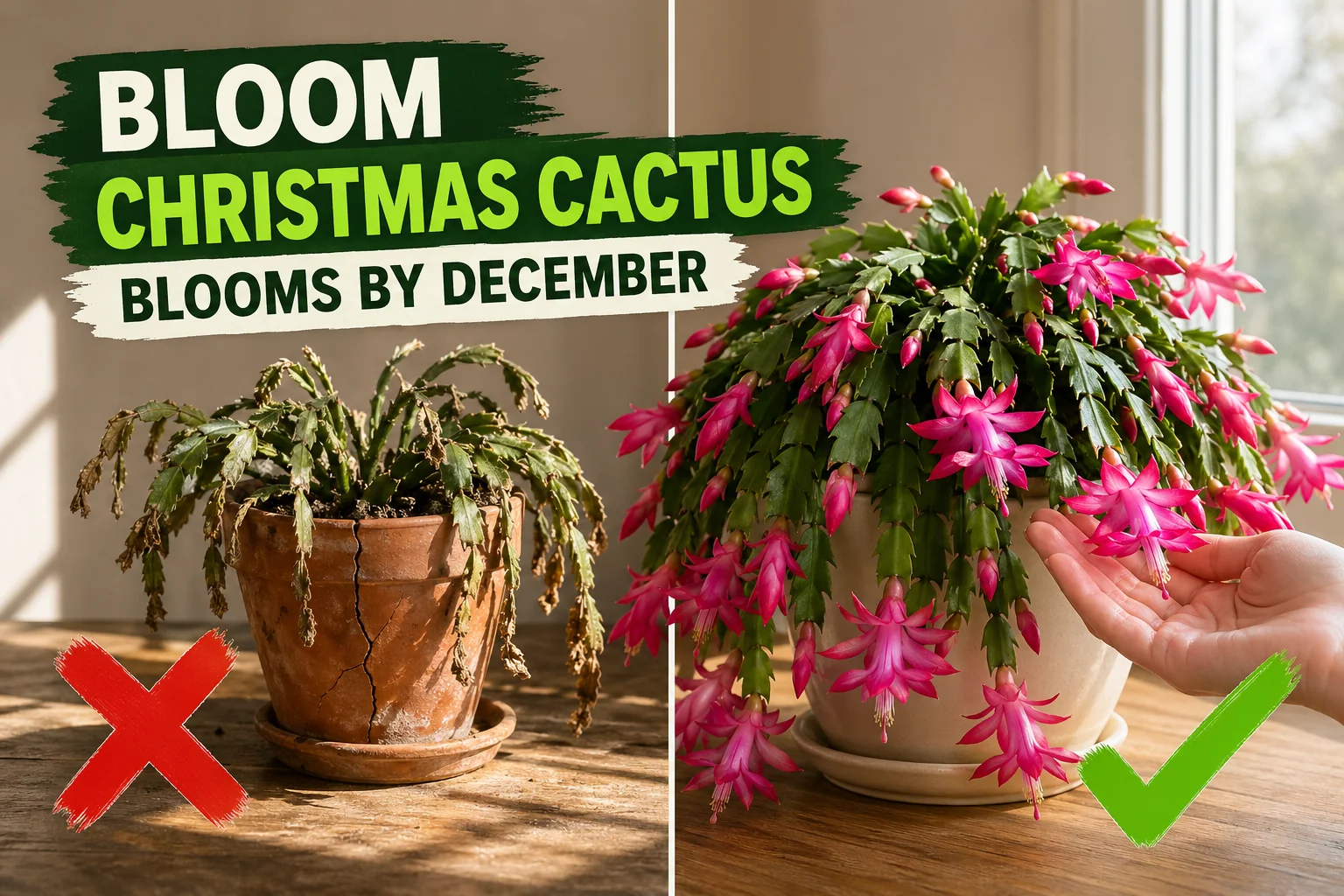
Christmas cactus care made simple — light, water, and the 6-week dark-and-cool trick that forces Schlumbergera into a heavy bloom every December, year after year.
On this page
- Quick answer
- Christmas cactus, Thanksgiving cactus, Easter cactus — what you actually have
- Why it isn’t a real cactus (and why that changes everything)
- What you’ll need
- Light: bright but never direct
- Water: between desert and tropical
- Soil and pot
- Temperature and humidity
- Fertilizing
- How to make a Christmas cactus bloom (the 6-week cool-and-dark trick)
- Pruning and propagation
- Common mistakes to avoid
- Troubleshooting
- Watch: Christmas cactus care and rebloom walkthrough
- Christmas cactus care checklist
- Related reading
- A note on conditions
Watch the visual walkthrough
How to Care for Christmas Cactus 🌵🎄 // Garden Answer
LINKS Espoma Cactus Mix - http://amzn.to/2Afc0Vs Espoma Cactus Fertilizer - http://amzn.to/2C7flaa MORE LINKS Video ...
A Christmas cactus is one of the most rewarding houseplants you can own — bought once, it can bloom every December for 30 or 40 years. The catch is that almost everyone treats it like a desert cactus, which is why so many sit green and bloomless on windowsills. It isn’t a desert plant at all. It’s a tropical epiphyte from the cloud forests of southeast Brazil, and once you treat it that way, it gets very easy.
This guide covers everything: where to put it, how often to water, how to feed it, how to tell it apart from its lookalike cousins, and exactly how to force it to bloom for the holidays.
Quick answer
Give your Christmas cactus bright indirect light, water only when the top 2–3 cm (1 in) of soil is dry, and use a chunky cactus or orchid mix in a pot with drainage. To trigger blooms by December, give it 12–14 hours of complete darkness and cool nights of 10–15°C (50–59°F) per day for 6 weeks, starting in early October — buds appear 3–4 weeks after the dark treatment ends.
Christmas cactus, Thanksgiving cactus, Easter cactus — what you actually have
Three different plants are sold in supermarkets every winter under nearly identical labels. Care is similar, but the bloom time is not — so it matters which one you own.
| Common name | Botanical name | Stem segments | Bloom time |
|---|---|---|---|
| Christmas cactus | Schlumbergera × buckleyi | Rounded, scalloped edges | Mid- to late December |
| Thanksgiving cactus | Schlumbergera truncata | Sharp, pointed, claw-like | Late November |
| Easter cactus | Hatiora gaertneri (a.k.a. Rhipsalidopsis) | Soft round segments, bristles | Mid-March to April |
If your “Christmas” cactus blooms in November, it’s almost certainly a Thanksgiving cactus. The good news: every care step in this guide applies to all three.
Why it isn’t a real cactus (and why that changes everything)
Schlumbergera × buckleyi is a Brazilian rainforest epiphyte. In the wild it grows on mossy tree branches and rocky outcrops at 700–1,800 m (2,300–5,900 ft) in the Serra dos Órgãos mountains, drinking from passing mist and rain. It is not a desert cactus and was never adapted to drought, full sun, or sandy soil.
That single fact explains every common mistake:
- It scorches in direct south-window sun (it’s a shade plant)
- It rots in dry sandy “cactus mix” sold for desert succulents (use a chunky bark-rich mix)
- It drops leaves when the soil bone-dries between waterings (it’s used to constant moisture)
- It blooms when nights get long and cool (its rainforest winter)
Treat it like an orchid or a forest fern with thicker leaves, and you’re 90% of the way there.
What you’ll need
- A 12–15 cm (5–6 in) pot with a drainage hole (Christmas cactus likes to be slightly root-bound)
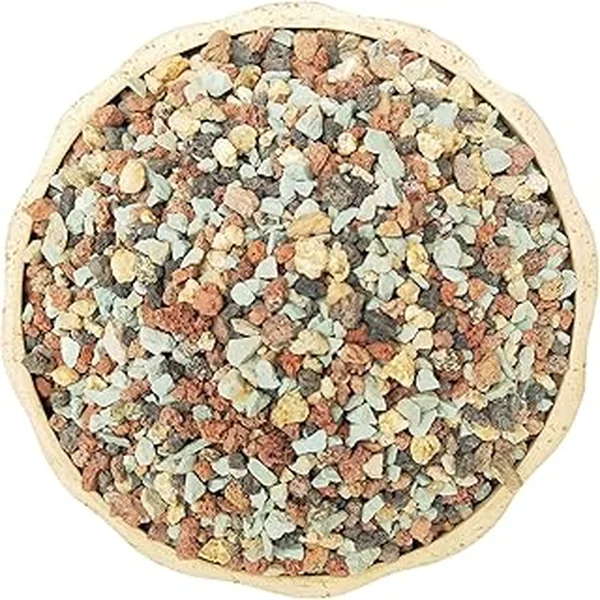
- A chunky well-draining mix — half potting soil, half orchid bark or perlite, OR a bagged cactus and succulent mix loosened with extra perlite
- An east- or north-facing window, or a south/west window with a sheer curtain
- A watering can with a narrow spout
- Sharp clean snips for pruning
- Optional: bloom-booster fertilizer for late summer
- Optional: a closet or blackout cover for the 6-week dark treatment in October
Light: bright but never direct
Christmas cactus wants bright indirect light — think the dappled forest floor it came from. The right spot:
- Indoors: east- or north-facing window year-round
- South or west window: only with a sheer curtain or 1 m (3 ft) back from the glass
- Outdoors: full shade or dappled shade only, never direct afternoon sun
Signs the light is right: stem segments stay deep glossy green and tight against each other. Signs it’s wrong: red or purple tinge on the edges (too much sun) or stretched, pale, floppy stems (too little).
A short summer holiday outside in deep shade is great — the temperature swing primes it for fall bud set.
Water: between desert and tropical
This is where most owners go wrong. Christmas cactus does not want bone-dry soil and it does not want soggy soil. The rule is simple: water when the top 2–3 cm (1 in) of soil is dry, soak deeply, and let the excess drain away.
Practical schedule:
- Spring and summer (active growth): every 7–10 days
- Early fall (bud set): every 10–14 days
- Late fall and bloom (buds and flowers): every 7–10 days, more if blooming heavily
- After blooming, deep winter rest: every 2–3 weeks
Always finger-test first. Push your finger 2 cm (1 in) into the soil. If you feel any moisture, wait. If it’s dry, water until you see drips from the drainage hole, then empty the saucer 10 minutes later — standing water is the #1 killer of Christmas cactus.
A free plant care app like Tazart can hold the watering schedule for you, adjust it for your local weather, and ping you when it’s time — useful when you have a few houseplants on different routines.
Soil and pot
Use a chunky well-draining mix. The roots are fine and shallow and need oxygen between waterings. Two good options:
- 1 part standard potting mix + 1 part orchid bark + 1 part perlite
- A bagged cactus mix loosened with another 30% perlite
The pot should be 12–15 cm (5–6 in) wide with a drainage hole. Christmas cactus blooms more reliably when slightly root-bound, so don’t rush to repot. Once every 3–4 years, in spring after the bloom show is over, is plenty.
Temperature and humidity
- Ideal day: 18–22°C (65–72°F)
- Ideal night during bud set: 10–15°C (50–59°F)
- Hard low: brief dips to 4°C (40°F) are tolerated, but never freezing
- Average household humidity (40–60%) is fine
Christmas cactus does not need misting. Wet segments invite fungal spots. If your home is very dry in winter, a pebble tray under the pot is plenty.
Fertilizing
Feed monthly with a half-strength balanced houseplant fertilizer from April through August. Switch to a half-strength bloom-booster (high phosphorus) in late August and September to fuel bud development. Stop feeding entirely in October and through the bloom — the plant doesn’t want a nitrogen push when it’s trying to flower.
Resume light feeding in spring once new segments appear at the stem tips.
How to make a Christmas cactus bloom (the 6-week cool-and-dark trick)
Christmas cactus is photoperiodic and thermoperiodic — it needs both long nights AND cool temperatures to set buds. Modern centrally heated homes with lamps on all evening confuse both signals at once, which is why most Christmas cacti never bloom after the first season.
The fix is six weeks of long, cool nights starting around early October. Buds appear about 3–4 weeks after the trigger period, so 6 weeks of treatment + 3 weeks of waiting = roughly 9 weeks total, which lands the bloom right in mid-December.
The routine
- Pick your start date. For mid-December blooms, start the routine on the first weekend of October.
- During the day (10 hours), keep the plant in its normal bright indirect spot.
- Each evening at 6 pm, give the plant 12–14 hours of complete darkness until 8 am the next morning. Options:
- A spare-room closet that no one opens at night
- A cardboard box flipped over the plant in a quiet dark room
- A blackout grow tent or plant cover
- Keep the room cool overnight — 10–15°C (50–59°F). An unheated spare bedroom, a cool basement, or a porch (above freezing) all work.
- Water sparingly during these 6 weeks — about every 14 days — and skip fertilizer.
- After 6 full weeks, return the plant to its normal bright window and resume light watering.
- Buds appear 3–4 weeks later, swelling at the segment tips. Resume half-strength bloom feed once colour shows.
Why “complete” darkness matters
Even a brief light hit at night — a hallway lamp, a streetlight, a 30-second closet check, a phone flashlight — resets the plant’s internal clock and breaks the bud-set signal. If your dark routine isn’t producing buds, this is almost always why. Tape the closet door, or use a covered plant somewhere genuinely lightless.
Once buds form, do not move the plant
Christmas cactus is famous for bud drop. Once buds appear, leave the plant exactly where it is until the flowers are open. A change in light angle, temperature, or humidity is enough to make every bud fall off in 48 hours. Even rotating the pot can cause it. Resist the urge to put it on the dining table for dinner guests until after it’s fully open.
Pruning and propagation
After the bloom show finishes (usually late January), trim back any leggy stems by 1–2 segments. Use clean sharp snips and twist gently at the joint between segments — the segment pops off cleanly without crushing.
Don’t throw the trimmings away. Christmas cactus is one of the easiest plants to propagate:
- Let the cut end callous over for 2–3 days on a paper towel
- Push the calloused end 1 cm (0.5 in) into a pot of barely damp cactus mix
- Keep in bright indirect light
- Roots form in 3–4 weeks; new growth signals success around week 6
A single cutting becomes a flowering plant in 2–3 years. Heirloom Christmas cacti are passed down generations this way — most “100-year-old grandmother’s plants” are actually rooted cuttings of an original from the 1900s.
Common mistakes to avoid
- Treating it like a desert cactus. Sandy mix, full sun, and drying out completely will kill it within a season. It’s a rainforest plant.
- South-window sun. Bleaches the segments to a sad red-purple and scorches the edges brown.
- Watering on a fixed weekly schedule. Always finger-test the top 2–3 cm (1 in) first.
- Repotting too often. Christmas cactus blooms more when slightly root-bound. Every 3–4 years is plenty.
- Moving the plant after buds form. Almost every “all my buds fell off” story traces back to this. Pick a final spot before the buds appear.
- Skipping the cool nights. Without 10–15°C (50–59°F) overnight in October, the dark trick alone often isn’t enough. Both signals are needed.
- Heavy nitrogen feed in fall. Pushes leaves at the expense of flowers. Switch to bloom feed in late summer, then stop.
Troubleshooting
| Symptom | Likely cause | Fix |
|---|---|---|
| Segments dropping in chains, soft stem base | Overwatering / root rot | Stop watering, unpot, trim mushy roots, repot in dry chunky mix; resume only when top 2–3 cm (1 in) is dry |
| Segments wrinkled, papery, limp | Underwatering | Soak the pot in a bowl of water for 15 minutes, drain fully — segments plump up overnight |
| Red or purple tinge on segment edges | Too much direct sun | Move 1 m (3 ft) back from a south window, or shift to an east or north window |
| Pale, stretched, floppy growth | Not enough light | Move closer to a bright indirect window; supplement with a small grow light in winter |
| All buds drop before opening | Plant moved, draft, or temperature swing | Return to original spot; don’t relocate once buds form; keep nights above 13°C (55°F) once in bloom |
| Plant green and healthy but never blooms | No long-night + cool-night trigger | Run the 6-week 12–14 hour dark + 10–15°C (50–59°F) night routine starting in October |
| Brown crispy spots on segments | Sunburn or fungal spotting | Move out of direct sun; water only at the soil line, never overhead |
| Tiny black flying insects in soil | Fungus gnats from soggy soil | Let soil dry to depth; top with a 1 cm (0.5 in) layer of dry sand or use BTI granules |
| White cottony tufts in stem joints | Mealybugs | Dab each tuft with a cotton swab dipped in 70% isopropyl alcohol; repeat weekly until clear |
Watch: Christmas cactus care and rebloom walkthrough
A short visual walkthrough pairs well with the steps above. If you’re a visual learner, search YouTube for Christmas cactus rebloom long nights cool temperatures and pick a clip that shows the October closet routine — then come back here for exact watering, feeding, and timing numbers.
Christmas cactus care checklist
- East or north window with bright indirect light (no direct afternoon sun)
- 12–15 cm (5–6 in) pot with drainage; chunky cactus + bark + perlite mix
- Water when top 2–3 cm (1 in) of soil is dry; never let it sit in water
- Half-strength balanced fertilizer monthly April–August; switch to bloom feed September; stop in October
- Day temps 18–22°C (65–72°F); aim for 10–15°C (50–59°F) nights from October onwards
- 12–14 hours of complete darkness from early October for 6 weeks
- Don’t move the plant once buds form
- Repot only every 3–4 years, in spring after blooming
Related reading
- How to care for an aloe vera plant — the desert cousin Christmas cactus is often confused with, and the watering rules that don’t apply.
- Donkey tail plant care — another epiphytic-style trailing succulent with similar light and pot needs.
- Pothos plant care — same bright-indirect-light rule for a forgiving beginner houseplant to pair with your Christmas cactus.
- Set up a watering schedule for your Christmas cactus in the free Tazart plant care app and ask Dr. Afrao when bud-set season starts in your climate.
A note on conditions
Every home is different. Light, pot size, soil mix, season, humidity, and your local weather all change how fast a Christmas cactus grows and how reliably it blooms. Use the steps above as a starting point and adjust based on what your plant actually does in week two — that’s how every good plant grower learns.
Highly recommended
The supplies that make this guide work


Tazart is an Amazon Associate — we earn from qualifying purchases at no extra cost to you. Thank you for helping us keep these guides free.
Frequently asked questions
How do you take care of a Christmas cactus?
Treat it like a tropical rainforest plant, not a desert cactus. Give it bright indirect light, water when the top 2–3 cm (1 in) of soil is dry, use a chunky well-draining mix, and keep it in normal household humidity. Feed monthly with a half-strength balanced fertilizer from spring through early fall, then back off in October to trigger buds.
How do you get a Christmas cactus to bloom?
Christmas cactus is photoperiodic — it sets buds when nights are long and temperatures drop. Starting 6 weeks before you want flowers, give it 12–14 hours of complete darkness and cool nights of 10–15°C (50–59°F) per day. After 6 weeks, return it to a normal bright spot. Buds appear in 3–4 weeks and open right around mid-December.
How often should I water my Christmas cactus?
Roughly every 7–14 days indoors during active growth, but always check the soil first. The top 2–3 cm (1 in) of soil should feel dry before you water again. In autumn during the bud-set period, stretch it to every 2–3 weeks. Christmas cactus rots fast in soggy soil but doesn't survive long droughts either — it sits between desert cactus and a typical houseplant.
Does a Christmas cactus need full sun?
No — direct hot sun bleaches and scorches the segments. It evolved on mossy tree branches in shaded Brazilian cloud forests, so it wants bright indirect light. East- or north-facing windows are ideal indoors. A south- or west-facing window works only with a sheer curtain to soften the afternoon sun.
Why is my Christmas cactus dropping leaves?
Almost always one of three causes: (1) overwatering — the roots are rotting, segments fall off in chains; (2) sudden temperature swing — moving the plant from a warm room to a cold draft; (3) a heavy bud set on a stressed plant — it sheds segments to save energy. Check the soil first. If it's wet and the lower stem is soft, repot into dry mix and trim the rot.
Is a Christmas cactus the same as a Thanksgiving cactus?
No. They look almost identical and care is the same, but they're different species. Christmas cactus (Schlumbergera × buckleyi) has rounded, scalloped stem segments and blooms mid-December. Thanksgiving cactus (Schlumbergera truncata) has sharp pointed claw-like segments and blooms in November. Easter cactus (Hatiora gaertneri or Rhipsalidopsis) is a separate genus altogether and blooms in spring.
How long do Christmas cactus blooms last?
Each individual flower lasts 5–7 days, and a healthy plant opens waves of buds over 4–8 weeks. Cooler rooms (16–18°C / 60–65°F) extend the bloom; warm rooms above 22°C (72°F) shorten it. Avoid moving the plant once buds form — even a small relocation can cause bud drop.