Flowers
Chinese Lantern Plant Care (Physalis alkekengi): Full Growing Guide
Learn how to grow Chinese lantern plants for their iconic orange pods. Includes invasive spread control, toxicity warnings, watering, soil, and drying tips.
On this page
- Invasive spread and toxicity — safety first
- Quick answer
- Where to plant: containers vs garden beds
- Light requirements
- Watering
- Soil
- Sowing from seed
- Care through the seasons
- Harvesting and drying the lanterns
- Controlling spread
- Common mistakes
- Troubleshooting
- Watch: Chinese lantern plant care
- Related reading
- A note on conditions
Watch the visual walkthrough
Abutilon Flowering Maple (aka Chinese Lantern) - Overview of Care, Propagation, and Problems
The abutilon has a papery crepe-like look in the shape of an umbrella or a Chinese lantern, full of color and surrounded by vibrant ...
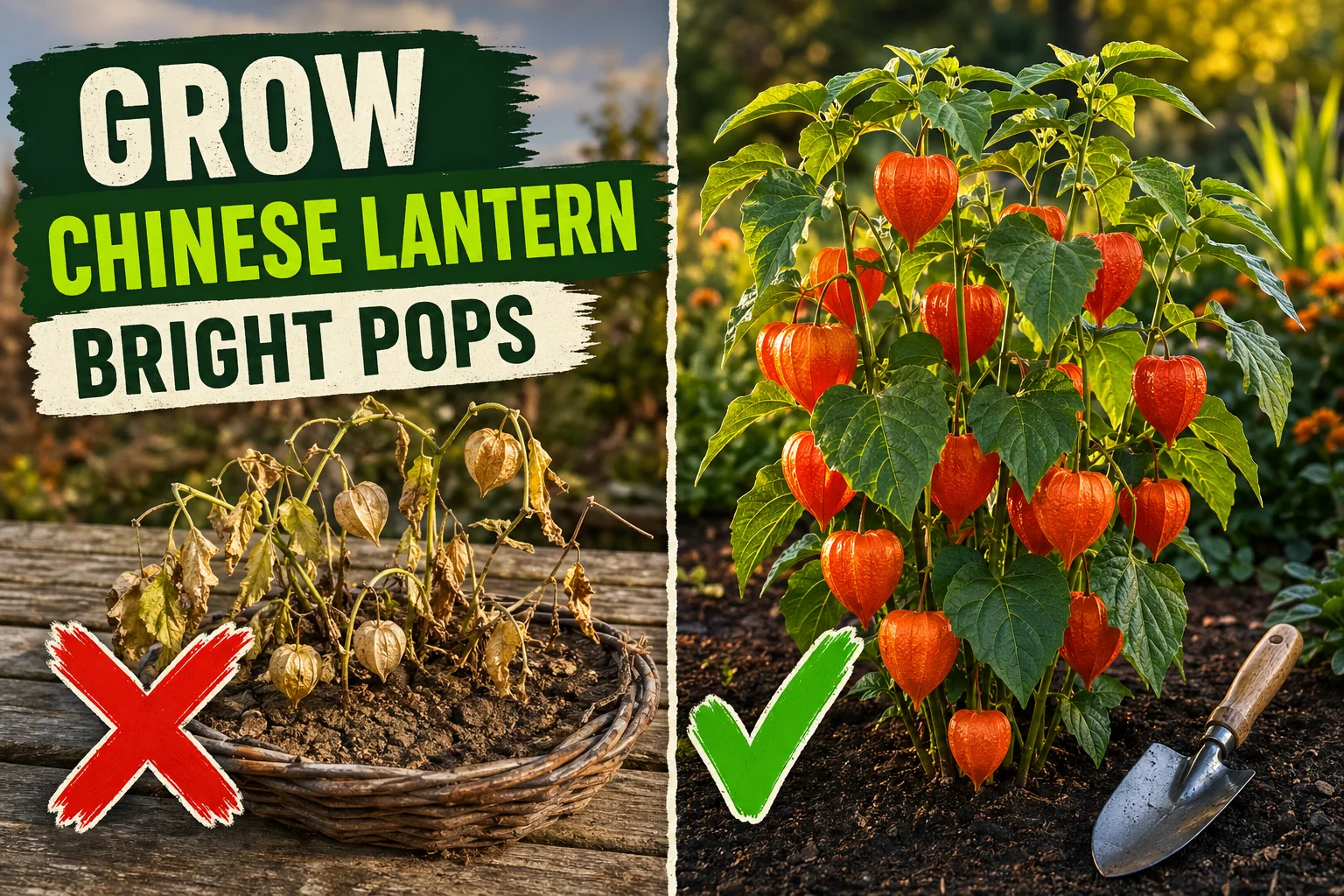
Chinese lantern plants (Physalis alkekengi) are one of the most visually striking perennials in the autumn garden. Their papery, bright orange calyx pods — shaped like small paper lanterns — glow like embers on bare stems and make spectacular dried arrangements that last through winter indoors.
But before you plant them, there are two important things every grower needs to know: this species is aggressively invasive via underground rhizomes, capable of taking over a garden bed within a few seasons; and the unripe berries, leaves, and stems are toxic, containing solanine — the same compound found in nightshade. Grow it with your eyes open, contain it properly, and it rewards you with a unique autumn display unlike anything else in the garden.
Invasive spread and toxicity — safety first
Spread: Physalis alkekengi sends out horizontal underground rhizomes that emerge as new shoots often metres away from the parent plant. It also self-seeds freely. In the UK, parts of Europe, and several US states, it is considered an invasive species. Never plant it directly into an open bed without a physical root barrier at least 30 cm (12 in) deep, or plant exclusively in containers.
Toxicity: The green (unripe) berries, all foliage, and the stems contain solanine and related glycoalkaloids. Symptoms of ingestion include nausea, vomiting, stomach cramps, and in larger quantities, more serious effects. Only fully ripe orange berries inside mature, fully orange lantern husks are considered edible in culinary traditions — but the ornamental species is not typically grown for eating. Keep children and pets away from the plant, and wash hands after handling it. Wear gloves when pruning.
Quick answer
Plant Chinese lanterns in a container or rhizome-barriered bed in full sun (6+ hours), in well-draining loamy soil. Water 2–3 cm (0.75–1 in) per week. They grow to 60–80 cm (24–31 in), flower in summer with small white blooms, and the iconic orange papery pods ripen in late summer to early autumn. Hardy to −30 °C (-22°F) (USDA zones 3–9). Always contain rhizomes — this plant spreads aggressively.
Where to plant: containers vs garden beds
Containers (recommended): The simplest way to enjoy Chinese lanterns without regret. Use a large, heavy pot — at least 30–40 cm (12–16 in) wide and deep. Fill with good-quality loamy potting compost. Sit the pot on a hard surface such as paving stones so rhizomes cannot escape through drainage holes into the soil below. Repot every two to three years as the rhizomes fill the container.
Garden beds: Possible, but requires containment. Dig a trench around the planting area and line it with solid root barrier fabric or heavy-duty plastic sheeting buried at least 30 cm (12 in) deep. Check the barrier every spring for any rhizomes that have escaped underneath. Remove all seed heads before they drop in autumn to prevent self-seeding beyond the barrier.
Avoid planting near boundaries with neighbours or near naturalistic or wild garden areas where spread would be impossible to manage.
Light requirements
Chinese lantern plants need full sun — at least 6 hours of direct sunlight per day. In full sun they produce the most pods, deepest orange colour, and sturdiest stems.
They tolerate partial shade (3–5 hours of sun), but pod production drops significantly and stems become floppy. Avoid deep shade — in heavy shade they produce almost no pods and become sprawling and weak.
In the hottest climates (USDA zones 8–9), afternoon shade during the peak summer heat can prevent leaf scorch. Zones 3–7 — give them as much sun as possible.
Watering
Aim for 2–3 cm (0.75–1 in) of water per week, including rainfall. Chinese lanterns prefer consistently moist but not waterlogged soil. In containers, check the top 2–3 cm (0.75–1 in) of compost — water when it feels dry to the touch. In garden beds, established plants are reasonably drought tolerant once the rhizomes are mature, but consistent moisture during the pod-forming period (summer) improves pod size and colour.
Overwatering signs: yellowing lower leaves, mushy stems at the base, grey mould on pods. Underwatering signs: wilting in the heat of the day that does not recover in the evening, pods that shrivel before turning fully orange, leaf drop.
Reduce watering significantly in late autumn and winter — the plants die back to ground level and rhizomes are dormant. Container plants in a very wet autumn can rot at this stage if drainage is poor.
Soil
Chinese lanterns perform best in well-draining, moderately fertile loamy soil. They tolerate sandy and clay soils if amended, but waterlogged heavy clay will cause rhizome rot.
Ideal soil profile:
- Good drainage (no standing water after rain)
- Neutral to mildly alkaline pH (6.5–7.5)
- Moderate organic matter — dig in compost at planting, not high-nitrogen fertiliser
- Avoid over-rich soils — excess nitrogen produces lush foliage at the expense of pods
In containers, a standard well-draining potting compost mixed with 20% perlite or grit works well.
Sowing from seed
Chinese lanterns can be grown from seed, though division of rhizomes is more reliable for guaranteed plants.
Seed starting indoors (recommended for zones 3–6):
- Start seeds 8–10 weeks before your last frost date.
- Sow 5 mm deep in moist seed compost. Do not cover completely — seeds need some light to germinate.
- Keep at 18–22 °C (64–72°F). Germination takes 14–21 days.
- Pot on to 9 cm (3.5 in) pots once seedlings have two true leaves.
- Harden off outdoors for 7–10 days before transplanting after the last frost.
Direct sowing outdoors: Sow after the last frost date, 15–25 cm (6–10 in) spacing. Germination is slower and less reliable than indoor starts.
Rhizome division (easier): In spring, dig up a section of rhizome with at least one bud, replant 5–8 cm (2–3 in) deep. New shoots emerge within 2–3 weeks.
Care through the seasons
Spring: New shoots push up from the rhizomes as temperatures rise above 10 °C (50°F). Check containment barriers now — any escaping runners are easiest to remove before they establish. Apply a thin layer of garden compost around the base. In containers, check if repotting is needed.
Summer: Peak growth. Stems reach full height (60–80 cm (24–31 in)). Small white star-shaped flowers appear on the stems — these are inconspicuous but are the precursor to the lanterns. Keep watering consistently (2–3 cm (0.75–1 in) per week). No deadheading needed — every flower can become a pod. Stake taller plants if they are exposed to strong wind.
Early–mid autumn: The papery calyx husks inflate and turn bright orange — this is the payoff moment. Stop fertilising. Begin reducing watering. Harvest pods for drying arrangements before the first hard frost, or leave on the plant for a few more weeks of garden display.
Late autumn/winter: Stems die back after the first frost. Cut dead stems back to ground level. Mulch containers lightly in zones 3–5. The rhizomes are very cold-hardy — Physalis alkekengi survives down to −30 °C (-22°F), making it reliably perennial across USDA zones 3–9.
Harvesting and drying the lanterns
The pods are most dramatic as dried indoor decorations — and harvest timing is critical to getting the best result.
When to harvest: Cut stems when the majority of pods on that stem have turned fully, uniformly orange. Green-tipped pods will not ripen further once cut. Aim for late summer to mid-autumn.
How to harvest: Cut stems low, about 10–15 cm (4–6 in) from the base, using clean sharp secateurs. Leave at least some stems on the plant to continue photosynthesising and feeding the rhizomes for next year.
Drying method:
- Strip the leaves from the stem — they will go mouldy during drying and will not dry attractively.
- Tie stems in small loose bundles of 5–7 stems.
- Hang upside down in a cool, dark, well-ventilated room.
- Allow 3–4 weeks to dry fully. The orange colour intensifies slightly as moisture leaves the calyx.
- Once dry, the pods are fragile — handle gently. Display in vases, wreaths, or dried arrangements away from direct sunlight to preserve colour.
Skeleton lanterns: If pods are left on the plant past full ripeness or allowed to weather through autumn rain, the outer calyx slowly decays to reveal the delicate inner skeleton — a mesh of fine veins holding the berry. These are equally sought-after for botanical arrangements.
Controlling spread
This deserves its own section because it is the primary management challenge with Physalis alkekengi.
Annual spring patrol: Walk the entire perimeter of where you planted — and a metre beyond. Pull any new shoots that emerge outside your containment zone. Pull the entire rhizome runner, not just the shoot above ground — severed runners produce multiple new plants.
Autumn seed removal: Before pods fully dry and drop seeds, remove all fallen lanterns from the ground and dispose of them in general waste (not compost). One plant can produce dozens of pods, each containing viable seeds.
Barrier maintenance: Check any buried root barriers for damage or gaps each spring. Rhizomes will find the smallest gap over time.
Container discipline: Never let a container plant sit directly on soil. Hard standing only. If you move the pot, check under it — rhizomes sometimes attempt escape through drainage holes into the ground below even within a season.
If you discover an established colony that has escaped containment, systematic removal takes multiple seasons. Dig out as much rhizome as possible each spring before new growth emerges; do not compost the rhizomes — bag and bin them.
Common mistakes
-
Planting directly in an open bed without barriers. The most common regret with this plant. Even gardeners who know about the spreading habit underestimate it. Containment from day one is non-negotiable.
-
Assuming unripe pods are safe. Green or part-ripe berries contain solanine. Never eat anything from this plant unless the pod is fully orange and the berry inside is ripe red-orange. When in doubt, treat it as ornamental only.
-
Harvesting pods too early. Cutting stems while pods are still partly green means they will not ripen further and will shrivel to an unattractive pale cream rather than bright orange.
-
Leaving foliage on when drying. Leaves go mouldy. Always strip them before hanging. This single step determines whether your dried arrangement looks professional or mouldy.
-
Planting in heavy shade. You will get leafy stems with almost no pods. Chinese lanterns need sun to form and colour their pods.
-
Forgetting to check containers in autumn wet weather. Poor drainage in a container during a wet autumn will rot the rhizomes. Make sure containers drain freely and consider elevating them on pot feet.
Troubleshooting
| Symptom | Likely cause | Fix |
|---|---|---|
| Pods stay green and do not turn orange | Insufficient sun, or harvested too early | Move to a sunnier spot; only harvest when pods are fully orange |
| Stems are floppy and flop over | Not enough sun, or over-rich nitrogen soil | Move to full sun; avoid high-nitrogen feeds |
| Pods shrivel and dry prematurely on the plant | Underwatering during pod-forming summer period | Water consistently to 2–3 cm (0.75–1 in) per week through summer |
| Grey mould (Botrytis) on pods | Overwatering, poor air circulation | Reduce watering; space plants or thin stems for airflow |
| New shoots appearing far from the original plant | Rhizome spread escaping containment | Install or repair root barriers; remove escaping runners each spring |
| Yellow leaves with green veins | Iron or magnesium deficiency, common in alkaline container soil | Use ericaceous feed or apply Epsom salts (magnesium sulphate) at 5 g/litre monthly |
Watch: Chinese lantern plant care
A visual walkthrough is helpful for understanding pod development and harvesting timing. Search YouTube for “Physalis alkekengi care and harvest” for practical video guides that show what fully ripe pods look like versus pods cut too early. This guide covers the full written method — the video is a useful complement for colour judgment at harvest.
Related reading
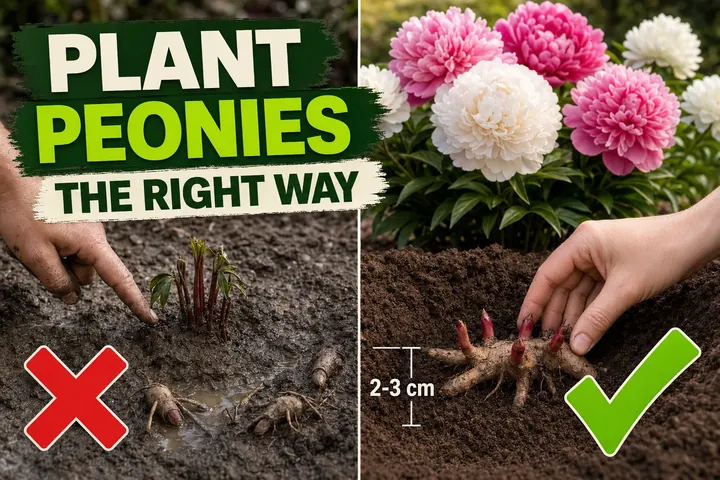
- How to plant peony bulbs — another long-lived perennial that rewards careful siting and a little patience each spring.
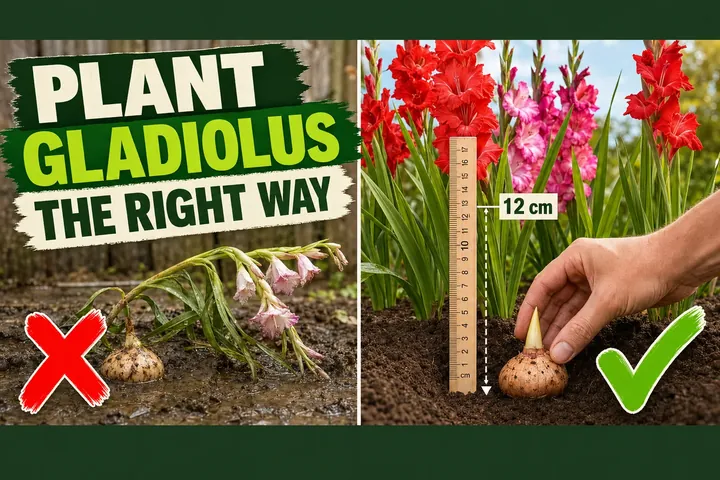
- How deep to plant gladiolus bulbs — if you’re building out a cutting-flower and dried-arrangement garden alongside your lanterns.
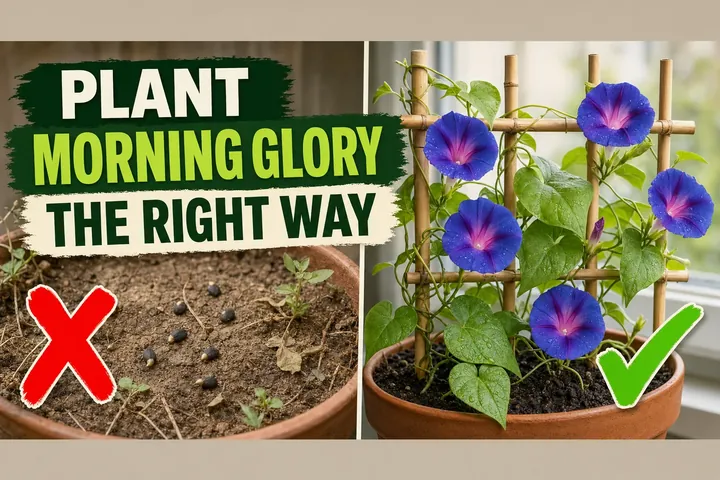
- How to plant morning glory seeds — a fast-growing annual climber that pairs beautifully with the upright stems of Chinese lanterns for a late-season display.
- Azalea plant care (acid-loving beauty done right) — another woodland-edge flowering shrub where soil pH and steady moisture decide whether you get a riot of blooms or a yellowing sulk.
- Plumeria plant care (frangipani tropical bloom guide) — the warm-climate counterpart for fragrant flowers in containers if you want tropical bloom on a sunny patio.
Track your Chinese lantern watering schedule, containment reminders, and seasonal harvest dates with the free Tazart plant care app. Set a spring rhizome-patrol reminder and an autumn harvest reminder — two of the most time-sensitive tasks this plant demands.
A note on conditions
Every garden is different. Your soil drainage, local rainfall, container size, climate zone, and aspect all affect how fast Physalis alkekengi grows, how vigorously it spreads, and when the pods ripen. Use the timings and quantities in this guide as a starting point — observe what your plant actually does in the first season and adjust from there. In a warm USDA zone 8 garden the pods may ripen in late July; in a cool zone 4 season they may not turn fully orange until October.
Highly recommended
The supplies that make this guide work


Tazart is an Amazon Associate — we earn from qualifying purchases at no extra cost to you. Thank you for helping us keep these guides free.
Frequently asked questions
Is the Chinese lantern plant invasive?
Yes — Physalis alkekengi spreads aggressively through underground rhizomes and self-seeding. It can colonise large areas within a few seasons. In many regions it is listed as an invasive species. Always plant in containers or install physical root barriers at least 30 cm (12 in) deep when growing in garden beds. Remove seed heads before they drop to limit self-seeding.
Is Chinese lantern plant toxic to humans or pets?
Unripe berries, leaves, and stems contain solanine and related alkaloids — the same toxins found in other Solanaceae family members like nightshade. Ingestion can cause nausea, vomiting, and abdominal pain. Only fully ripe orange berries inside the mature lanterns are considered edible. Keep the plant away from children and pets, and wear gloves when pruning.
When do Chinese lantern pods turn orange?
The papery calyx pods typically turn bright orange in late summer to early autumn (August–October in the Northern Hemisphere), after the small white summer flowers are pollinated and the fruit inside fully ripens. The entire pod — not just the berry — changes from green to vivid orange when ready.
How do you stop Chinese lanterns from spreading?
The most reliable methods are: (1) growing in containers with no drainage contact with garden soil, (2) installing solid root barriers at least 30 cm (12 in) deep around any bed planting, (3) removing all seed heads before they drop, and (4) digging out any rhizome runners you spot in spring before they establish. Consistent vigilance each season is needed — a single missed runner can restart a colony.
Can you grow Chinese lanterns in containers?
Yes, and containers are actually the recommended method to control their invasive spreading habit. Use a large pot of at least 30–40 cm (12–16 in) wide and deep, filled with well-draining loamy compost. Make sure the pot sits on a hard surface (paving, not soil) so rhizomes cannot escape through drainage holes into the ground below.
How tall do Chinese lantern plants grow?
Physalis alkekengi typically reaches 60–80 cm (24–31 in) tall. Stems are upright and somewhat woody at the base. The plant spreads sideways much more than it grows tall, primarily through underground rhizomes rather than by increasing height.