Houseplants
China Doll Plant Care (Radermachera sinica): Complete Guide
China doll plant care for Radermachera sinica — bright indirect light, even moisture, high humidity, and how to stop the dreaded leaf drop.
On this page
Watch the visual walkthrough
China Doll Plant Care Tips (Radermachera Sinica)
China Doll Plant Care Tips (Radermachera Sinica) and my experience with caring for this tree. Care starts at 1:36. If there was ...
The china doll plant is one of those houseplants that draws every eye in the nursery — glossy emerald-green compound leaves, a tidy upright shape, a delicate tree-like silhouette — and then sulks the moment you bring it home and put it down somewhere wrong.
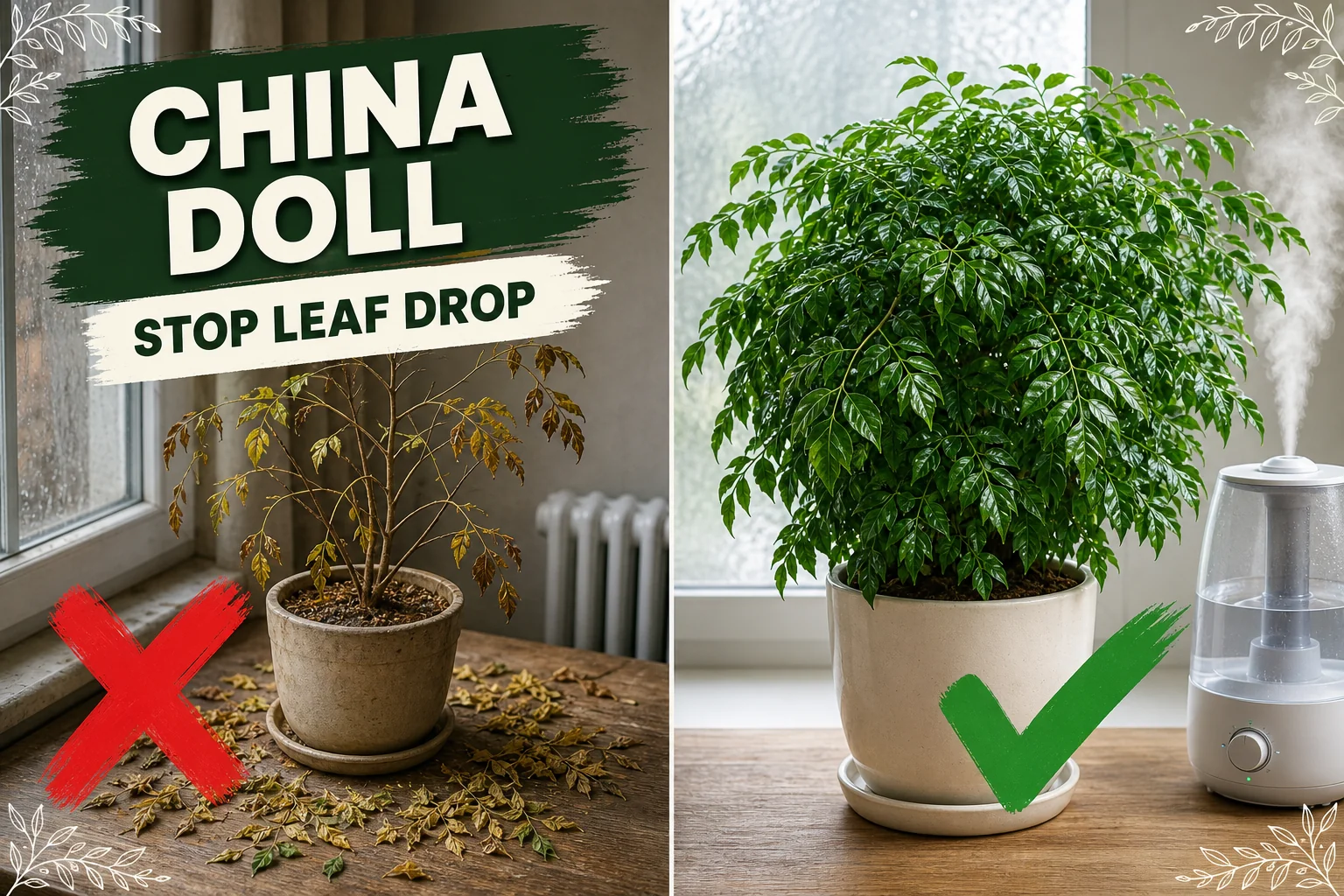
Radermachera sinica is genuinely beautiful. It is also genuinely fussy. It is the houseplant equivalent of a temperature-sensitive musician: any change in the room (light, water, humidity, draft, time of year) registers as drama, and the drama always takes the same form — sudden leaf drop. The good news is that once you stabilise its conditions, it relaxes and grows quickly. The bad news is that getting to “stable” requires understanding what it actually wants.
This guide walks through every variable that affects china doll plant care and explains how to stop the leaf drop for good.
Quick answer
China doll plants (Radermachera sinica) need bright indirect light, evenly moist (never soggy, never dry) well-draining soil, 50%+ humidity, warm temperatures of 16–24°C (61–75°F), and absolutely no drafts or sudden moves. Water when the top 2–3 cm (1 in) of soil is dry. Feed monthly in spring and summer. Pinch tips for bushiness. They drop leaves at any sign of stress — the fix is stability, not intervention.
Table of contents
- What china doll plant actually is
- Light
- Watering
- Humidity — the dealbreaker
- Temperature
- Soil and pot
- Feeding
- Pruning for bushiness
- The leaf drop problem
- Troubleshooting
- Common mistakes
- Related reading
What china doll plant actually is
China doll is Radermachera sinica, a member of the Bignoniaceae family (the trumpet vine and catalpa family). In its native subtropical forests across China, Taiwan, and Southeast Asia it grows as a small to medium evergreen tree reaching 10 metres (33 ft). Indoors as a houseplant it stays much smaller — typically 1.0 to 1.8 m (3 to 6 ft) over many years — and forms a tidy upright bush.
The leaves are the defining feature. Each “leaf” is actually a bipinnate compound leaf — a feathery branching structure of dozens of small glossy emerald-green leaflets that gives the plant its alternate common name, emerald tree. The leaflets are smooth, slightly waxy, and reflect light in a way that makes a healthy china doll look almost lacquered.
It was introduced to the houseplant trade in the 1980s and has remained popular ever since, despite its reputation for being difficult. The reputation is mostly deserved — but it is also a misunderstanding. China doll is not difficult so much as it is intolerant of change.
Light
Bright indirect light is non-negotiable.
Aim for 4 to 6 hours of filtered or reflected daylight per day. Good placements:
- 1 to 2 metres (3 to 6 ft) back from a south- or west-facing window
- Directly in front of an east-facing window (gentle morning sun is fine)
- Beneath a grow light set to 12 hours on / 12 off, suspended 30–45 cm (12–18 in) above the canopy
Avoid:
- Direct midday sun. Bleaches the glossy leaves to a pale washed-out green and can scorch the leaflets brown.
- Low light. Below about 2 hours of bright indirect daylight per day, the plant becomes leggy — stems stretch toward the window, internodes lengthen, the canopy thins, and within a few months the plant looks tired and skeletal.
Rotate the pot a quarter turn every 1–2 weeks so all sides receive equal light. China doll genuinely does grow toward the light source and will lean alarmingly within a month if it is not rotated.
For a similarly light-fussy tree-form houseplant, our fiddle leaf fig care guide covers the same bright-indirect-light principle in more depth.
Watering
Even moisture is the goal. China doll drops leaves at both ends of the watering spectrum — too dry and too wet are both fatal — so consistency matters more than any specific schedule.
Rule: water when the top 2–3 cm (1 in) of soil feels dry to the touch.
In practice:
- Spring and summer (active growth): typically every 5–7 days.
- Autumn and winter (slow growth): every 10–14 days.
Always water thoroughly — pour slowly around the base until water flows freely from the drainage holes — then empty the saucer immediately. A china doll left to sit in standing water for more than 30 minutes will start dropping leaves within a week.
Signs of underwatering: dry crispy leaflets, all of which drop together within 24–48 hours of a missed watering. The plant looks suddenly bare.
Signs of overwatering: yellowing leaflets from the base of the plant upward, soft mushy stems at soil level, soggy soil that stays wet for more than 5 days. Root rot follows quickly in standing water.
A consistent watering reminder (the Tazart plant care app can adjust the schedule by season) genuinely helps with china doll because the plant punishes inconsistency more than any specific watering frequency.
Humidity — the dealbreaker
This is the single most-overlooked factor in china doll care.
The plant needs 50% relative humidity minimum. 60–70% is better. Most centrally heated homes in winter sit around 25–35%, which is why so many china dolls drop leaves dramatically from October through March even when light and watering are correct.
The fixes, in order of effectiveness:
- A small ultrasonic humidifier placed 50–100 cm (1.5–3 ft) from the plant, running 8–12 hours a day. By far the most reliable fix.
- Grouping multiple houseplants together. Each plant transpires moisture, and a cluster of 4–6 plants creates a local humid microclimate.
- A pebble tray — a shallow tray of pebbles and water beneath the pot. Modest effect but better than nothing.
- A bathroom or kitchen. Both rooms naturally run higher humidity from showers and cooking. A china doll near a bright bathroom window often thrives where the same plant in a dry living room fails.
What does not work: daily misting. The water evaporates from the leaves within minutes and the humidity around the plant returns to room baseline almost immediately. Misting also encourages fungal leaf spots on china doll’s tightly packed canopy. Skip it.
Temperature
China doll wants 16 to 24°C (61 to 75°F) consistently. Avoid:
- Temperatures below 13°C (55°F) — cold shock triggers immediate leaf drop.
- Temperatures above 27°C (80°F) for extended periods — drying stress.
- Drafts of any kind. Cold drafts from windows in winter, hot drafts from radiators, blasts from heating/cooling vents — all of these cause leaf drop. Position the plant at least 60 cm (24 in) from any vent or drafty window.
- Sudden swings. A 5°C (10°F) drop overnight is enough to trigger leaf drop in a sensitive specimen.
Soil and pot
China doll wants a loose, well-draining, peat-free or low-peat potting mix that holds moisture without staying soggy.
Recommended mix:
- 60% standard houseplant potting mix
- 25% perlite or pumice
- 15% coco coir or fine bark fines
This drains quickly and dries evenly between waterings — the conditions that prevent both root rot and dry shock.
Pot choice: ceramic, plastic, or glazed terracotta all work as long as the pot has drainage holes. Plain terracotta dries faster than glazed pots, which can be useful in cool damp homes but problematic in dry heated homes — match the pot material to your conditions.
Keep the pot slightly snug. China doll prefers being lightly rootbound over swimming in excess soil that stays wet. Repot only every 2–3 years, in early spring, into a pot 2–3 cm (1 in) wider than the current root ball.
Feeding
Feed once a month during the growing season (April–September) with a balanced liquid houseplant fertilizer diluted to half strength.
Do not feed in autumn and winter — growth slows or stops and excess fertilizer salts accumulate in the soil, burning the roots and triggering leaf drop.
If you see a white crusty deposit on the soil surface or pot rim, the soil has accumulated fertilizer salts. Flush the pot with plain tepid water by running 3–4 times the pot’s volume of water slowly through the soil, then resume normal watering. Hold off on fertilizing for 8 weeks afterwards.
Pruning for bushiness
China doll responds well to pinching, which is the secret to keeping it dense and round instead of tall and leggy.
In early spring, identify the longest stems and pinch off the top 2–3 cm (1 in) of each just above a leaflet node, using clean snips. New side shoots will emerge from the next two nodes below the cut within 4–6 weeks, doubling the apparent leaf density at that point of the plant.
Repeat every 6–8 weeks through spring and summer to maintain a tight rounded canopy. Stop pinching by mid-autumn so the plant can settle into its slower growth phase for winter.
The leaf drop problem
Almost every china doll owner experiences sudden leaf drop at some point. The pattern is recognisable: one day the plant looks fine, the next day half the leaflets have fallen onto the floor.
The triggers, in order of how common they are:
- A move. Even a 2-metre shift across the room. Don’t move a china doll without good reason — and if you must, expect 2–3 weeks of leaf drop afterwards.
- A drop in humidity. Switching on the heating in autumn is the classic trigger. Bring the humidifier out the same day the radiators come on.
- A draft. Cold air from an opened window in winter is enough. Position carefully.
- Inconsistent watering. Letting the soil dry out fully once, then overcompensating with a heavy soaking.
- Cold shock. A car ride home from the nursery in a cold trunk; a pot left outside in autumn after a warm day.
- Temperature swing. Heating turned off overnight to save energy, then blasted on in the morning.
- Root rot. Slower-developing, but produces yellow-then-brown leaflets that drop progressively from the bottom upward over weeks.
The recovery is always the same: stabilise the conditions (bright indirect light, even moisture, 50%+ humidity, no drafts, 16–24°C / 61–75°F) and wait. A healthy china doll regrows lost leaflets within 4–6 weeks once the conditions are right. Resist the urge to repot, change soil, or fertilize during a leaf-drop episode — additional intervention is more likely to make things worse than better.
Troubleshooting
| Symptom | Likely cause | Fix |
|---|---|---|
| Sudden leaf drop, leaves still green | Move, draft, humidity drop, or temperature swing | Stabilise conditions; do not move; add humidifier |
| Yellowing leaves from base upward | Overwatering / root rot | Let soil dry; check roots for black/mushy areas; repot if needed |
| Brown crispy leaf tips | Air too dry (under 40% humidity) | Add humidifier; group with other plants |
| Brown patches mid-leaf | Direct sun scorch | Move 30 cm (12 in) further from window |
| Leggy stems, wide gaps between leaflets | Insufficient light | Move closer to bright window or add grow light |
| White crust on soil | Fertilizer salt build-up | Flush soil with plain water; pause fertilizer for 8 weeks |
| Black mushy stem at soil level | Crown rot from waterlogged soil | Unpot; trim rotted tissue; repot in fresh well-draining mix |
Common mistakes
- Moving the plant frequently. Each move triggers leaf drop. Pick a permanent spot with the right light and humidity, and leave it there.
- Ignoring humidity. The single most common reason china doll plants decline indoors. Below 50% humidity, no amount of correct watering will keep it healthy long-term.
- Watering on a fixed weekly schedule. Conditions change with the season. Always check the top 2–3 cm (1 in) of soil before watering.
- Letting it sit in standing water. Root rot follows within 5–7 days. Always empty the saucer.
- Fertilizing in winter. Salts accumulate in the soil and burn the roots. Stop feeding from October through March.
- Misting the leaves. Encourages fungal leaf spots and does nothing for humidity. Use a humidifier instead.
- Repotting too often. Disturbs the roots unnecessarily. Repot every 2–3 years, not annually.
- Intervening during a leaf-drop episode. Repotting, changing soil, or fertilizing a stressed plant usually makes things worse. Stabilise and wait.
Related reading
- Fiddle leaf fig care — another famously fussy tree-form houseplant with similar light and stability requirements.
- Baby rubber plant care — a much more forgiving alternative if china doll proves too demanding for your environment.
- Money tree care — another tropical tree-form houseplant that pairs well with china doll in the same bright corner.
Track china doll’s watering schedule and seasonal humidity adjustments with the free Tazart plant care app — a reminder to switch on the humidifier when heating turns on each autumn saves the leaves before they drop.
A note on conditions
Every home is different. Local humidity, the angle of light through your windows, ambient temperature swings, and the species of central heating you run all change how a china doll behaves in your room. The numbers in this guide — bright indirect light, 50% humidity, 16–24°C (61–75°F), water when top 2–3 cm (1 in) is dry — are reliable starting points. The plant itself tells you within 2–3 weeks whether the spot is right. Stable foliage and steady new growth mean keep everything as it is; recurring leaf drop means one of the variables is wrong and worth troubleshooting systematically.
Highly recommended
The supplies that make this guide work



Tazart is an Amazon Associate — we earn from qualifying purchases at no extra cost to you. Thank you for helping us keep these guides free.
Frequently asked questions
Why does my china doll plant keep dropping leaves?
Leaf drop is the china doll's reaction to any sudden change in conditions — moving locations, a draft, dry air, overwatering, underwatering, or a temperature swing. The fix is stability: once you find a spot with bright indirect light, even moisture, and 50%+ humidity, do not move the plant. New leaves will replace the lost ones within 4-6 weeks if the conditions stay consistent.
How much light does a china doll plant need?
Bright indirect light — 4 to 6 hours of filtered or reflected daylight per day. A spot 1 to 2 metres back from a south- or west-facing window, or directly in front of an east-facing window, works well. Direct midday sun bleaches the glossy compound leaves; low light produces leggy stems with widely spaced leaves and the plant declines.
How often should I water a china doll plant?
Water when the top 2-3 cm (1 in) of soil feels dry. In practice that is usually every 5-7 days in spring and summer and every 10-14 days in autumn and winter. The soil should stay evenly moist — not soggy, not bone-dry. Both extremes trigger leaf drop. Always empty the saucer after watering.
Is china doll plant toxic to cats?
Radermachera sinica is listed as non-toxic to cats and dogs by the ASPCA. The sap can still cause mild stomach upset if a pet eats large quantities of the leaves, so it is sensible to discourage grazing, but it is one of the safer options among glossy-leaved tropical houseplants.
Why are the leaves on my china doll plant turning brown?
Brown crispy leaf tips and edges usually mean the air is too dry — china doll needs at least 50% humidity. Brown patches in the middle of the leaf often indicate sunburn from direct light. Brown leaves that turn yellow and drop together signal overwatering and root rot. Diagnose by checking humidity first, then light position, then soil moisture.
How do I make my china doll plant bushy?
Pinch the growing tips of each stem with clean snips just above a leaf node in spring. This redirects energy to side shoots and produces a fuller plant within 6-8 weeks. Combine regular pinching with bright indirect light and consistent moisture to maintain a dense rounded canopy. Leggy plants almost always have a light deficit, not a pruning problem.