Care
Catmint Plant Care: The Complete Grower's Guide (Nepeta)
Grow catmint (Nepeta) like a pro — light, water, soil, pruning for rebloom, winter care, Walker's Low vs Six Hills Giant, and catmint vs catnip explained.
On this page
- Quick answer
- What catmint actually is
- Catmint vs catnip — the clear difference
- Light requirements
- Soil
- Planting
- Watering
- Pruning — the most important catmint task
- Winter care
- Common varieties
- Catmint as a pollinator plant
- Common mistakes
- Troubleshooting table
- Feeding
- Watch: catmint care video guide
- Common mistakes — practical checklist
- Related reading
- A note on conditions
Watch the visual walkthrough
The Perfect Perennial: Why Catmints (Nepetas) Belong in Every Garden! 👏👍😜
Join expert David Wilson as he takes you into his own garden to showcase a stunning planting of Catmints (Nepeta 'Blue ...
Catmint (Nepeta) is one of those perennials that experienced gardeners reach for instinctively and beginners overlook entirely. It blooms for months, tolerates drought, feeds every pollinator in the neighbourhood, smells faintly of mint in the sun, needs almost no feeding, and recovers from a hard cutback in under a month. Once it’s planted and established, the main job is simply to prune it once at midsummer — and watch it erupt in flowers all over again.
This guide covers everything you need to plant, grow, and maintain catmint well: the right light and soil conditions, a simple watering approach, the exact pruning method that triggers rebloom, how to prepare plants for winter, the best cultivars to choose, and a clear answer to the catmint vs catnip question that confuses almost every new grower.
Quick answer
Plant catmint in full sun in free-draining, average-to-poor soil. Water weekly for the first season; established plants are drought tolerant from year two. Cut the whole plant back by half in midsummer after the first bloom fades — this triggers a second full flush of lavender-blue flowers in late summer. Hardy in USDA zones 3–9 depending on cultivar. Does not self-seed or spread invasively. Excellent for bees, butterflies, and border edges.
What catmint actually is
Catmint is the common name for ornamental species and cultivars in the genus Nepeta, family Lamiaceae (the mint family). The two species you will encounter in most garden centres are:
- Nepeta faassenii — the most widely sold ornamental catmint. A sterile hybrid that does not set seed. Forms a tidy, spreading mound of grey-green aromatic foliage covered in small lavender-blue flowers from late spring through summer.
- Nepeta racemosa (also sold as N. mussinii) — the parent species. Very similar in appearance to N. faassenii but sometimes produces seed. Slightly more compact.
Most named cultivars sold today — including Walker’s Low and Six Hills Giant — are selections from these two species or their crosses.
Catmint is not catnip. That distinction matters and is covered in full further down this guide.
The flowers are tubular, arranged in whorled spikes, and range from pale lavender-white through violet-blue depending on cultivar. The leaves are small, softly hairy, and emit a mild mint-and-herbal scent when brushed. The entire plant has a grey-green, slightly frosted appearance that pairs beautifully with roses, salvias, alliums, and most other sun-loving perennials.
Catmint vs catnip — the clear difference
This is the question that comes up in every catmint discussion, so here is the definitive answer:
| Catmint (N. faassenii / racemosa) | Catnip (Nepeta cataria) | |
|---|---|---|
| Primary use | Ornamental garden plant | Herbal plant / cat stimulant |
| Plant size | 30–90 cm (12–36 in) tall | 60–120 cm (24–48 in) tall |
| Appearance | Tidy, silvery-grey mound | Coarser, taller, more upright |
| Seeds | Sterile — does not self-seed | Prolifically self-seeds |
| Nepetalactone | Low concentration | High concentration |
| Effect on cats | Mild or none | Strong euphoric response |
| Garden value | Excellent — long bloom, tidy habit | Poor — seeds everywhere, sprawls |
The active compound nepetalactone is what produces the rolling, rubbing response in cats. Catnip (N. cataria) contains it in high amounts. Most ornamental catmint cultivars contain such low levels that the response in cats is mild to absent — which is also why your garden catmint is not mobbed by every neighbourhood cat the way a true catnip plant would be.
For garden use, always buy catmint. For cats, buy catnip separately if you want the full effect.
Light requirements
Catmint needs full sun — at least 6 hours of direct sunlight per day. This is the single condition it is least flexible about.
- Full sun (6+ hours): produces the densest, most floriferous plant with the most compact habit and the strongest rebloom after pruning.
- Part shade (4–5 hours): catmint will grow but becomes noticeably leggier, flops more easily, and produces fewer flowers per stem. The grey-green colour of the leaves lightens toward plain green.
- Heavy shade (under 3 hours): avoid entirely. Plants become weak, floppy, prone to fungal problems, and bloom poorly.
In very hot climates (USDA zones 8–9), afternoon shade is beneficial — morning sun plus afternoon shade is a reasonable compromise that prevents scorching while keeping plants compact.
Soil
Catmint’s Mediterranean heritage shapes everything about its soil preferences. It evolved in thin, stony, free-draining soils — not rich, fertile garden beds.
What it wants:
- Well-draining soil — the single most important requirement
- Average to lean fertility — rich, over-amended soil produces floppy, sappy growth and fewer flowers
- pH 6.0–7.5 — adaptable across a wide range
- Grit or sandy texture is a bonus, not a requirement
What it cannot tolerate:
- Waterlogged or heavy clay — crown rot sets in rapidly in wet winters, even in a plant that has been fine for years
- Permanently boggy spots — even brief winter waterlogging kills the crown
How to prepare the planting site: If you have clay soil, dig in a generous amount of horticultural grit or coarse sand — at least one full bucket per square metre — and work it into the top 20–25 cm (8–10 in). On very heavy clay, raising the bed 15–20 cm (6–8 in) above the surrounding grade is the most reliable fix.
Avoid adding compost or manure generously at planting — catmint is one of the few plants that genuinely performs better in leaner soil.
Planting
The best times to plant are spring (once frosts are past) or early autumn (at least 6 weeks before hard frost, to let roots establish before the ground freezes).
- Choose a full-sun spot with free-draining soil.
- Space plants 45–60 cm (18–24 in) apart for most cultivars. Six Hills Giant needs 75–90 cm (30–36 in).
- Dig a hole no deeper than the root ball — set the crown level with the soil surface.
- Backfill with the existing soil (no amendments unless improving drainage). Firm gently.
- Water in thoroughly.
- Do not mulch heavily over the crown — catmint crowns sitting in damp organic material are prone to rot.
Watering
Year one: establish the roots
Water newly planted catmint once per week through the first growing season, giving enough water to moisten the soil to 15 cm (6 in) depth. The goal is to encourage roots to grow downward rather than staying near the surface.
During prolonged dry spells in the first summer, water every 5–6 days rather than waiting a full week.
Year two onward: drought-tolerant
Once established, catmint is genuinely drought tolerant. In most temperate climates with normal summer rainfall patterns, established plants need no supplemental watering at all. Only step in when you’ve had 3–4 weeks of dry weather with no meaningful rain.
Signs the plant needs water despite being established:
- Foliage wilts noticeably in the afternoon and does not recover overnight
- Leaves feel dry and slightly crisp at the edges (not just the midday droop that’s normal in heat)
Avoid overhead watering on established plants — wet foliage in warm weather can encourage powdery mildew. Water at the base.
Never water in autumn to “help it along.” Wet soil going into winter is a crown-rot risk. Let autumn rains do the work, and stop any supplemental irrigation by late summer.
Pruning — the most important catmint task
This is where most growers either get it right or leave significant bloom potential on the table.
Catmint has a natural bloom cycle with two distinct phases — and the second phase only happens if you trigger it with pruning.
Phase 1: Spring through early summer bloom
The main flush runs from late spring through early to midsummer (roughly May through July in USDA zones 5–7). This is when catmint puts on its most spectacular display — a foaming sea of lavender-blue above silver-grey foliage.
The midsummer cutback — the key action
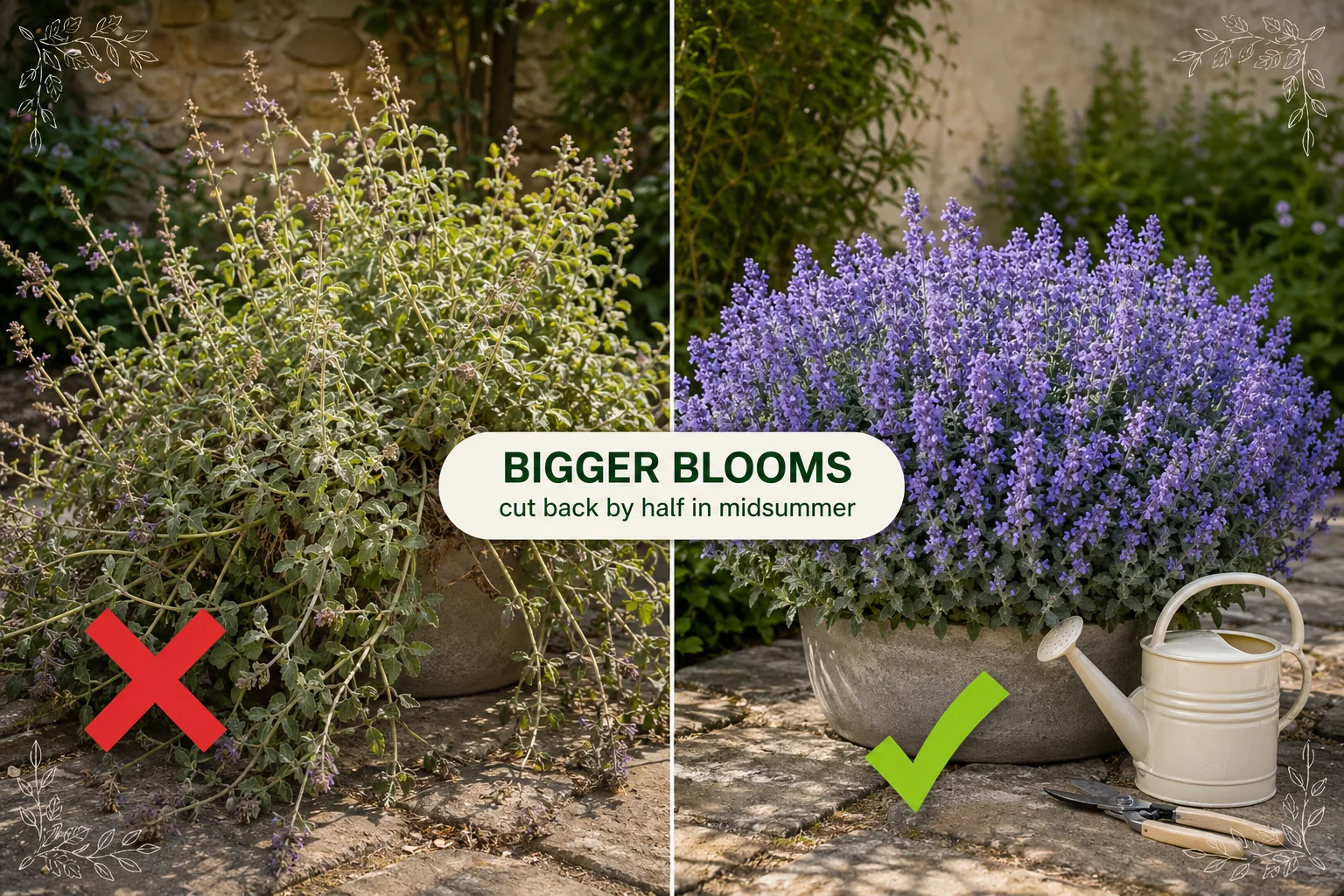
When at least two-thirds of the flower spikes have turned brown and the plant looks spent and floppy:
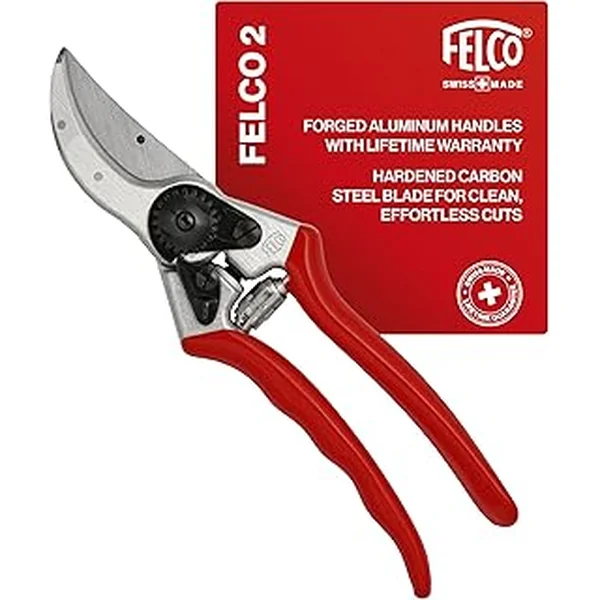
- Use sharp bypass shears or garden scissors.
- Cut the entire plant back by one-half to two-thirds — typically down to 10–15 cm (4–6 in) above the ground. Don’t be timid; a decisive cut produces a better result than a hesitant one.
- You will be left with a low mound of grey-green stubs. This is correct.
- Water once after cutting.
- If the plant is large and has been fertilised, a light feed can be given at this point, but it is not necessary.
Within 3–4 weeks, fresh foliage emerges from the base and a new set of flower spikes rapidly follows.
Phase 2: Late summer through autumn rebloom
The second flush runs from late summer through early autumn (August through October in most zones). It is often as strong as the first, and in a warm autumn can push all the way to the first frost.
In mild climates or after a very warm summer, a third flush is possible if you deadhead the second bloom promptly as it fades.
Deadheading between major cuts
Between the main midsummer cutback and during the second bloom phase, you can deadhead spent spikes individually to keep the plant tidy and encourage fresh blooms from lower buds. This is optional — the plant will continue blooming regardless — but it keeps the display cleaner.
Spring cleanup
In late winter or very early spring, before new growth emerges, cut any remaining dead stems down to a few centimetres above the ground. This is the annual reset that tidies the plant and gives you a clear view of where new growth will emerge.
Do not cut too early in autumn if you are in a cold zone — the dead stems provide some insulation for the crown through winter.
Winter care
Catmint is more cold-hardy than most gardeners expect. Most cultivars survive USDA zone 4 winters without any protection; some survive zone 3.
In zones 5–9: no special protection needed. Leave dead stems in place through winter for insulation and wildlife cover; cut back in late winter before new growth starts.
In zones 3–4 (coldest winters):
- Leave dead stems standing through the coldest months — they trap snow and insulate the crown.
- Apply a light mulch of 5–8 cm (2–3 in) of dry straw, pine needles, or coarse bark around (not over) the crown in late autumn.
- Avoid heavy wet mulches like compost or leaf mould directly over the crown — they can cause crown rot even in cold weather.
- Remove mulch in early spring before new growth begins.
The biggest winter risk is not cold — it is wet. A catmint crown that stays consistently waterlogged through winter is far more likely to fail than one that gets dry winter cold. Drainage is the top priority.
Common varieties
Walker’s Low (Nepeta racemosa ‘Walker’s Low’)
The most widely grown catmint cultivar and winner of the Perennial Plant Association’s Plant of the Year. Despite the name, it is not especially low-growing — it reaches 45–60 cm (18–24 in) tall with a relaxed, spreading habit 60–90 cm (24–36 in) wide. Flowers are rich violet-blue, produced in abundance over a long season. Excellent rebloom after midsummer cutback. Hardy in USDA zones 3–8. The best all-round choice for most gardens.
Six Hills Giant (Nepeta ‘Six Hills Giant’)
A large, vigorous catmint reaching 60–90 cm (24–36 in) tall and spreading 90–120 cm (36–48 in) wide. Lavender-blue flowers, produced in large quantities, on long arching stems. Better suited to larger borders, the back of a bed, or mass planting on slopes. Needs more space than Walker’s Low but offers a more dramatic display for big gardens. Hardy in USDA zones 4–8.
Blue Wonder (Nepeta racemosa ‘Blue Wonder’)
A more compact selection reaching 30–40 cm (12–16 in) tall. Flowers are a bright, vivid blue-violet. Better suited to containers or smaller borders. Good rebloom. Hardy in USDA zones 3–8.
Purrsian Blue (Nepeta ‘Purrsian Blue’)
A newer compact cultivar bred specifically for containers and small spaces. Reaches 25–35 cm (10–14 in) tall, with a very tidy mounded habit. Lavender-blue flowers. Hardy in USDA zones 3–8.
Junior Walker (Nepeta racemosa ‘Junior Walker’)
A dwarf form of Walker’s Low at 30–40 cm (12–16 in) tall. All the rebloom performance and pollinator appeal of the standard Walker’s Low in a tighter package. Excellent for edging paths and front-of-border use.
| Cultivar | Height | Width | Flower colour | Best use | USDA zones |
|---|---|---|---|---|---|
| Walker’s Low | 45–60 cm (18–24 in) | 60–90 cm (24–36 in) | Violet-blue | All-round border | 3–8 |
| Six Hills Giant | 60–90 cm (24–36 in) | 90–120 cm (36–48 in) | Lavender-blue | Large borders, slopes | 4–8 |
| Blue Wonder | 30–40 cm (12–16 in) | 45–60 cm (18–24 in) | Bright blue-violet | Containers, small borders | 3–8 |
| Purrsian Blue | 25–35 cm (10–14 in) | 35–45 cm (14–18 in) | Lavender-blue | Containers, pots | 3–8 |
| Junior Walker | 30–40 cm (12–16 in) | 45–60 cm (18–24 in) | Violet-blue | Path edging, front border | 3–8 |
Catmint as a pollinator plant
Catmint is one of the most pollinator-productive plants you can put in a temperate garden.
For another bee-magnet herb with a long flowering season, a calming lemon scent, and the same drought-tolerant growing conditions, the lemon balm plant care guide covers a great companion for a wildlife-friendly herb garden. The long bloom season — especially the double flush when cutback is done correctly — means it is in flower for more total weeks per year than most perennials.
Russian sage offers a similar combination of drought tolerance, long bloom, and high pollinator value — see the russian sage plant care guide for how to combine both in a dry sunny border that flowers from June through September.
Visitors include:
- Bumblebees — the primary and most frequent visitors; the flower shape and size is almost perfectly matched to bumblebee anatomy.
- Honeybees — regular visitors throughout the bloom period.
- Solitary bees (mason bees, mining bees, leafcutter bees) — all use catmint heavily.
- Butterflies — painted ladies, skippers, small tortoiseshells, and fritillaries.
- Hoverflies — the secondary bloom period in late summer is especially attractive to late-season hoverflies.
The combination of long bloom season, drought tolerance, low maintenance, and strong pollinator value makes catmint one of the highest-return plants in any garden designed to support wildlife.
Common mistakes
- Planting in part shade. Catmint becomes leggy, floppy, and blooms poorly. It needs 6+ hours of sun.
- Rich, amended soil. Excess fertility pushes floppy, sappy growth with fewer flowers. Lean soil produces the best plants.
- Waterlogged clay without drainage improvement. Crown rot, especially in winter. Improve drainage before planting.
- Skipping the midsummer cutback. The plant will not produce a strong second flush on its own. Cut it back.
- Cutting back too timidly. A half-hearted trim produces a half-hearted rebloom. Cut by at least half.
- Overwatering established plants. Once established, catmint does not need supplemental watering in normal seasons.
- Heavy mulching over the crown. Keeps the crown damp going into winter, inviting crown rot.
- Confusing catmint with catnip and expecting a reaction from cats. Most ornamental catmint has low nepetalactone concentration.
Troubleshooting table
| Symptom | Likely cause | Fix |
|---|---|---|
| Floppy, sprawling stems | Too much shade, or soil too rich | Move to full sun; avoid fertiliser |
| Poor flowering | Not enough sun | Minimum 6 hours direct sun |
| Powdery white coating on leaves | Powdery mildew (humidity + poor airflow) | Improve spacing; avoid overhead watering; cut back affected growth |
| Crown dies over winter | Waterlogged soil or crown rot | Improve drainage; avoid winter wet |
| Plant fails to rebloom in late summer | Midsummer cutback was skipped or too shallow | Cut back by half-to-two-thirds in midsummer |
| Very little growth in spring | Late frost damage or normal slow emergence | Be patient; catmint is a late-ish starter |
| Cats digging at the plant | Residual nepetalactone (more common right after planting when roots are disturbed) | Protect with wire mesh temporarily; usually stops after the plant establishes |
Feeding
Catmint is a genuinely low-feeding plant. In average garden soil it needs no feeding at all.
- Spring: if the soil is very poor (pure sand or chalk), a single light application of a balanced slow-release granular fertiliser at half the label rate is sufficient for the whole season.
- After midsummer cutback: an optional very light feed can help fuel the second bloom flush, but most established plants do not need it.
- Avoid: high-nitrogen fertilisers (lawn feed, tomato food). These push soft, sappy growth, increase flopping, and make the plant more vulnerable to powdery mildew.
In rich, regularly amended garden soil — typical of most established borders — skip feeding entirely.
Watch: catmint care video guide
For a visual walkthrough of the midsummer cutback technique and how to spot when catmint is ready for its trim, a short video guide demonstrates the process on a real plant far more clearly than text alone. Search YouTube for “catmint pruning for rebloom” for practical demonstrations. The cutback step is the one that growers most often underestimate until they see it done on a mature plant.
Common mistakes — practical checklist
Before the end of each season, run through this list:
- Did the plant get at least 6 hours of sun?
- Was the midsummer cutback done when two-thirds of spikes were spent?
- Was the cutback deep enough (half to two-thirds of plant height)?
- Did the crown stay dry through winter — not waterlogged?
- In zones 3–4: was light mulch applied (not heavy/wet) around the crown?
- Were dead stems left in place for winter insulation and only removed in late winter?
Related reading
- Marigold plant care — another full-sun, drought-tolerant annual that pairs beautifully with catmint in a pollinator border and benefits from the same deadheading approach for extended bloom.
- Borage plant care — a bee-friendly herb that blooms in the same colour range as catmint and thrives in similarly lean, well-drained soil.
- Peony plant care — a classic companion for catmint in a cottage-style border; the two bloom in sequence — peony first, catmint running from spring well into autumn.
Set seasonal reminders in the Tazart plant care app so you never miss the midsummer cutback — the one task that doubles catmint’s bloom season. Dr. Afrao, the in-app plant assistant, can help you identify which Nepeta cultivar you have and when to time the trim based on your local climate.
A note on conditions
Every garden behaves differently. Soil drainage, local rainfall patterns, the number of actual sun hours your border receives, and the severity of your winters all influence how catmint grows for you. Use the guidelines above as a starting point, observe the plant through its first full season, and adjust from there. A plant that flops in one spot often stands beautifully once moved 60 cm (24 in) further into the sun. Catmint is honest — when the conditions are wrong, the plant tells you quickly, and when they are right, it tells you even more dramatically.
Highly recommended
The supplies that make this guide work
Tazart is an Amazon Associate — we earn from qualifying purchases at no extra cost to you. Thank you for helping us keep these guides free.
Frequently asked questions
Does catmint come back every year?
Yes. Catmint (Nepeta) is a hardy perennial that dies back to the ground in winter and reliably regrows from the root crown each spring. Most cultivars are rated USDA zones 3–8 or 4–9, meaning they survive hard winters across the majority of North America and Europe without any extra protection.
How do you prune catmint for rebloom?
After the first flush fades in early to midsummer — when at least two-thirds of the flower spikes look brown or spent — cut the whole plant back by about one-half to two-thirds its height, to roughly 10–15 cm (4–6 in) above the ground. Use sharp shears, water once, and within 3–4 weeks a fresh mound of foliage and a second wave of flowers will emerge. This is the single most impactful task in catmint care.
What is the difference between catmint and catnip?
Catmint (Nepeta faassenii or Nepeta racemosa) is an ornamental garden perennial bred for flowers and garden form — it is sterile or nearly so and has mild to no effect on cats. Catnip (Nepeta cataria) is a taller, coarser, seed-producing herb that contains high concentrations of nepetalactone — the compound that causes the well-known response in cats. Catmint is for gardens; catnip is for cats (and herbal tea).
Is catmint drought tolerant?
Very much so. Once established — typically after one full growing season — catmint handles extended dry spells on rainfall alone in most temperate climates. Its Mediterranean heritage gives it silver-green leaves coated in fine hairs that reflect heat and reduce moisture loss. In the first season, water weekly to establish roots. From year two onward, supplemental watering is only needed during prolonged drought of 3–4 weeks or more.
When does catmint bloom?
The main bloom runs from late spring through early to midsummer (roughly May through July in USDA zones 5–7). After a midsummer cutback, a second flush of blooms arrives in late summer through early autumn (August–October). In mild climates, a third partial flush is possible after a second trim, extending colour nearly to the first frost.
Will catmint spread and take over?
Cultivated catmint (Nepeta faassenii and most named cultivars like Walker's Low) is sterile and does not self-seed, so it cannot spread invasively. The clump does expand slowly each year — a mature Walker's Low plant reaches 60–90 cm (24–36 in) wide — but it stays in a tidy mound and is easy to divide or cut back if it outgrows its space. It does not run via underground rhizomes.
Does catmint attract bees and butterflies?
Yes, reliably and abundantly. Catmint is one of the best-documented pollinator plants in temperate gardens. Bumblebees, honeybees, and solitary bees visit constantly throughout the bloom period. Butterflies — including skippers, small tortoiseshells, and painted ladies — are frequent visitors. The second flush after midsummer cutback is often busier than the first because it coincides with peak summer pollinator activity.
Can catmint grow in containers?
Yes, though it performs best in the ground where roots can spread. In containers, use a well-draining mix of potting compost and horticultural grit (roughly 3:1), choose a pot at least 30 cm (12 in) wide and deep, and water more regularly since pots dry out faster than garden soil. Compact cultivars like 'Walker's Low' or 'Blue Wonder' suit containers better than the large Six Hills Giant.