Houseplants
Boston Fern Care (Nephrolepis exaltata): The Complete Guide
Boston fern care guide for Nephrolepis exaltata — humidity, watering, indirect light, fronds dropping fix, division, repotting, and outdoor zones.
On this page
Watch the visual walkthrough
How to Grow Beautiful Boston Ferns for Little to No Cost!
Facebook- www.facebook.com/themoreyougrow Instagram- www.instagram.com/moreyougrow Equipment I Use Panasonic ...
The Boston fern is the houseplant your grandmother probably hung on her porch and the one your favourite plant shop probably puts in a macrame hanger by the window. Few plants project as much old-fashioned charm — a cascading mound of feathery green fronds that softens a corner the way no other plant does.
It is also the plant most often returned to the shop after six weeks of crispy brown frond drop in a centrally heated living room. Nephrolepis exaltata evolved in the humid understory of subtropical forests, and the gap between that environment and the inside of a typical heated home is wider than most people realise.
This guide covers everything that matters for keeping a Boston fern actually thriving indoors or out — light, water, the humidity problem, division, and the frond-drop fix.
Quick answer
Boston ferns (Nephrolepis exaltata) want bright indirect light, evenly moist (never soggy, never dry) soil, 50%+ humidity minimum, temperatures of 16–24°C (61–75°F), and no drafts. Water when the top 1–2 cm (½ in) of soil is dry. Feed monthly at half strength in spring and summer. Hardy outdoors in USDA zones 9–11; treat as an indoor or seasonal-outdoor plant in colder zones. Frond drop is almost always a humidity problem.
Table of contents
- What Boston fern actually is
- Light
- Watering
- Humidity — the dealbreaker
- Temperature
- Soil and pot
- Feeding
- Repotting and division
- Indoors vs. outdoors
- Common problems
- Common mistakes
- Related reading
What Boston fern actually is
Boston fern is Nephrolepis exaltata, a tropical sword fern in the Nephrolepidaceae family. The cultivar name ‘Bostoniensis’ was selected in Boston around 1894 from a sport of the wild species, and the lush sword-shaped fronds with their dense overlapping leaflets gave the plant its common name and its lasting popularity.
In the wild it grows as a semi-epiphytic understory fern through subtropical Americas, Africa, and Polynesia — often clinging to tree bark or moss-covered rocks in shaded humid forest. Domesticated as a houseplant, it forms a mounded clump of arching fronds 60–90 cm (24–36 in) long that cascade gracefully from a pot or hanging basket.
Notably, it was identified by NASA’s Clean Air Study as one of the more efficient houseplants for removing airborne formaldehyde — a small but real bonus for an already-charming plant.
Hardy outdoors in USDA zones 9–11. In zones 8 and below it can survive light frost but defoliates; in zones 7 and below it is grown as an indoor plant or as a seasonal outdoor plant brought in before the first hard frost.
Light
Bright indirect light. 4 to 6 hours of filtered or reflected daylight per day is the sweet spot.
Best placements:
- Directly in front of a north- or east-facing window
- 1–2 metres back from a south- or west-facing window with a sheer curtain diffusing the direct sun
- Beneath a grow light running 12 hours on / 12 off, suspended 30–45 cm (12–18 in) above the canopy
- Outdoor: dappled shade beneath trees, or under a covered porch with morning sun only
Avoid:
- Direct midday sun. Even an hour can scorch the leaflets to crispy yellow within days. Boston fern has zero tolerance for direct hot light.
- Deep shade. Below 2 hours of bright indirect daylight per day, fronds become sparse and leggy and the plant gradually declines.
Watering
Boston ferns want evenly moist soil. Not soggy, not dry. This is the single most common care mistake — gardeners either let the soil dry out completely between waterings (triggering frond drop) or keep it permanently waterlogged (triggering root rot).
Rule: water when the top 1–2 cm (½ in) of soil feels dry to the touch.
In practice:
- Spring and summer: typically every 3–5 days for a pot indoors; every 1–2 days for a fern outside on a hot porch.
- Autumn and winter: every 7–10 days.
Water thoroughly — pour slowly around the base until water flows freely from the drainage holes — then empty the saucer. Tepid water is gentler on the shallow root system than cold tap water.
If a fern dries out completely once, all the fronds will collapse and many will brown and shed within 48 hours. Bottom-water the pot by sitting it in a basin of 5 cm (2 in) of tepid water for 30 minutes to rehydrate the root ball thoroughly, then drain. The plant often recovers within 2–3 weeks if the root system is intact, but expect significant frond loss.
Humidity — the dealbreaker
This is the single biggest factor in Boston fern care indoors.
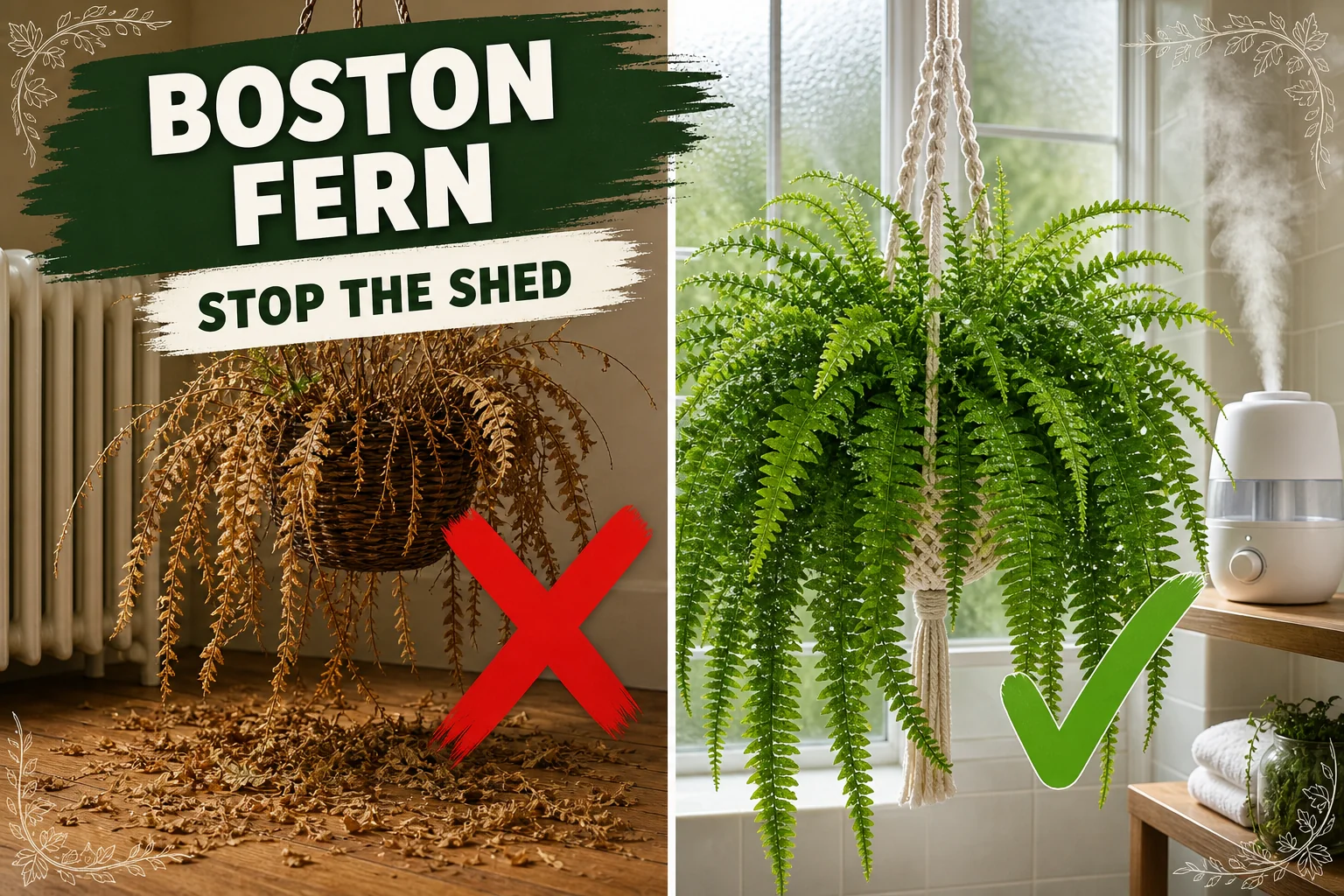
Boston ferns evolved in 70%+ humidity subtropical forests. They tolerate down to about 50% relative humidity. Below that — and most heated homes in winter sit at 25–35% — the leaflets crisp, shatter, and shed from the fronds in a cascade of brown bits that everyone with a Boston fern recognises.
The fixes, in order of effectiveness:
- A small ultrasonic humidifier running 8–12 hours a day, placed 50–100 cm (1.5–3 ft) from the fern. The most reliable fix by a wide margin.
- Move to a bathroom or kitchen. Both rooms naturally run higher humidity from showers and cooking. A bright bathroom is the ideal Boston fern home in most centrally heated houses.
- Group plants together. A cluster of 4–6 houseplants creates a local humid microclimate as each plant transpires.
- A pebble tray. Shallow tray of pebbles and water under the pot. Modest effect but better than nothing.
- Misting. Brief humidity boost — useful as a supplement, not a substitute. Always use distilled water or rainwater to avoid white mineral spots on the fronds.
What does not work: spraying the fronds twice a day with tap water. The water evaporates within minutes, room humidity returns to baseline, and the mineral content of tap water leaves white deposits that look worse than the dry-air symptoms you were trying to fix.
Temperature
Boston ferns thrive at 16 to 24°C (61 to 75°F).
Below 10°C (50°F) the fronds yellow and shed; below 4°C (40°F) the plant suffers cold injury and may die back to the rhizome. They cannot tolerate frost. Outdoor specimens in marginal zones must be brought indoors or moved into a sheltered porch before the first hard frost of autumn.
Avoid drafts from windows, doorways, and air-conditioning or heating vents. Position the fern at least 60 cm (24 in) from any vent.
Soil and pot
Boston ferns want a light, well-draining, organic-rich potting mix that holds moisture without staying soggy.
Recommended mix:
- 50% peat-free potting mix or coco coir
- 30% perlite
- 20% composted bark fines or leaf mould
This combination drains quickly enough to prevent root rot while retaining the consistent moisture the fern wants.
Pot choice: plastic, glazed ceramic, or hanging baskets all work. Plastic and glazed pots retain moisture longer than plain terracotta, which is helpful for Boston fern. Whatever pot you choose, drainage holes are non-negotiable.
A hanging basket is the classic Boston fern presentation. The arching fronds can drape naturally and the air circulation around the foliage is excellent — useful for preventing fungal leaf spots.
Feeding
Feed monthly during the growing season (April–September) with a balanced liquid houseplant fertilizer diluted to half strength. Do not feed in autumn and winter.
Boston ferns are light feeders. Heavy fertilizing scorches the delicate leaflets and produces soft floppy growth that shatters easily. If you see white salt crust on the soil surface or pot rim, flush the soil with plain tepid water (running 3–4 times the pot’s volume through the soil slowly) and skip the next 2 feedings.
Repotting and division
Repot every 2 years in early spring, or sooner if the fern becomes visibly rootbound — roots emerging from the drainage holes, soil drying out within 24 hours of watering, or fronds visibly thinning despite correct care.
Move up only one pot size at a time (2–3 cm / 1 in wider than the current pot). Larger jumps trap excess soil that stays wet and rots the rhizome.
Division is the easiest way to multiply Boston ferns and to keep an aging clump vigorous. Every 3–4 years:
- Lift the fern from its pot in spring.
- Use a clean sharp knife to slice the rhizome mass into 2–4 sections, each with a healthy crown of fronds and intact roots.
- Pot each division into its own pot of fresh well-draining mix.
- Water in thoroughly and place in bright indirect light with high humidity for 4–6 weeks while the divisions establish.
Expect some frond drop on each division for the first month. Once new fronds start emerging from the centre, the division is established and can return to normal care.
Indoors vs. outdoors
Boston fern is one of those plants where the outdoor experience and indoor experience are entirely different.
Outdoors in USDA zones 9–11 (or seasonally outdoors in cooler zones from late spring through early autumn): Boston ferns thrive on a shaded covered porch with morning sun, daily watering in summer, and naturally high outdoor humidity. They grow large and full and rarely have problems. This is the plant’s preferred environment.
Indoors year-round: the plant tolerates indoor culture but requires deliberate humidity management. A bathroom near a north window, paired with a small humidifier, produces a healthy indoor fern. A dry living room with central heating does not.
Many gardeners run a hybrid system: Boston ferns spend May through September on the porch in dappled shade with daily watering, then come inside in October to a bathroom or to a corner near a humidifier for the winter. This is the most reliable way to keep a Boston fern looking magazine-perfect year-round in cool climates.
Common problems
| Symptom | Likely cause | Fix |
|---|---|---|
| Brown crispy frond tips | Low humidity (below 40%) | Add humidifier; move to bathroom; group plants |
| Mass frond drop, leaflets shed everywhere | Humidity crash or dry soil | Bottom-water; raise humidity; trim damaged fronds |
| Yellow fronds from base upward | Overwatering / root rot | Let soil dry; check roots; repot in fresh mix if rotted |
| Pale, washed-out fronds | Direct sun scorch | Move to indirect light immediately |
| Sparse leggy growth | Insufficient light | Move closer to a bright window or add grow light |
| White spots on fronds | Hard tap water mineral deposits | Switch to distilled water or rainwater for misting |
| Soft mushy crown at soil line | Crown rot from waterlogged soil | Repot in fresh well-draining mix; reduce watering |
| Brown spots on undersides of fronds | Often spore patches (normal!) or fungal leaf spot | Inspect — if in neat rows, they are spores, not disease |
The brown dots in neat rows on the undersides of mature fronds are sori — the fern’s spore-producing structures. They are a sign of a healthy mature plant, not a pest or disease. Do not strip them off.
Common mistakes
- Ignoring humidity. The single most common reason indoor Boston ferns decline. Below 50% humidity the plant cannot thrive long-term.
- Letting the soil dry out fully. Triggers immediate frond drop and rarely full recovery. Keep soil evenly moist.
- Placing in direct sun. Scorches the fronds within days. Always indirect light.
- Heavy fertilizing. Light feeding only — half strength, monthly, growing season only.
- Misting with tap water. Leaves white mineral deposits that look worse than the dry air symptoms. Use distilled water or rainwater.
- Repotting into a much larger pot. Excess soil holds water and rots the rhizome. Move up only one pot size.
- Not dividing. Aging clumps lose vigour. Divide every 3–4 years to refresh.
- Stripping the sori. The brown dots in neat rows on the undersides of the fronds are reproductive structures, not pests.
Related reading
- Peace lily care — another humidity-loving tropical houseplant that pairs well with Boston fern in a bright bathroom.
- Air plant care — a useful contrast in tropical plant care, with completely different watering and humidity needs.
- Cast iron plant care — the low-light alternative when a Boston fern proves too humidity-demanding for your space.
Track Boston fern’s watering schedule and humidity reminders with the free Tazart plant care app — a reminder to top up the humidifier each morning during heating season can be the difference between a full lush fern and a winter shed.
A note on conditions
Every home is different. The humidity in your bathroom, the angle of light through your windows, the type of central heating you run, and the local outdoor climate all change how a Boston fern actually behaves. The numbers in this guide — bright indirect light, 50%+ humidity, 16–24°C (61–75°F), water when top 1–2 cm (½ in) is dry — are reliable starting points. Watch the fronds: full, deep green, gently arching means the conditions are right; thinning, crisping, or shedding means one of the variables is off and worth troubleshooting before the plant declines further.
Highly recommended
The supplies that make this guide work



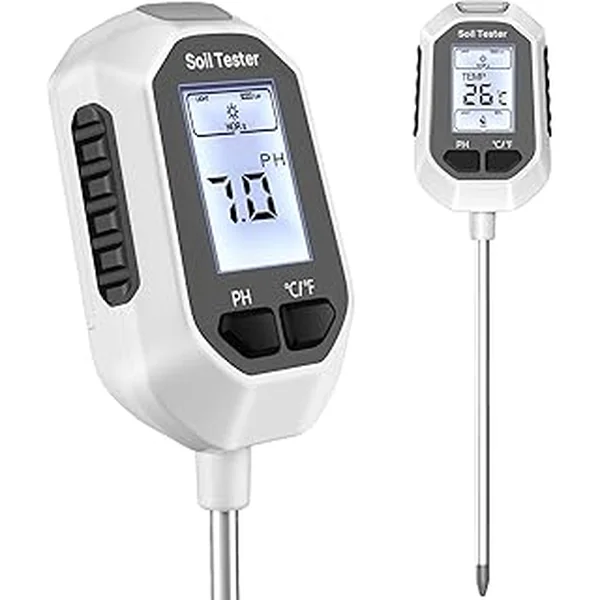
Tazart is an Amazon Associate — we earn from qualifying purchases at no extra cost to you. Thank you for helping us keep these guides free.
Frequently asked questions
How often should I water a Boston fern?
Water when the top 1-2 cm (½ in) of soil feels dry — usually every 3-5 days in summer and every 7-10 days in winter. Boston ferns prefer evenly moist soil that never dries out fully. Bone-dry soil triggers immediate frond drop. Always water thoroughly until water flows from the drainage holes, then empty the saucer.
Why is my Boston fern dropping leaves?
Frond shedding on a Boston fern is almost always a humidity problem. Below 50% relative humidity, the leaflets crisp and shatter. Other causes include dry soil, sudden temperature drops, or cold drafts. The fix is to raise humidity (humidifier, group with other plants, move to a bathroom), water more consistently, and avoid drafts.
Can a Boston fern live indoors?
Yes, but it needs higher humidity than most homes provide. Bathrooms, kitchens, and rooms with a humidifier are best. Without 50%+ humidity, indoor Boston ferns gradually thin out and shed fronds. Outdoor culture in shade is much easier in USDA zones 9-11; in colder zones, treat it as an annual outdoors or bring it inside before frost.
How much sunlight does a Boston fern need?
Bright indirect light — 4 to 6 hours of filtered or reflected daylight per day. A north- or east-facing window is ideal. Direct sun, even for an hour, scorches the fronds and turns them yellow within days. Deep shade produces sparse leggy growth and weakens the plant.
Why is my Boston fern turning brown?
Brown crispy frond tips signal low humidity. Brown fronds throughout suggest the soil dried out fully at some point. Yellow-then-brown fronds from the base mean overwatering or root rot. The fix depends on the pattern — diagnose by feeling the soil and assessing room humidity before adjusting care.
Should I mist my Boston fern?
Misting helps briefly but does not meaningfully raise long-term humidity. A small room humidifier or grouping multiple plants together has a much bigger effect. If you do mist, use distilled or rainwater (tap water leaves white spots on the fronds) and mist in the morning so the leaves dry by evening to prevent fungal spots.