Flowers
Bleeding Heart Plant Care: A Complete Shade Garden Guide
Bleeding heart plant care (Lamprocapnos spectabilis): light, soil, watering, summer dormancy, companions for the gap, and the white 'Alba' form.
On this page
- Quick answer
- Table of contents
- What bleeding heart actually is
- Light
- Soil
- Watering
- The summer dormancy thing
- Companion plants for the gap
- Fertilizing
- The white ‘Alba’ form and other cultivars
- Bleeding heart vs. fringed bleeding heart
- Common problems
- Common mistakes
- Related reading
- A note on conditions
Watch the visual walkthrough
How to Grow and Care Bleeding Heart Vine/All about Unique Flowering Vine Bleeding Heart
Me- Ranjana Lal My Channel - Home Gardening by Ranjana Lal Welcome to our Gardening channel In today's video, we're ...
Bleeding heart is the perennial that defines the cool side of spring. Arching stems hung with rows of pink, white, or rose-red lockets, lacy blue-green foliage, and an almost storybook silhouette — it is one of the few plants gardeners describe as romantic without irony.
It is also one of the most misunderstood. Bleeding heart was reclassified from Dicentra spectabilis to Lamprocapnos spectabilis in 1997, and the closely related fringed bleeding heart (Dicentra eximia) is often confused with it. Most importantly, the classic spring bleeding heart is ephemeral — it disappears in midsummer and returns the following year. New gardeners often panic, dig it up, and lose a perfectly healthy plant.
This guide covers the full care cycle: light, soil, water, the summer dormancy gap, companion plants that hide it, the white ‘Alba’ form, and how to tell true bleeding heart from its fringed cousin.
Quick answer
Plant bleeding heart (Lamprocapnos spectabilis) in part to full shade in humus-rich, evenly moist, well-drained soil at pH 6.0–7.0. Hardy in USDA zones 3–9. Foliage emerges in early spring, blooms April–June, then yellows and dies back to the ground in midsummer — this is normal dormancy, not death. Mark the spot, mulch 5 cm (2 in) deep, and let it sleep. Plant hostas or ferns nearby to cover the summer gap.
Table of contents
- What bleeding heart actually is
- Light
- Soil
- Watering
- The summer dormancy thing
- Companion plants for the gap
- Fertilizing
- The white ‘Alba’ form and other cultivars
- Bleeding heart vs. fringed bleeding heart
- Common problems
- Common mistakes
- Related reading
What bleeding heart actually is
Bleeding heart is a hardy herbaceous perennial in the poppy family (Papaveraceae). The species we grow in temperate gardens is Lamprocapnos spectabilis — native to woodland margins in Siberia, northern China, Korea, and Japan, where it grows in the cool, moist understory beneath deciduous trees.
A few details worth knowing:
- Old name vs. new name: until 1997 it was called Dicentra spectabilis. Most nursery tags still use the old name. Both refer to the same plant.
- Hardy in USDA zones 3–9. It tolerates real cold (down to about −40°C (−40°F) with snow cover) and dislikes hot dry summers.
- Long lived. A well-sited clump can persist for 20+ years without division.
- Ephemeral. This is the one quirk every gardener needs to internalize — see the summer dormancy section.
A mature plant reaches 75 to 90 cm (30 to 36 in) tall and equally wide at peak spring growth, then shrinks back to nothing by July or August. The flowers are the show: 1.5 to 2 cm (½ to ¾ in) pink-and-white locket shapes that dangle in neat rows along the underside of the arching stems for 4 to 6 weeks in mid to late spring.
Light
Bleeding heart wants part to full shade — roughly 2 to 4 hours of gentle morning sun and shade for the rest of the day. Dappled light beneath deciduous trees is ideal.
Practical rules by climate:
- Cool northern zones (USDA 3–5, UK, Pacific Northwest): tolerates more sun if the soil stays consistently moist. Even half-day sun works if the bed never dries.
- Mid zones (USDA 6–7): part shade is the sweet spot. Morning sun only, afternoon shade.
- Hot southern zones (USDA 8–9): plant in nearly full shade. Hot afternoon sun forces the plant into early dormancy by late May and shortens the bloom display dramatically.
If a clump’s leaves scorch around the edges or yellow prematurely in late spring, the most likely culprit is too much direct sun combined with dry soil. For another shade-loving perennial that pairs beautifully with bleeding heart and uses the same light range, see our coral bells care guide.
Soil
Reproduce a woodland floor and you have ideal bleeding heart soil:
- pH 6.0–7.0 — slightly acidic to neutral. Most garden soils fall in this range naturally.
- Humus-rich — fork well-rotted compost, leaf mould, or aged bark fines into the planting hole to a depth of 20–25 cm (8–10 in).
- Evenly moist but free-draining — soggy soil rots the fleshy crown; bone-dry soil triggers early dormancy.
Heavy clay benefits from raised beds 20–30 cm (8–12 in) above grade or generous compost amendment. Pure sand needs extra organic matter to hold moisture between waterings.
Planting depth matters. Set the fleshy crown so the topmost growing point sits just 2–3 cm (1 in) below the soil surface. Burying it deeper smothers spring growth; planting too high exposes the crown to drying winds and frost heaving in winter.
Watering
Bleeding heart wants consistent moisture during the spring growing and flowering season — equivalent to about 2.5 cm (1 in) of water per week from rainfall plus irrigation combined.
A few specifics:
- Water deeply when the top 2–3 cm (1 in) of soil feels dry to the touch.
- Reduce watering once the foliage starts yellowing in early summer — the plant is heading into dormancy and the roots no longer need surface moisture.
- Stop supplemental watering entirely once the plant has died back to the ground.
- Resume in late winter or early spring when new red shoots appear from the soil.
A 5 cm (2 in) layer of pine bark, shredded leaves, or composted bark mulch over the root zone (but not over the emerging crowns) keeps the soil cool and moist through warming spring weather and stretches the bloom display by a week or two.
The summer dormancy thing
This is the single most important thing to understand about bleeding heart.
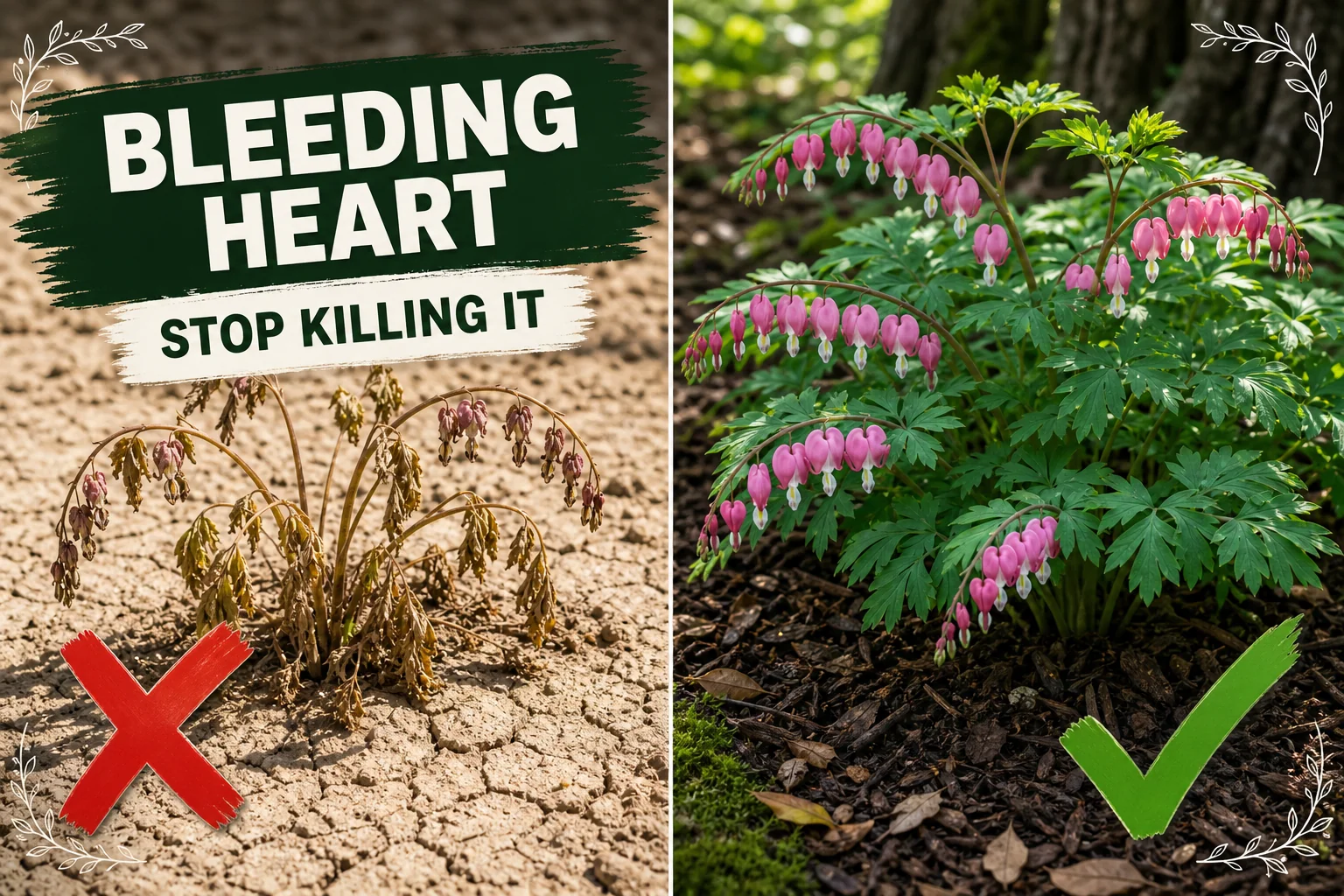
By midsummer — usually June in southern zones, July or August further north — the leaves yellow, brown, and collapse to the ground. The plant looks dead. It is not. The fleshy underground crown and root system stay fully alive and dormant; the plant has simply finished its visible season early to escape summer heat.
This pattern is called ephemerality and it is genetic — you cannot water or feed your way out of it. Some cultivars (notably ‘Gold Heart’ with its chartreuse foliage) hold their leaves slightly longer in cooler climates, but every classic Lamprocapnos eventually goes summer-dormant.
What to do:
- Wait. Let the foliage yellow completely before cutting back. Photosynthesis during the yellowing phase pumps energy into the roots for next year’s display.
- Cut to soil level once the stems are fully yellow and limp. Use clean snips.
- Mark the spot. A small plant label, a stone, or a permanent garden marker. This prevents you (or anyone helping) from digging up a “bare patch” by mistake.
- Mulch lightly over the dormant crown — 2–3 cm (1 in) of leaf mould or composted bark keeps the soil cool through summer heat.
- Plant companion perennials nearby to cover the visual gap (see next section).
The plant will resurrect itself the following spring with the first warm rain, sending up red-tinged shoots from the soil.
Companion plants for the gap
Because bleeding heart vanishes in midsummer, smart shade-garden design layers it with companions that fill the gap. Pick plants that share the same part-shade, humus-rich, evenly moist conditions:
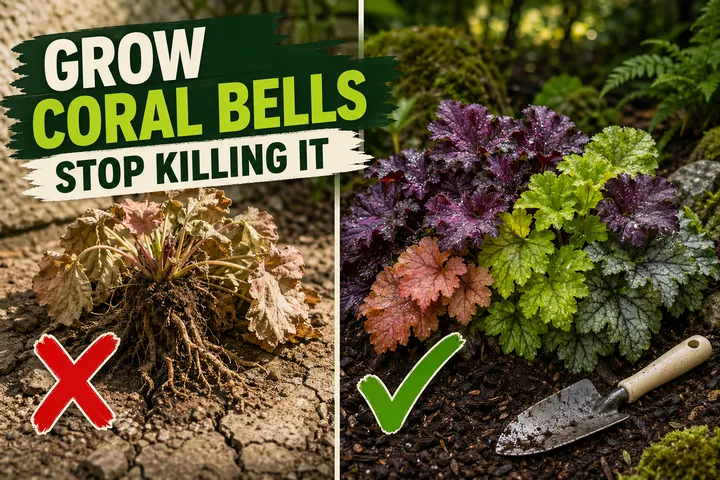
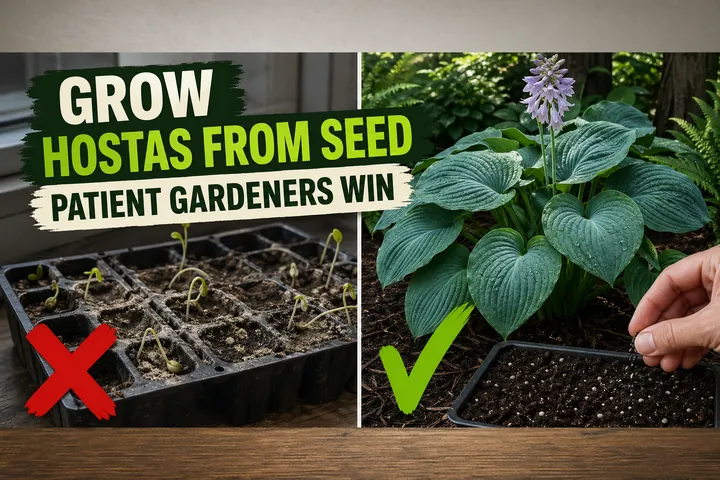
- Hostas — the classic companion. They emerge later in spring, peak in midsummer just as bleeding heart fades, and hold their broad leaves through frost. See our how to plant hosta seeds guide for starting hostas from seed.
- Coral bells (Heuchera) — evergreen mound of colorful foliage that anchors the spot year-round. Our coral bells care guide covers cultivar selection.
- Ferns — autumn fern, Japanese painted fern, and lady fern all hold through summer and into autumn.
- Astilbe — blooms in midsummer just as bleeding heart fades; fluffy plume flowers in pink, white, and red.
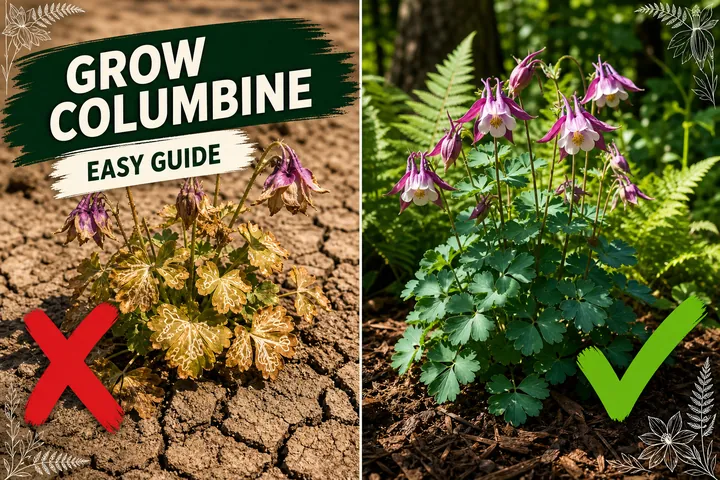
- Columbine (Aquilegia) — overlaps the bleeding heart bloom but lingers slightly longer. See our columbine flower care guide.
- Foamflower (Tiarella) — low evergreen groundcover that holds the soil cool around the dormant crown.
The best layered scheme places bleeding heart in the back-middle of a part-shade border with hostas and ferns immediately in front and to the sides. By July, the hostas have grown to fill the visual space and the bleeding heart’s absence is invisible.
Fertilizing
Bleeding heart is a light feeder.
- Early spring: top-dress with a 2–3 cm (1 in) layer of well-rotted compost around the emerging crown.
- Mid spring: a single light application of a balanced slow-release perennial fertilizer at half the label rate, scratched gently into the soil surface.
- Avoid high-nitrogen lawn fertilizer — it pushes soft floppy growth and shortens the bloom display.
That is it. A clump in good humus-rich soil rarely needs more.
The white ‘Alba’ form and other cultivars
A handful of cultivars are worth seeking out:
| Cultivar | Flower | Foliage | Notes |
|---|---|---|---|
| ’Alba’ | Pure white lockets | Soft green | The classic white form; glows in low evening light |
| ’Gold Heart’ | Pink lockets | Bright chartreuse-gold | Foliage holds longer into summer in cool climates |
| ’Valentine’ | Deep rose-red lockets with white tips | Dark green with red stems | Newer cultivar with stronger flower color |
| ’White Gold’ | White lockets | Pale gold foliage | The albino combination — needs more shade to avoid scorching |
The pure white ‘Alba’ is especially valued in moon gardens and evening borders, where the white flowers glow against the dark foliage and remain visible at dusk long after the pink form has faded into the gloom.
Bleeding heart vs. fringed bleeding heart
The two plants are often confused in the trade. Both belong to the same plant family, but they behave very differently:
| Feature | Lamprocapnos spectabilis (true bleeding heart) | Dicentra eximia (fringed bleeding heart) |
|---|---|---|
| Height | 75–90 cm (30–36 in) | 30–45 cm (12–18 in) |
| Foliage | Smooth, blue-green, hosta-like | Lacy, deeply cut, ferny |
| Bloom shape | Classic locket with two pink panels | Smaller, narrower, slimmer lockets |
| Bloom period | Mid to late spring, then dormant | Spring through autumn, repeat-blooming |
| Summer behavior | Dies back to the ground by midsummer | Stays in leaf and continues to bloom |
| Native range | East Asia | Eastern United States |
| USDA zones | 3–9 | 3–9 |
Fringed bleeding heart is the better choice if you want a long bloom display and refuse to give up garden space to a midsummer gap. The classic large bleeding heart is the better choice for sheer drama and the iconic locket shape in spring — and for the romance of having one plant that comes and goes with the seasons.
Both can be planted together. The fringed form happily fills the space the larger species vacates in midsummer.
Common problems
Yellow leaves in early summer
Almost always normal dormancy. Confirm by gently feeling the base — if the crown is firm and the surrounding soil moist but not soggy, the plant is fine. Cut back, mark the spot, and wait for spring.
Yellow leaves in spring
Usually too much sun, dry soil, or both. Move to deeper shade or amend with compost and mulch heavily.
Black mushy crown
Crown rot from waterlogged soil. Lift the plant, trim away the dark tissue with a clean knife, dust the cut with cinnamon or sulphur, and replant in a raised bed or amended hole with added grit.
Slug damage
Holes chewed in the lacy spring foliage. Hand-pick at dusk, use copper tape around the bed, or apply iron-phosphate slug pellets (pet-safe formulation) early in spring as new growth emerges.
Plant disappearing each year and “dying”
Read the dormancy section again. Mark the spot.
Not flowering
Most often too much shade (under 1 hour of light per day) or a recently transplanted clump that needs a season to settle. Bleeding heart resents root disturbance and may skip a bloom year after being moved.
Common mistakes
- Digging up a “dead” plant in midsummer. The most common reason mature bleeding hearts disappear from gardens. Always mark the spot before the foliage dies back.
- Planting in full sun. Forces early dormancy, scorches the leaves, and shortens the bloom display. Move to part shade.
- Burying the crown too deep. Smothers spring growth. Set the topmost growing point just 2–3 cm (1 in) below the surface.
- Letting the soil dry out in spring. Triggers early dormancy and a tired, half-finished bloom display. Mulch and water consistently.
- Heavy-feeding with high-nitrogen fertilizer. Produces floppy soft stems and weak flowers. A spring compost top-dress is plenty.
- Planting alone with no summer companion. Leaves a visible gap in the bed. Pair with hostas, ferns, or astilbe.
Related reading
- Coral bells care — the colorful-foliage shade perennial that fills the gap left by bleeding heart in summer.
- Columbine flower care — spring-blooming shade companion that overlaps the bleeding heart display.
- How to plant hosta seeds — the classic hosta companion grown from seed for budget-friendly mass plantings.
- Water avens plant care — another moisture-loving shade perennial that pairs well with bleeding heart in damp borders.
Track bleeding heart’s spring emergence, bloom window, and the summer dormancy markers with the free Tazart plant care app — a reminder to mark the spot before cut-back day saves a lot of accidentally dug-up crowns.
A note on conditions
Every shade garden is slightly different. Your local soil composition, summer heat, winter snow cover, and the species of tree overhead all change how bleeding heart actually behaves in your bed. The numbers in this guide — bloom in April–June, dormancy by midsummer, hardy in USDA 3–9 — are reliable starting points. The plant itself will tell you whether the spot is right within its first full season: lush foliage and a long bloom display mean keep the conditions as-is; a short tired display means deeper shade, more compost, and more consistent moisture next year.
Highly recommended
The supplies that make this guide work
Tazart is an Amazon Associate — we earn from qualifying purchases at no extra cost to you. Thank you for helping us keep these guides free.
Frequently asked questions
Is bleeding heart sun or shade?
Part to full shade. Lamprocapnos spectabilis evolved on woodland edges and dislikes direct afternoon sun. Aim for 2-4 hours of gentle morning light followed by shade for the rest of the day. In cool northern climates it tolerates more sun if the soil stays consistently moist; in hot southern zones it needs near-full shade.
Why is my bleeding heart turning yellow in summer?
Yellow foliage in early to mid summer is almost always normal ephemeral dormancy — the plant naturally dies back to the ground after flowering once temperatures rise. The roots stay alive and dormant in the soil and the plant returns next spring. Cut back the yellowing stems to soil level and mark the spot so you do not accidentally dig it up.
Is bleeding heart a perennial?
Yes — bleeding heart is a long-lived herbaceous perennial hardy in USDA zones 3 to 9. A well-sited clump can live for 20 years or more without needing division. It returns each spring from the same fleshy root system and slowly expands into a graceful arching mound.
When does bleeding heart bloom?
Bleeding heart blooms in mid to late spring, typically April through early June depending on your zone. The locket-shaped flowers dangle in rows along arching stems and last 4 to 6 weeks. Bloom ends when daytime temperatures consistently exceed 24°C (75°F) and the plant starts heading into summer dormancy.
Is bleeding heart poisonous to dogs?
Yes, mildly. All parts of the plant contain isoquinoline alkaloids that can cause vomiting, drooling, and lethargy if a dog eats a significant quantity. The sap can also irritate skin. Plant in a spot pets do not graze, and wear gloves when dividing or pruning.
How big does bleeding heart get?
A mature Lamprocapnos spectabilis reaches 75 to 90 cm (30 to 36 in) tall and equally wide at peak spring growth. The fringed bleeding heart (Dicentra eximia) is much smaller — about 30 to 45 cm (12 to 18 in) — and does not go fully dormant in summer, making it a useful gap-filler companion.