Houseplants
Best Plants for Bathroom: 10 Humidity-Loving Picks
Discover the 10 best plants for bathroom spaces — humidity-loving tropicals that thrive where others fail, plus which plants to never put in a bathroom.
On this page
Watch the visual walkthrough
Best Houseplants For Bathrooms
My Top 10 Houseplants that do really well in the Bathroom with Low Light 1:29 Dieffenbachia 1:54 Asparagus Fern 2:24 Golden ...
Bathrooms are one of the most underused spaces for houseplants — and one of the best. The steam from your daily shower delivers exactly the high humidity that tropical plants crave but rarely get in typical home conditions.
The catch: not every plant survives in a bathroom. Succulents rot. Lavender turns to mush. Fiddle leaf figs sulk. But the plants on this list were practically made for the conditions you generate every morning.
This guide covers the 10 best plants for bathroom use, how low-light vs windowed bathrooms change your options, what to absolutely avoid, and the drainage rules that apply to every single plant on this list.
Quick answer
The best plants for a bathroom are Boston fern, calathea, prayer plant, peace lily, ZZ plant, snake plant, pothos, philodendron, bird’s nest fern, and spider plant. All tolerate 60–90% humidity and indirect light. Never put succulents, cacti, lavender, or rosemary in a bathroom — they rot in constant moisture. Every bathroom plant must be in a pot with a drainage hole.
Table of contents
- Why bathrooms are great for tropical plants
- Low-light vs windowed bathrooms
- The 10 best plants for a bathroom
- Plants you should never put in a bathroom
- Drainage: the rule that applies to all of them
- Care adjustments in a humid bathroom
- FAQs
Why bathrooms are great for tropical plants
Most houseplants sold in garden centres are native to tropical and subtropical rainforests — places where humidity stays between 60–90% year-round. Your home’s living room runs at roughly 30–50% relative humidity, which is already stressful for many of them.
A bathroom with regular shower use regularly spikes to 70–90% humidity during and after a shower. That steam is exactly the environment a Boston fern, calathea, or prayer plant evolved for. It means:
- Leaves stay hydrated without misting
- Brown crispy tips (the #1 symptom of low humidity) disappear
- Growth rate visibly increases in spring and summer
- You water less often, because the air itself reduces water loss through the leaves
The trade-off is light — bathrooms often have smaller or frosted windows, and some have no windows at all. That’s the variable that determines which plants from the list below will work for your specific space.
Low-light vs windowed bathrooms
Before picking plants, assess your bathroom’s light:
Windowed bathroom (natural light present) Any plant on the top-10 list below will thrive. South- or east-facing windows support the full list. North-facing windows still suit calathea, pothos, peace lily, ZZ plant, snake plant, and bird’s nest fern — all genuine low-light performers.
Frosted-window bathroom Frosted glass transmits diffused light but filters out direct sun. Good for pothos, peace lily, snake plant, ZZ plant, spider plant, and calathea. Boston fern and bird’s nest fern can manage near a frosted window if the glass isn’t deeply obscured.
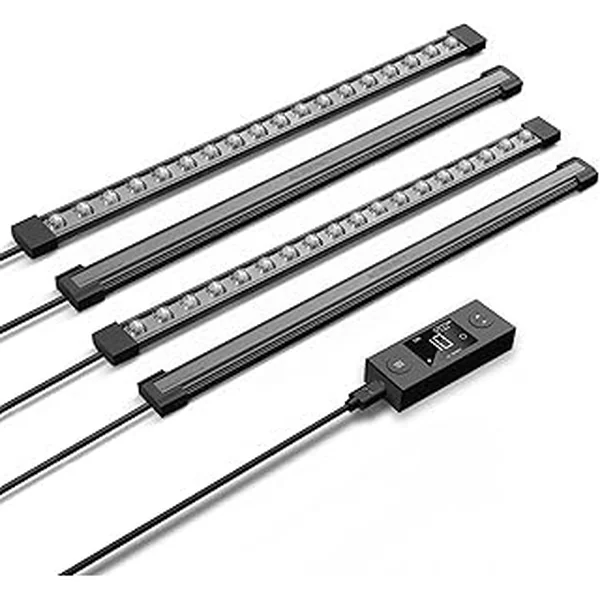
Windowless bathroom Needs a full-spectrum LED grow light on a timer (10–12 hours on, 12–14 hours off). ZZ plant and pothos are your safest choices here — they handle the lowest light of any plant on this list. Other tropicals like calathea and peace lily can survive under a grow light, but they need a quality one placed no more than 30–60 cm (12–24 in) above the foliage.
The 10 best plants for a bathroom
1. Boston fern (Nephrolepis exaltata)
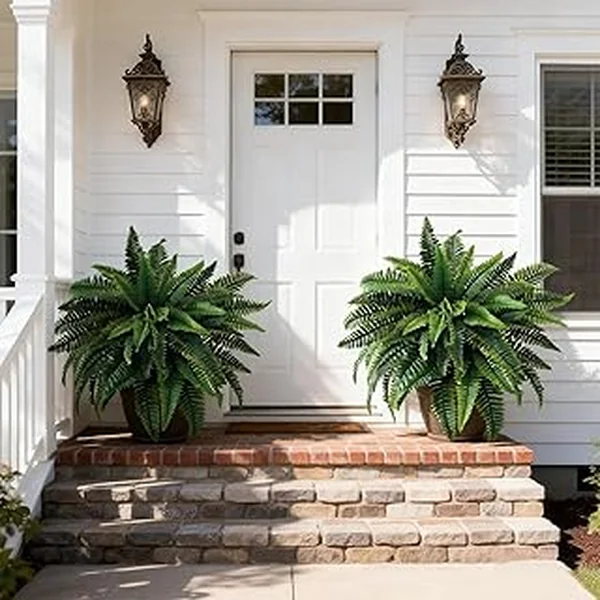
Boston fern is the benchmark bathroom plant. It craves humidity above everything else — bathrooms solve its single biggest problem before you even start. In a typical home, Boston ferns need constant misting or a humidifier nearby to avoid brown fronds. In a bathroom, the shower steam does it for free.
Light: Bright indirect light. A clear or slightly frosted east-facing window is ideal. Watering: Keep the soil evenly moist but never waterlogged. In a humid bathroom, water approximately every 5–7 days in summer, every 10–14 days in winter. Humidity: Loves 60–80%+ — a steamy bathroom is essentially its natural habitat. Temperature: Prefers 15–24°C (60–75°F). Don’t let it drop below 10°C (50°F). Warning: Needs bright indirect light — a completely dark bathroom will kill it even with perfect humidity.
2. Calathea (Goeppertia spp.)
Calathea is famous for crispy brown leaf edges in typical home conditions — caused almost entirely by low humidity and tap water sensitivity. A bathroom solves the humidity half of the equation instantly. Calatheas are also one of the most visually dramatic houseplants: striped, patterned, and in some varieties, deep purple underneath.
Light: Low to medium indirect light. Tolerates north-facing windows well. Watering: Water when the top 2 cm (0.75 in) of soil is dry, using filtered water or rainwater — calatheas are sensitive to fluoride and chlorine in tap water. Humidity: Loves 60%+. Bathrooms eliminate the most common cause of calathea failure. Temperature: 18–27°C (65–80°F). Sensitive to cold draughts — keep away from air conditioning vents.
3. Prayer plant (Maranta leuconeura)
Closely related to calathea and shares the same humidity requirements. Prayer plants are slightly more tolerant of irregular watering, which makes them a good first-choice for beginners who want the dramatic foliage of the Marantaceae family. The daily leaf movement — folding upward at night, opening in the morning — is a healthy sign and looks particularly striking on a bathroom shelf.
Light: Bright indirect light or lower. Handles a metre or two back from a north-facing window. Watering: Water when the top 2 cm (0.75 in) is dry. Use room-temperature filtered water when possible. Humidity: 50–60%+ preferred. A bathroom delivers this naturally. Temperature: 18–27°C (64–81°F).
4. Peace lily (Spathiphyllum wallisii)
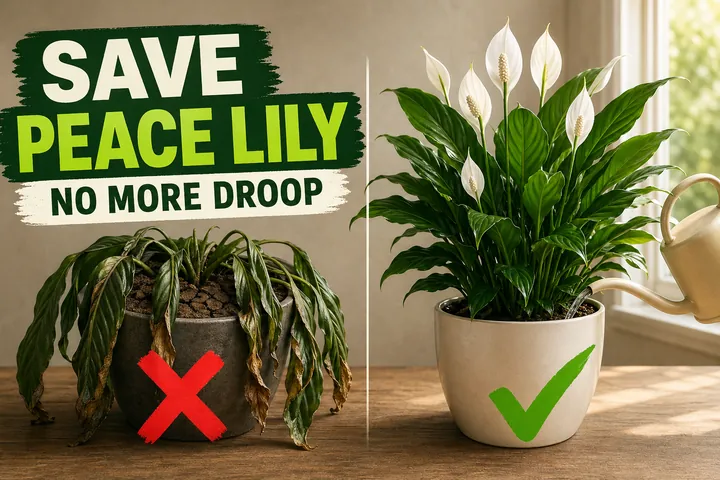
Peace lily is one of the best all-round bathroom plants: it tolerates low light better than most flowering plants, loves high humidity, and produces elegant white spathe blooms when happy. It also droops visibly when thirsty, which makes watering timing intuitive.
Light: Low to medium indirect light. One of the best performers in north-facing bathroom windows. Watering: Water when the leaves just begin to droop slightly — roughly every 7–10 days in summer. Bathrooms reduce this frequency by keeping the air humid. Humidity: Thrives at 50–80%. Will noticeably boost its growth rate in a bathroom versus a dry living room. Warning: Toxic to cats and dogs. Keep on a high shelf or choose a different plant if your pet has bathroom access.
5. ZZ plant (Zamioculcas zamiifolia)
ZZ plant is the closest thing to an indestructible houseplant. It stores water in thick underground rhizomes, meaning it can go weeks without watering and tolerate very low light. It also doesn’t mind bathroom humidity — unlike succulents, it doesn’t rot from ambient moisture when the soil is allowed to dry between waterings.
Light: Low to medium indirect light. One of the top two choices for windowless bathrooms with a grow light. Watering: Every 2–3 weeks in summer, every 3–4 weeks in winter. Let the soil dry fully between waterings. Humidity: Tolerant of a wide range — from typical dry home air to humid bathroom air. Note: ZZ plant grows slowly, but its waxy, deep-green leaves stay polished and lush in a bathroom year-round.
6. Snake plant (Dracaena trifasciata, formerly Sansevieria)
Unlike most succulents, snake plants handle humid conditions without rotting — as long as their soil is allowed to dry properly between waterings. They are one of the most low-maintenance bathroom plants available: tough, architectural, and tolerant of everything from low light to occasional neglect.
Light: Low to bright indirect light. Very adaptable. Watering: Every 2–3 weeks in summer, every 4–6 weeks in winter. Overwatering in a humid bathroom is the one real risk — let the soil dry completely before watering again. Humidity: Tolerant of high humidity as long as drainage is good and watering is infrequent. Temperature: 15–27°C (60–80°F). Dislikes prolonged cold below 10°C (50°F).
7. Pothos (Epipremnum aureum)
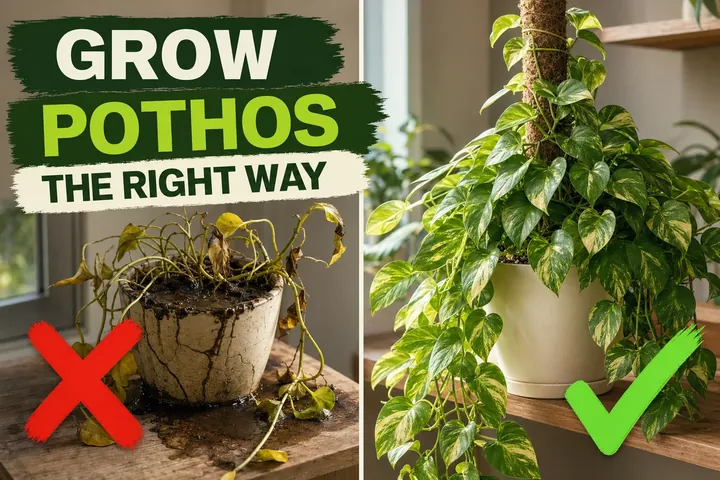
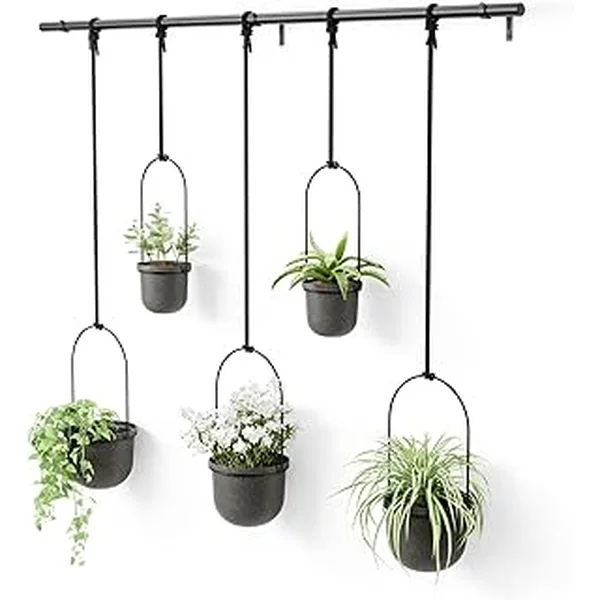
Pothos is possibly the easiest trailing plant for a bathroom. It trails beautifully from shelves, tolerates low light, and actually grows noticeably faster in high humidity. It’s an ideal choice for a bathroom with a high shelf or a hanging planter — letting the vines drape down toward the steam from the shower.
Light: Low to bright indirect light. Handles a windowless bathroom under a grow light better than almost any other trailing plant. Watering: Every 7–10 days in summer. In a humid bathroom, you can stretch this to every 10–14 days because the air reduces water loss. Humidity: Loves 50–70%+. Humidity visibly speeds up its growth. Note: Toxic to cats and dogs. Hang it high if pets have bathroom access.
8. Philodendron (Philodendron spp.)
Both heartleaf philodendron (Philodendron hederaceum) and split-leaf types handle bathroom conditions well. They share the same humid tropical origins as pothos, trail similarly well, and are slightly more forgiving of occasional over-watering. In a humid bathroom they push out new leaves at a noticeably faster rate than in a dry living room.
Light: Medium indirect light is ideal. Tolerates lower light well. Watering: Water when the top 2–3 cm (about 1 in) of soil is dry. Reduce frequency by 20–30% in a bathroom versus a dry room. Humidity: Thrives at 60%+. Grows faster and the leaves stay larger in consistent humidity. Temperature: 18–26°C (65–80°F).
9. Bird’s nest fern (Asplenium nidus)
Bird’s nest fern is one of the most architecturally interesting plants for a bathroom. Its wide, wavy fronds fan outward from a central “nest” rosette. It’s native to the humid understory of tropical Asian rainforests and actually struggles in the dry air of a typical home. A bathroom solves its biggest challenge — humidity — and gives it a genuinely excellent growing environment.
Light: Low to medium indirect light. Tolerates north-facing windows. Keep away from direct sun, which scorches and crisps the fronds. Watering: Keep the soil lightly moist. Water around the edges of the pot, not into the central rosette — trapped water in the crown causes rot. Humidity: Loves 60–80%+. One of the most humidity-dependent plants on this list — a bathroom is close to ideal. Temperature: 18–27°C (65–80°F).
10. Spider plant (Chlorophytum comosum)
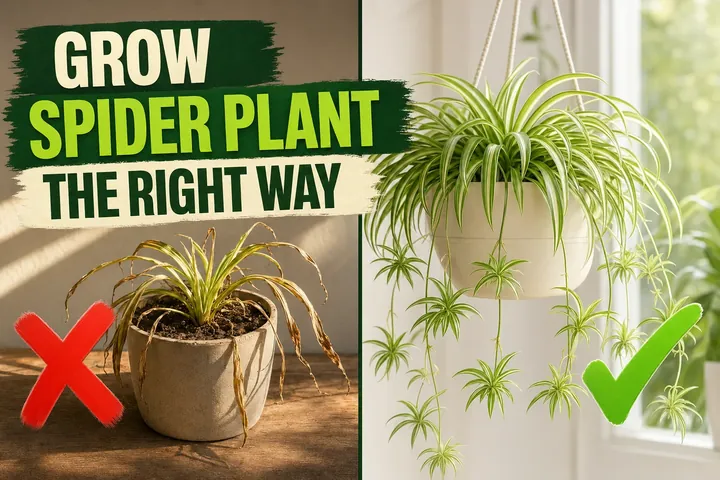
Spider plant is one of the most tolerant houseplants available and adapts remarkably well to bathroom conditions. It’s a good choice for beginners and families because it’s non-toxic to cats and dogs (the only one on this list alongside calathea, prayer plant, and bird’s nest fern). In a bathroom it produces cascading “spiderettes” faster than in a dry room.
Light: Medium indirect light. Handles lower light but produces fewer offshoots. Watering: Every 7–10 days in summer. Let the top 2–3 cm (1 in) of soil dry between waterings. Humidity: Appreciates 50%+. Humidity reduces the brown tip problem that spider plants commonly show in dry homes. Temperature: 13–27°C (55–80°F). One of the most temperature-tolerant plants on this list.
Plants you should never put in a bathroom
The bathroom environment is hostile to one entire category of plants: drought-adapted species from arid or Mediterranean climates.
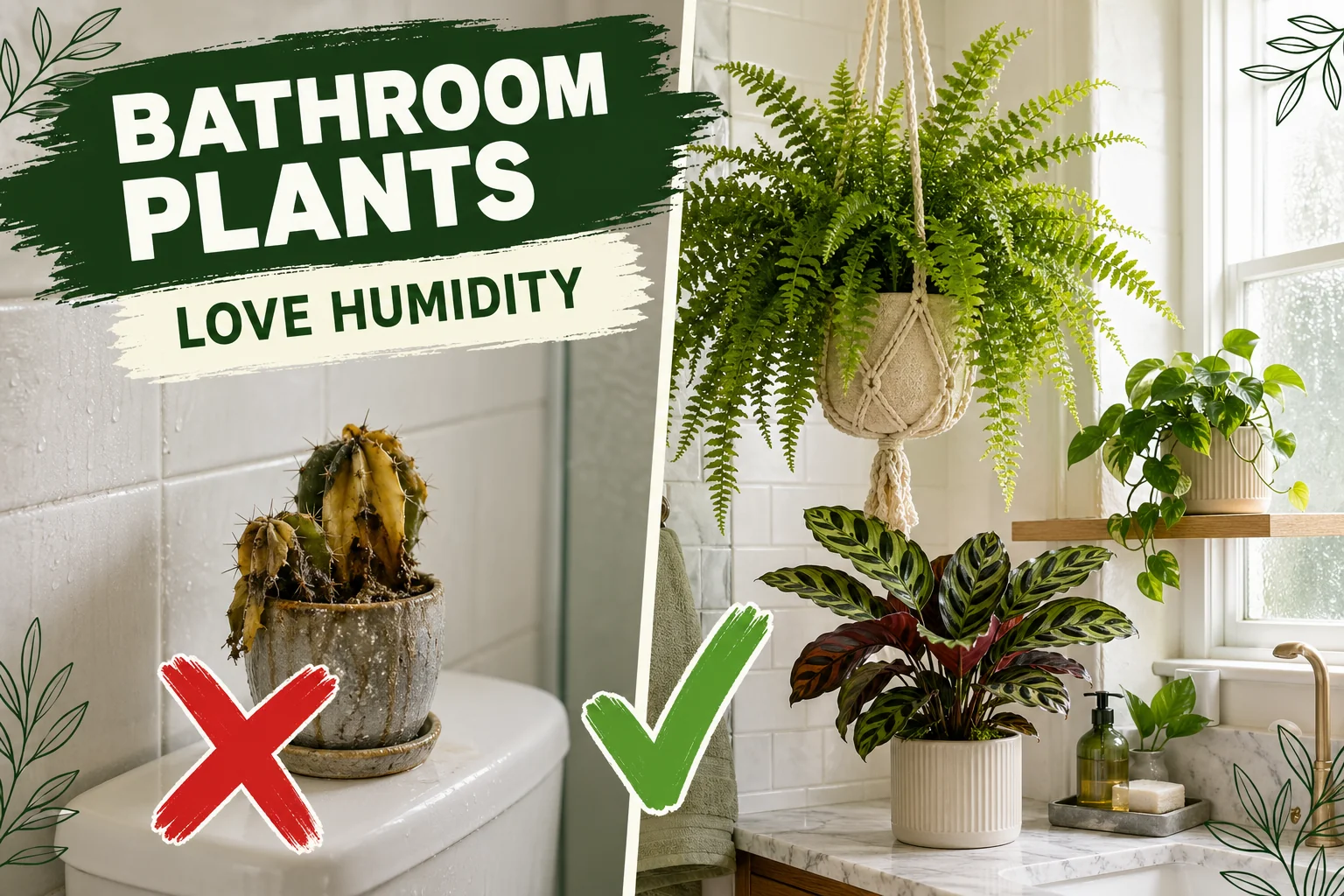
Succulents and cacti — Echeveria, haworthia, aloe, jade plant, various cacti — these evolved in environments with weeks of drought followed by heavy rain, then drying out quickly. Bathroom air keeps the soil surface perpetually damp. Even with good drainage, their roots develop rot within weeks of constant ambient moisture.
Lavender — Lavender requires low humidity, excellent airflow, and full direct sun. A bathroom provides the opposite on all three counts. Expect mildew on the foliage and root rot within a month.
Rosemary and most Mediterranean herbs — Same issue. Rosemary, thyme, sage, and oregano come from dry, sunny hillsides. They tolerate drought and direct sun far better than they tolerate soggy, humid conditions. Keep herbs on a sunny kitchen windowsill instead.
Fiddle leaf fig (Ficus lyrata) — Despite being a tropical plant, fiddle leaf figs are highly sensitive to humidity fluctuations. A bathroom that swings from 30% to 90% humidity twice a day as people shower causes dramatic leaf drop and stress. They prefer stable, moderate humidity — not the dramatic swings of a bathroom.
Orchids (most varieties) — Orchids prefer good airflow and careful watering rather than constant humidity. The stagnant humid air of a sealed bathroom can encourage crown rot and fungal issues. If you want orchids, a bathroom with good ventilation and an openable window can work — but a sealed, poorly ventilated bathroom is not suitable.
Drainage: the rule that applies to all of them
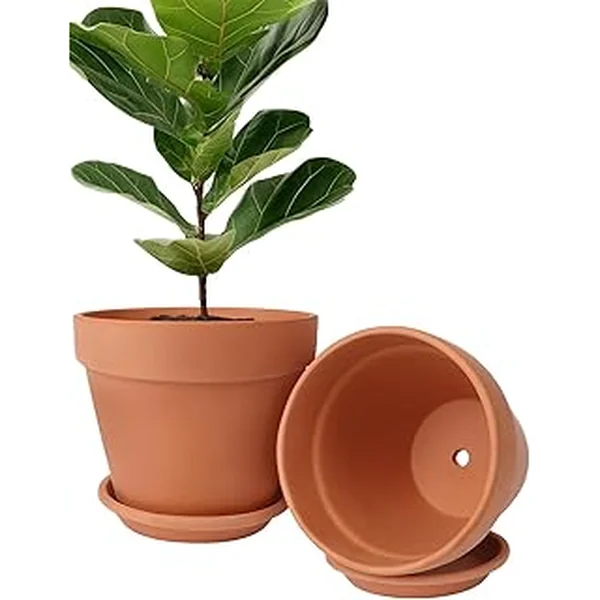
This rule applies to every single plant on this list without exception: the pot must have at least one drainage hole.
A high-humidity bathroom already keeps the soil moisture level elevated. Without drainage holes, excess water has nowhere to go and the roots sit in standing water — the fastest route to root rot for any plant.
If you love a decorative pot without a drainage hole, use it as a cachepot: keep the plant in a plain nursery pot with drainage inside it, then lift the plant out to water it at the sink and let it drain fully before replacing it in the decorative outer pot.
Terracotta pots work particularly well in bathrooms because the porous clay actively wicks and releases moisture, which provides an additional buffer against overwatering.
Care adjustments in a humid bathroom
Moving a plant into a bathroom changes its baseline water needs. Apply these adjustments:
Water less often. High humidity reduces transpiration — the plant loses less water through its leaves. Reduce your usual watering frequency by approximately 25–30% compared to the same plant in a typical dry room. Always check the soil before watering; never water on a fixed schedule.
Watch for fungal issues. In a poorly ventilated bathroom, stagnant humid air can encourage mould on the soil surface or fungal spots on foliage. Run the exhaust fan during and after showers if you have one. Remove any dead or fallen leaves promptly.
Wipe the leaves. Bathroom steam deposits minerals and soap particles on foliage over time. Gently wipe large-leaved plants (peace lily, philodendron, ZZ plant) with a damp cloth monthly to keep the stomata clear and the leaves photosynthesising efficiently.
Fertilise in spring and summer only. High humidity slows growth slightly in some plants (they’re using less energy on water-stress responses), but the growing season rhythm stays the same. A balanced liquid fertiliser at half-strength, monthly from April to September, is enough for all the plants on this list.
Add a grow light if needed. Light is the real limiting factor in bathroom plant care — not humidity. A quality full-spectrum LED grow light bar on a 12-hour timer compensates for any shortfall in natural light and opens up your bathroom to almost the full range of tropicals on this list.
Related posts
Highly recommended
The supplies that make this guide work
Tazart is an Amazon Associate — we earn from qualifying purchases at no extra cost to you. Thank you for helping us keep these guides free.
Frequently asked questions
What plants grow best in a bathroom?
The best plants for a bathroom are those native to tropical rainforest floors — they already evolved to handle high humidity, warm temperatures, and filtered light. Top picks include Boston fern, calathea, prayer plant, peace lily, pothos, philodendron, ZZ plant, snake plant, bird's nest fern, and spider plant. All handle the 60–90% humidity that a bathroom generates during and after showers.
Can plants survive in a bathroom with no window?
Some can, but only in a windowless bathroom if you add a grow light on a timer for at least 10–12 hours daily. ZZ plant and pothos are the most tolerant of very low light. Everything else needs some natural light — even indirect — to stay healthy long-term. A full-spectrum LED grow light bar set to 12 hours on / 12 hours off will support most of the plants on this list in a windowless space.
Do plants like bathroom humidity?
Tropical plants genuinely love bathroom humidity. Most homes run at 30–50% relative humidity, which is already low for many tropicals. Bathrooms spike to 70–90% during showers — exactly the environment Boston ferns, calathea, peace lilies, and bird's nest ferns come from. The steam that stresses humans actively helps these plants grow faster and produce healthier foliage.
What plants should you not put in a bathroom?
Avoid succulents, cacti, lavender, rosemary, and any Mediterranean herb. These plants evolved in dry, arid climates with intense direct sun. Constant bathroom humidity causes root rot and fungal problems within weeks. Fiddle leaf figs also dislike the humidity fluctuations — they want stable, dry conditions. If you love succulents, keep them on a sunny windowsill in a drier room.
Is a peace lily good for a bathroom?
Yes — peace lily is one of the best bathroom plants available. It thrives in high humidity, tolerates low to medium indirect light, and produces elegant white blooms. The only requirement is that it must have a pot with drainage holes — peace lilies in standing water develop root rot. Place it on a shelf near (but not in) a window, or under a grow light if your bathroom has no windows.
Can a snake plant live in a bathroom?
Yes. Snake plants are among the most adaptable houseplants and can handle the humidity of a bathroom without any issues — unlike most other succulents, they don't rot easily in humid conditions. They need a pot with drainage holes and should not be watered more often than every 2–3 weeks. A bathroom with some natural light is ideal; a windowless bathroom with a grow light also works.
Why are my bathroom plants dying?
The two most common causes are overwatering (the humidity reduces the plant's water need, so many people still water on their usual schedule and drown the roots) and insufficient light (bathrooms with frosted or no windows often have too little light even for shade-tolerant plants). Check drainage first — all bathroom pots must have drainage holes. Then check light — add a grow light if needed. Finally, reduce watering frequency by about 30% compared to the same plant in a drier room.