Edible
Basil Plant Care: The Complete Guide (Sweet Basil)
Master basil plant care — sunlight, watering, pinching to prevent bolting, harvest technique, common varieties, and fixes for downy mildew and Fusarium wilt.
On this page
- Quick answer
- Table of contents
- Light requirements
- Watering basil correctly
- Feeding and soil
- Pinching — the #1 skill
- How to harvest basil
- Basil varieties
- Indoor vs outdoor basil
- Common problems
- Troubleshooting quick-reference table
- Watch: Basil Care Video Guide
- Related reading
- Summary: basil plant care checklist
Watch the visual walkthrough
How to Prune Basil So It Grows Forever!
Get free seeds, shipping, and returns: https://www.epicgardening.com/greenhouse/ Pruning basil to promote growth is one of the ...
Basil is one of the most rewarding herbs to grow — but also one of the fastest to go wrong. Buy a supermarket pot, skip one or two key steps, and within a fortnight you have a bitter, flowering, leggy plant that tastes nothing like the pesto you were imagining.
The good news: basil care has exactly one real secret. It is called pinching. Do that one thing consistently and basil practically grows itself.
Quick answer
Basil (Ocimum basilicum) needs 6–8 hours of direct sun, consistent moisture (never waterlogged, never bone dry), and weekly pinching of every flower spike and growing tip. Pinching above a leaf node triggers two new branches to grow from that point — done every 1–2 weeks, it turns one spindly plant into a dense bush. Feed lightly with a balanced liquid fertiliser once a month. Harvest always above a leaf node pair. Indoors, supplement with a full-spectrum LED grow light if window light is below 6 hours.
Table of contents
- Light requirements
- Watering basil correctly
- Feeding and soil
- Pinching — the #1 skill
- How to harvest basil
- Basil varieties
- Indoor vs outdoor basil
- Common problems: downy mildew, Fusarium wilt, and more
- Troubleshooting quick-reference table
- FAQ
Light requirements
Basil is a sun worshipper. It evolved in tropical Asia and Africa — full tropical sun, no shade, high heat. In a garden or on a balcony, aim for at least 6 hours of direct sun per day, with 8 hours being the productive sweet spot.
Below 6 hours of direct light:
- Stems stretch and elongate (the plant is reaching toward the light source)
- Leaves pale from deep green to yellowish green
- Bolting happens earlier and faster
- Flavour weakens — the essential oils responsible for basil’s aroma need heat and sun to concentrate
Best outdoor position: south- or west-facing, unobstructed from mid-morning sun, sheltered from harsh drying winds.
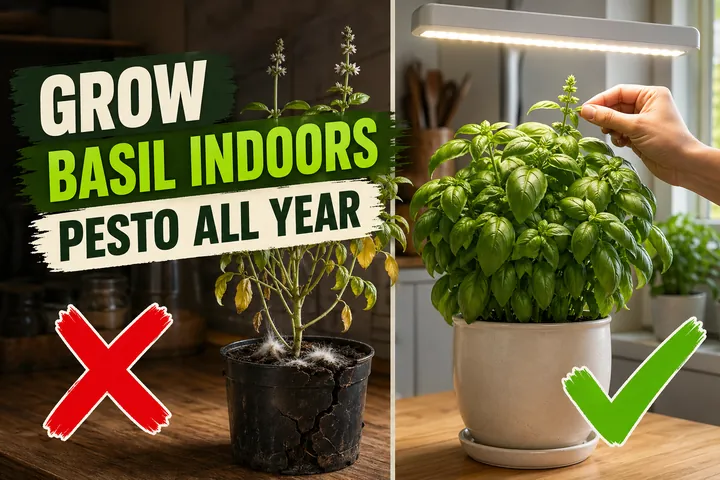
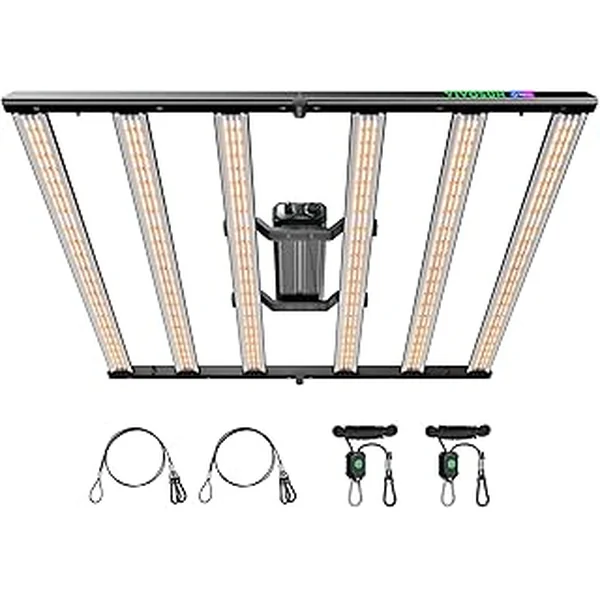
Indoors: A south-facing window in summer can deliver borderline-sufficient light. In winter — or in flats with limited window access — a full-spectrum LED grow light bar positioned 15–25 cm (6–10 in) above the plant on a 12-hour timer is not optional, it is the only way to keep basil genuinely productive. Read the full detail in our guide to growing basil indoors year-round.
Watering basil correctly
Basil wants consistent moisture — not wet, not dry. It will tolerate neither extreme gracefully.
The watering rule: Check the top 2–3 cm (0.75–1 in) of soil with your finger. When it feels dry, water deeply. When still moist, leave it alone.
In practice this translates to:
- Outdoor pots in summer: every 2–3 days, sometimes daily above 30°C (86°F)
- In-ground garden beds: every 3–4 days in warm dry weather; rainfall takes care of the rest
- Indoors: every 3–5 days; more often under a grow light
How to water: Pour slowly at the base of the plant (not over the leaves) until water flows freely from the drainage holes. Then stop — let the pot drain completely before the next watering. For a full breakdown of intervals by season, container size, and climate, our dedicated guide on how often to water a basil plant covers the specifics in detail.
What to avoid:
- Standing water in a saucer under the pot → root rot
- Overhead watering in humid conditions → promotes downy mildew
- Letting soil go bone dry → wilting stresses the plant, accelerates bolting
Feeding and soil
Soil
Basil is not demanding, but it does need:
- Well-draining, light, fertile mix — heavy clay or compacted garden soil suffocates the roots
- pH 6.0–7.0 (slightly acidic to neutral)
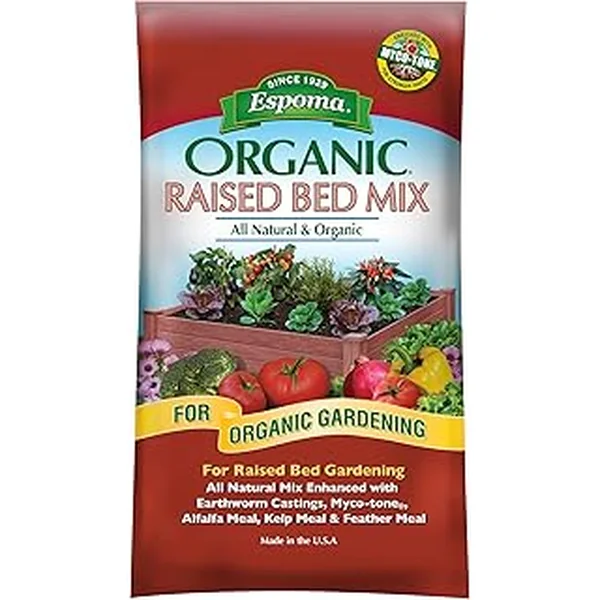
- Good moisture retention without waterlogging — a quality peat-free potting mix, or garden soil amended with perlite and compost, works perfectly
Avoid over-rich or very high-nitrogen soils. Too much nitrogen produces large leaves with poor flavour — you want the plant to work slightly for its nutrients.
Feeding
Basil is a light feeder. Over-fertilising produces lush but flavourless leaves.
Recommended routine: A balanced liquid fertiliser (e.g. 10-10-10 or similar) diluted to half-strength, applied once a month during the growing season. In containers, where nutrients flush out with every watering, you can feed every 4–6 weeks. In rich garden beds, you may not need to feed at all if you top-dressed with compost at planting.
What to avoid: Heavy nitrogen-only feeds. Slow-release fertiliser granules designed for lawns. Any feed with very high phosphorus in the vegetative stage.
Pinching — the #1 skill
This is the skill that separates thriving, bushy basil from a one-hit-wonder stalk. Understand it once and you will never struggle with basil again.
Why pinching works
Basil (like all members of the mint family, Lamiaceae) has leaf nodes arranged in opposite pairs up every stem. At each node, two leaves emerge — and two dormant buds sit at the base of those leaves.
When you remove the growing tip of a stem (the topmost leaf pair), the apical-dominance hormone signal disappears. The plant redirects energy to the two dormant buds at the node below. Both buds activate and grow into full new stems. Cut one tip → two new stems form.
Repeat this process across every stem every 1–2 weeks and one plant exponentially multiplies its branching. After 4–5 rounds of pinching, a single seedling becomes a dense 30–40 cm (12–16 in) wide bush capable of large weekly harvests.
How to pinch basil: step by step
- Identify the growing tip — the topmost pair of leaves on any stem.
- Find the node below — the point where the pair of leaves below the tip emerges from the stem.
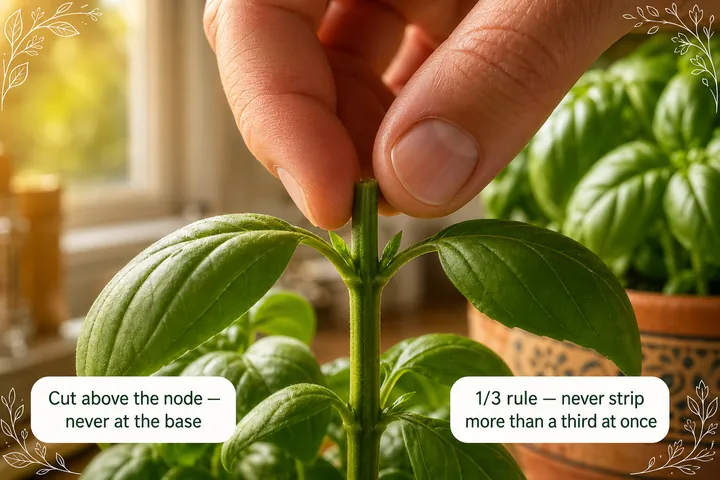
- Pinch or snip just above that lower node — remove the top two sets of leaves entirely.
- Repeat on every stem of the plant.
- Watch for two new shoots to emerge from the pinched node within 7–10 days.
- Pin the calendar — repeat in 1–2 weeks.
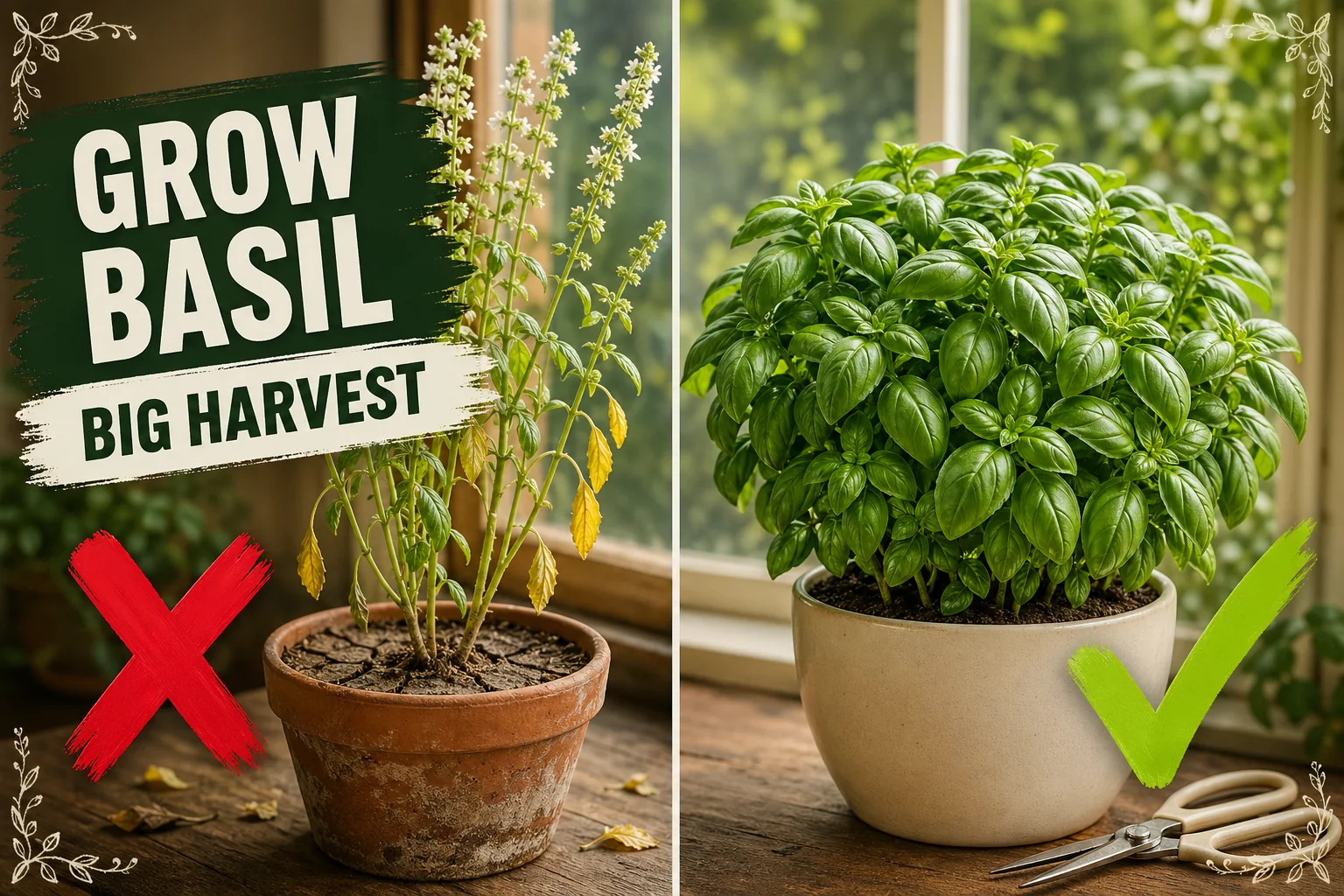
Flower spike pinching: The moment you see a flower spike forming (a thinner, elongated shoot at the top with tiny leaves getting progressively smaller), pinch it off immediately. Do not wait for flowers to open. Once basil flowers, the plant prioritises seed-setting, leaf production drops, and flavour turns bitter. Pinch proactively, every single visit to the plant.
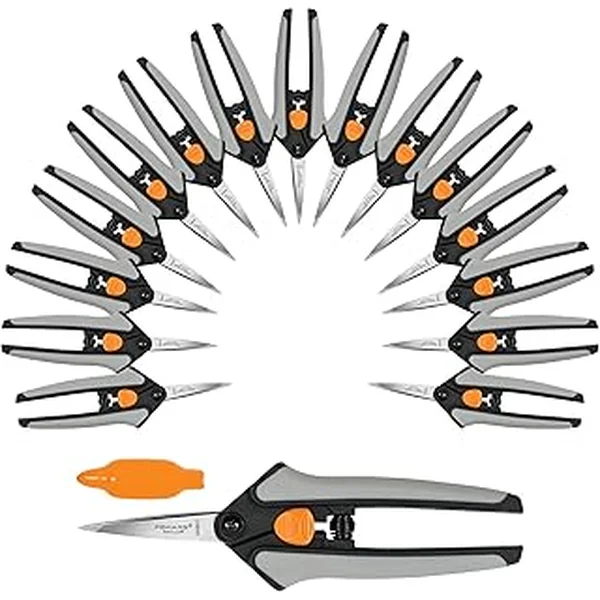
Tools: You can use clean fingers (the traditional method) or precision herb scissors. Either works. If the stems are woody or thick, scissors give a cleaner cut with less tearing.
How to harvest basil
Harvesting and pinching are essentially the same action — every harvest should be a pinch.
The rule: Always cut above a leaf node pair. Never strip leaves off the lower stem. Never pull the whole plant.
Step-by-step harvest
- Choose a stem with at least 3–4 node pairs of growth above the base.
- Count up two node pairs from the bottom of the stem.
- Cut just above that second node pair — leave two full sets of leaves and nodes intact on the plant.
- Use what you harvested — the top stems, the leaves, or both.
- The remaining stub regenerates two new shoots from the cut node within a week.
Volume rule: Never harvest more than one-third of the plant in a single session. Taking more shocks the plant and slows recovery.
Best time to harvest: Morning, after any dew has dried. Leaf oil content is highest in the morning, flavour is at its peak, and cut surfaces dry quickly in the day’s warmth — reducing the risk of fungal entry.
For a complete deep-dive on harvest mechanics, see our full guide: How to Cut Basil from a Plant.
Basil varieties
Sweet basil (Ocimum basilicum) covers dozens of cultivars. Here are the ones worth knowing:
| Variety | Flavour | Size | Best use | Notes |
|---|---|---|---|---|
| Genovese | Classic sweet, clove-anise | Large leaves, 45–60 cm (18–24 in) tall | Pesto, pasta, caprese | The gold standard for Italian cooking |
| Thai basil | Spicy anise-clove | Smaller leaves, purple stems, 30–45 cm (12–18 in) | Asian stir-fries, curries | More heat and bolt-tolerant than Genovese |
| Lemon basil | Citrus-basil | Compact, 30–40 cm (12–16 in) | Fish dishes, drinks, desserts | Very fragrant; prone to bolting in heat |
| Purple / Dark Opal | Slightly spicier than Genovese | Medium, 30–40 cm (12–16 in) | Salads, garnish, infused oils | Ornamental value; slower grower |
| Eleonora / Prospera | Classic sweet | Compact | Same as Genovese | Downy mildew resistant — best choice in humid gardens |
Grow mix tip: Planting two or three varieties in separate pots gives you flavour range for cooking and hedges against one losing to disease.
Indoor vs outdoor basil
Outdoors
- Plant out after last frost, when overnight temperatures stay reliably above 10°C (50°F). Basil dies at frost.
- Full sun position is almost always achievable.
- Natural rain handles most watering — supplement in dry spells.
- More air movement helps prevent fungal problems.
- Growth is faster and more vigorous than indoors.
- In hot climates above 35°C (95°F), light afternoon shade protects leaves from scorching.
Indoors
- Can grow year-round if light is sufficient.
- The main challenge is light — see the LED grow light note above.
- Keep temperatures above 18°C (65°F); basil shows chill damage below 10°C (50°F).
- Keep away from cold draughts, air-conditioning vents, and poorly insulated windows in winter.
- Water more carefully — indoor environments are often warmer and lower-humidity than outdoors, but pots stay moist longer without evaporation from wind.
- Use a humidity tray (pebbles + water under the pot) in very dry heated rooms — basil appreciates 50–60% humidity.
The main indoor pitfall: low light combined with warm temperatures produces exactly the conditions that trigger bolting. A plant that is hot but not getting enough light bolts faster than a plant that is cool and bright.
Common problems
Downy mildew (Peronospora belbahrii)
Symptoms: Yellow patches on the upper leaf surface; white to grey fuzzy sporulation on the underside. Spreads rapidly in humid, cool conditions with poor air circulation.
Cause: An obligate water mould — not a true fungus — that spreads by airborne spores. Once a susceptible variety is infected, the infection cannot be effectively controlled with fungicides at retail scale.
Fix:
- Remove and bin (do not compost) all infected leaves immediately.
- Improve air circulation — thin crowded stems, space plants at least 30 cm (12 in) apart outdoors.
- Switch to resistant varieties: ‘Eleonora’, ‘Prospera’, ‘Devotion’ (these are the current best-tested resistance series).
- Avoid overhead watering; water at the base only.
- If the whole plant is heavily infected, remove and start fresh with a resistant cultivar.
Fusarium wilt (Fusarium oxysporum f. sp. basilici)
Symptoms: Brown streaks on stems (often visible if you split the stem), sudden wilting of individual branches or the whole plant despite moist soil, distorted or stunted growth, yellowing leaves. Infected plants typically collapse within days.
Cause: A soil-borne fungus that enters through roots and blocks the water-conducting vascular system. It can persist in soil for years.
Fix:
- There is no cure for infected plants. Remove and dispose of the entire plant (not in compost).
- Do not replant basil in the same soil or pot for at least 2–3 years.
- Sterilise pots with a 10% bleach solution before reuse.
- Use certified disease-free seed from reputable suppliers.
- Some varieties (e.g. ‘Nufar’) carry Fusarium resistance — look for “Fusarium wilt resistant” on seed packets.
Aphids
Symptoms: Clusters of tiny soft-bodied insects (green, black, or white) on new growth; sticky honeydew residue; distorted young leaves.
Fix: Strong blast of water to knock them off; neem oil solution (5 ml per litre / 1 tsp per quart of water) applied to affected areas; introduce ladybird larvae in the garden.
Leggy growth
Cause: Insufficient light, insufficient pinching, or both.
Fix: Move to brighter position or add LED grow light; start a consistent pinching schedule immediately. Severely leggy plants can be cut back by one-third and will reshoot from lower nodes.
Yellowing lower leaves
Cause: Normal on very old lower leaves; but also caused by overwatering, nitrogen deficiency, or early Fusarium infection.
Fix: Check drainage; verify watering frequency; feed with half-strength balanced fertiliser if yellowing is widespread; inspect stem for brown internal streaking (Fusarium).
Troubleshooting quick-reference table
| Symptom | Most likely cause | Fix |
|---|---|---|
| Flower spikes forming | Heat, long days, stress | Pinch immediately; keep well watered |
| Leaves yellowing (lower plant) | Overwatering / poor drainage | Reduce watering; improve drainage |
| Leggy stems, pale leaves | Insufficient light | Move to sun or add LED grow light |
| White-grey fuzz under leaves | Downy mildew | Remove infected leaves; switch to resistant variety |
| Wilting despite moist soil | Fusarium wilt or root rot | Check stem for streaks; remove plant |
| Sticky residue on leaves | Aphids | Water blast + neem oil |
| Leaves dark and mushy after cold spell | Frost or chill damage | Bring indoors; protect above 10°C (50°F) |
| Bitter-tasting leaves | Plant has bolted | Pinch flowers; start fresh if past recovery |
Watch: Basil Care Video Guide
This visual walkthrough covers pinching and harvesting technique and pairs well with the written steps above.
Related reading
Looking to go deeper on specific aspects of basil care?
- How to Cut Basil from a Plant — exact node-cutting and harvest technique
- How to Grow Basil Indoors — LED lighting, potting, and year-round care
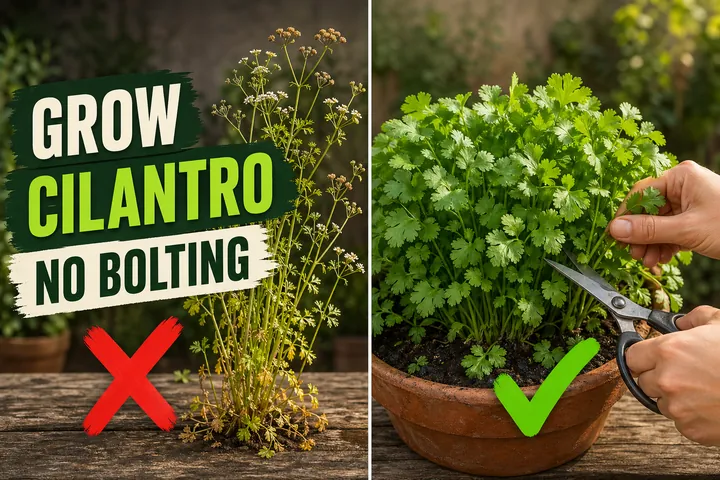
- Cilantro Plant Care — the other fast-bolting kitchen herb
Summary: basil plant care checklist
- Sun: 6–8 hours direct sun per day; LED grow light indoors
- Water: When top 2–3 cm (0.75–1 in) of soil is dry; deep soak, full drainage
- Soil: Well-draining, fertile, pH 6.0–7.0
- Feed: Half-strength balanced liquid fertiliser once a month
- Pinch: Every 1–2 weeks, above a leaf node; remove every flower spike immediately
- Harvest: Above a leaf node; no more than one-third at a time; morning is best
- Temperature: Above 18°C (65°F) minimum; frost-free at all times
- Diseases: Prefer resistant varieties in humid gardens; improve air circulation; water at base only
- Varieties: Genovese for pesto; Thai for Asian cooking; Eleonora/Prospera for disease resistance
Basil rewards attention. Visit the plant every few days, pinch what needs pinching, water when needed, and you will have more leaves than you can use all summer.
Want personalised basil watering reminders and a care calendar tailored to your local climate? The Tazart app sets smart reminders and lets Dr. Afrao, our AI plant assistant, answer your specific basil care questions in real time.
Highly recommended
The supplies that make this guide work
Tazart is an Amazon Associate — we earn from qualifying purchases at no extra cost to you. Thank you for helping us keep these guides free.
Frequently asked questions
How much sun does basil need?
Basil needs at least 6 hours of direct sunlight per day — 8 hours is ideal for outdoor plants. Below 6 hours, stems stretch leggy, leaves pale, and the plant becomes far more prone to bolting. Indoors, a south-facing window is the bare minimum; most indoor setups need a full-spectrum LED grow light on a 12-hour timer to keep basil genuinely bushy.
How often should I water a basil plant?
Water basil when the top 2–3 cm (0.75–1 in) of soil feels dry — typically every 2–4 days outdoors in summer and every 3–5 days indoors. Water deeply until it runs from the drainage holes, then let the pot drain fully. Never let the soil stay waterlogged (roots rot) or bone dry (leaves wilt and bolt accelerates). In hot weather above 30°C (86°F), check containers daily.
Why is my basil bolting and how do I stop it?
Basil bolts (sends up flower spikes and stops leaf production) in response to heat, long days, and stress. You cannot permanently prevent it — basil is an annual programmed to set seed — but you can delay it for weeks or months by pinching off every flower spike the moment it appears and keeping the plant well-watered and fed. Once a plant has bolted fully and the stems have turned woody, it will not recover leaf quality. Start a new plant.
How do I pinch basil correctly?
Find the top pair of leaves and the node just below them — that node point is where the new branches will form. Pinch or snip the entire stem just above that lower node, removing the top two sets of leaves. Within 7–10 days, two new stems grow from the pinched node. Repeat this on every stem every 1–2 weeks. After 3–4 rounds of pinching, one plant becomes a dense multi-branched bush that can yield large harvests indefinitely.
What is the difference between Genovese and Thai basil care?
Genovese (sweet basil) prefers warmth above 18°C (65°F), consistent moisture, and pinching every 1–2 weeks to stay productive. Thai basil is slightly more heat-tolerant and bolt-resistant — it can handle occasional dry spells better than Genovese. Both need 6+ hours of sun and dislike cold; Thai basil's anise-clove flavour intensifies with a brief mild drought, while Genovese turns bitter under stress. General care is similar; Thai basil just requires less babying in summer heat.
What causes white fuzzy spots on basil leaves?
White to grey fuzzy patches on the underside of basil leaves — usually accompanied by yellow patches on the upper surface — are the classic sign of downy mildew (Peronospora belbahrii). It spreads by airborne spores and thrives in humid, cool, still air. There is no fully effective chemical treatment once it takes hold on susceptible varieties. Remove infected leaves immediately, improve air circulation, avoid wetting leaves, and replace with a resistant variety such as 'Eleonora' or 'Genovese Compact'.
How do I harvest basil without killing the plant?
Always cut stems just above a leaf node pair — the point where two leaves emerge from the stem. Never strip leaves from the base or pull the whole stem out. After a proper node cut, two new shoots grow from that node, effectively doubling the branch count. Take no more than one-third of the plant at any single harvest session. For maximum yield, harvest in the morning when leaf oils and moisture are at their peak.
Can basil grow indoors year-round?
Yes, but only with enough light. A south-facing window usually delivers 4–5 hours of direct winter sun — not enough on its own for basil to stay bushy. Supplement with a full-spectrum LED grow light bar positioned 15–25 cm (6–10 in) above the plant on a 12-hour timer. Keep temperatures above 18°C (65°F) year-round and away from cold draughts or air-conditioning vents. Indoors, basil grows more slowly but can produce harvestable leaves continuously.