Houseplants
Anthurium Care (Glossy Red Spathe Houseplant Guide)
Keep your Anthurium blooming year-round. Light, watering, humidity, soil and feeding for those glossy red waxy spathes — plus how to fix faded flowers and brown tips.
On this page
- Quick answer
- Table of contents
- Light — the on/off switch for blooms
- Watering — let it breathe
- Soil and potting
- Humidity — non-negotiable
- Temperature
- Feeding for repeat blooms
- Pruning and grooming
- Repotting
- Propagation
- Toxicity warning
- Common mistakes
- Troubleshooting
- Watch: Anthurium care guide
- Related reading
- A note on conditions
Watch the visual walkthrough
Anthurium Care Is EASIER Than You Think! Here's Why...
MERCH https://jake-inzerra.printify.me SOCIALS Instagram: ...
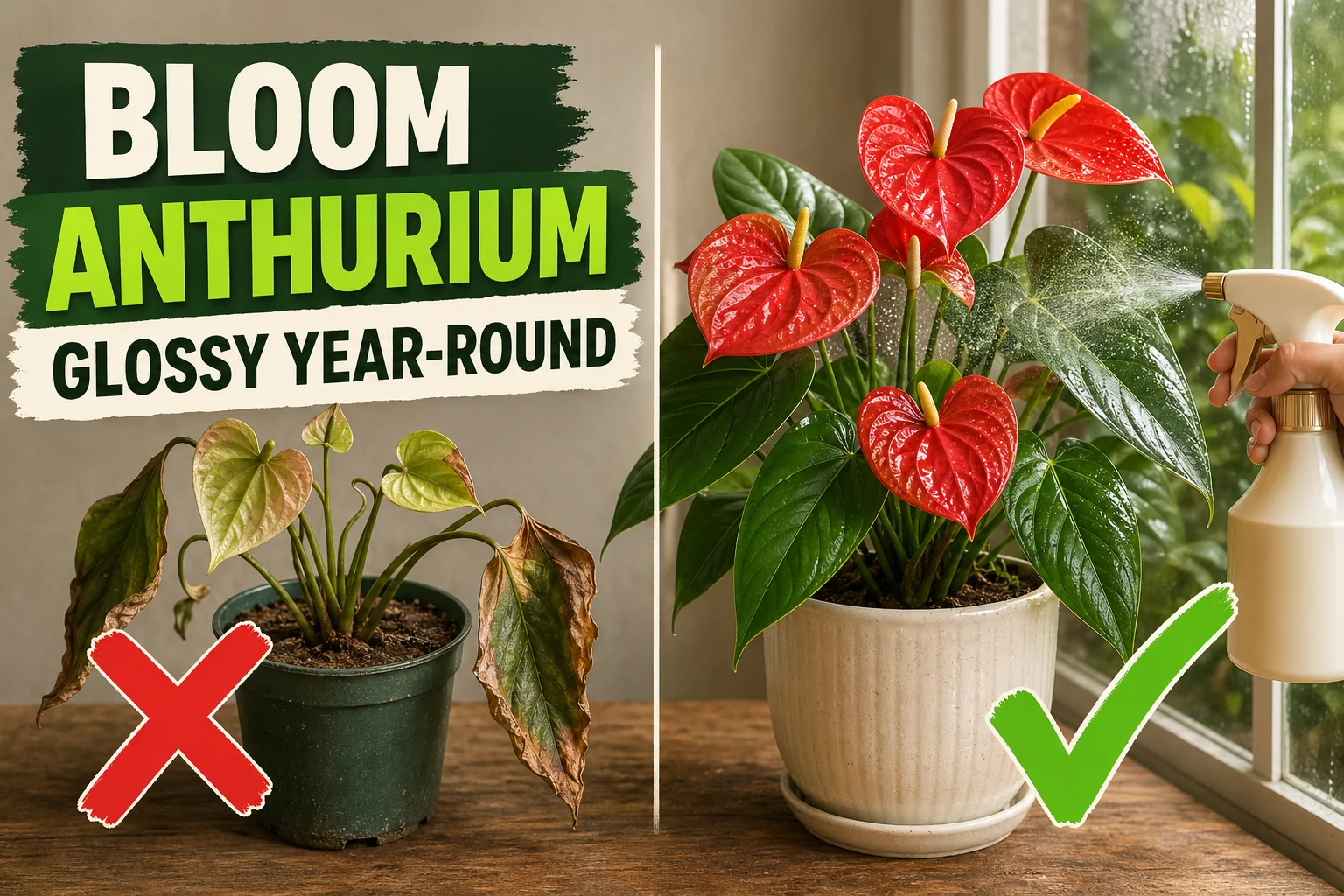
Anthurium andraeanum — sold as the flamingo flower or just “anthurium” — is one of the few houseplants that can bloom continuously. Those waxy heart-shaped flower spathes you see in red, pink, or white aren’t actually petals; they’re modified leaves protecting the real flowers, the bright yellow spadix poking up from the centre.
Get the conditions right and a healthy plant pushes a fresh spathe every 6–8 weeks, all year. Get them wrong and the blooms fade to green, the leaf tips crisp brown, and the plant slowly stalls. This guide gives you every specific number you need so you never have to guess.
Quick answer
Anthuriums want bright indirect light, watering when the top 2–3 cm (1 in) of soil are dry, a chunky peat-free aroid mix in a pot with drainage, 60–80% humidity, temperatures of 18–28°C (65–82°F), and a phosphorus-leaning fertilizer at quarter strength every 2 weeks in spring and summer. Soggy soil and dry air are the two biggest killers.
Table of contents
- Light — the on/off switch for blooms
- Watering — let it breathe
- Soil and potting
- Humidity — non-negotiable
- Temperature
- Feeding for repeat blooms
- Pruning and grooming
- Repotting
- Propagation
- Toxicity warning
- Common mistakes
- Troubleshooting table
- Watch: Anthurium care guide
- Related reading
- A note on conditions
Light — the on/off switch for blooms
Light is the single biggest factor in whether your Anthurium flowers or just sits there as a leafy green plant. In their native rainforest understory, Anthuriums grow as epiphytes attached to tree branches in dappled bright light — never direct sun, never deep shade.
What works:
- Bright indirect light, 0.5–1.5 m (1.5–5 ft) from an east or west window
- Filtered light through a sheer curtain on a south window
- 200–400 foot-candles is the sweet spot for steady reblooming
What doesn’t work:
- Direct midday sun — scorches leaves and bleaches red spathes within hours
- Deep shade more than 2 m (6 ft) from any window — the plant survives but stops flowering
- Cold dim spots near unheated north windows in winter
If your Anthurium is otherwise healthy but won’t push a new flower for months, light is almost always the answer. Move it 30–60 cm (12–24 in) closer to a bright window — new spathes usually appear within 6–8 weeks.
Watering — let it breathe
Anthuriums are epiphytic aroids. In nature their roots cling to bark, getting soaked by rain and then drying out in air. Indoors, the closest you can mimic that is water deeply, then let the top of the soil dry before the next round.
The rule: water when the top 2–3 cm (about 1 in) of soil feel dry. Push your finger straight down to the second knuckle — if it comes out with damp soil clinging to it, wait. If it comes out barely damp or dry, water thoroughly until it drains from the bottom.
Seasonal guide:
- Spring and summer: every 5–7 days on average
- Autumn and winter: every 10–14 days as growth slows
Signs of over-watering:
- Yellow leaves starting from the bottom of the plant
- Soft, mushy stem at soil line
- Soggy soil that stays wet for more than 3–4 days
- Black tips on new growth
Signs of under-watering:
- Leaves curl inward and feel papery
- Soil pulls away from the pot edges
- Spathes wilt and droop on their stalks
- Light, bone-dry pot when lifted
If you struggle to remember when you last watered — or want the schedule to shift automatically through the seasons — a free plant care app like Tazart tracks it for you and pings you when it’s time to check.
Soil and potting
Anthurium roots want air. A standard dense potting compost suffocates them and triggers root rot within weeks. The right mix feels chunky and barely holds together when you squeeze a handful.
Good aroid mix recipe:
- 40% peat-free or coir-based potting compost
- 30% orchid bark (small to medium chips)
- 20% perlite (coarse grade)
- 10% horticultural charcoal
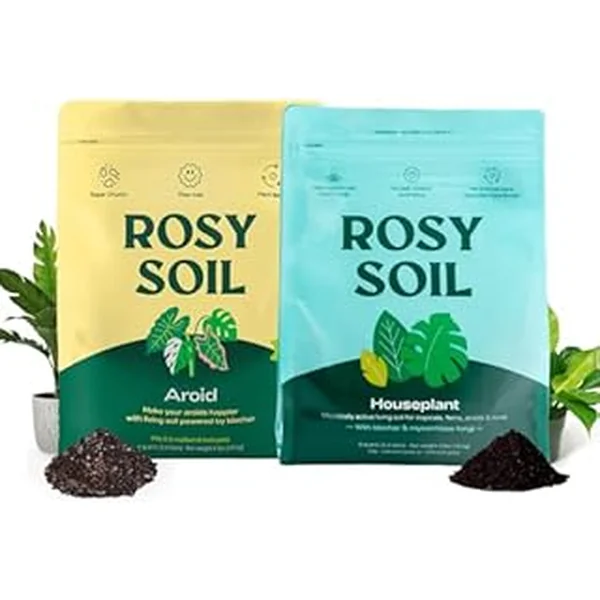
You can buy a pre-blended aroid mix that hits these ratios — they’re sold for monsteras, philodendrons, and anthuriums interchangeably.
Pot choice:
- Always use a pot with drainage holes — no exceptions
- Terracotta breathes more (good if you tend to overwater); glazed ceramic holds moisture longer
- Pot size: only one size up (2–3 cm (about 1 in) wider) when repotting — too large a pot stays wet and rots roots
- 15 cm (6 in) pots suit most full-size shop-bought anthuriums
Humidity — non-negotiable
Of all the houseplants Tazart users ask about, Anthurium is one of the most humidity-dependent.
Another tropical houseplant that demands the same 60%+ humidity range and rewards that effort with year-round colour is the croton — the croton plant care guide covers how to keep its vivid foliage from browning at the tips in dry indoor air. Below 40% relative humidity, you’ll see brown crispy tips on the leaves within weeks and new spathes that open small or deformed.
Target: 60–80% relative humidity. Tolerable: 50%. Stress zone: below 40%.
Easy fixes that actually work:
- Run a small warm-mist humidifier within 1 m (3 ft) of the plant in winter
- Group several plants together — local humidity rises by 10–15%
- Sit the pot on a pebble tray with water below the pot base (water shouldn’t touch the pot)
- Keep it out of the path of heating vents and air conditioning units
What doesn’t really work:
- Misting alone — the moisture evaporates within 20 minutes and barely raises humidity at all
- Bathroom placement, unless the room actually stays humid (most don’t between showers)
Temperature
Anthurium is a true tropical and dislikes any swing toward cold.
Ideal range: 18–28°C (65–82°F)
Absolute minimum: 13°C (55°F) — even a single night below this can blacken stems and cause sudden leaf collapse.
Practical tips:
- Move the pot away from cold windows from late autumn through early spring
- Never place an Anthurium directly under or beside an air conditioning vent
- In a room that drops below 16°C (61°F) overnight in winter, move it to an interior wall
Heat above 30°C (86°F) is fine if humidity stays high — that’s actually closer to its native climate. The combination of dry heat and low humidity is what stresses it.
Feeding for repeat blooms
Anthuriums are light feeders, but the type of fertilizer matters more than the amount. The flower spathes are powered by phosphorus (the middle number in N-P-K), so a balanced or bloom-boosting fertilizer wins over a straight nitrogen feed.
Schedule:
- Spring and summer: every 2 weeks with a phosphorus-leaning liquid fertilizer (e.g. 10-30-20, or balanced 20-20-20 if that’s what you have) diluted to quarter strength
- Autumn and winter: stop feeding entirely — the plant grows slowly and excess salts will burn the roots
Flush the soil with plain water every 2–3 months. Pour water through until it runs freely from the drainage holes, wait a few minutes, and repeat once. This clears built-up fertilizer salts that cause brown leaf tips.
Pruning and grooming
Anthuriums need very little pruning — mostly removing spent flowers and the occasional old leaf.
How to deadhead spent spathes:
- Wait until the spathe has fully turned green and the spadix has shrivelled
- Cut the flower stem at the base where it meets the main plant, using clean sharp scissors
- Don’t pull — the stem can tear and damage the crown
Wear gloves: the sap contains calcium oxalate crystals that irritate skin and eyes.
Yellow or damaged leaves:
- Cut at the base of the petiole with clean scissors
- Removing them redirects energy into new growth and new spathes
If your plant has become tall and leggy with bare lower stems and aerial roots showing, it’s ready for repotting (next section) — not pruning.
Repotting
Repot every 2–3 years, or sooner if:
- Roots are circling the bottom or growing out of drainage holes
- The plant dries out within 2–3 days of watering
- The aroid mix has broken down into dense compost-like material
How to repot:
- Repot in spring, when the plant is entering active growth
- Choose a pot only 2–3 cm (about 1 in) wider in diameter than the current one
- Mix fresh aroid mix (recipe above)
- Slide the plant out, gently loosen the outer roots, and trim any black or mushy ones
- Set the plant at the same depth it was before — don’t bury the crown
- Backfill with fresh mix, tap to settle, and water once thoroughly
Skip fertilizer for 4 weeks after repotting — fresh mix has enough nutrition and roots are still re-establishing.
Propagation
Anthurium is propagated most reliably by division, occasionally by stem cuttings if the plant has grown a tall stem with aerial roots.
Division
- Unpot the parent plant at repotting time in spring
- Look for separate crowns or rooted side-shoots growing from the base
- Gently tease the root systems apart with your fingers — only cut if absolutely necessary
- Pot each division individually in fresh aroid mix
- Water lightly and keep in bright indirect light at 22–26°C (72–79°F) for 2–3 weeks while roots settle
Stem cuttings (for legacy plants with bare lower stems)
- Take a cutting that includes at least 2–3 nodes and 1–2 aerial roots
- Let the cut end air-dry for an hour to callus
- Plant in moist sphagnum moss or chunky aroid mix
- Keep at 24–28°C (75–82°F) and 70%+ humidity (a clear plastic bag tent works)
- New roots and a new growing point emerge in 4–8 weeks
Seed propagation is possible but slow — 2–4 years to flowering — and rarely worth the wait.
Toxicity warning
Anthurium is toxic to pets and humans.
It belongs to the Araceae family — the same family as Aglaonema, Dieffenbachia, Pothos, and Philodendron — and contains calcium oxalate crystals throughout its leaves, stems, and spathes. When any part of the plant is chewed or swallowed, these crystals cause:
- Intense mouth and throat burning
- Excessive drooling and pawing at the mouth (in pets)
- Swelling of the lips, tongue, and throat
- Vomiting and difficulty swallowing
If ingestion is suspected, contact a vet or poison control immediately. Wear gloves when pruning or repotting — sap can irritate sensitive skin and eyes. Wash hands thoroughly afterwards.
Common mistakes
-
Using regular potting compost. Dense soil suffocates Anthurium roots within weeks. They need a chunky aroid mix with bark and perlite.
-
Watering on a schedule. Anthuriums rot in consistently wet soil. Always check the top 2–3 cm (1 in) before watering — never water on autopilot.
-
Putting it in a dark corner. Low light is the #1 reason anthuriums stop flowering. Bright indirect light is mandatory for repeat blooms.
-
Ignoring humidity. Below 40% humidity, leaf tips brown and new spathes deform. A small humidifier solves it cheaply and permanently.
-
Over-feeding with high-nitrogen fertilizer. Pushes lots of leaves but few flowers. Use a phosphorus-leaning bloom feed at quarter strength.
-
Burying the crown when repotting. Anthurium grows from a central crown that needs to sit at or just above soil level. Buried, it rots.
-
Pots without drainage. No drainage = standing water = root rot in days. Always use a pot with holes, even inside a decorative cachepot.
Troubleshooting
| Symptom | Likely cause | Fix |
|---|---|---|
| New spathes open green instead of red | Low light or low phosphorus | Move 30–60 cm (12–24 in) closer to a bright window; switch to a bloom-boosting fertilizer at half strength |
| Plant hasn’t bloomed in 3+ months | Insufficient light | Bright indirect light is mandatory; aim for within 1 m (3 ft) of an east or west window |
| Brown crispy leaf tips | Low humidity or fertilizer salt buildup | Raise humidity to 60%+ with a humidifier; flush the soil with plain water |
| Yellow leaves starting from the bottom | Over-watering / root rot | Check roots; trim black mushy ones; repot in fresh airy aroid mix; water less often |
| Wilting with dry soil | Under-watering | Water thoroughly; check humidity; resume the “top 2–3 cm (1 in) dry” rule |
| Black or blackening leaves and stems | Cold damage | Move away from cold windows and AC vents; minimum 13°C (55°F) at all times |
| Tiny flying insects in the soil | Fungus gnats from soil staying too wet | Let the top 2–3 cm (1 in) dry between waterings; top with a 1 cm (0.5 in) layer of dry sand |
| Pale washed-out leaves | Too much direct sun | Move out of direct sun into bright indirect light |
Watch: Anthurium care guide
A visual walkthrough pairs well with the steps above — watching someone repot an Anthurium into a chunky aroid mix and prune off a spent spathe makes the soil and grooming rules click much faster than reading alone. Search for Anthurium care andraeanum guide on YouTube and look for plant care channels that show before/after of low-light fading and repotting at the right depth.
Related reading
- Pothos plant care — another Araceae family aroid with similar watering rules and even better low-light tolerance
- Prayer plant care — perfect humidity-loving companion that thrives in the same 60%+ range as Anthurium
- Aglaonema plant care (Chinese Evergreen) — fellow aroid with the same “let the top 2–5 cm (1–2 in) dry” rule, more cold-tolerant if your home runs cool
Track your Anthurium’s watering schedule and bloom cycle automatically with the free Tazart plant care app. It adjusts reminders by season and Dr. Afrao — the in-app AI plant assistant — can diagnose faded spathes, brown tips, and root rot from a photo.
A note on conditions
Every home is different. The numbers in this guide — 18–28°C (65–82°F), 60–80% humidity, water every 5–7 days — are solid starting points, but your specific light levels, pot size, soil mix, season, and local climate all shift how often your Anthurium needs water and how vigorously it blooms. Watch the plant for the first month after you bring it home. The leaves and the colour of new spathes will tell you what to adjust. That feedback loop — observe, adjust, observe again — is how every confident plant owner is made.
Highly recommended
The supplies that make this guide work


Tazart is an Amazon Associate — we earn from qualifying purchases at no extra cost to you. Thank you for helping us keep these guides free.
Frequently asked questions
How often should I water my Anthurium?
Water when the top 2–3 cm (about 1 in) of soil feels dry — usually every 5–7 days in spring and summer and every 10–14 days in autumn and winter. Anthuriums are epiphytic aroids: their roots want oxygen between waterings. Soggy soil rots them faster than almost any other houseplant.
Why is my Anthurium not blooming?
Almost always not enough light. Anthuriums need bright indirect light — around 200–400 foot-candles — to push new spathes. Move it within 1 m (3 ft) of a bright east or west window, keep humidity above 50%, and feed a phosphorus-leaning fertilizer at quarter strength every 2 weeks in spring and summer. New flowers usually appear within 6–8 weeks.
Why are my Anthurium spathes turning green?
Spathes naturally fade to green as they age — that's a normal end-of-bloom signal, not a problem. If new spathes open green instead of red, the plant is short on light or phosphorus. Move it brighter and switch to a bloom-boosting fertilizer (high middle number, e.g. 10-30-20) at half strength.
Is Anthurium toxic to cats and dogs?
Yes. Anthurium belongs to the Araceae family and contains calcium oxalate crystals throughout its leaves, stems, and spathes. Chewing causes intense mouth burning, drooling, swelling, and vomiting in cats, dogs, and humans. Keep it out of reach of pets and children, and wear gloves when pruning.
How much light does an Anthurium need?
Bright indirect light — never direct midday sun. Aim for a spot 0.5–1.5 m (1.5–5 ft) from an east, west, or filtered south window. Direct sun scorches the leaves and bleaches the red spathes within hours; deep shade stops flowering completely.
What humidity does an Anthurium need?
At least 50% relative humidity, ideally 60–80%. Below 40%, leaf tips brown and new spathes can open small or deformed. Use a small warm-mist humidifier nearby in winter, group plants together, or sit the pot on a pebble tray with water below the base.