Houseplants
Air Plant Care (Tillandsia Without Soil)
Air plants (Tillandsia) live without soil — they drink and feed through their leaves. Learn the exact misting + soaking schedule, light, and airflow they need.
On this page
- Quick answer
- Table of contents
- What air plants actually are
- Watering — soak vs mist
- How to soak an air plant (step by step)
- Light requirements
- Temperature and airflow
- Fertilizing
- Flowering and pups
- Common mistakes
- Troubleshooting
- Watch: air plant care visual walkthrough
- Related reading
- A note on conditions
Watch the visual walkthrough
Air Plant Care Guide // Garden Answer
LINKS Ideas for Displaying Air Plants - https://youtu.be/eqfWu8Hui-c MORE LINKS Video Gear we Use ...
Air plants — the genus Tillandsia — are the strangest houseplants you can own and one of the easiest, once you understand the trick: they don’t drink through roots. They’re epiphytic bromeliads that cling to tree bark in the wild, and every drop of water and every nutrient enters through tiny silver scales on their leaves called trichomes.
That means no pot, no soil, no repotting. Just a bowl of water once a week, bright indirect light, and good airflow. This guide gives you the exact soak time, misting cadence, light, and feeding schedule so your Tillandsia stays plump, silver-green, and eventually flowers.
Quick answer
Soak your air plant in room-temperature water for 20–30 minutes once a week, shake it out, and dry it upside down for 2–4 hours in a bright airy spot. Between soaks, mist 2–3 times a week. Bright indirect light at 1–2 m (3–6 ft) from a window. Never plant in soil, never seal in a closed terrarium, and feed with a Tillandsia-specific fertilizer once a month in spring and summer.
Table of contents
- What air plants actually are
- Watering — soak vs mist
- How to soak an air plant (step by step)
- Light requirements
- Temperature and airflow
- Fertilizing
- Flowering and pups
- Common mistakes
- Troubleshooting
- FAQs
What air plants actually are
Tillandsia is a genus of about 650 species in the bromeliad family (Bromeliaceae) — the same family as the pineapple. They evolved to live perched on tree branches, rocks, and even power lines across Central and South America, taking water from rain and humidity and minerals from dust on the wind.
They’re epiphytes, not parasites — they don’t harm the host they cling to. Their roots are wiry holdfasts, not feeding roots. The real magic is in the silver scales (trichomes) covering each leaf: each one opens like a tiny sponge when wet to absorb moisture and nutrients, and closes shut when dry to slow evaporation.
This single fact drives every care rule. They drink through leaves, not roots. Soil rots them. Sealed humidity rots them. They want to get wet fast and dry fast, like a sponge in a desert.
Watering — soak vs mist
There are two ways to water an air plant, and a healthy plant needs both.
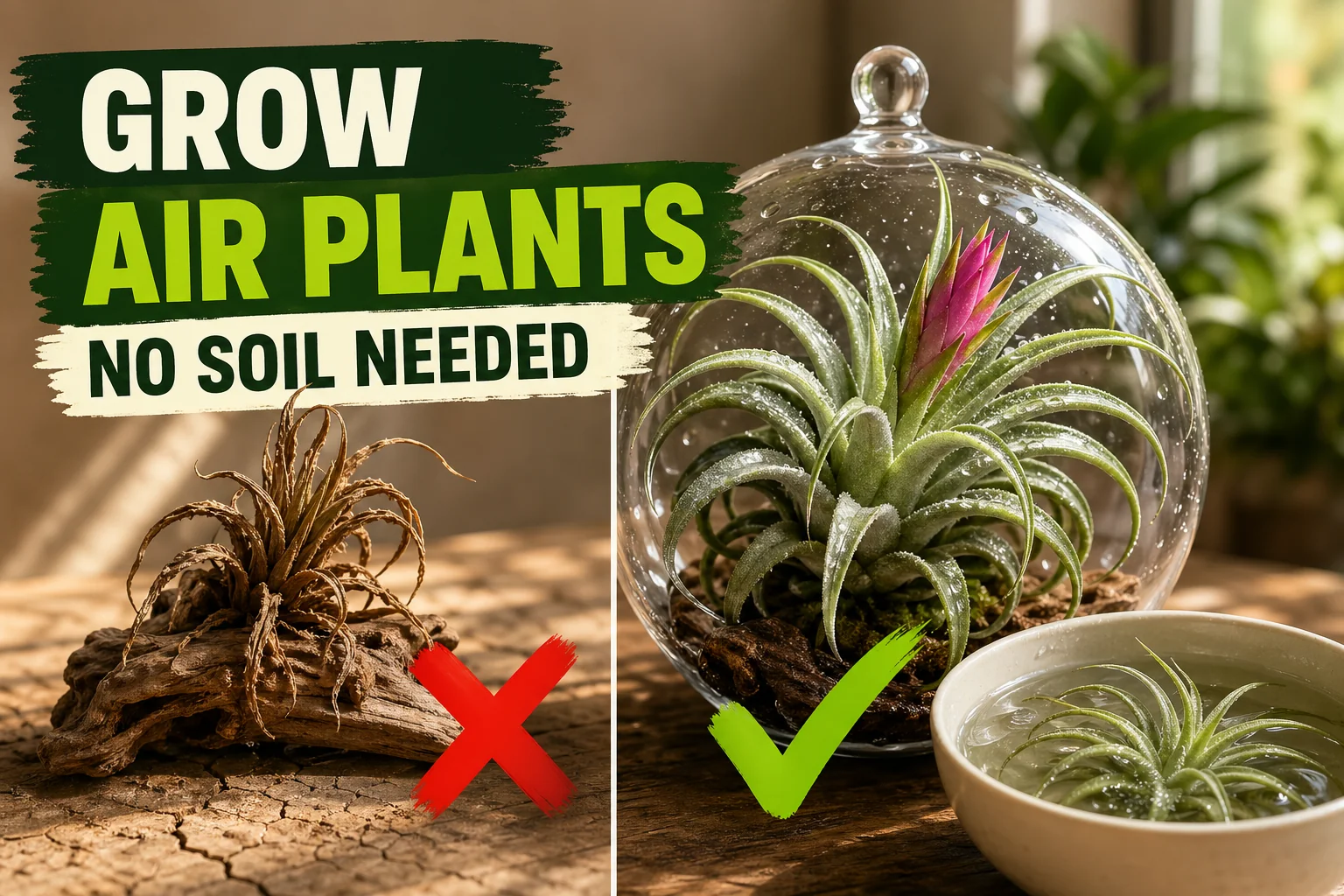
Soaking (the main meal) — once a week, fully submerge the plant in a bowl of room-temperature tap, rain, or filtered water for 20–30 minutes. This is when the trichomes fully hydrate and the plant absorbs most of its water and nutrients.
Misting (the in-between) — 2–3 times a week between soaks, a fine spray bottle keeps the trichomes from drying out completely in heated rooms. Misting alone is not enough to keep most Tillandsia alive long-term — it only wets the surface and rarely reaches the inner leaves.
Adjust by season:
| Season | Soak frequency | Misting |
|---|---|---|
| Spring / summer (warm + dry indoor air) | Every 5–7 days | 2–3× per week |
| Hot summer (room above 27°C / 80°F) | Every 4–5 days, or 2× a week | 3–4× per week |
| Autumn / winter (cool, low light) | Every 10–14 days | 1–2× per week |
| In a humid bathroom / kitchen | Every 10–14 days | Rarely needed |
Water type matters. Use rainwater, pond water, aquarium water, or filtered tap water if your tap is heavily chlorinated or softened. Distilled water and reverse-osmosis water lack minerals — fine for one-off soaks, but not as a permanent diet. Softened (salted) water kills air plants quickly.
How to soak an air plant (step by step)
1. Fill a bowl
Use any bowl, jar, or sink basin big enough to fully submerge the plant. Fill with room-temperature water — cold water shocks them, hot water cooks the trichomes. Aim for around 18–24°C (65–75°F).
2. Submerge upside down
Drop the plant in leaf-tips-first, base-up. This lets any trapped air bubbles escape from inside the rosette so water can reach the centre.
3. Set a timer for 20–30 minutes
Less than 15 minutes and the leaves don’t fully rehydrate; more than 60 minutes and the crown can start to rot, especially on velvety silver varieties. 20–30 minutes is the safe range for almost every Tillandsia.
4. Shake out the water
Pull the plant out, hold it base-up, and give it a few firm shakes. Water trapped in the centre of the rosette is the single biggest cause of rot.
5. Dry upside down for 2–4 hours
Lay the plant on a tea towel or hang it upside down in a bright airy spot. It must be completely dry within 4 hours — if it’s still damp at hour 5, your room has too little airflow. Aim a small fan at it on low for next time.
Only return it to a closed display (glass globe, mounted driftwood) once the centre is fully dry to the touch.
Light requirements
Air plants want bright indirect light — the same conditions that suit a Calathea or pothos.
- Ideal: 1–2 m (3–6 ft) from an east, west, or filtered south-facing window.
- Tolerable: 2–3 m (6–10 ft) from a bright window — growth slows but the plant survives.
- Too dark: any spot more than 3 m (10 ft) from a window with no grow light. Leaves stretch and lose their silver sheen.
- Too bright: direct hot afternoon sun through unfiltered glass — leaves scorch within hours.
A few rules of thumb:
- Silver, fuzzy species (T. xerographica, T. tectorum, T. caput-medusae) have denser trichomes and tolerate brighter light, even some morning direct sun.
- Greener, smoother species (T. butzii, T. bulbosa, T. ionantha ‘Guatemala’) prefer shadier indirect light.
- A grow light at 30 cm (12 in) above the plant for 10–12 hours a day works well for windowless rooms.
Temperature and airflow
Tillandsia are happy in normal indoor temperatures: 13–32°C (55–90°F).
For a lush, soil-rooted fern that thrives in the same humid bathrooms and kitchens where air plants do well, the Boston fern care guide covers a great companion for creating a tropical indoor atmosphere. Below 10°C (50°F) most species suffer cold damage; above 35°C (95°F) they need extra misting and shade.
The non-negotiable rule is airflow. Air plants come from windswept tree branches; they hate stagnant humidity. That means:
- No closed jars or sealed terrariums — ever.
- Open glass globes, hanging holders, driftwood mounts, and shells all work well.
- A ceiling fan or oscillating fan on low for a few hours a day in a humid bathroom is fine.
- Bathrooms and kitchens with a window are great spots — humidity is high but airflow is real.
Fertilizing
Air plants live on dust and decomposed insect scraps in the wild — they barely need feeding. A monthly low-dose feed in the growing season is plenty.
- Use a Tillandsia-specific or bromeliad-specific fertilizer (low nitrogen, no urea).
- Mix at quarter strength of the label dose.
- Add to your soak water once a month in spring and summer.
- Skip fertilizer entirely in autumn and winter.
Regular houseplant fertilizer (Miracle-Gro, etc.) is too high in urea-based nitrogen and burns the trichomes — you’ll see brown spots within days.
Flowering and pups
Every Tillandsia flowers exactly once in its lifetime, then dies — but slowly, while making 2–8 baby plants (“pups”) around the base. This is normal, not a disaster.
- The flower spike is bright pink, red, or purple and lasts a few weeks to a few months depending on species.
- Pups appear at the base 2–6 months after flowering.
- Once a pup is roughly one-third the size of the parent, you can gently twist or cut it free — or leave it attached to form a clump.
- The original plant gradually browns and dies over 1–2 years. Trim the dying outer leaves as you go.
A free plant care app like Tazart keeps a per-plant soak schedule with reminders that adjust for your local weather and season — useful once you’re juggling a clump of pups.
Common mistakes
- Putting it in soil. Tillandsia roots are anchors, not feeders. Soil holds moisture against the base and rots the crown within weeks.
- Sealing it in a closed terrarium. Trapped humidity = crown rot. Always use open displays with airflow.
- Misting only, never soaking. A weekly soak is the main meal; misting alone slowly starves the plant.
- Leaving water trapped in the centre after soaking. This is the #1 cause of sudden mush rot. Always shake and dry upside down.
- Using softened (salted) water. Sodium kills trichomes fast. Use rain, filtered, or non-softened tap water.
- Direct hot afternoon sun. Scorches the leaves in a single afternoon. Filtered or indirect light only.
- Hot dry rooms next to a radiator. Crispy brown tips within days. Move the plant or add a humidifier.
Troubleshooting
| Symptom | Likely cause | Fix |
|---|---|---|
| Leaves curl tightly inward | Underwatering / dehydration | Soak for 30 min, then resume weekly soaks |
| Brown crispy leaf tips | Dry air or hard tap water | Trim tips at an angle; switch to rain or filtered water; add a humidifier |
| Base turns black or mushy | Crown rot from trapped water | Almost always fatal — separate any healthy pups, discard the parent, and shake-dry every soak from now on |
| Leaves losing silver sheen, stretching | Too little light | Move within 1–2 m (3–6 ft) of a bright window or add a grow light |
| Pale yellowish leaves, scorched patches | Direct hot sun | Move to filtered or indirect light |
| Plant feels light and brittle | Severely dehydrated | 30–60 min rescue soak; if no recovery in a week, it’s dead |
| White crusty residue on leaves | Mineral build-up from hard tap water | Switch to rain or filtered water; rinse during soaks |
| No flowering after 2+ years | Light or feeding shortfall | Move brighter; add monthly bromeliad fertilizer in spring/summer |
Watch: air plant care visual walkthrough
A short video showing the soak-and-shake routine pairs well with the steps above. Search YouTube for Tillandsia soak and dry tutorial and use this guide as your written reference for timing and light.
Related reading
- Prayer plant care guide — another humidity-loving houseplant that pairs beautifully with air plants on a bright indirect shelf.
- Pothos plant care — the easy soil-grown counterpart for any windowsill.
- Aglaonema (Chinese Evergreen) care — low-light houseplant that thrives in the same room conditions Tillandsia enjoy.
- Open the free Tazart plant identifier to scan your air plant — Dr. Afrao will set up a per-plant soak schedule that adjusts for your local weather.
A note on conditions
Your home’s heating, humidity, light angle, and the specific Tillandsia species all change how often a plant needs to soak and how fast it dries. The schedule above is a starting point — watch your plant in its first month and tune from there. Plump, silver-green, and dry within 4 hours of a soak means you’ve found the right rhythm.
Highly recommended
The supplies that make this guide work
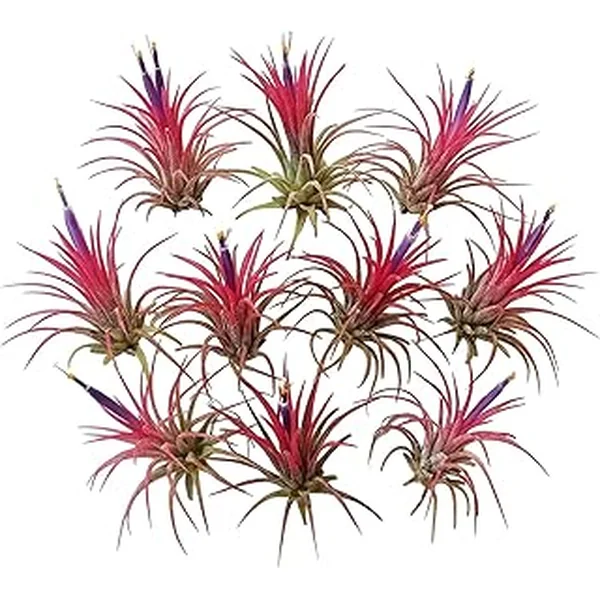
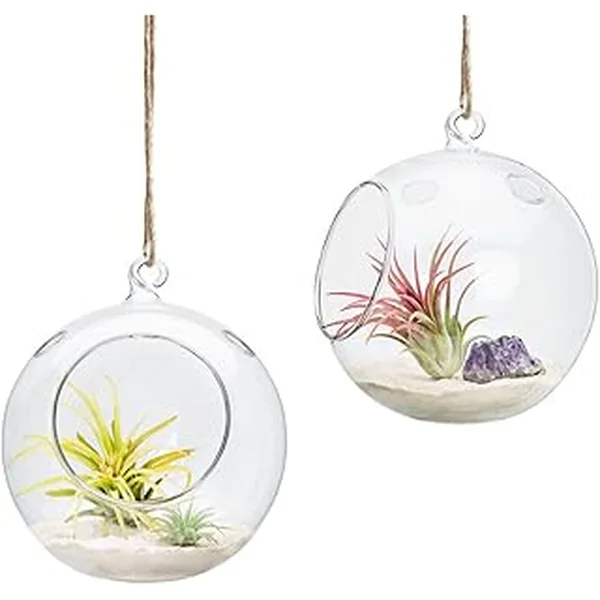

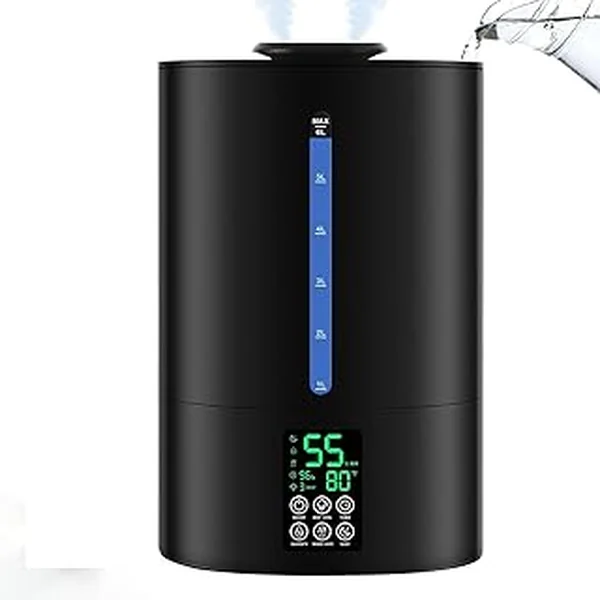
Tazart is an Amazon Associate — we earn from qualifying purchases at no extra cost to you. Thank you for helping us keep these guides free.
Frequently asked questions
How often should I water an air plant?
Soak the whole plant in a bowl of room-temperature water for 20–30 minutes once a week, then shake out excess water and let it dry upside down for 2–4 hours. Between soaks, mist 2–3 times a week if your air is dry. In hot summer rooms, soak twice a week; in cool damp winters, every 10–14 days is enough.
Do air plants really live without soil?
Yes. Tillandsia are epiphytes — in the wild they cling to tree bark, rocks, and even telephone wires. They take all their water and nutrients through tiny silver scales on their leaves called trichomes. Their roots are anchors, not feeders, so soil actually rots them.
How long do you soak an air plant?
20–30 minutes is the sweet spot. Less than 15 minutes and the leaves don't fully rehydrate; more than 60 minutes and the centre of the plant can start to rot, especially on velvety silver varieties like Tillandsia xerographica. Always shake the water out and dry upside down.
Why is my air plant turning brown and crispy?
Almost always underwatering or low humidity. The outermost leaves and tips dry out first. Soak the plant for 30 minutes, trim the dead brown tips at an angle with sharp scissors, then commit to a weekly soak schedule. Heat from a radiator or south-facing window also accelerates browning.
Can air plants live in a closed terrarium?
No — closed terrariums kill air plants fast. Tillandsia need strong air circulation to dry out fully between waterings; trapped humidity rots their crowns within weeks. Use open glass globes, hanging holders, or driftwood mounts with airflow on all sides.
Do air plants need direct sunlight?
Bright indirect light is best — within 1–2 m (3–6 ft) of an east, west, or filtered south-facing window. Silver, fuzzy varieties (T. xerographica, T. tectorum) handle more direct sun; greener, smoother varieties (T. butzii, T. bulbosa) prefer shadier indirect light. Direct hot afternoon sun scorches leaves within hours.
How do I fertilize an air plant?
Add a Tillandsia-specific or low-nitrogen bromeliad fertilizer to soak water at quarter strength, once a month in spring and summer. Skip fertilizer entirely in autumn and winter. Never use regular houseplant fertilizer — it's too high in urea-based nitrogen and burns the trichomes.